When Your Kubria Crusher Shifts from Coarse to Fine Configuration, Your Wear Parts Chemistry Must Shift Too—Or Expect Catastrophic Failure
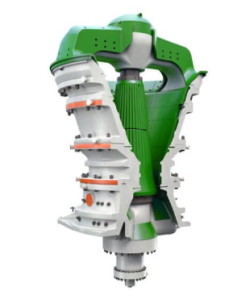
The thyssenkrupp Kubria cone crusher represents a significant engineering advancement in modular crushing technology. Its ability to reconfigure between coarse, intermediate, and fine crushing modes without requiring a complete equipment change has transformed operational flexibility for aggregate and mining operations. However, this very versatility creates a critical specification challenge that most procurement teams overlook: the wear parts chemistry and hardness profile that performs adequately in a coarse crushing application at 180mm CSS will fail catastrophically when the same machine is reconfigured for fine crushing at 12mm CSS.
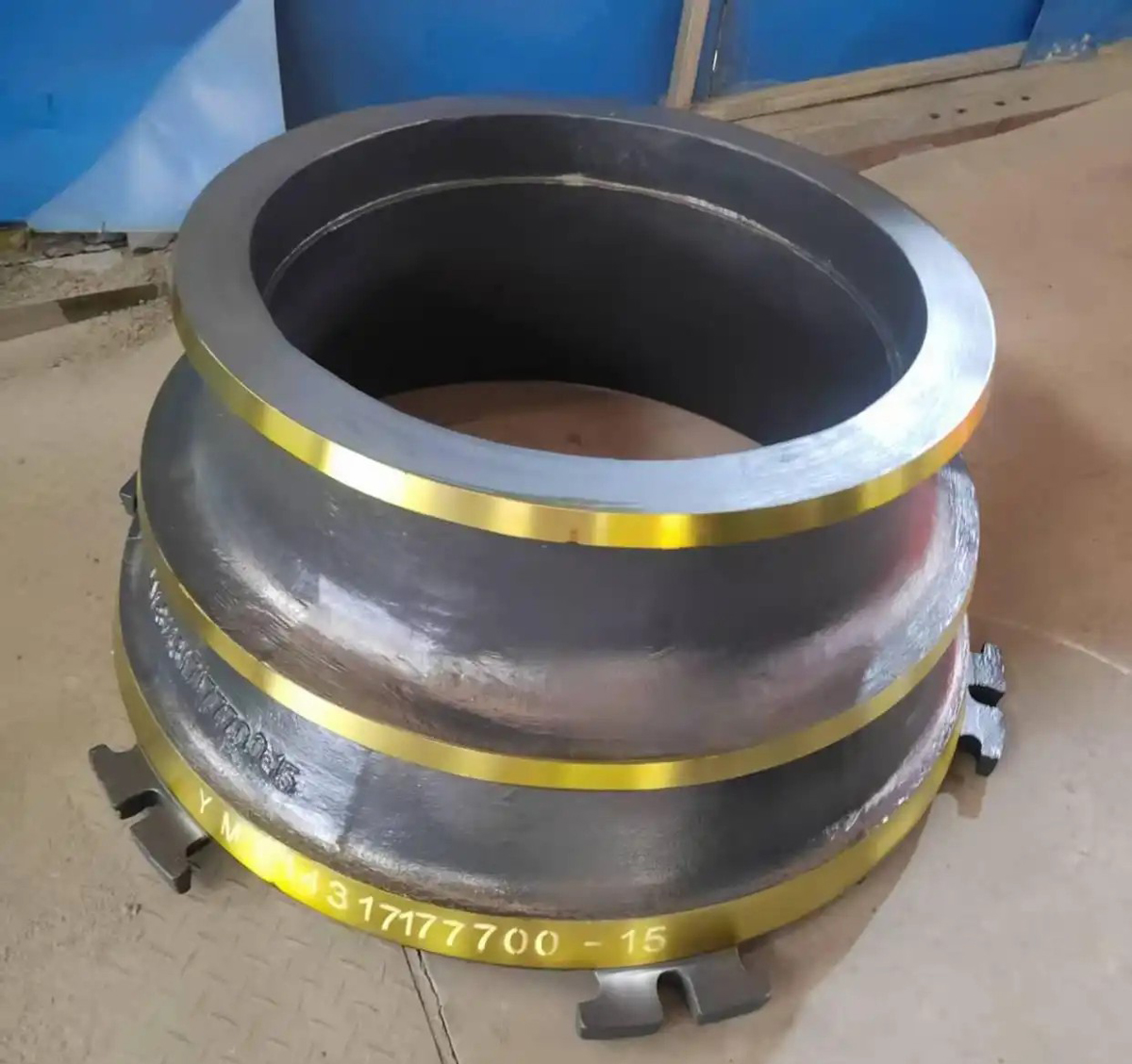
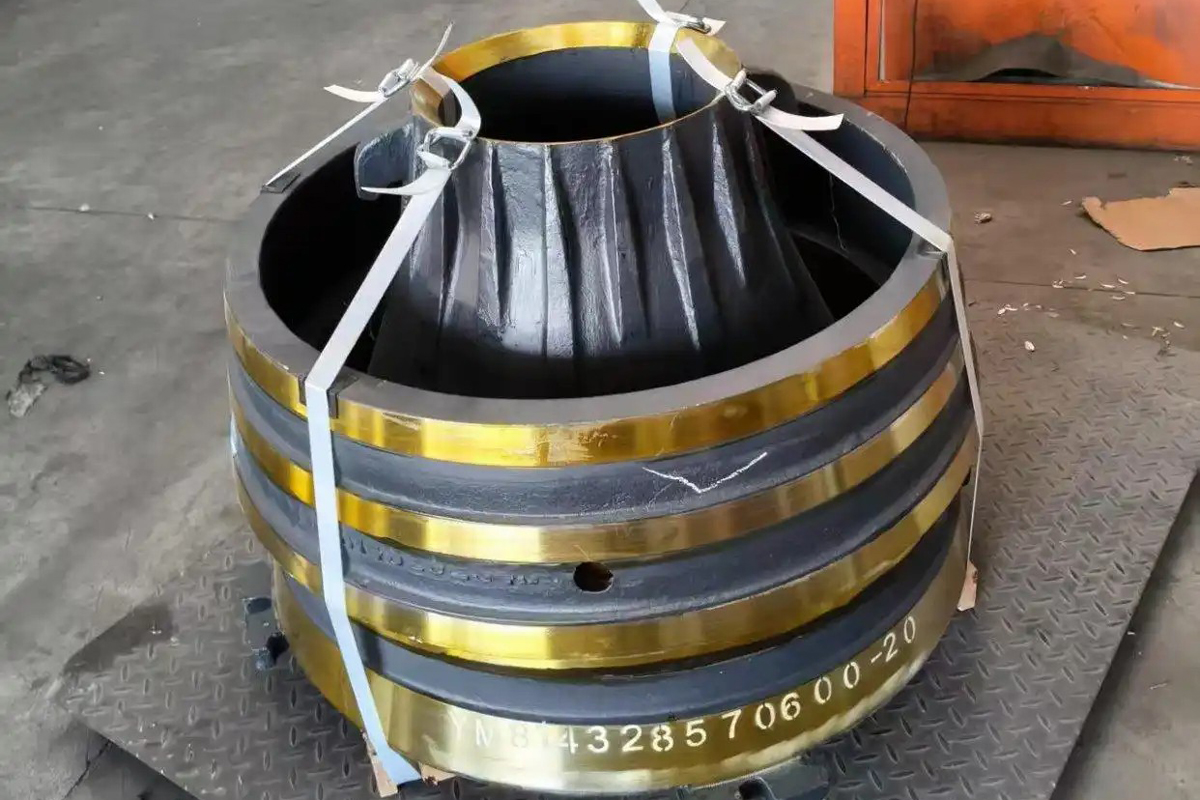
I witnessed this exact scenario at a basalt quarry in the Pacific Northwest. The operations manager had just completed a \$480,000 Kubria installation configured for secondary crushing with a 50mm closed side setting. The manganese steel mantle and concave were specified as standard Mn13Cr2 chemistry—appropriate for the high-impact, coarse reduction duty they anticipated. Six months later, market demand shifted toward manufactured sand production, and the maintenance team reconfigured the crusher to operate at 8mm CSS for tertiary duty. Within 180 operating hours, both the mantle and concave exhibited through-wear to the backing compound. The failure wasn’t gradual degradation—it was accelerated ablation. The material simply couldn’t generate sufficient work-hardening under the reduced impact forces typical of fine crushing, while the increased particle velocity and shearing action turned the austenitic steel surface into what resembled a cheese grater.
Understanding Kubria’s Modular Architecture: Why Configuration Changes Everything
The Kubria design philosophy centers on eccentric throw adjustment and chamber profile interchangeability. Unlike conventional cone crushers where the crushing chamber geometry is fixed, Kubria permits field modification of the crushing cavity shape by installing different mantle and concave profiles matched to specific product gradations. This modularity delivers tremendous operational value, but it fundamentally alters the tribological conditions that cone crusher parts must withstand.
Impact Energy vs. Sliding Abrasion: The Configuration-Dependent Failure Mode
In coarse crushing mode with CSS settings above 40mm, particle-on-liner interactions are dominated by compressive impact. Large feed rocks enter the crushing chamber at relatively low velocities and undergo brittle fracture through high-stress compression. Under these conditions, standard high-manganese steels like Mn13 or Mn18Cr2 perform exceptionally well because the repeated impact loading induces work-hardening. The surface austenite undergoes strain-induced martensitic transformation, driving hardness from approximately 210 HBW in the as-cast state to values exceeding 500 HBW after several hours of operation.
When the same Kubria unit is reconfigured for fine crushing with CSS below 20mm, the physics change entirely. Feed particle size decreases, impact energy per particle contact drops, and the crushing mechanism shifts toward high-frequency, low-amplitude compression combined with sliding abrasion. The reduced impact magnitude is insufficient to trigger the slip-plane deformation required for work-hardening in conventional manganese chemistries. Simultaneously, the increased number of particle interactions per unit time and higher sliding velocities subject the liner surface to severe gouging abrasion—the exact wear mode where under-hardened austenitic steel performs poorly.
| Operating Configuration | CSS Range | Dominant Wear Mode | Recommended Manganese Chemistry | Target Surface Hardness |
|---|---|---|---|---|
| Coarse Crushing | 40mm – 180mm | High-energy impact compression | Mn13Cr2 or Mn18Cr2 | 450-550 HBW (work-hardened) |
| Intermediate Crushing | 20mm – 40mm | Moderate impact with sliding | Mn18Cr2 or Mn22 | 400-500 HBW |
| Fine Crushing | 6mm – 20mm | High-velocity gouging abrasion | Mn22 or Mn25 (high-carbon variant) | 500-600 HBW (requires higher initial hardness) |
Material Specification for Kubria Applications: Beyond the Standard ASTM Grades
While ASTM A128 provides standardized grades for austenitic manganese steel castings, operators of modular equipment like the Kubria crusher must understand that these standards represent minimum requirements, not application-optimized solutions. For installations where configuration changes are anticipated, parts specification demands a more sophisticated approach.
Mn22 Chemistry: When and Why It Becomes Non-Negotiable
Mn22 designation refers to austenitic manganese steel with manganese content between 21% and 23%, typically with carbon controlled in the 1.1%-1.3% range. The elevated manganese percentage serves two critical functions. First, it stabilizes the austenitic matrix across a broader temperature range, reducing the risk of carbide precipitation during cooling or thermal cycling in service. Second, it increases the initial yield strength and strain-hardening coefficient of the base material.
For Kubria cone crusher parts operating in fine crushing configurations, Mn22 chemistry provides higher inherent abrasion resistance even before work-hardening occurs. This is crucial because the reduced impact energy in fine crushing may never fully activate the transformation hardening mechanism. The material must resist wear in its initial state, relying on composition and microstructure rather than service-induced transformation.
Pro-Tip: When specifying Mn22 castings for Kubria applications, insist on verification of the solution annealing parameters. The casting must be held at 1050-1100°C for sufficient time to fully dissolve chromium carbides, then water quenched at a rate exceeding 50°C per minute. I’ve cut apart failed liners from budget suppliers and found networked carbide structures throughout the cross-section—proof that the heat treatment cycle was abbreviated. This carbide network acts as a crack initiation site and dramatically reduces both impact toughness and wear life. Request heat treatment certification that includes actual furnace temperature charts and quench medium temperature monitoring.
Installation Protocol: Where Modular Design Demands Extra Precision
The Kubria’s modular eccentric assembly introduces specific installation requirements that differ from conventional fixed-geometry crushers. Because the eccentric throw is adjustable and the crushing force distribution changes with different mantle profiles, proper installation of cone crusher parts requires particular attention to backing compound placement and liner seating verification.
Eccentric Clearance Verification Before Liner Installation
Before installing new wear components, measure the radial clearance between the mainshaft and the eccentric bore using inside micrometers at multiple heights. The Kubria design specification calls for 0.15mm to 0.25mm clearance depending on shaft diameter. Clearances below this range indicate bushing wear or thermal growth issues that will cause binding. Clearances exceeding specification permit eccentric runout that creates uneven load distribution on the newly installed liners.
For the bronze bushings themselves, thyssenkrupp specifies C93800 alloy with minimum hardness of 85 HB. During scheduled maintenance, remove the bushings and inspect for scoring patterns. Vertical scratches indicate contaminated oil or inadequate filtration. Circumferential scoring suggests misalignment or thermal distortion of the mainframe. Do not install new liners until bushing condition is verified and any dimensional deviations are corrected.
Epoxy Backing Application in Modular Configurations
The backing compound thickness between the mantle and the mainframe core varies with different crushing chamber profiles. When transitioning a Kubria from coarse to fine configuration, the replacement mantle may have a different back-face contour than the original. This changes the backing layer thickness from the previous installation.
Optimal backing thickness ranges from 8mm to 15mm for most Kubria applications. Thinner layers provide inadequate vibration damping and thermal insulation. Thicker layers create excessive thermal resistance, preventing heat dissipation from the steel surface and potentially causing backing compound degradation from operating temperatures exceeding 120°C.
Before pouring backing compound, verify ambient temperature exceeds 15°C and the epoxy components are pre-warmed to at least 20°C. Mix ratio must be exact—most industrial backing compounds use 100:20 resin-to-hardener ratios by weight, not volume. Under-catalyzed compound will not achieve full cure strength. Over-catalyzed compound generates excessive exothermic heat during cure, creating internal stress concentrations.
Predictive Maintenance Through Oil Analysis: The Kubria-Specific Markers
The Kubria’s modular design includes a sophisticated lubrication circuit with multiple filtration stages and temperature monitoring. This system provides an opportunity for advanced condition monitoring through systematic oil sampling and analysis.
Establishing Baseline Contamination Levels
After initial commissioning or following major maintenance, establish baseline elemental analysis values for the lubrication oil. Key elements to monitor include copper (from bronze bushings), iron (from gear surfaces and bearing races), silicon (indicating dust ingress), and aluminum (from certain seal materials). For a properly functioning Kubria system operating with ISO VG 320 gear oil, expect the following baseline ranges:
- Copper: 5-15 ppm
- Iron: 20-40 ppm
- Silicon: less than 10 ppm
- Chromium: less than 2 ppm
When copper levels exceed 50 ppm and trend upward across consecutive samples, bushing wear has accelerated beyond normal rates. This often correlates with misalignment between the mainshaft and eccentric assembly—a condition that becomes more likely after reconfiguring the crusher between coarse and fine modes if reassembly procedures are not rigorously followed.
Silicon contamination above 25 ppm indicates compromised dust sealing. For Kubria installations in dusty environments processing abrasive materials like granite or quartzite, this is particularly critical. The modular design uses multiple seal points around the eccentric assembly, and any seal degradation permits particle ingress directly into the lubrication circuit. These contaminants act as lapping compound, accelerating wear of precision surfaces.
Total Cost of Ownership Analysis: Modular Flexibility vs. Parts Optimization
The economic case for application-matched parts specification becomes compelling when analyzed across the full equipment lifecycle rather than individual purchase transactions. Consider a Kubria installation that operates in coarse mode for eight months annually processing 800,000 tonnes, then shifts to fine mode for four months producing 200,000 tonnes of manufactured sand.
Scenario A uses standard Mn18Cr2 liners year-round. In coarse mode, these achieve 5,000 operating hours before replacement. When reconfigured for fine crushing with the same liners, service life drops to 1,200 hours due to the wear mechanism mismatch previously discussed. Annual liner consumption: approximately 3.5 sets.
Scenario B uses Mn18Cr2 for the coarse crushing period and switches to Mn22 chemistry when reconfiguring for fine production. The Mn22 liners achieve 2,400 hours in fine crushing duty—double the life of the mismatched Mn18 material. Annual consumption: approximately 2.8 sets.
While Mn22 castings carry approximately 18% higher unit cost than Mn18Cr2, the reduction in changeout frequency delivers substantial savings. Each liner replacement requires a minimum 16-hour shutdown for cooldown, removal, installation, backing cure, and restart procedures. At a typical aggregate operation producing \$45 per tonne margin, a single avoided shutdown generates \$180,000 in preserved production value—far exceeding the incremental material cost.
Hidden Costs of Generic Aftermarket Parts in Modular Applications
The Kubria’s precision requires OEM-level dimensional accuracy in replacement components. Budget aftermarket suppliers frequently economize by eliminating finish machining operations on the mantle bore and concave mounting surfaces. This creates fit-up problems that manifest in several ways:
Mantle bore tolerances exceeding ±0.8mm cause eccentric runout during rotation. This runout translates directly to uneven crushing force distribution, preferential wear on one side of the crushing chamber, and premature failure of the adjustment mechanism components. The resulting vibration also accelerates fatigue cracking in the mainframe casting—a repair that can cost \$150,000 and requires three weeks of downtime.
Concave mounting surface irregularities prevent uniform backing compound thickness. Thin spots in the backing layer create direct metal-to-metal contact points where cyclic loading induces fatigue cracking in the concave casting. Thick spots trap heat and accelerate backing compound thermal degradation. Neither condition becomes apparent during installation, only manifesting as premature wear or catastrophic failure after 400-800 operating hours.
Configuration Change Checklist: Engineering Rigor for Modular Transitions
When reconfiguring a Kubria crusher between operational modes, treat the transition as a precision assembly process, not a simple parts swap. The following sequence ensures dimensional integrity and prevents the cascading failures that result from shortcuts:
- Document the existing configuration with photographs and measurements of CSS, eccentric throw setting, and liner wear patterns.
- During disassembly, inspect all fasteners for thread damage or elongation. Kubria adjustment ring locks and eccentric clamp bolts operate under extreme cyclic loading. Any bolt showing more than 0.05mm thread pitch distortion must be replaced.
- Clean and inspect all precision mating surfaces. Use a dial indicator to verify that the mainframe mounting face runout does not exceed 0.10mm across the diameter. Excessive runout indicates structural fatigue or previous installation errors that will doom the new configuration.
- When installing the new mantle profile, verify the interference fit between the mantle bore and mainframe core meets specification—typically 0.10mm to 0.15mm. Too loose permits slippage and fretting wear. Too tight risks hydraulic lock during thermal expansion.
- After backing compound cure, perform a slow rotation check with the drive disengaged. Any binding or irregular resistance indicates misalignment that must be corrected before powered operation.
Conclusion: Modularity Is an Asset Only When Parts Strategy Matches
The thyssenkrupp Kubria cone crusher delivers genuine operational flexibility through its modular design. However, this flexibility creates a responsibility for operators and maintenance teams to match wear parts specifications to the actual crushing application, not just the equipment model number. A mantle and concave set optimized for coarse crushing at 100mm CSS will fail prematurely when the machine is reconfigured for fine crushing at 10mm CSS—not because the parts are defective, but because the tribological conditions have fundamentally changed.
Successful Kubria operations require moving beyond commodity purchasing of cone crusher parts toward application-engineered specification. This means understanding failure modes, recognizing when standard ASTM grades are insufficient, and investing in materials like Mn22 chemistry when abrasion resistance must exist independent of work-hardening. The incremental cost of optimized metallurgy disappears rapidly when measured against the value of preserved production and avoided catastrophic failures. In modular crushing, one specification does not fit all applications—and pretending otherwise converts flexibility into a liability.