OWN FOUNDRY — Crusher Parts Manufacturing!

OWN FOUNDRY — Crusher Parts Manufacturing!

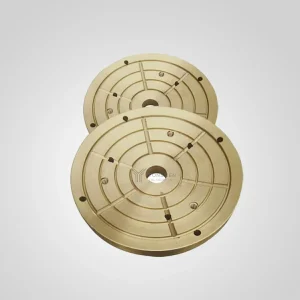
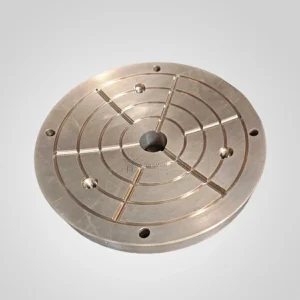
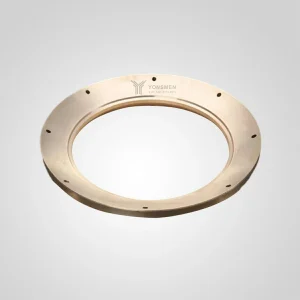
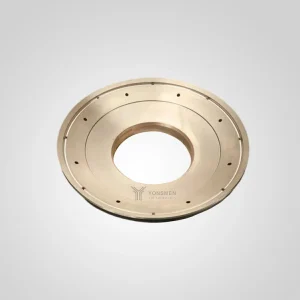
The socket liner sits inside the spherical seat of the crusher frame and carries the full weight and thrust of the cone crusher main shaft while it gyrates under load. It is a small part with an outsized job — every degree of articulation the shaft makes as it crushes rock passes through this single bronze bushing, so its bore geometry, wall thickness, and alloy composition have to match the original design almost exactly or the whole crushing chamber runs out of tolerance.
Yonsmen manufactures socket liners against verified OEM drawings and physical samples rather than generic size charts, and we machine, cast, and inspect every piece in our own facility. If you need a socket liner for a specific frame size, send us your machine model or a worn sample and we will confirm bore diameter, height, and bronze grade before quoting.
Material tin bronze centrifugally cast, standard and custom bore tolerances, typical production lead time under three weeks for common frame sizes.
A socket liner that is even slightly off on bore taper or outer diameter changes how load transfers from the main shaft into the frame casting, which shows up later as uneven wear on the mantle and concave rather than as an obvious fault at installation. Below are the cone crusher brands and model families we regularly supply socket liners for.

Covers the HP100, HP200, HP300, HP400, HP500 and HP800 series, the GP100, GP200, GP300 and GP500 series, and the large MP800, MP1000 and MP1250 machines.
Covers the multi-cylinder CH420, CH430, CH440, CH660 and CH880 series, along with the CS420, CS430, CS440 and CS660 series.
Covers the Kubria G coarse crushing range and the Kubria F/M medium and fine range, across frame sizes 75, 90, 110 and 130.
Covers the Titan, SBX and SBS cone crusher lines, machined to the bore and taper of each frame size.
Covers both Standard and Short Head chamber configurations across the 2 ft, 3 ft, 4.25 ft, 5.5 ft and 7 ft size range.
If your model is not listed above, contact us. We source and support many additional cone crusher models beyond this list, and can confirm fitment from a drawing or a physical sample.
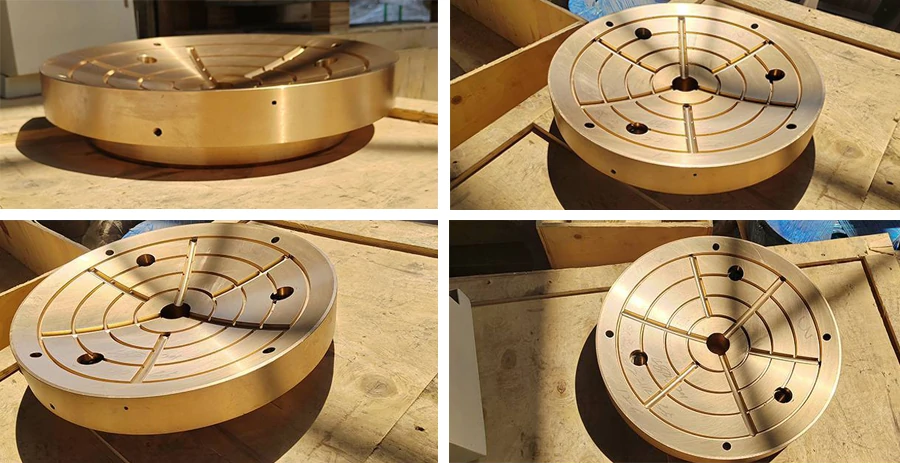
Socket liner wear rarely announces itself with a single obvious symptom. It shows up gradually, first as a slightly wider closed side setting than expected, then as knocking noise under load, and only later as visible scoring on the bronze bore. Checking clearance at every scheduled shutdown, rather than waiting for a symptom, is the difference between a planned liner change and an unplanned one.
Running clearance between the socket liner bore and the cone crusher main shaft typically falls between 0.10 mm and 0.30 mm depending on frame size, and this should be measured with a dial bore gauge rather than judged by hand or by rocking the shaft. Record the reading against the original installation clearance so wear trend, not just a single snapshot, drives the replacement decision.
As a general guideline, replace the socket liner once measured clearance reaches roughly double the original installation value. Running past that point lets the main shaft contact the frame casting directly during peak crushing loads, which turns a routine bronze bushing replacement into a frame repair.
After fitting more cone crushers than I can easily count, the socket liner is the part I always slow junior mechanics down on. It looks like a simple bronze sleeve, and it gets treated that way, which is exactly how avoidable damage happens. Do not drive an oversized liner into the socket with a sledgehammer to save ten minutes, and do not skip cleaning old grease and grit out of the frame bore before fitting a new one. Both habits change the actual interference fit from what the drawing specifies, and neither mistake shows up until the machine has been running for a few hundred hours.
Before installing a replacement socket liner, always measure the main shaft’s spherical seating surface for out-of-round wear. A new liner pressed against a worn seat will show clearance problems again within a few hundred hours, no matter how precisely the liner itself was machined.

Yonsmen produces socket liners using centrifugal casting rather than static sand casting. Molten tin bronze is poured into a mold spinning at high speed, and centrifugal force pushes the denser metal outward toward the working bore while lighter oxides and trapped gas migrate inward, away from the load-bearing surface. The result is a far more uniform grain structure with significantly less internal porosity than a statically cast part of the same size.
That density difference is not cosmetic. Centrifugally cast tin bronze in the ZQSn10-1 family typically reaches a Brinell hardness in the 65 to 75 HB range with markedly lower porosity than static casting, which translates into higher compressive strength at the bore, more consistent machining allowance across the wall thickness, and a working life extension in the range of 20 to 30 percent under equivalent load conditions. It also holds a tighter interference fit after final boring, which is what keeps clearance close to design specification for longer between inspections.
As a crusher parts supplier built around manufacturing rather than trading, Yonsmen backs every socket liner with engineering drawings, in-house casting, and CNC finishing under one roof, so metallurgy and dimensional accuracy are controlled directly instead of audited after the fact.

Every drawing is built from measurements taken directly off the customer’s machine or an original sample, confirming bore taper, oil groove layout, and interference fit before a blank is ever cast.
A mixed fleet of large and small, high and standard precision CNC machines holds tight bore tolerances across parts ranging from small bushings to large frame liners and the bronze cone crusher concave seat, without outsourcing critical finishing steps.
Melting, centrifugal casting, and static casting all happen on our own floor, so alloy composition and cooling rate are controlled at the source rather than inspected after delivery.
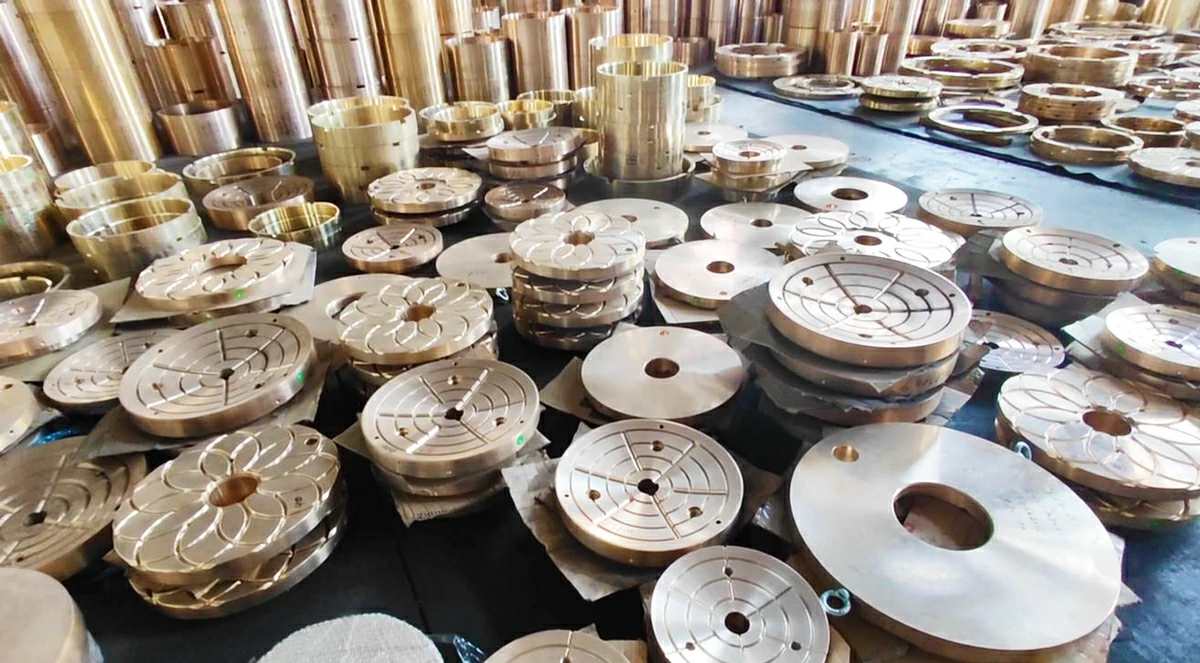
Bore diameter, overall height, wall thickness, and oil groove pattern can all be adjusted to match a worn original or a modified crushing chamber, which matters for older machines where the OEM drawing has drifted from the part actually installed. Because common frame-size blanks are cast and held in stock ahead of orders, only final machining runs against your specific order, which typically cuts delivery from the ten to sixteen weeks common through OEM channels down to a few weeks for standard sizes, and slightly longer for fully custom dimensions.
A socket liner earns its keep quietly, holding the cone crusher main shaft in correct alignment shift after shift without ever being the reason a plant loses production. That reliability comes from three things working together — an accurate drawing, denser centrifugally cast bronze, and finishing on equipment precise enough to hold the fit the drawing calls for. Yonsmen controls all three from raw metal to finished part, which is what lets us back the fit rather than just the paperwork behind it.
Send us your cone crusher model, frame size, or a worn socket liner sample and we will confirm bore dimensions and bronze specification before quoting. Request a Socket Liner Quote
We will provide you with a professional quotation service.Please wait patiently for our account manager to contact you.