
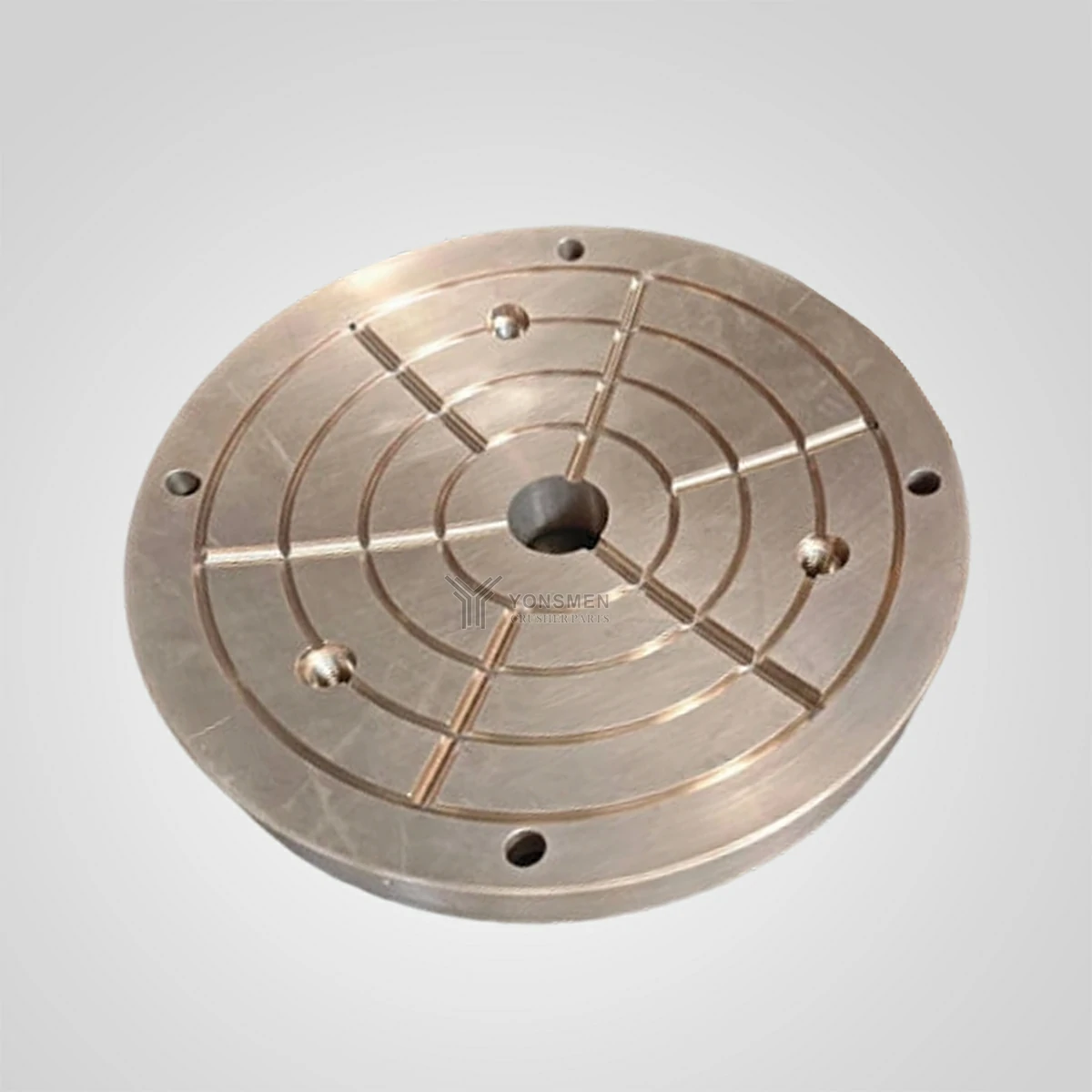
Metso HP800 Cone Crusher Socket Liner 1048724025: The Bronze Bearing That Carries the Full Crushing Load
A 222.6 kilogram bronze casting does not fail quietly. When a socket liner inside a Metso HP800 cone crusher starts to break down, the first sign is rarely a dramatic bang. It is a subtle rise in hydraulic pressure fluctuation on the tramp release accumulator, followed a few days later by a faint knocking sound from the crushing chamber that most operators mistake for a loose liner bolt. I have chased that exact symptom across three separate HP800 installations over the years, and in every case the root cause traced back to the same component seated between the eccentric assembly and the crusher head.
The Role of the Socket Liner Inside the HP800 Crushing Chamber
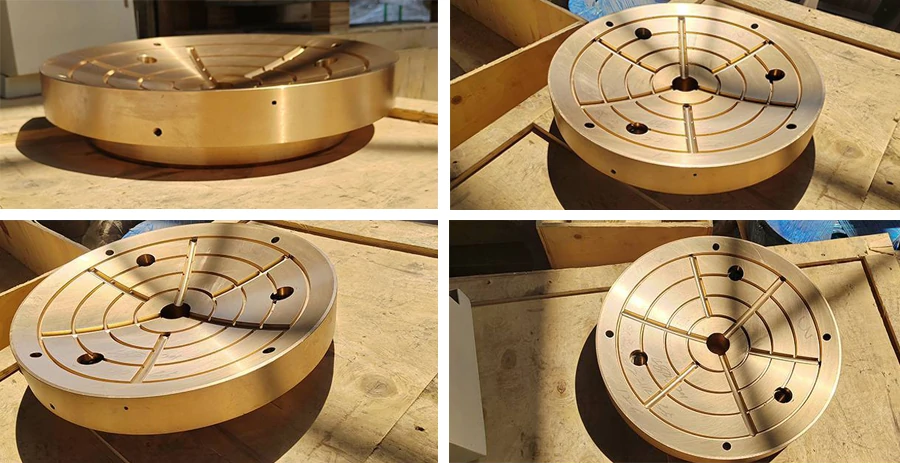
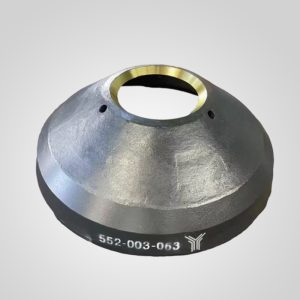
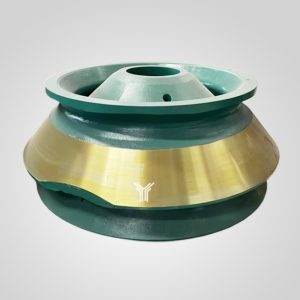
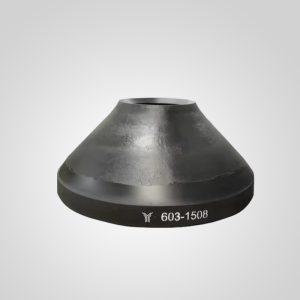
Inside a Metso Nordberg HP800, the socket liner forms the spherical bearing surface that allows the head to gyrate freely while the eccentric bushing drives the crushing motion. Part number 1048724025 identifies the socket liner built specifically for the HP800 platform, machined to a spherical radius that must mate with the head casting within a few hundredths of a millimeter. Because the HP800 carries a rated motor power of 600 kW, or roughly 800 horsepower, and runs a closed side setting range between 16.5 and 51 millimeters depending on cavity configuration, the socket liner absorbs enormous cyclical thrust with every rotation, transferring crushing force from the mainshaft into the head while keeping the gyration angle stable under load. When this bronze bearing surface wears unevenly, closed side setting drifts, product gradation becomes inconsistent, and the eccentric bushing mounted above it starts taking radial loading it was never designed to carry.
Material Specification and Casting Quality
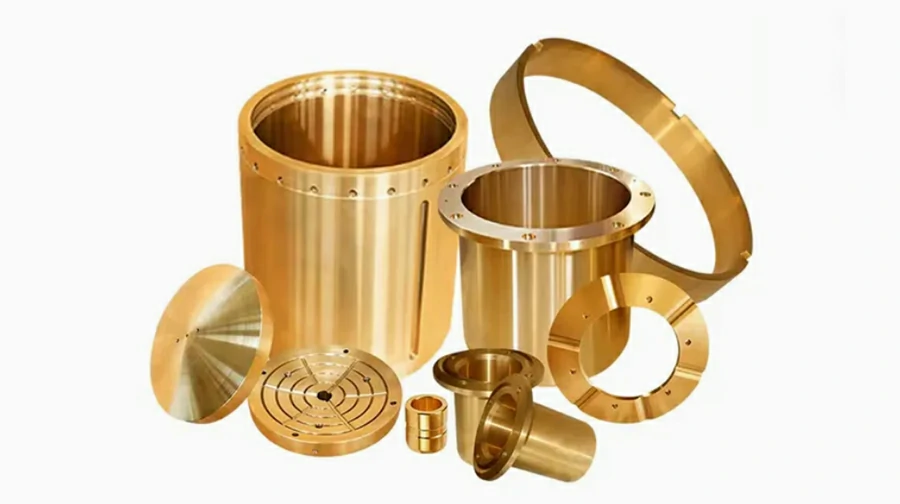
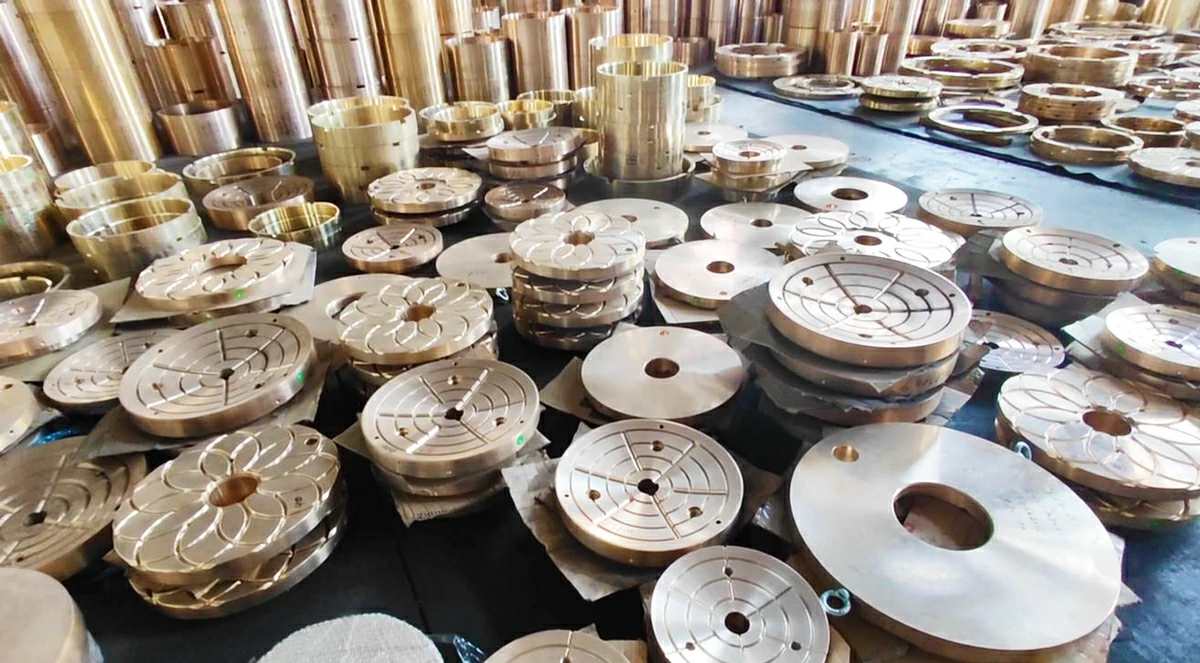
This Metso crusher part is produced from a centrifugally cast tin bronze alloy, generally equivalent to ASTM B505 C93800, chosen because bronze combines high compressive strength with enough embeddability to absorb hard contaminant particles without scoring the far more expensive steel head casting. A properly cast socket liner in this class reaches a Brinell hardness between 65 and 80 HB, a range selected deliberately so the bronze sacrifices itself before the head takes damage. At 222.6 kilograms, part 1048724025 carries a noticeably thicker cross-section than socket liners built for smaller HP series machines, reflecting the higher thrust load generated by the HP800’s larger head diameter and greater installed power compared with an HP300 or HP400 crusher.
| Specification | Detail |
|---|---|
| Part Number | 1048724025 |
| Compatible Machine | Metso Nordberg HP800 Cone Crusher |
| Material Grade | Cast tin bronze, ASTM B505 C93800 equivalent |
| Net Weight | 222.6 kg (490.7 lbs) |
| Brinell Hardness | 65 to 80 HB |
| Closed Side Setting Range | 16.5 to 51 mm (standard cavity) |
| Rated Motor Power | 600 kW (800 hp) |
A Failure I Still Walk New Technicians Through
On a copper operation running two HP800 units side by side, one crusher began showing a two percent increase in fines carryover on the discharge conveyor over roughly six weeks, without ever tripping an automation alarm. Throughput stayed close to nameplate capacity, so the operations team assumed feed gradation had simply shifted at the pit. When we finally pulled the head during a scheduled mantle change, the socket liner showed a clear stepped wear pattern on one side, roughly a millimeter deeper than the opposite face. The eccentric bore above it already carried early scoring. Tracing the history back, the crusher had been running slightly choke fed for weeks after a conveyor modification, which shifted load distribution across the spherical bearing surface long before any downstream metric flagged the problem. Since then, my standing instruction to any crew running an HP800 is straightforward: correlate fines carryover trends with feed distribution changes immediately, rather than waiting for the closed side setting to drift far enough to show up in final product sizing.
Machining Tolerance and Why It Determines Service Life
Two socket liners can share the same part number and the same alloy certificate yet deliver very different service life if the spherical radius is not held to a tight machining tolerance. On the HP800, a deviation of even half a millimeter on the seating radius concentrates load onto a narrow band of contact rather than spreading it across the full spherical surface, and that concentrated loading accelerates wear at a rate that is not linear, often cutting expected service life by a third or more. Reputable manufacturers of this Metso crusher part verify the spherical profile against a coordinate measuring machine or a dedicated radius gauge before the casting leaves the machining cell, and they retain batch-level inspection records rather than relying on a single tolerance figure printed on a catalog page. When a socket liner arrives without that documentation, the safest field practice is to check the contact pattern with bluing compound against the head seat before final installation, confirming even contact across at least eighty percent of the spherical surface.
Choosing a Crusher Parts Supplier for HP800 Wear Components
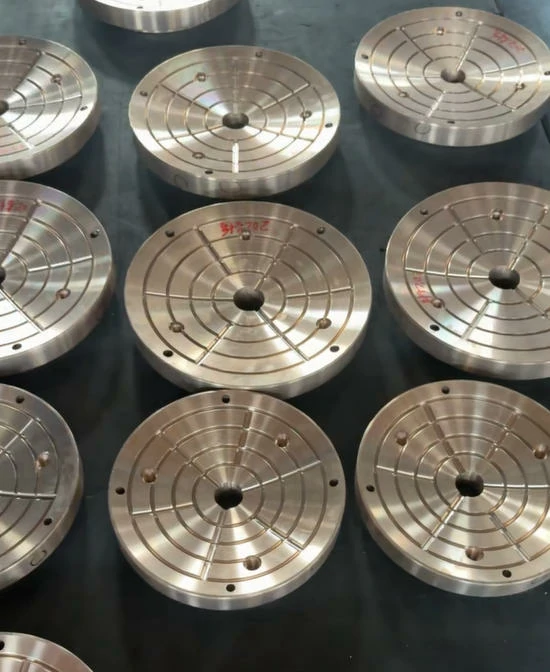
OEM lead times on a large bronze casting like the 1048724025 socket liner routinely stretch past ten to twelve weeks, which pushes most operations running HP800 crushers toward aftermarket sourcing for planned wear part rotation. The decision that actually determines outcomes is not aftermarket versus OEM, but which crusher parts supplier is doing the casting and the finish machining. A crusher parts supplier that maintains consistent alloy sourcing batch to batch, documents Brinell hardness testing, and keeps dimensional records tied to each casting lot gives a maintenance planner the confidence to schedule a socket liner change around a production window instead of reacting to an unplanned shutdown. I have compared liners from suppliers where two units pulled from the same shipment measured within a few thousandths of each other on the spherical radius, and I have also measured liners from a different supplier where the variance between two supposedly identical parts exceeded a millimeter, which is more than enough to trigger the edge loading described above within the first few hundred operating hours.
Installation and Field Maintenance Checklist
- Inspect the head seat for pitting, scoring, or uneven wear before fitting any new socket liner into an HP800 head assembly.
- Verify the lubrication channels on the socket liner align with the head’s oil distribution grooves to prevent localized dry running.
- Apply bluing compound and confirm even seating contact across at least eighty percent of the spherical surface before final torque.
- Follow the manufacturer’s specified fastener torque sequence in multiple passes rather than a single full-torque pass on any retaining bolt.
- Track fines carryover, hydraulic pressure trends, and closed side setting together each shift rather than monitoring them as isolated metrics.
- Re-inspect the socket liner at every scheduled mantle change instead of waiting for a vibration alarm to force an unplanned teardown.
Why the Right Socket Liner Protects the Whole HP800 Drivetrain
A socket liner is a comparatively small line item against the total cost of running an HP800 cone crusher, yet it sits at the mechanical center of the entire crushing motion. Choosing a dimensionally consistent Metso crusher part, verifying the alloy and hardness on arrival, and working with a crusher parts supplier who can document casting traceability all reduce the same risk: unplanned load transfer into the eccentric bushing, the mainshaft, and ultimately the head casting itself. For operations running an HP800 across continuous shifts, that consistency translates directly into predictable maintenance windows, stable product gradation, and a lower total cost per ton crushed over the working life of the machine.
Reviews
There are no reviews yet.