


Symons 4Ft Cone Crusher Socket Liner 4872-5205: Engineering Behind the Bronze Bearing Surface
A cracked socket liner rarely gives warning before it fails. One shift the crusher runs within normal amperage draw, and the next shift the operator hears a metallic knock from the head assembly while the whole plant goes down for an unplanned changeout. After more than twenty years walking crusher decks, from open-pit copper operations to aggregate quarries, I have pulled enough failed liners out of Symons 4Ft cone crushers to know that the socket liner is one of the most underestimated wear items on the machine, even though it carries the entire eccentric thrust load transmitted from the mainshaft to the head.
What the Socket Liner Actually Does Inside a 4Ft Cone Crusher
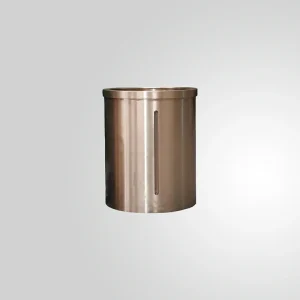
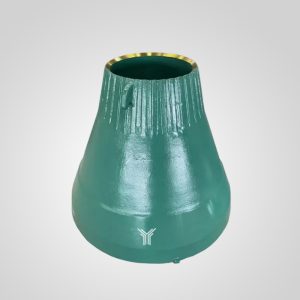
The socket liner sits between the crusher head and the eccentric assembly, forming the spherical bearing surface that allows the head to gyrate while distributing crushing force evenly across the mantle. Part number 4872-5205 is the socket liner specified for the Symons 4Ft cone crusher platform, and its geometry is machined to match the spherical seat of the head casting within a tight dimensional tolerance. Because this component absorbs both radial and axial loading during every gyration cycle, its wear rate directly governs crusher output consistency, closed-side setting accuracy, and downstream product gradation. When a socket liner wears unevenly, the head begins to tilt slightly off-axis, and that misalignment shows up first as increased vibration, then as irregular product size, and eventually as damage to the mainshaft and spider bushing if left unaddressed.
Material Composition and Casting Standards
This bronze crusher part is manufactured from a cast tin bronze alloy, typically comparable to ASTM C93800 or SAE 660 leaded tin bronze, chosen specifically because bronze offers a favorable combination of compressive strength, embeddability for contaminant particles, and a low coefficient of friction against the steel head casting. Sand-cast or centrifugally cast bronze crusher parts of this type generally achieve a Brinell hardness in the range of 60 to 75 HB, soft enough to sacrifice itself rather than score the mating steel surface, yet dense enough to hold dimensional tolerance under sustained compressive cycling. The 4872-5205 socket liner weighs 74.55 kilograms, a mass that reflects the thick cross-section required to carry gyratory load without deforming under peak crushing pressure, particularly when the crusher runs near its rated horsepower on abrasive feed material such as granite or basalt.
| Specification | Detail |
|---|---|
| Part Number | 4872-5205 |
| Compatible Machine | Symons 4Ft (1200mm) Cone Crusher |
| Material Grade | Cast tin bronze, ASTM C93800 equivalent |
| Net Weight | 74.55 kg (164.3 lbs) |
A Field Failure I Still Reference Today
On a limestone quarry retrofit years ago, a maintenance crew installed a replacement socket liner without properly checking the seating surface on the head casting for scoring left over from the previous failure. Within roughly three weeks, the new liner began showing localized wear on one quadrant instead of an even wear pattern across the spherical face. We pulled the head, and the eccentric bore showed clear evidence of edge loading. The root cause was not the liner itself but a failure to lap the head seat before reassembly, a step crews skip more often than they should when they are under production pressure. That single missed step cost the operation nearly nine days of downtime once the head casting also had to be reworked. Since then, my standard field procedure has been simple: always blue the seat and verify the contact pattern before any socket liner goes back into service, regardless of how new or well-machined the replacement part appears.
Sourcing Aftermarket Parts Without Compromising Fit
Aftermarket parts for Symons 4Ft crushers have become the dominant supply route for most operations, largely because OEM lead times on cast bronze components can stretch past twelve weeks while a comparable aftermarket casting ships within days. The risk is not in choosing aftermarket parts generally, but in choosing a wear part supplier that does not control pattern tolerances or alloy composition consistently across production batches. I have seen aftermarket socket liners that measured within a few thousandths of OEM spec sit right next to liners from the same supplier that were undersized by nearly two millimeters on the spherical radius, which is enough to cause premature edge contact within the first hundred hours of operation. A dependable wear part supplier will provide material certification for the bronze alloy, machining tolerance documentation, and ideally a dimensional inspection report specific to the casting batch, not just a generic catalog spec sheet.

Installation and Ongoing Maintenance Practices
- Inspect the head seat for scoring, pitting, or uneven wear before installing any new cone crusher part in that location.
- Confirm the lubrication grooves on the socket liner align correctly with the head’s oil distribution channels to prevent dry-running spots.
- Check the contact pattern with bluing compound to verify the liner seats evenly across at least eighty percent of the spherical surface.
- Torque retaining fasteners following the manufacturer’s specified sequence rather than a single pass, since uneven clamping load is a common contributor to early liner cracking.
- Log operating hours and re-inspect the liner during the next scheduled mantle change instead of waiting for a vibration alarm to trigger the inspection.
Why Dimensional Consistency Matters More Than Price
Operators often compare socket liners purely on unit price, but the real cost comparison should weigh dimensional consistency against downtime risk. A cone crusher part that is machined even slightly outside tolerance will still bolt into place and may run for a short period before uneven load distribution accelerates wear on adjacent components, including the eccentric bushing and mainshaft. On high-throughput operations running two or three shifts, the difference between a properly toleranced socket liner and an inconsistent one can mean the difference between a scheduled changeout during a planned maintenance window and an unplanned failure that stops the entire crushing circuit.
Selecting a Long-Term Wear Part Supplier
Choosing where to source a socket liner or any other bronze crusher part for a Symons 4Ft cone crusher should be treated as a long-term supplier relationship decision rather than a single transactional purchase. A cone crusher part supplier who understands the specific failure modes of the 4Ft platform, maintains consistent alloy sourcing, and can document casting traceability gives maintenance teams the confidence to plan changeouts around production schedules instead of reacting to unexpected part failures. For operations running Symons 4Ft crushers continuously, that reliability translates directly into fewer unplanned shutdowns, more predictable product gradation, and a lower total cost per ton crushed over the life of the machine.
| Weight | 74.55 kg |
|---|
Reviews
There are no reviews yet.