
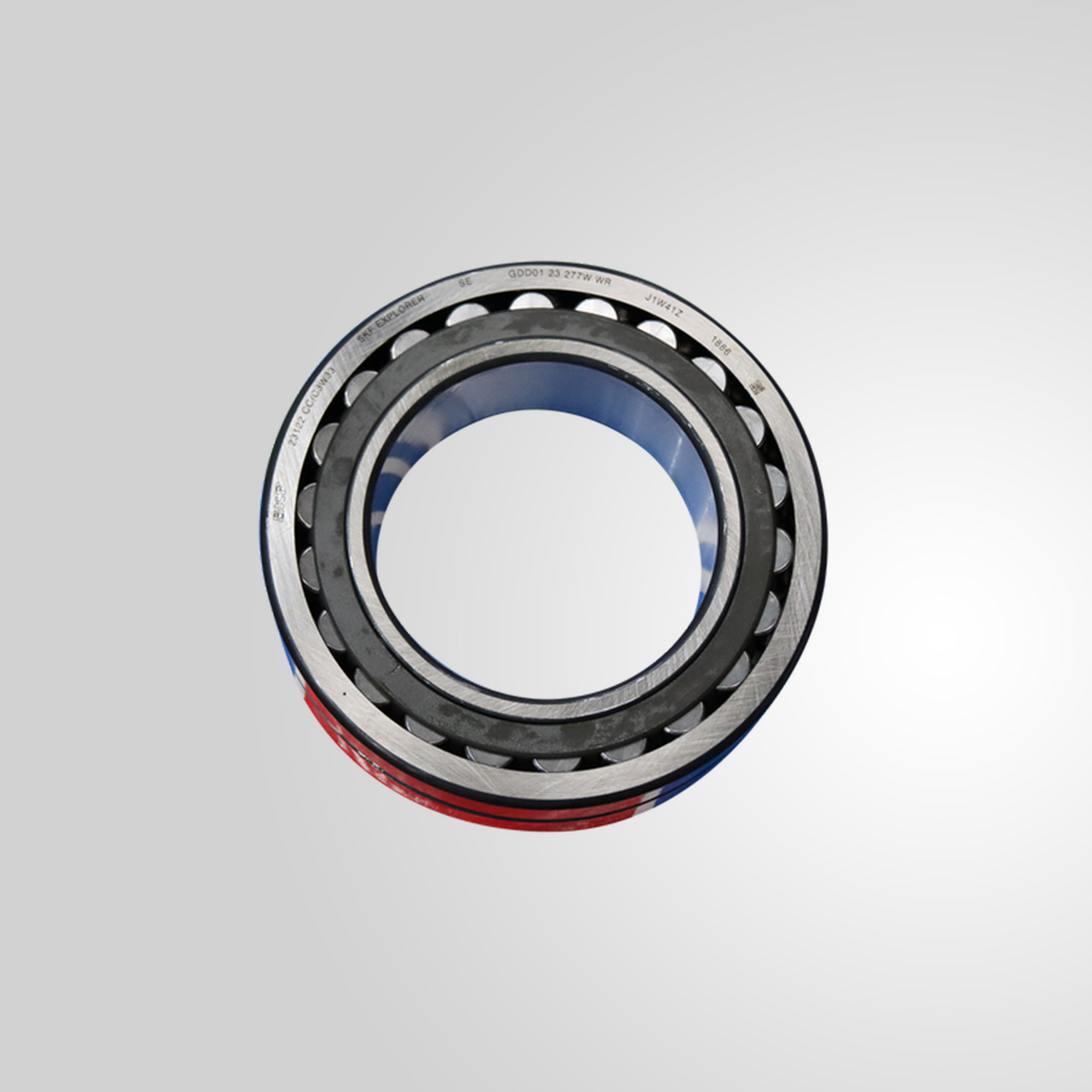
Sandvik CS440 Cone Crusher Roller Bearing 868.0282-00 is engineered for high radial and axial load zones in secondary crushing circuits. Manufactured with ASTM A485 high-carbon chromium steel, paired with a C93800 bronze cage, and hardened to 58–62 HRC, this bearing ensures resistance against spalling and edge loading. Precision-ground to ISO P5 tolerance with Ra ≤ 0.8 μm raceway finish, it directly reduces vibration, heat generation, and unplanned downtime in CS440 platforms.
Technical Specifications
| Parameter | Specification |
| Product Name | Sandvik CS440 Cone Crusher Roller Bearing |
| Part Number | 868.0282-00 |
| Bearing Type | Spherical Roller Bearing (Heavy Duty) |
| Material – Rings & Rollers | ASTM A485 / EN 100Cr6 (GCr15 Equivalent) |
| Cage Material | C93800 Phosphor Bronze |
| Hardness (Rings & Rollers) | 58–62 HRC |
| Cage Hardness | HB 90–120 |
| Surface Roughness | Ra ≤ 0.8 μm (Raceway) |
| Dimensional Tolerance | ISO P5 (±0.01 mm critical fits) |
| Radial Clearance | C3 / C4 (customized for thermal expansion) |
| Operating Temperature | -30°C to +150°C |
| Lubrication Type | ISO VG 220–320 Gear Oil / EP Additive |
| Recommended Mounting Torque | 450–600 Nm (depending on shaft size) |
| Applicable Machine | Sandvik CS440 Cone Crusher |
| Inspection Standard | Ultrasonic Testing + Magnetic Particle Inspection |
Detailed Introduction
Axial misalignment exceeding 0.05 mm and shock loads above 160 MPa are the two most common reasons why standard aftermarket bearings fail prematurely in CS440 crushers. Sandvik CS440 Cone Crusher Roller Bearing 868.0282-00 is specifically engineered to handle these failure modes through material selection, microstructure control, and precision machining.
Material Composition and Failure Resistance
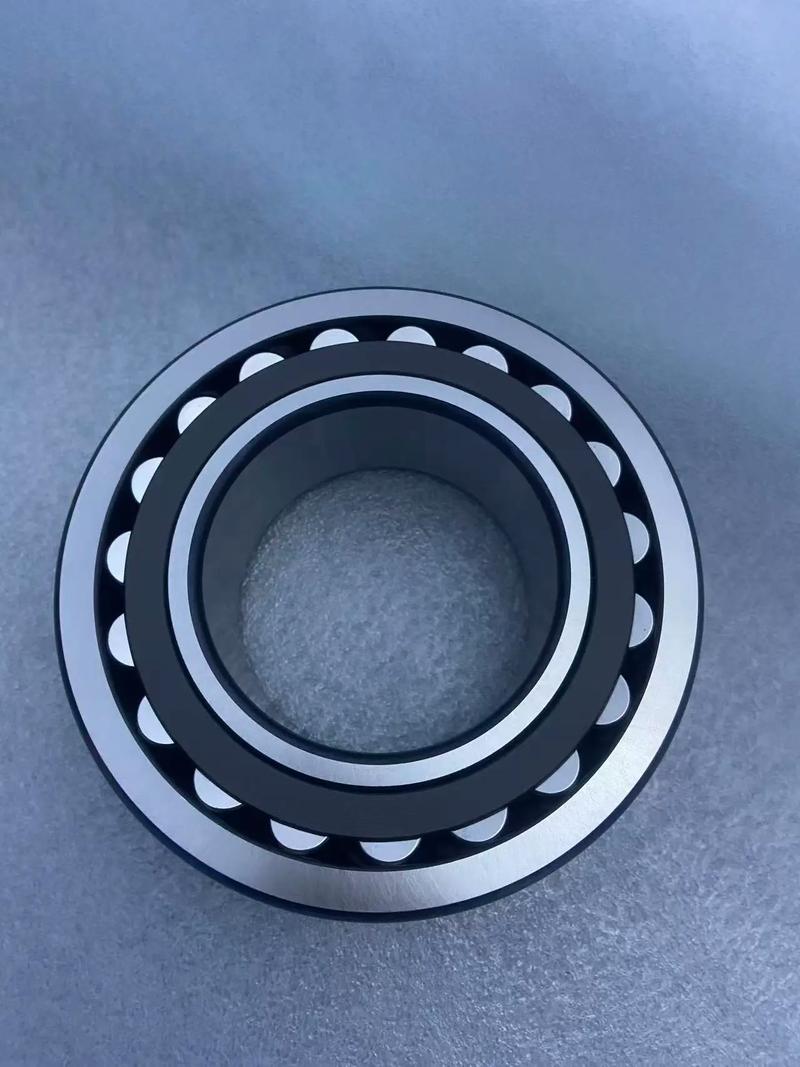
The inner and outer rings, along with the rolling elements, are manufactured from ASTM A485 high-carbon chromium bearing steel. With a carbon content of approximately 1.0% and chromium at 1.5%, this material delivers a martensitic microstructure after heat treatment, ensuring hardness in the range of 58–62 HRC. This hardness range is critical: below 56 HRC, abrasive wear accelerates; above 63 HRC, brittleness increases the risk of micro-cracking under impact loads.
In crushing environments where dust contamination exceeds ISO 4406 cleanliness levels of 20/18/15, surface fatigue manifests as spalling on raceways. The Ra ≤ 0.8 μm finish reduces asperity interaction, minimizing stress concentration points that initiate fatigue cracks.
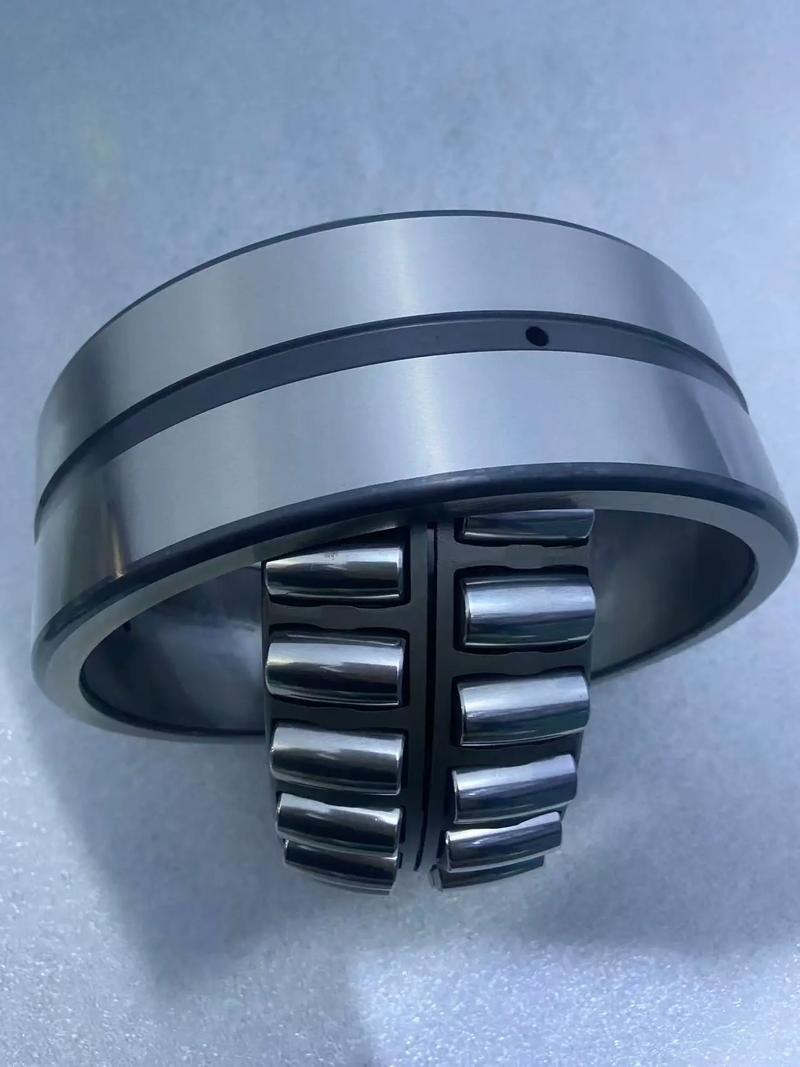
The cage is manufactured from C93800 phosphor bronze, a material chosen for its excellent embeddability and anti-galling properties. Compared to low-cost steel cages, bronze cages significantly reduce the risk of galling during lubrication starvation events. This becomes critical when oil film thickness drops below 1.5 μm under high load conditions.
Precision and Load Distribution
The bearing is machined to ISO P5 tolerance class, ensuring dimensional accuracy within ±0.01 mm for critical fits. This precision directly influences load distribution across the rolling elements. Uneven load sharing, even by 10%, can increase localized stress by over 25%, accelerating mushrooming deformation on roller ends.
Radial clearance options such as C3 or C4 are selected based on operating temperature. In CS440 crushers, shaft expansion can exceed 0.03 mm at operating temperatures around 90°C. Without proper clearance compensation, preload conditions develop, leading to excessive heat generation and lubricant breakdown.
Installation Guidelines for Field Engineers
Proper installation determines whether this bearing reaches its designed service life of 8,000–12,000 operating hours.
- Shaft tolerance should be maintained at h6, with roundness error less than 0.01 mm.
- Housing bore tolerance recommended at H7 to ensure correct interference fit.
- Mounting force should be applied using hydraulic nuts or induction heaters, avoiding direct hammering.
- Recommended tightening torque for lock nuts ranges between 450–600 Nm depending on shaft diameter.
- Measure axial clearance after installation; target value typically 0.12–0.18 mm.
Lubrication and Oil Analysis Strategy
This bearing relies on a stable lubrication film to prevent metal-to-metal contact. ISO VG 220–320 gear oil with extreme pressure additives is recommended. However, lubrication is not just about oil selection—it is about monitoring degradation.
Routine oil analysis should track:
- Iron (Fe) content: >100 ppm indicates early wear
- Viscosity deviation: ±10% signals thermal degradation
- Particle count: ISO cleanliness target ≤ 18/16/13
Elevated copper levels in oil analysis often indicate cage wear. Since the cage is made of C93800 bronze, this becomes a leading indicator of lubrication failure before catastrophic bearing seizure occurs.
Failure Modes in Low-Cost Aftermarket Bearings
Many aftermarket alternatives use lower-grade materials such as GCr15 without controlled heat treatment or substitute cages made from stamped steel. These compromises lead to:
- Spalling within 1,500–3,000 hours due to poor surface finish (Ra ≥ 1.6 μm)
- Galling under marginal lubrication conditions
- Uneven hardness distribution causing micro-cracking
Additionally, tolerance deviations beyond ±0.03 mm create misalignment, increasing vibration levels and accelerating fatigue.
Total Cost of Ownership (TCO) Analysis
While low-cost bearings may reduce upfront procurement costs by 20–30%, the total cost over a 12-month period tells a different story.
| Factor | OEM Standard Bearing | Low-Cost Aftermarket |
| Initial Cost | 100% | 70% |
| Service Life | 8,000–12,000 hours | 2,000–4,000 hours |
| Downtime Cost | Low | High |
| Maintenance Frequency | Planned | Unplanned |
| Total Annual Cost | Baseline | +35% to +60% |
In high-throughput mining operations where downtime costs exceed $5,000 per hour, the use of Sandvik CS440 Cone Crusher Roller Bearing 868.0282-00 significantly reduces unexpected failures and stabilizes production output.
Conclusion: Engineering Value Beyond Specifications
This bearing is not just a replacement component—it is a load-bearing system engineered to withstand shock loads, contamination, and thermal expansion typical of cone crushing environments. From ASTM A485 steel microstructure to C93800 cage durability and ISO P5 precision, every parameter directly translates into reduced vibration, longer service intervals, and predictable maintenance cycles.
For operations running Sandvik CS440 platforms under continuous load, selecting the correct bearing is not a procurement decision—it is a reliability strategy.
Reviews
There are no reviews yet.