

Jaw Crusher Pitman
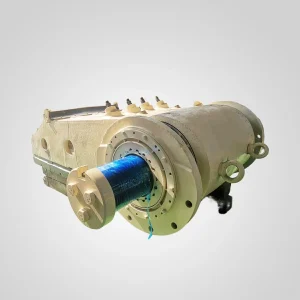
Component Name: Jaw Crusher Pitman Assembly
Applicable Crusher Types: Metso C Series, Sandvik JM Series, Terex Finlay, Telsmith, FLSmidth, and equivalent primary jaw crushers
Primary Material Option 1: Cast Steel — ASTM A148 Grade 90-60
Primary Material Option 2 : Alloy Steel — 42CrMo4 or 35CrMo (quench-and-temper heat treatment)
Primary Material Option 3 : High Manganese Steel — Mn13Cr2 / Mn18Cr2 / Mn22Cr2 (ASTM A128)
Manufacturing Process : Precision Casting or Closed-Die Forging
Heat Treatment : Quench-and-Temper / Induction Hardening at eccentric bore surface
Jaw Crusher Pitman Manufacturers — Industry Specifications Reference Table
| Parameter | Value / Industry Standard |
|---|---|
| Component Name | Jaw Crusher Pitman Assembly |
| Applicable Crusher Types | Metso C Series, Sandvik JM Series, Terex Finlay, Telsmith, FLSmidth, and equivalent primary jaw crushers |
| Primary Material Option 1 | Cast Steel — ASTM A148 Grade 90-60 |
| Primary Material Option 2 | Alloy Steel — 42CrMo4 or 35CrMo (quench-and-temper heat treatment) |
| Primary Material Option 3 | High Manganese Steel — Mn13Cr2 / Mn18Cr2 / Mn22Cr2 (ASTM A128) |
| Manufacturing Process | Precision Casting or Closed-Die Forging |
| Heat Treatment | Quench-and-Temper / Induction Hardening at eccentric bore surface |
| Body Hardness (as-machined) | HB 180–280 |
| Eccentric Bore Surface Hardness | ≥ 58 HRC (induction-hardened zone) |
| Eccentric Bore Roundness / Concentricity | ≤ 0.03 mm |
| Toggle Seat Surface Roughness | Ra ≤ 1.6 μm |
| Eccentric Bore Fit Tolerance | H7 per ISO 286-1 |
| Standard Body Length Range | 700–1,200 mm (model-dependent) |
| Standard Bore Diameter Range | 200–350 mm (model-dependent) |
| Reference Assembly Weight (C100) | 5,668 kg (OEM Part No. 910557) |
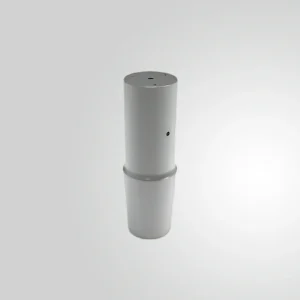
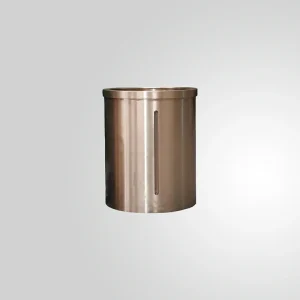
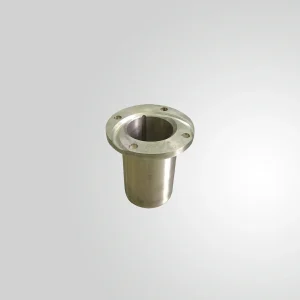
| Assembly Sub-Components | Pitman arm body, Eccentric shaft, Spherical roller bearings, Tightening bushing, Distance sleeve, Bearing housing, Cover, Lock plate, Eye bolt, Washers, Screws |
| Lubrication System | Integrated grease nipples and oil channels; ISO VG 320 mineral oil or equivalent lithium-complex grease NLGI Grade 2 |
| Surface Treatment (body) | Anti-corrosion spray paint or powder coating |
| Tensile Strength (42CrMo4, Q&T) | ≥ 900 MPa |
| Yield Strength (42CrMo4, Q&T) | ≥ 750 MPa |
| Impact Toughness (Charpy, -20°C) | ≥ 47 J |
| Quality Inspection Protocol | Chemical analysis (OES), hardness test (5-point), ultrasonic flaw detection (ASTM E114), dimensional inspection, surface roughness measurement |
| Quality Certification | ISO 9001:2008 |
| Delivery Lead Time (standard) | 15–30 days (OEM-spec casting); 7–15 days (stocked models) |
| Minimum Order Quantity | 1 set |
| Standard Warranty | 12 months from installation date |
Jaw Crusher Pitman Manufacturers: What the Spec Sheet Doesn’t Tell You — But Your Downtime Bill Does
A jaw crusher running a 42CrMo4 pitman at 280 RPM generates cyclic bending stress exceeding 350 MPa at the eccentric bore root radius with every stroke. Over a single 10-hour shift, the pitman completes roughly 168,000 load cycles. At that fatigue frequency, a bore roundness deviation of just 0.08 mm — well within the tolerance that many low-cost manufacturers consider acceptable — generates micro-slip between the pitman and the bearing outer ring. Within 600 to 800 operating hours, that micro-slip initiates fretting fatigue. The fretting crack propagates through the bore wall, and the result is a catastrophic bore seizure that destroys the eccentric shaft journal, both spherical roller bearings, and the bearing housing in a single event. The replacement cost for those associated components typically runs three to five times the original pitman price.
This is the engineering reality that separates jaw crusher pitman manufacturers who build to actual OEM tolerance from those who build to a price. The parameter that matters most — eccentric bore concentricity ≤ 0.03 mm — does not appear prominently in most supplier datasheets. This page documents the full technical specification framework for evaluating pitman assemblies across manufacturers, material grades, and duty cycles.
Mechanical Function: Why the Pitman Is the Most Stress-Critical crusher part in the Drive Train
The jaw crusher pitman assembly is the sole kinematic link between the eccentric shaft’s rotational output and the movable jaw’s reciprocating crushing stroke. It does not simply transmit force — it amplifies stroke from top to bottom of the crushing chamber. In well-engineered C Series-type jaw crushers, the stroke at the bottom of the cavity is measurably longer than at the top, creating an increasing open area that accelerates material throughput and enables inter-particle crushing.
The pitman body must simultaneously resist three independent stress modes in each crushing cycle:
- Compressive bending load during the power stroke, when the movable jaw closes against the feed material
- Tensile recoil stress during the return stroke, driven by the tension rod and spring system pulling the jaw back open
- Torsional stress from asymmetric feed — a condition that occurs whenever feed material is not uniformly distributed across the full jaw width
The pitman arm body must provide stiffness against all three simultaneously. This is why the rib geometry, fillet radii at stress concentration points, and bore wall thickness are not interchangeable between manufacturers. A pitman with 15% less wall thickness at the bore may weigh less and cost less to cast, but its fatigue life under combined bending and torsion can be 40% shorter than the OEM-specified geometry.
Material Selection by Application: Casting vs. Forging, Steel Grades, and Heat Treatment
Jaw crusher pitman manufacturers currently offer three primary material paths, each with a distinct performance profile and cost envelope.
Cast Steel — ASTM A148 Grade 90-60
Cast steel is the most common pitman body material for medium-duty applications. ASTM A148 Grade 90-60 specifies a minimum tensile strength of 620 MPa (90 ksi) and a minimum yield of 415 MPa (60 ksi). Castings are economical to produce in complex near-net shapes and allow integrated rib structures and lubrication passage geometries that would be difficult to forge. The limitation is porosity: even with modern casting process controls, internal micro-porosity above 3 mm equivalent disc reflector (per ASTM E114 ultrasonic testing) creates initiation sites for fatigue cracking under high-cycle loading. Any credible jaw crusher pitman manufacturer should supply ultrasonic test certificates confirming porosity acceptance for each cast pitman body.
Alloy Steel — 42CrMo4 / 35CrMo Quench-and-Temper
For heavy-duty primary crushing applications — granite, iron ore, copper porphyry, or any feed with a Bond Work Index above 14 kWh/t — alloy steel pitmans manufactured from 42CrMo4 or 35CrMo with a full quench-and-temper heat treatment cycle deliver superior fatigue resistance. The 42CrMo4 grade achieves tensile strength ≥ 900 MPa, yield strength ≥ 750 MPa, and Charpy impact toughness ≥ 47 J at -20°C after proper heat treatment. The chromium-molybdenum addition suppresses temper embrittlement and maintains toughness at the low temperatures encountered in underground or arctic mining installations.
Induction hardening of the eccentric bore contact surface to ≥ 58 HRC creates a hard, wear-resistant outer zone over a tough core — the combination that best resists both the sliding wear of the bearing fit and the fatigue crack propagation in the bore wall. The induction-hardened layer depth should be verified by the manufacturer and specified at 3–5 mm for C-Series class pitmans.
Forged vs. Cast Pitman Bodies
Forged pitmans exhibit superior grain flow alignment and approximately 20–30% higher fatigue strength compared to cast equivalents of the same alloy. The forging process closes micro-porosity and orients the grain structure along the primary stress direction. For crushers operating above 300 RPM with continuous hard-rock primary duty — a regime where the pitman completes more than 180,000 load cycles per 10-hour shift — forged pitmans from qualified jaw crusher pitman manufacturers represent the lower total cost of ownership despite a 25–40% higher initial unit price.
Pro-Tip (Field Experience): On a granite quarry project in Southern Europe, we replaced a failed cast pitman (service life: 4,100 hours) with a forged 42CrMo4 unit from a certified jaw crusher pitman manufacturer. The forged pitman accumulated 9,800 hours before showing the first detectable bore wear requiring action. The forged unit cost 32% more at purchase but delivered 139% more service hours — a verified cost-per-operating-hour saving of 46%.
Assembly Sub-Components and Their Individual Failure Modes
A fully assembled pitman unit as supplied by reputable jaw crusher pitman manufacturers includes the following sub-components, each with a defined failure mode that procurement teams must track separately:
- Pitman arm body — Primary failure mode: eccentric bore fretting fatigue. Inspection interval: bore diameter measurement every 2,000 hours; reject if bore diameter exceeds H7 upper deviation.
- Eccentric shaft — Primary failure mode: journal surface scoring due to bearing outer ring spin. Inspection criterion: journal roughness Ra ≤ 0.8 μm; hardness ≥ 58 HRC induction-hardened surface.
- Spherical roller bearings — Primary failure mode: fatigue spalling of raceways due to overloading or inadequate lubrication. Oil analysis trigger: Fe particle count above 150 ppm or Cu above 30 ppm in the lubrication oil sample.
- Tightening bushing — Primary failure mode: axial creep under alternating thermal cycles. Re-torque verification required at 500-hour intervals using the manufacturer’s specified torque value (typically 850–1,200 N·m depending on crusher size).
- Toggle seat — Primary failure mode: adhesive galling when toggle plate spring tension falls below specification. Surface roughness at toggle seat must be maintained at Ra ≤ 1.6 μm. Any scoring exceeding 0.5 mm depth requires seat resurfacing before reinstalling the toggle plate.
- Bearing housing and cover — Primary failure mode: fretting corrosion at the housing bore when housing clamp bolt load relaxes. Inspect housing bore for ovality every 4,000 hours.
How to Evaluate Jaw Crusher Pitman Manufacturers: A Procurement Checklist
The market includes a wide spectrum of jaw crusher pitman manufacturers, from foundries supplying OEM-certified castings with full material traceability to trading companies reselling untested components with no dimensional verification. The following technical requirements define a minimum acceptable standard for procurement qualification:
- Material certification by optical emission spectrometry (OES), with certificate referencing heat batch number traceable to the finished casting or forging
- Hardness test results at a minimum of five body locations, with all readings within the specified HB 180–280 range for the pitman body and ≥ 58 HRC at the bore induction-hardened zone
- Ultrasonic flaw detection (UT) report per ASTM E114, confirming no internal defects exceeding 3 mm equivalent disc reflector in the bore zone and 5 mm in the body
- Dimensional inspection report for eccentric bore diameter, roundness (≤ 0.03 mm), toggle seat dimensions, and overall length — issued on a per-unit basis, not as a generic production average
- Surface roughness measurement certificate for toggle seat contact faces (Ra ≤ 1.6 μm) and eccentric bore landing zones
- ISO 9001:2008 or equivalent quality management certification with scope covering casting or forging, machining, heat treatment, and final inspection
- Confirmed 12-month warranty from installation date, covering material and manufacturing defects — not limited to transport damage
Manufacturers who cannot provide the UT flaw detection report and the per-unit dimensional inspection certificate should be disqualified regardless of price. Those two documents are the only objective evidence that the component leaving the factory will function within OEM tolerance — and they are the documents that make the difference between a pitman that runs 8,000 hours and one that fails at 800.
Lubrication Maintenance Protocol for Extended Pitman Service Life
Lubrication failure is the single most preventable cause of premature pitman assembly damage. The following protocol, developed from active quarry and underground mining installations, applies across pitman assemblies from all jaw crusher pitman manufacturers:
- Eccentric shaft bearing grease interval: every 250 operating hours (or 500 hours if the installation uses a centralized automatic lubrication system calibrated to manufacturer specification)
- Grease type: lithium-complex NLGI Grade 2, EP (extreme pressure) additive, drop point ≥ 220°C; do not mix grease types — mixing incompatible thickener systems causes oil separation and loss of film strength
- Oil analysis sampling interval: every 30 days for jaw crushers in continuous hard-rock primary duty; every 60 days for limestone or recycling applications
- Iron (Fe) particle action threshold: 150 ppm — schedule bearing inspection within the next 100 operating hours
- Copper (Cu) particle action threshold: 30 ppm — plan bearing replacement within 200 operating hours; rising Cu indicates bronze cage wear in the spherical roller bearing
- Silicon (Si) action threshold: 25 ppm — indicates dust ingress past the labyrinth seal; replace seals and flush the lubrication circuit before the next production shift
- Bearing housing operating temperature limit: 70°C above ambient; any sustained exceedance indicates lubrication starvation or bearing preload misalignment
Compatible Models and Application Scope
Qualified jaw crusher pitman manufacturers supply pitman assemblies compatible with the following crusher families and their equivalent aftermarket models. Each crusher model requires a dimensionally verified pitman specific to its eccentric bore diameter, body length, toggle seat geometry, and weight class:
- Metso Nordberg C Series: C80, C96, C100, C106, C110, C116, C120, C125, C140, C150, C160, C200 — reference assembly weight range from approximately 1,200 kg (C80) to 8,500 kg (C200)
- Sandvik JM Series: JM1108, JM1208, JM1211, JM1312, JM1513, JM1415
- Terex Finlay J Series and equivalent Pegson / Extec models
- Telsmith 3242, 3648, 4248, 5060 jaw crushers
- FLSmidth Fuller-Traylor jaw crusher series
When sourcing a replacement pitman assembly, always provide the OEM part number (for example, 910557 for the C100 pitman assembly at 5,668 kg) or the crusher model, serial number, and eccentric shaft bore diameter to the manufacturer. Dimensional deviation of even ±0.1 mm from the specified bore diameter — a figure within the tolerance band of some non-OEM suppliers — will cause bearing outer ring rotation within the bore under operating loads, leading to shaft journal scoring and an unplanned major overhaul within 500 to 1,000 operating hours.
All manufacturer names, part numbers, model numbers, and descriptions are used for reference and identification purposes only, they are owned by the respective machine manufacturer, including but not limited to FLSmidth®, Metso®, thyssenkrupp®, and Sandvik®. All parts supplied are manufactured and warranted by yonsmen and are not manufactured by or purchased from the Original Equipment Manufacturer. yonsmen has no association with the OEM and does not intend to give this impression.

Reviews
There are no reviews yet.