
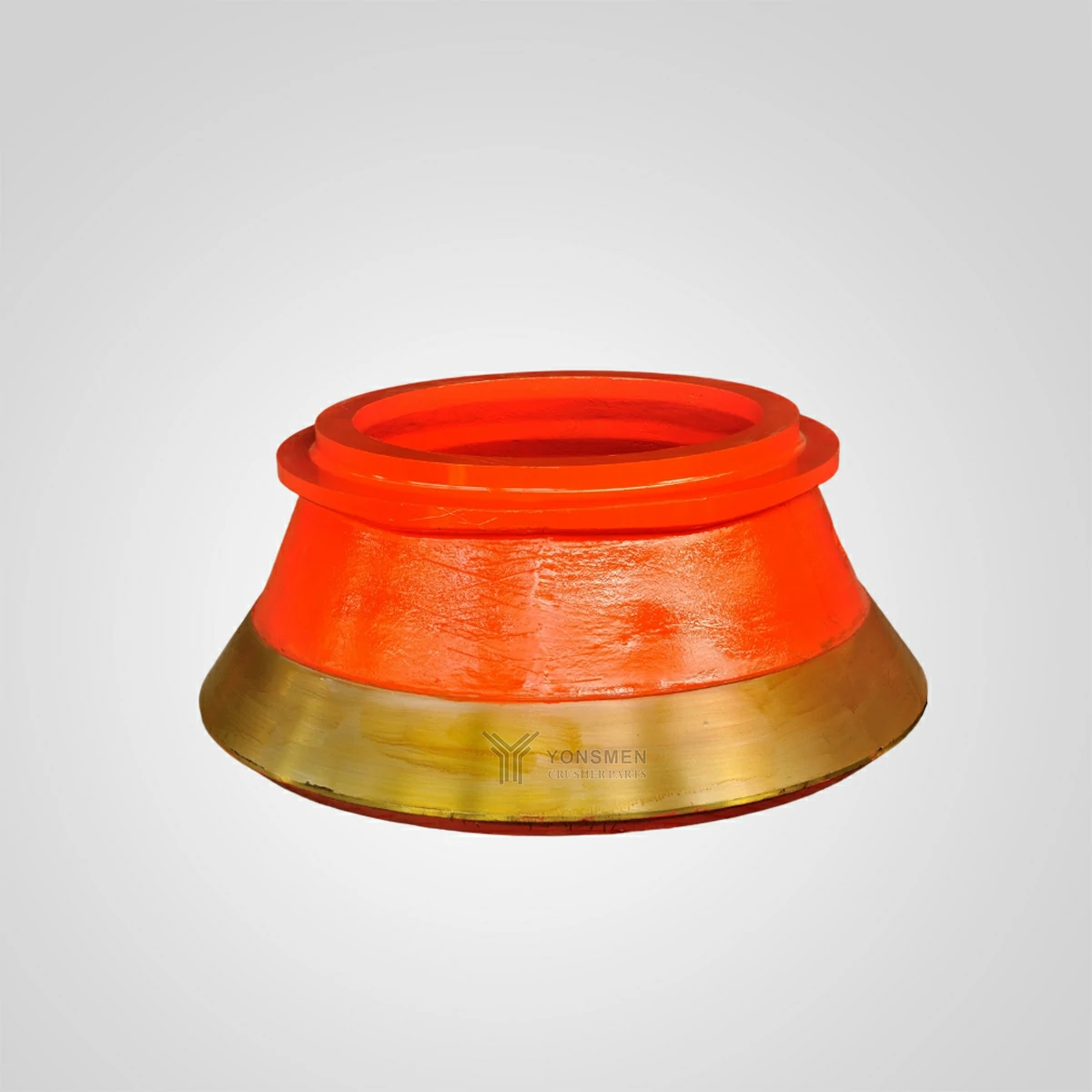
Technical Specifications for Raptor XL900 Crusher Parts Bowl Liner — Manganese Grade and Chamber Geometry Guide
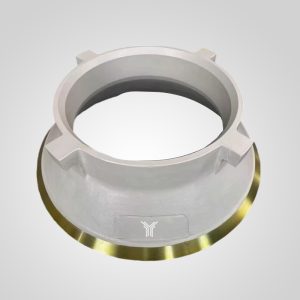
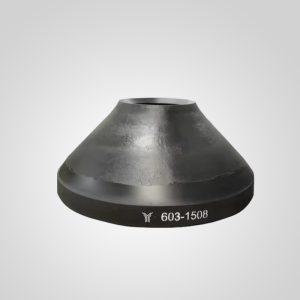
Component Name: Bowl Liner (Concave)
Crusher Compatibility : FLSmidth Raptor XL900 Cone Crusher
Standard Feed Opening (Coarse): 370 mm / 14.75 in
Minimum Closed Side Setting (CSS): 25 mm – 30 mm (Chamber dependent)
Bowl Liner Weight (Dry/No Backing) : 2,631 kg / 5,800 lbs (±5% casting tolerance)
Bowl Liner Weight (With Backing) : 3,878 kg / 8,550 lbs (±5% casting tolerance
The Raptor XL900 bowl liner is the stationary crushing interface that defines the secondary or tertiary chamber geometry. Technical data for this component is derived from verified FLSmidth Raptor series brochures and industrial casting standards. Parameters marked as “site configuration dependent” must be confirmed against the machine serial number to ensure correct chamber profile matching.
| Parameter | Verified Value / Specification |
| Component Name | Bowl Liner (Concave) |
| Crusher Compatibility | FLSmidth Raptor XL900 Cone Crusher |
| Standard Feed Opening (Coarse) | 370 mm / 14.75 in |
| Minimum Closed Side Setting (CSS) | 25 mm – 30 mm (Chamber dependent) |
| Bowl Liner Weight (Dry/No Backing) | 2,631 kg / 5,800 lbs (±5% casting tolerance) |
| Bowl Liner Weight (With Backing) | 3,878 kg / 8,550 lbs (±5% casting tolerance) |
| Standard Material Grade | Mn18Cr2 (Austenitic Manganese Steel) |
| Initial Hardness (As-Cast) | 200 – 250 HBW |
| Surface Hardness (Work-Hardened) | 450 – 550 HBW (Depth up to 15-18 mm) |
| Dimensional Profile Tolerance | ±2.0 mm on crushing face; ±0.5 mm on seating surfaces |
| Heat Treatment | Solution Annealing (1,050°C–1,100°C) + Water Quench |
| HS Code | 84749000 |
Chamber Geometry and Wear Distribution in High-Pivot Designs
The Raptor XL900 operates with a high pivot point and a large crushing stroke, which creates a more parallel-sided crushing action compared to legacy cone designs. For the bowl liner, this means the wear zone extends further up the chamber. If a replacement bowl liner is cast with a profile that does not account for the XL900’s specific stroke and pivot geometry, the feed zone will bridge prematurely or the parallel zone will wear through before the upper manganese is fully utilized. Sourcing Raptor XL900 crusher parts requires a profile that maintains the design nip angle throughout the liner’s service life.
Material selection for the XL900 typically focuses on Mn18Cr2. For ores with a Bond Work Index exceeding 16 kWh/t or silica content above 25%, Mn22Cr2 provides superior work-hardening depth. However, using Mn22Cr2 in low-impact or fine-feed applications is often a waste of capital, as the material may never reach its peak surface hardness of 550 HBW, leading to “mushy” wear and poor product shape.
Backing Compound Failure and Structural Cracking
A recurring high-risk issue in Raptor XL900 crusher parts management is the improper application of backing compound during bowl liner installation. Because the XL900 generates significant crushing forces—driven by its 900 hp motor—any void or “soft spot” in the epoxy or zinc backing allows the manganese liner to flex against the adjustment ring. This flexing initiates fatigue cracks from the back of the liner toward the crushing face. I have seen 2,600 kg liners fail within 400 hours because the backing compound was poured into a bowl that was still contaminated with old grease and dust, preventing a structural bond. Ensuring the adjustment ring is cleaned to Ra 3.2 μm and the backing is mixed at the correct ambient temperature ratio is the single most effective way to prevent premature liner scrap.
Frequently Asked Questions
What is the difference between “Dry” and “Wet” weights for Raptor XL900 bowl liners?
The “Dry” weight of 2,631 kg refers to the manganese casting alone. The “Wet” weight of 3,878 kg includes the high-density backing compound required to seat the liner within the adjustment ring. When calculating crane lift requirements for Raptor XL900 crusher parts, always use the wet weight or the total weight of the bowl assembly to ensure safety factors are maintained.
Can I use a “Short Head” bowl liner in a Standard Raptor XL900 configuration?
No. The Standard and Short Head configurations use different head diameters and pivot geometries. Installing a Short Head bowl liner in a Standard machine will result in a mismatched crushing chamber that will cause immediate eccentric loading and potential structural damage to the adjustment ring threads.
How often should I measure bowl liner wear on the XL900?
Given the 1,270 TPH capacity of the machine, wear should be measured every 250–500 operating hours using a multi-point grid. Because of the high pivot point, wear may be more aggressive in the mid-chamber. Recording these measurements allows you to predict the exact week of replacement, avoiding the 15-20% throughput loss that occurs when running over-worn Raptor XL900 crusher parts.
All manufacturer names, part numbers, model numbers, and descriptions are used for reference and identification purposes only, they are owned by the respective machine manufacturer, including but not limited to FLSmidth®, Metso®, thyssenkrupp®, and Sandvik®. All parts supplied are manufactured and warranted by yonsmen and are not manufactured by or purchased from the Original Equipment Manufacturer. yonsmen has no association with the OEM and does not intend to give this impression.
Reviews
There are no reviews yet.