The Physics of Precision: Deconstructing Particle Size in Multi-Cylinder Cone Crushers
In the high-stakes environment of aggregate production, the difference between profit and loss is often measured in millimeters. As an engineer who has spent two decades crawling inside crushing chambers and analyzing discharge curves, I can tell you that a multi-cylinder cone crusher is not just a machine; it is a complex system of dynamic forces. The 702 series, renowned for its robust architecture, relies on the synchronized action of multiple hydraulic cylinders to achieve what we call “inter-particle comminution” or layer crushing. Unlike single-cylinder models that rely on a simpler pivoting motion, the multi-cylinder design applies a uniform, high-frequency compressive force around the entire circumference of the mantle.
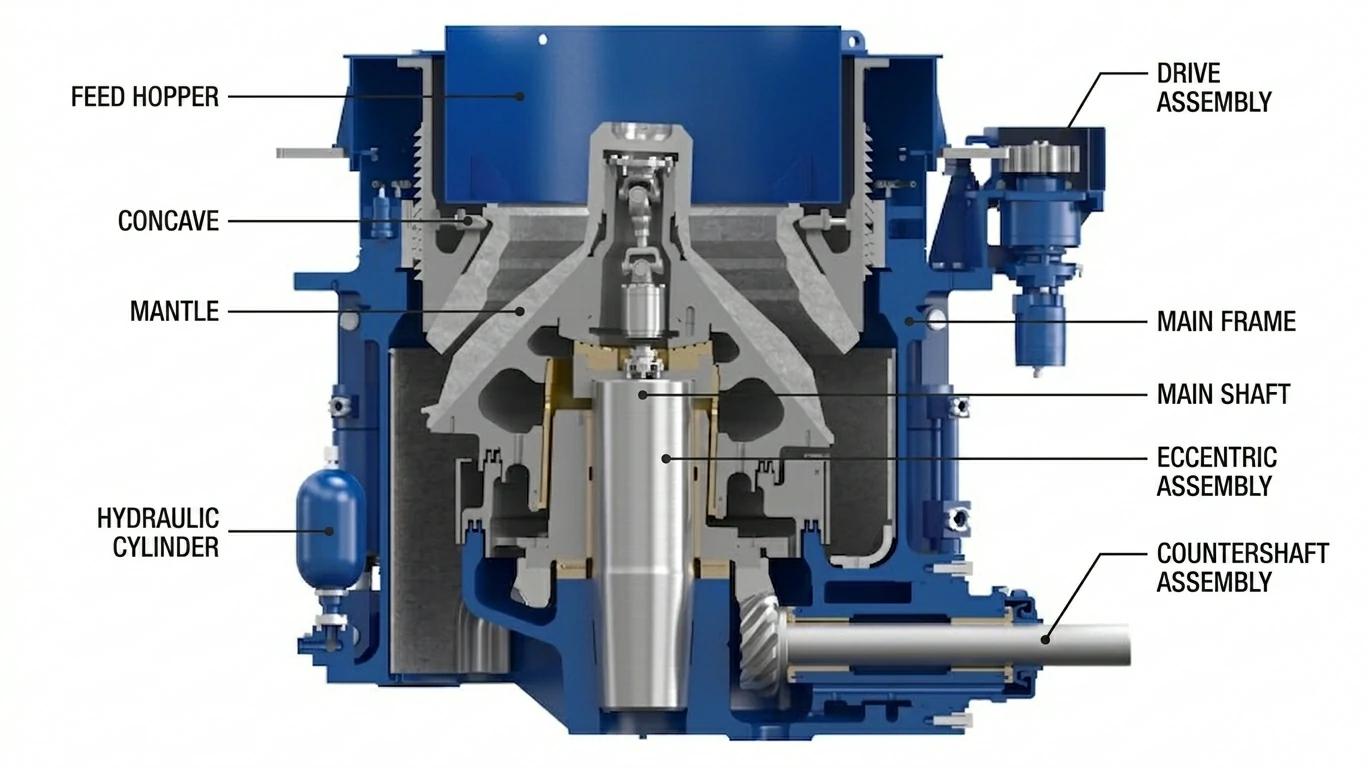
This mechanical distinction is critical. When we talk about controlling the final output, we are essentially managing the energy transfer from the eccentric bushing to the rock. The goal is to ensure that every cone crusher part involved in the kinematic chain contributes to a consistent reduction ratio. If the forces are uneven, you don’t just get poor gradation; you get accelerated wear, unpredictable downtime, and a product that fails to meet the strict cubicity requirements of modern concrete specifications.
The Mechanics of Layer Crushing and Hydraulic Synchronization
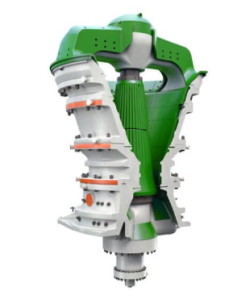
To truly understand how to manipulate the output size, one must first respect the physics occurring inside the chamber. The 702 model utilizes a multi-cylinder hydraulic system to support the main shaft and provide the necessary crushing force. This isn’t merely about holding the head in place; it is about active force distribution. As material enters the crushing cavity, it forms a “rock bed” or compression layer. The mantle gyrates against the concave, and the hydraulic cylinders maintain a specific pressure to crush this bed.
The advantage here is the ability to apply higher crushing forces compared to spring-based or single-cylinder systems. This results in a higher percentage of fines and a more cubical product shape, which is essential for high-quality asphalt and concrete. However, this complexity means that the calibration of your hydraulic system is directly tied to your granulometry. If the hydraulic pressure fluctuates, the crushing force varies, leading to inconsistent breakage patterns. Therefore, maintaining the stability of the hydraulic circuit is the first step in ensuring a stable particle size distribution curve.
Critical Variables Influencing Gradation Curves
When operators ask why their product size has shifted, the answer is rarely simple. It is usually a combination of four distinct variables interacting in real-time. We need to look beyond the basic settings and understand the interplay between machine parameters and material properties.
- Closed Side Setting (CSS): This is the most obvious variable, representing the narrowest point in the crushing chamber. However, it is not a guarantee of maximum particle size, but rather a baseline. The actual top size will often be larger due to the elasticity of the rock and the geometry of the chamber.
- Eccentric Speed (RPM): The speed at which the mantle gyrates determines the number of compression cycles a rock undergoes as it travels down the chamber. Too fast, and you risk packing the chamber (choking); too slow, and you lose capacity and may produce elongated particles.
- Feed Characteristics: You cannot crush what you do not feed. The hardness (Work Index), moisture content, and feed size distribution (F80) dictate how the rock responds to the crushing force. Harder rocks require higher pressure and may result in coarser products if the CSS is not adjusted accordingly.
- Hydraulic Pressure: In a multi-cylinder setup, the pressure setting acts as a clamp. It ensures the crusher doesn’t open up under extreme loads, maintaining the set CSS even when processing variable ore hardness.
Optimizing Wear Parts for Consistent Output
One of the most overlooked aspects of size control is the condition of the liners. A new set of liners produces a very different gradation than a worn set, even if the CSS remains constant. This is because the “throw” and the chamber profile change as the manganese steel erodes. To maintain a tight specification, you must adopt a proactive approach to managing your cone crusher wear parts.

Regular monitoring is non-negotiable. I recommend measuring the CSS daily and charting the progression of liner wear. When the liners are worn to a certain point—usually when the throughput drops or the product becomes too coarse—it is time for a change. Waiting until the liners are completely destroyed risks damaging the head and seat, turning a routine maintenance job into a catastrophic repair. Furthermore, selecting the right liner profile (cavity) for your application is crucial. A standard cavity might offer better capacity, but a short-head cavity is designed specifically for finer, more precise product sizing.
Tuning the Machine: Practical Adjustments for the 702 Series
So, how do we translate this theory into practice on the plant floor? Optimization is an iterative process. If you are struggling to hit a specific target, such as minimizing flakiness in the 10-20mm fraction, you need to systematically adjust your variables.
First, ensure your feed is consistent. Segregation in the feed hopper can cause the crusher to surge, leading to power spikes and inconsistent product. Use a vibrating grizzly feeder to scalp out fines before they enter the chamber. Second, verify your hydraulic settings. Ensure the clamping pressure is sufficient for the material hardness you are processing. For the 702 series, this often means running at a higher pressure setting to maximize the effectiveness of the layer crushing principle.
Finally, consider the relationship between speed and power draw. If you increase the eccentric speed, you may need to reduce the CSS to maintain the same power draw, or vice versa. It is a balancing act. By keeping a detailed log of these adjustments and their resulting impact on the screen analysis, you build a knowledge base that allows for rapid troubleshooting in the future.
| Operational Variable | Effect on Particle Size | Engineering Recommendation |
|---|---|---|
| Closed Side Setting (CSS) | Directly correlates to the P80 (80% passing size). Reducing CSS increases fines but reduces capacity. | Adjust in small increments (2-3mm) and allow the system to stabilize before sampling. |
| Eccentric Speed | Higher speeds generally produce finer products and better shape but increase wear rates. | Match speed to the cavity profile. Do not exceed recommended RPM for the specific liner type. |
| Chamber Fill Level | A choke-fed chamber ensures particle-on-particle crushing, improving shape and reducing liner wear. | Maintain a steady feed level above the parallel zone to prevent surging and ensure consistent output. |
The Role of Spare Parts in Long-Term Reliability
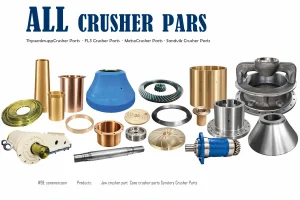
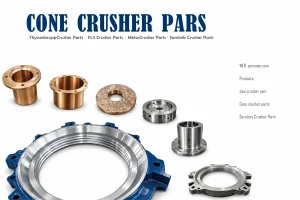
Ultimately, the precision of your crushing operation depends on the integrity of your components. We are not just talking about the manganese liners; we are talking about the entire assembly. The bushings, seals, and hydraulic pistons all play a role. If a seal fails and allows dust into the lubrication system, friction increases, heat builds up, and the clearances within the crusher change. This thermal expansion can alter the effective CSS, ruining your product gradation.
This is why sourcing high-quality cone crusher spare parts is a strategic investment, not just a procurement task. OEM-spec components are engineered with specific tolerances—often in the range of microns—to ensure that the kinematics of the machine remain true to the design. Using sub-par replacements might save money upfront, but the cost of unscheduled downtime and off-spec product quickly eclipses those savings. Always inspect your replacement parts for metallurgical certification and dimensional accuracy before installation.
The Path to Operational Excellence
Mastering the particle size in a multi-cylinder cone crusher like the 702 requires a blend of theoretical knowledge and hands-on intuition. It demands that you treat the machine as a holistic system where hydraulic pressure, mechanical settings, and material science intersect. By rigorously monitoring your wear parts, understanding the impact of your operating parameters, and maintaining the highest standards of component quality, you can transform your crushing circuit from a simple rock-breaker into a precision manufacturing tool. In the competitive world of aggregates, that level of control is your greatest asset.