BK 54-67 Maintenance White Paper For Primary Crushing Teams
A BK 54-67 that restarts with contaminated oil, a drifting open side setting, or a worn lower concave tier can turn a planned liner change into a mainshaft, eccentric bushing, and production loss event. The machine is built for heavy primary duty, but the maintenance margin is not unlimited. A 500 kW class drive, a mantle diameter of 1,700 mm, and a total machine weight around 175,000 kg mean that small inspection errors become large mechanical risks once ore enters the chamber.
The FLS Jaw Gyratory Crusher BK 54-67 Pro is designed for primary crushing of medium hard to hard rock and ore. Public product data lists capacity up to 4,000 metric tonnes per hour, a feed opening of 2,640 mm by 1,350 mm, an eccentric speed of about 137 rpm, an OSS range of 130 mm to 200 mm, adjustable eccentricity from 14 mm to 26 mm, and installed drive motor power up to 500 kW. These figures should not be treated as decoration. They define the maintenance discipline required around feed control, wear measurement, lubrication, lifting plans, and spare parts readiness.
Why This Machine Demands A Different Maintenance Mindset
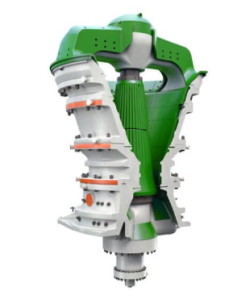
The BK 54-67 is not a small jaw crusher with a larger frame. It uses a jaw gyratory crushing concept with a large feed opening positioned on one side of the crusher. The main shaft is supported through the spider bearing and the eccentric bearing assembly. The rotating eccentric bushing creates the gyrating motion, while the mantle and concave liners produce continuous compression. Unlike a jaw crusher that crushes during only part of the cycle, this type of primary machine is always crushing through its eccentric motion.
That continuous action is the reason throughput can be high, but it is also the reason poor maintenance shows up quickly. A loose feed distribution pattern can accelerate one concave row. Excessive fines and wet clay can raise the risk of packing. Incorrect OSS control can increase load, product oversize, or liner stress. If the lube oil system is neglected, dirty oil can behave like a lapping compound across bearing surfaces, increasing clearances and shortening the life of expensive rotating assemblies.
Daily Inspection Before Ore Reaches The Chamber
The first maintenance check is visual and operational. The operator should confirm no abnormal vibration, no unstable oil pressure, no unexpected temperature rise, no abnormal noise from the drive area, and no visible leakage from hydraulic or lubrication circuits. The Gyramatic control and monitoring system should be used as a maintenance tool, not only as an operator screen. Trend changes matter more than single readings because bearing clearance, liner wear, and contamination usually develop gradually.
Feed size must also be controlled. Public maintenance references state that feed should be at least 15 to 20 percent smaller than the feed opening width for a typical gyratory design. For the BK 54-67 Pro, the published width is 2,640 mm, while FLS data notes a recommended maximum feed size up to 80 percent of the feed opening. Oversize boulders, slabby rock, and shovel teeth create different risks. Oversize rock can bridge. Steel can damage liners, spider protection, or the mantle surface. Slabby feed can create uneven chamber loading and lead to localized liner wear.
Lubrication Is The First Line Of Component Protection
Most expensive failures in heavy crushers begin with heat, contamination, or poor oil film. Forced oil circulation is normally used for high load crusher applications because grease is not suitable for many heavy bearing zones. A disciplined maintenance program should monitor supply pressure, drain temperature, temperature differential, filter condition, return screen debris, tank cleanliness, oil viscosity, water content, and particle count. An abnormal pressure drop may indicate pump wear, relief valve trouble, oil leakage, or excessive bearing clearance.
The return screen should be inspected with care. Bronze flakes, steel particles, seal fragments, or abnormal dark sludge are evidence, not rubbish. They should be photographed, collected, and linked to the running hours and oil analysis report. Oil analysis should include viscosity at 40 degrees Celsius, water contamination, ISO cleanliness code, oxidation, wear metals, and silicon dust indicators. If silicon rises together with iron and copper, dust entry may already be damaging bearing surfaces.
For greased auxiliary points, nipples and grease gun nozzles should be cleaned before lubrication. Over greasing can raise temperature, especially where bearing housings are filled beyond the free volume required for heat dissipation. A general maintenance reference notes that only the bearing should be completely filled, while free space in a housing is often partly filled around 30 to 50 percent. For the BK 54-67, the exact lubricant grade and interval must follow the OEM manual and site ambient temperature conditions.
OSS Control And Chamber Health
The open side setting is not just a product size value. It is a load management value. Public FLS data gives an OSS range of 130 mm to 200 mm for the BK 54-67 Pro. Public maintenance literature defines CSS as OSS minus eccentric throw. Because this model offers eccentricity adjustment from 14 mm to 26 mm, the maintenance team must understand how stroke selection changes load, product size, liner utilization, and power draw.
A weekly or campaign based setting record should include OSS, power draw, feed size, product top size, lube temperature, hydraulic pressure, and liner hours. If OSS is corrected only after product complaints, the machine may already have run with excessive chamber pressure or poor reduction. Modern OSS camera measurement systems can improve safety because workers do not need to rely only on manual measurement methods around a large primary crusher opening.
Wear Parts And Material Selection
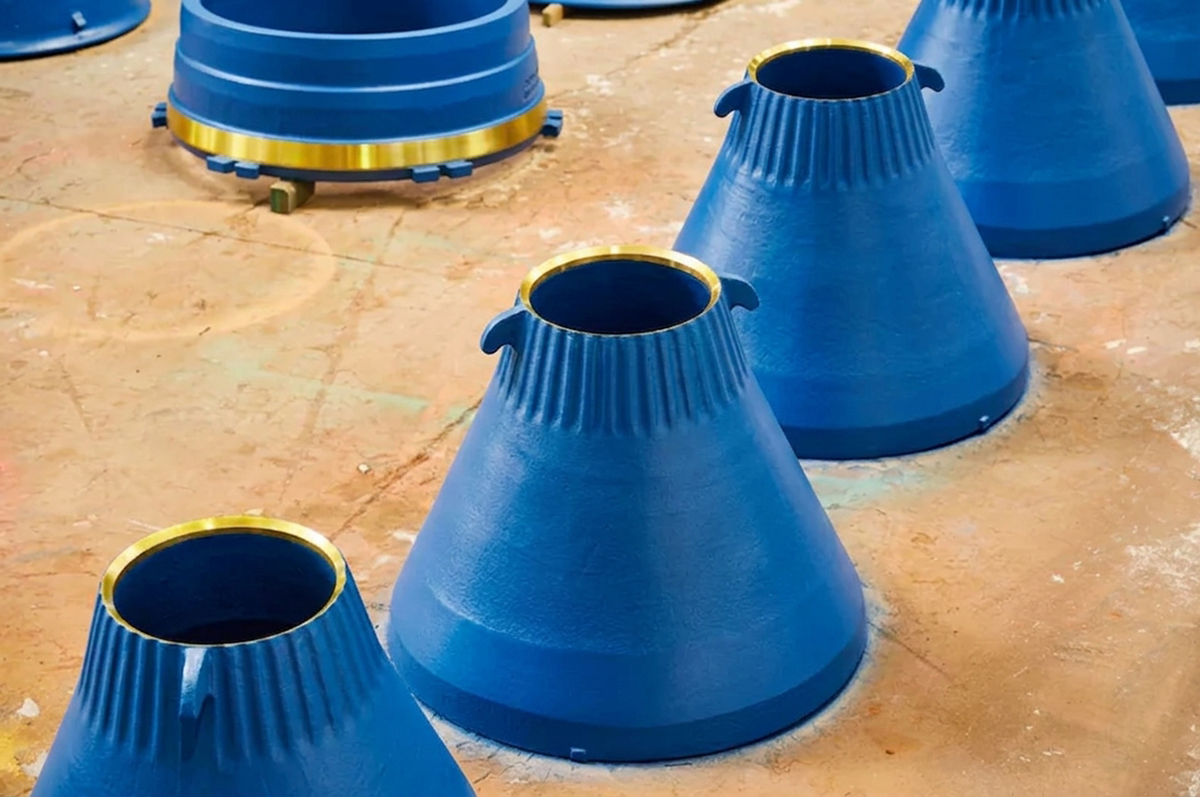
Upper concave tiers face impact from falling rock. Middle tiers see mixed impact and abrasion. Lower tiers often face the strongest sliding abrasion as reduced material exits the chamber. This is why material selection should not be uniform without analysis. Public maintenance references describe manganese alloys and impact resistant low alloy steel for upper intake liners, high manganese alloys or abrasion and impact resistant low alloy steel for middle chamber liners, and high abrasion materials or high chrome special material for bottom liners depending on feed characteristics.
Austenitic manganese steel remains a common liner material because it work hardens under compression and impact. Hadfield type manganese steel is commonly described around 1.2 percent carbon and 12 percent manganese. ASTM A128 Grade C type chemistry is widely referenced with carbon from 1.05 to 1.35 percent, manganese from 11.50 to 14.00 percent, chromium from 1.5 to 2.5 percent, silicon not over 1.00 percent, phosphorus not over 0.08 percent, and sulfur not over 0.025 percent in the cited maintenance reference. Heat treated hardness may be listed up to HB 229 before service. Under repeated impact, manganese steel can work harden from about 230 BHN to well over 500 BHN, with a hardened layer around 5 mm to 10 mm depending on impact load.
For demanding liner applications, 18 percent manganese steel is commonly used as a standard material for jaw and cone crusher liners, while 22 percent manganese is often selected as an option where work hardening speed and severe impact abrasion justify it. A maintenance white paper for the BK 54-67 should therefore require chemical analysis, heat treatment records, hardness readings, casting traceability, and dimensional inspection for every critical liner batch.
Mainshaft, Eccentric, Spider Bearing, And Step Bearing Checks
The main shaft position is controlled by the spider bearing at the upper end and by the eccentric bearing assembly below. The step bearing on the hydraulic piston provides axial support. These components are expensive and difficult to access, so condition based maintenance is more valuable than emergency repair. During a planned shutdown, inspect spider bearing lubrication condition, dust sealing, bushing contact pattern, eccentric bushing wear, pinion and bevel gear backlash, hydraulic cylinder condition, and mainshaft surface damage.
FLS public data lists the heaviest piece for maintenance at around 34,000 kg and the heaviest piece for transportation at around 46,000 kg. This means lifting studies, certified tools, crane capacity, rigging points, exclusion zones, and top access procedures must be confirmed before shutdown day. A safe maintenance plan should include actual part weight, centre of gravity, lifting beam rating, sling angle, ground bearing pressure, communication method, and hold points for inspection before reassembly.
Dimensional Control For Replacement Parts
A crusher parts supplier must not treat a BK 54-67 liner or bushing as only a casting by weight. Critical interfaces need measured geometry. For large cast wear parts, ISO 8062 casting tolerance grades are often used as a reference framework, but functional faces require machining and inspection. Seating surfaces, bores, taper contact zones, bolt holes, dowel locations, and thrust faces should be checked with calibrated tools.
For heavy machined contact faces, Ra 3.2 to 6.3 micrometres is a practical surface roughness range often used in heavy equipment applications where stable seating is needed. Bronze bushings should be checked for alloy certificate, oil groove geometry, bore size, outside diameter, wall thickness, surface finish, and handling damage. Large alloy steel shafts or pins should be checked for heat treatment condition, ultrasonic test status where required, and tensile strength class. Quenched and tempered 42CrMo4 or AISI 4140 type steel is often used in heavy machinery applications with tensile strength classes around 900 MPa to 1100 MPa depending on section size and heat treatment.
Shutdown Planning For The BK 54-67
A reliable shutdown starts before the machine stops. Spare liners, torch rings, backing materials where applicable, bushings, seals, filters, fasteners, hydraulic hoses, inspection tools, lifting equipment, and contingency parts should be staged before the last production shift. Incoming parts should be unpacked early enough to inspect casting numbers, dimensions, machined faces, hardness reports, and shipping damage.
- Before shutdown trend oil temperature, power draw, OSS, vibration, feed interruptions, and hydraulic pressure for at least one operating campaign.
- During shutdown clean the chamber, measure liner wear, inspect spider protection, record contact patterns, and collect debris from the lube return screen.
- Before reassembly verify seating surfaces, fastener condition, seal condition, bushing clearance, and correct orientation of wear parts.
- After restart run no load checks, confirm oil flow and pressure, monitor temperature rise, check abnormal noise, and bring feed back gradually.
- After stabilization record baseline power draw, OSS, product size, oil temperature, and vibration for future comparison.
Common Warning Signs That Should Not Be Ignored
A sudden rise in lube oil temperature can indicate insufficient oil flow, dirty oil, bearing damage, excessive clearance, wrong oil viscosity, or overload. A drop in lube oil pressure can point to pump wear, relief valve issues, leakage, or increased internal clearance. Uneven product size can indicate liner wear, OSS drift, poor feed distribution, or incorrect eccentricity selection. Abnormal metallic debris in the return screen should trigger inspection before the next long campaign.
Bridging in the feed opening should be treated as a process and maintenance issue. The BK 54-67 Pro is designed with a large feed opening and reduced tendency toward bridging compared with comparable mantle diameter machines, but wet sticky ore, slabby blasted rock, and oversize boulders can still create unstable feed. Operators should not use repeated aggressive clearing practices as a normal operating method. The root cause may be blasting, grizzly opening, truck loading method, moisture, clay content, or chamber configuration.
How To Work With Yonsmen On Critical Spares
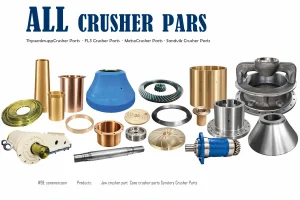
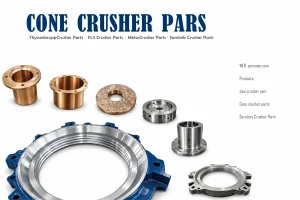
Yonsmen can be positioned as a crusher parts supplier for mines and contractors that need engineered replacement parts, not anonymous heavy castings. For BK 54-67 related procurement, the quotation should request crusher model, serial number, original part number if available, drawing revision, material grade, hardness target, machining requirement, inspection plan, packing method, and delivery schedule.
The strongest purchase orders include application data. State the ore type, compressive strength if known, silica level, feed size, moisture condition, target OSS, current liner life, failure history, and planned shutdown date. A capable crusher parts supplier should respond with material recommendation, traceability method, dimensional checkpoints, and a pre shipment report. For Yonsmen, the commercial value should be tied to fewer fit issues, documented metallurgy, export safe packaging, and repeatable batch quality.
Final Maintenance Principle
A BK 54-67 does not fail because it is a difficult machine. It fails when warning signs are normalized. Dirty oil is accepted. OSS drift is ignored. Liner wear is guessed rather than measured. Heavy lifts are planned too late. Replacement parts are checked only when the shutdown clock is already running. The better approach is simple. Treat lubrication, setting control, liner selection, lifting safety, and supplier documentation as one maintenance system. If you operate a Gyratory Crusher BK 54-67, this system is the difference between controlled primary crushing and an avoidable emergency stop.