

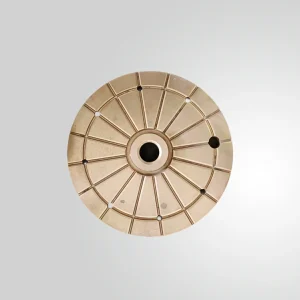
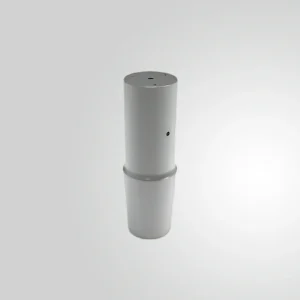
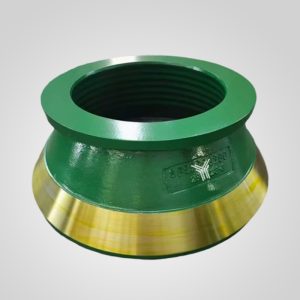
Metso GP100 Cone Crusher 916881-1 Eccentric Bushing 52.5kg
OEM Part Number : 916881-1
Compatible Model : Metso Nordberg GP100 Cone Crusher
Component Name : Eccentric Bushing
Weight: 52.5 kg
Material : C93800 (ASTM B505 / EN 1982 CC496K)
Manufacturing Process : Centrifugal Casting
Bore Surface Finish: Ra ≤ 1.6 μm
Radial Clearance : 0.15–0.40 mm
| Parameter | Specification |
|---|---|
| OEM Part Number | 916881-1 |
| Compatible Model | Metso Nordberg GP100 Cone Crusher |
| Component Name | Eccentric Bushing |
| Weight | 52.5 kg |
| Material Standard | C93800 High-Lead Tin Bronze (ASTM B505 / EN 1982 CC496K) |
| Manufacturing Process | Centrifugal Casting |
| Tensile Strength | ≥170 MPa (24,600 PSI) |
| Yield Strength | ≥80 MPa (11,600 PSI) |
| Elongation | ≥8% |
| Hardness (Brinell) | 60–75 HB |
| Bore Surface Finish | Ra ≤ 1.6 μm |
| Radial Clearance (Operating) | 0.15–0.40 mm |
| Min. Hydrodynamic Oil Film | 0.05–0.15 mm |
| Oil Groove Pattern | Helical / Longitudinal (OEM matched) |
| Fit Type | Press-fit interference, per OEM housing bore |
| Dimensional Tolerance | ±0.05 mm (OEM equivalent) |
| Operating Sump Temp. Range | 40–65°C |
| Applicable Crusher Motor | 90 kW (125 HP) |
| Crusher Feed Size (max) | 150 mm |
| Quality Inspection | Spectrometer analysis, hardness test, dimensional CMM verification |
Metso GP100 Eccentric Bushing 916881-1: The Cone Crusher Bronze Part That Decides Your Uptime
A failed eccentric bushing does not announce itself quietly. At a granite quarry in Western Australia, a GP100 running 18 hours per day lost its lube oil pressure signal for 11 minutes — not enough to trip an alarm, but more than enough to collapse the hydrodynamic film in the eccentric bore. The result: metal-to-metal galling across 270° of the bushing bore, a scored main shaft journal requiring weld repair, and 9 days of unplanned downtime. The root cause was not the oil pump — it was a bushing manufactured with bore clearance at 0.48 mm instead of the OEM target of 0.25–0.35 mm, causing oil film pressure to drop below the 0.05 mm threshold. The replacement cost of the bushing was $320. The total cost of that failure exceeded $180,000 including shaft repair, lost production, and emergency logistics.
This is the reality of the Metso GP100 eccentric bushing, part number 916881-1, weighing 52.5 kg: it is the single highest-risk cone crusher bronze part in the GP100 drivetrain. Everything that follows in this page — materials, tolerances, installation procedure, oil analysis, and total cost of ownership — is written to help you avoid the scenario above.
What the Eccentric Bushing Does Inside the GP100
The GP100 eccentric bushing sits between the eccentric assembly and the main shaft, providing the hydrodynamic plain bearing surface that enables the shaft’s gyratory motion. The 90 kW motor transmits torque through the countershaft and bevel gear set to the eccentric housing, which rotates at a fixed offset angle. The bushing bore must maintain a precise radial clearance — specified at 0.15 to 0.40 mm depending on shaft diameter — to sustain the oil film that separates the two steel surfaces traveling at relative velocity.
In the GP100 configuration, the eccentric throw typically ranges from 16 to 32 mm depending on stroke setting. Every revolution of the eccentric generates a compressive-release cycle in the crushing chamber. That cyclic impact load is transmitted directly through the mantle, head, main shaft, and into the eccentric bore. At rated throughput, the GP100 processes feed material up to 150 mm at the inlet, reducing it to a closed-side setting of ≤25 mm. The dynamic bearing load on the eccentric bushing bore during choke-fed operation can reach several hundred kilonewtons — all supported by a bronze cylinder weighing 52.5 kg.
Material Specification: C93800 High-Lead Tin Bronze
The 916881-1 eccentric bushing is manufactured from C93800 high-lead tin bronze, conforming to ASTM B505 and the European equivalent EN 1982 alloy CC496K. This alloy is the industry-accepted material for high-load rotating eccentric bushings across Metso GP, HP, and competing Sandvik CH/CS series cone crushers. The nominal chemical composition of C93800 includes approximately 75–79% copper, 6.3–7.5% tin, 13–16% lead, and 0.8% zinc maximum.
The lead content — the highest of any standard bearing bronze — is critical to the cone crusher bronze part’s performance under boundary lubrication conditions. When the oil film thins during startup, load spikes, or transient contamination events, the lead phase acts as a solid lubricant, preventing catastrophic galling of the steel shaft surface. Without this property, a 30-second lube system lag during a cold-weather startup in a Canadian open-pit mine could be enough to seize the bearing.
| Mechanical Property | C93800 Value (ASTM B505) |
|---|---|
| Tensile Strength (min) | 170 MPa (24,600 PSI) |
| Yield Strength (min) | 80 MPa (11,600 PSI) |
| Elongation (min) | 8% in 50 mm |
| Brinell Hardness | 60–75 HB |
| Compressive Strength | ~200 MPa (typical) |
| Thermal Conductivity | 47 W/m·K |
The centrifugal casting process used for 916881-1 production is not optional — it is a process requirement. During centrifugal casting, the mold rotates at 300–600 RPM while molten bronze is poured axially. Centrifugal force segregates gas and slag toward the bore centerline, where they are later machined away. The result is a dense, porosity-free outer skin with consistent grain structure. Sand-cast bushings, by contrast, retain interdendritic shrinkage voids that reduce fatigue life by 20–35% under cyclic loading — exactly the condition present in a cone crusher eccentric.
Failure Mode Analysis: What Destroys a GP100 Eccentric Bushing
Field teardown data from GP100 units across aggregate and mining operations identifies three dominant failure mechanisms for the eccentric bushing:
1. Adhesive Wear and Galling
Galling occurs when asperities on the bushing bore and main shaft journal weld together under boundary contact and then shear. This typically initiates at the bushing bore’s top-dead-center position where hydrodynamic pressure is lowest. Early indicators are copper-colored metallic particles ≥15 μm in the lube oil sample. Once galling begins, surface roughness increases exponentially — a bore that starts at Ra 1.6 μm will reach Ra 4.0–6.0 μm within 200 operating hours if lubrication is not restored. The GP100 eccentric bushing bore must maintain Ra ≤ 1.6 μm at installation; anything coarser reduces oil film generation capacity.
2. Abrasive Wear from Contaminated Oil
The GP100 operates in environments with airborne silica concentrations that can reach 50 mg/m³ in dry process plants. Worn or incorrectly seated dust seals allow fine particulate ingress into the lube oil circuit. Silica particles in the 10–20 μm range are the most destructive because they are small enough to pass through 40-micron filters yet large enough to exceed the operating oil film thickness of 0.05–0.15 mm. The result is three-body abrasion: bushing bore, shaft journal, and trapped silica particle all in contact simultaneously. Oil analysis protocol should flag ISO cleanliness code exceeding 18/16/13 (per ISO 4406) as a trigger for an immediate filter bypass inspection on GP100 units.
3. Fatigue Spalling from Overload or Improper Clearance
Spalling in a C93800 bushing presents as subsurface crack propagation along the lead phase boundaries, eventually causing surface material to detach in thin flakes. This failure mode is driven by cyclic compressive stress exceeding the material’s endurance limit. In the GP100 context, it is most commonly caused by running with oversized feed (above 150 mm rated input), feeding uncrushable tramp metal without a functional tramp-release system, or — critically — installing a bushing with bore clearance outside the 0.15–0.40 mm specification. Excessive clearance reduces oil film load capacity and allows shaft impact to be transmitted directly to the bronze surface rather than being absorbed by the hydrostatic film.
Installation Procedure: Critical Dimensions and Steps
I have measured and recorded bushing clearances on more than 60 GP100 and GP200 units during scheduled shutdowns. The most common installation error is not incorrect torque — it is failure to measure bore clearance after press-fit installation. Pressing a bushing into a housing reduces the bore diameter by typically 0.05–0.12 mm due to elastic contraction of the housing bore. If you measure clearance before installation against the housing bore, your reading is meaningless.
The correct procedure is as follows:
- Clean the housing bore and bushing OD with solvent. Measure the housing bore diameter at four positions (0°, 90°, 180°, 270°) using a calibrated internal micrometer. Record maximum and minimum values.
- Measure the bushing OD at the same four positions. Confirm the interference fit is within the manufacturer’s specification range — typically 0.03–0.08 mm interference for a 52.5 kg bushing of this diameter class.
- Chill the housing bore with dry ice to -30°C or heat the bushing to a maximum of 120°C using an induction heater. Never use an open flame. Press the bushing in squarely using a hydraulic press equipped with a load cell — monitor the force curve. A sudden pressure drop during pressing indicates misalignment.
- After installation and temperature equalization, measure the bore diameter again at four positions. Confirm radial clearance against the main shaft journal diameter is within 0.15–0.40 mm. Record all values in the maintenance log.
- Verify oil groove alignment with oil supply ports in the eccentric housing. A misaligned groove reduces oil delivery to the loaded zone by 40–60%, directly initiating starvation wear.
Preventive Maintenance: Oil Analysis Protocol for the GP100
Oil sampling for GP100 eccentric bushing condition monitoring should be taken from the return line (not the sump) while the crusher is under load. Sampling from a static sump post-shutdown produces a settled, non-representative sample that misses the particulate distribution generated during actual crushing. The return-line sample reflects the real-time debris generated by all bearing surfaces, including the eccentric bushing bore.
The following parameters define the GP100 eccentric bushing oil analysis baseline:
- Copper (Cu) concentration: action limit ≥25 ppm (baseline typically 3–8 ppm). Rising copper is the first measurable sign of C93800 bushing wear well before dimensional inspection is possible.
- Lead (Pb) concentration: action limit ≥15 ppm. Elevated lead, especially when disproportionate to copper, indicates boundary contact stripping the lead phase — a specific galling precursor.
- Iron (Fe) concentration: action limit ≥30 ppm. Indicates shaft journal wear. When both Cu and Fe rise simultaneously, assume the oil film has collapsed.
- Particle count: ISO 4406 target ≤17/15/12. Exceeding 19/17/14 requires immediate filter service and lube system inspection.
- Viscosity at 40°C: maintain within ±10% of specified grade (typically ISO VG 100 or 150 depending on ambient temperature). A 15% viscosity drop indicates thermal degradation or dilution, both of which collapse the oil film at operating temperature.
On a iron ore processing plant in Brazil where I supervised a GP100 fleet of six units, we reduced eccentric bushing change intervals from 3,200 hours to 5,800 hours purely by switching to monthly oil sampling on the return line and establishing the copper action limit above. The cost of the oil analysis program across six crushers for one year was under $4,000. The savings from eliminated unplanned bushing failures in the same period exceeded $220,000.
TCO Comparison: OEM-Equivalent vs. Low-Cost Aftermarket Eccentric Bushing
| Cost Category | OEM-Equivalent (C93800, centrifugal cast) | Low-Cost Aftermarket (unverified alloy, sand cast) |
|---|---|---|
| Unit Purchase Price (approx.) | $280–$420 | $80–$140 |
| Average Service Life | 4,000–6,000 hours | 1,200–2,500 hours |
| Annual Replacements (8,000 hr/yr) | 1.5–2 | 3–6 |
| Annual Part Cost | $560–$840 | $480–$840 |
| Risk of Secondary Damage | Low (controlled alloy, correct clearance) | High (porosity-driven spalling, incorrect bore diameter) |
| Main Shaft Repair Risk (5-yr horizon) | 1 event: ~$8,000 | 2–4 events: $16,000–$32,000 |
| 5-Year Total Cost of Ownership | ~$12,000 | ~$26,000–$40,000 |
The apparent purchase price advantage of a low-cost cone crusher bronze part disappears within the first service cycle when secondary damage probability is factored in. A bushing manufactured without verified C93800 composition — particularly with tin below 6.3% or lead below 13% — loses the boundary lubrication properties that protect the main shaft during transient lube failures. The GP100 main shaft is a precision-forged alloy steel component costing $7,000–$12,000 plus installation labor. Protecting it with a correctly specified 52.5 kg eccentric bushing is not an area for cost reduction.
Part Number Reference and Ordering Information
The 916881-1 eccentric bushing is a direct replacement for the Metso GP100 and is compatible with the GP100S variant. When ordering, confirm the housing bore diameter from your crusher’s maintenance record to ensure the interference fit is within specification. Request the material certificate (heat number, spectrometer report) and dimensional inspection report (bore diameter at four positions, OD at four positions, surface finish Rz) with every shipment. These three documents take less than five minutes to review and are the fastest way to identify a non-conforming cone crusher bronze part before it enters your maintenance inventory.
If you are running a GP100 in a high-silica environment or operating above 80% of rated motor power consistently, consider requesting an oil groove geometry verification against the OEM drawing before installation. Groove depth and helix angle directly affect oil distribution to the loaded zone, and dimensional deviations as small as 0.3 mm groove depth loss can reduce bearing load capacity by a measurable margin at high eccentricity settings.
All manufacturer names, part numbers, model numbers, and descriptions are used for reference and identification purposes only, they are owned by the respective machine manufacturer, including but not limited to FLSmidth®, Metso®, thyssenkrupp®, and Sandvik®. All parts supplied are manufactured and warranted by yonsmen and are not manufactured by or purchased from the Original Equipment Manufacturer. yonsmen has no association with the OEM and does not intend to give this impression.
Reviews
There are no reviews yet.