Strategic Stockpiling: Mn18Cr2 Wear Solutions for Argentina Mining Ops
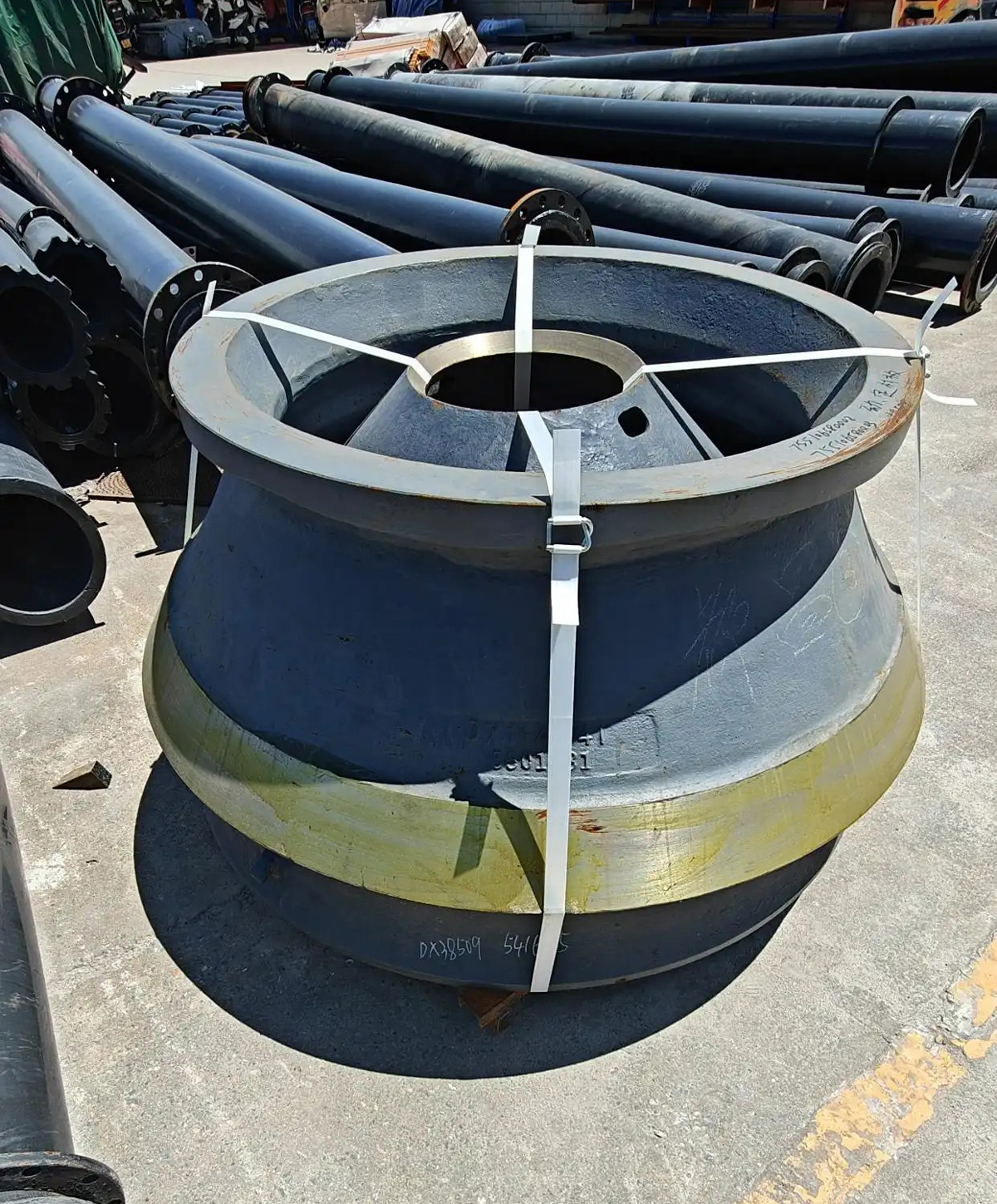
Unplanned downtime in the Andes region is not just an inconvenience; with crusher downtime costs often exceeding $5,000 per hour, it is a direct hemorrhage of capital. The recent arrival of our container in Argentina, stocked with compatible parts for thyssenkrupp crushers and Metso units, addresses this critical operational risk. These spares are not merely inventory; they are insurance against the 6-month lead times currently plaguing the OEM supply chain.
Material Metallurgy: Why Mn18Cr2 is the Non-Negotiable Standard
For high-yield secondary and tertiary crushing, standard Mn13 (Hadfield steel) is insufficient. This batch of mantle and concave liners is cast exclusively from Mn18Cr2. The addition of 2 percent Chromium is critical for maintaining yield strength without compromising the work-hardening capability required for hard rock applications.
The Metallurgical Critical Path
- Austenitization: Parts are heated to over 1050 Celsius to dissolve carbides.
- Water Quenching: Rapid cooling prevents carbide precipitation at grain boundaries. If this process is delayed by even 30 seconds during manufacturing, the liners will become brittle and crack under the compressive load of a functioning crusher.
- Hardness Profile: Delivered at approximately 220 HBW. Under impact, the surface work-hardens to over 550 HBW, creating a wear-resistant skin while the core remains ductile to absorb shock.
| Parameter | Standard Mn13 | Our Mn18Cr2 (Argentina Batch) | Operational Impact |
|---|---|---|---|
| Initial Hardness | 180-200 HBW | 210-230 HBW | Better resistance to initial gouging during break-in. |
| Yield Strength | 450 MPa | 350 MPa | Prevents plastic deformation (mushrooming) at the backing fit. |
| Microstructure | Variable | Fully Austenitic | Eliminates catastrophic cracking risks. |
Preservation Logic: The Grey Oxide Coating
The transit from the factory to the Argentine mine site involves crossing equatorial humidity and exposure to high-salinity maritime air. Unprotected manganese steel oxidizes rapidly, leading to pitting on critical mating surfaces.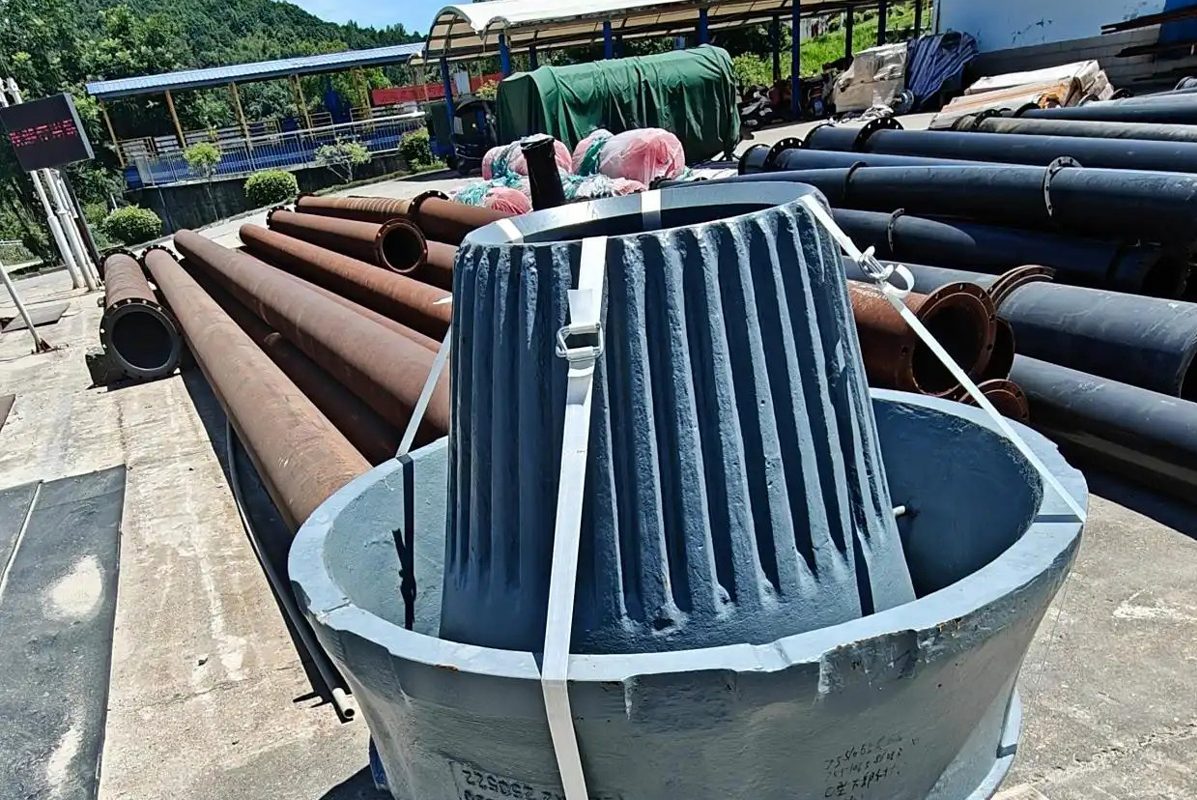
The specific grey coating applied to these parts is not aesthetic; it is a heavy-duty industrial primer engineered for:
- Salt Spray Resistance: Withstanding over 500 hours of continuous salt fog exposure (ASTM B117 equivalent).
- Machined Surface Integrity: Protecting the precise tolerances of the mating surfaces where the liner meets the head or bowl. Rust build-up here creates high spots, leading to stress risers and potential head cracking.
Receiving and Installation SOP (Field Guide)
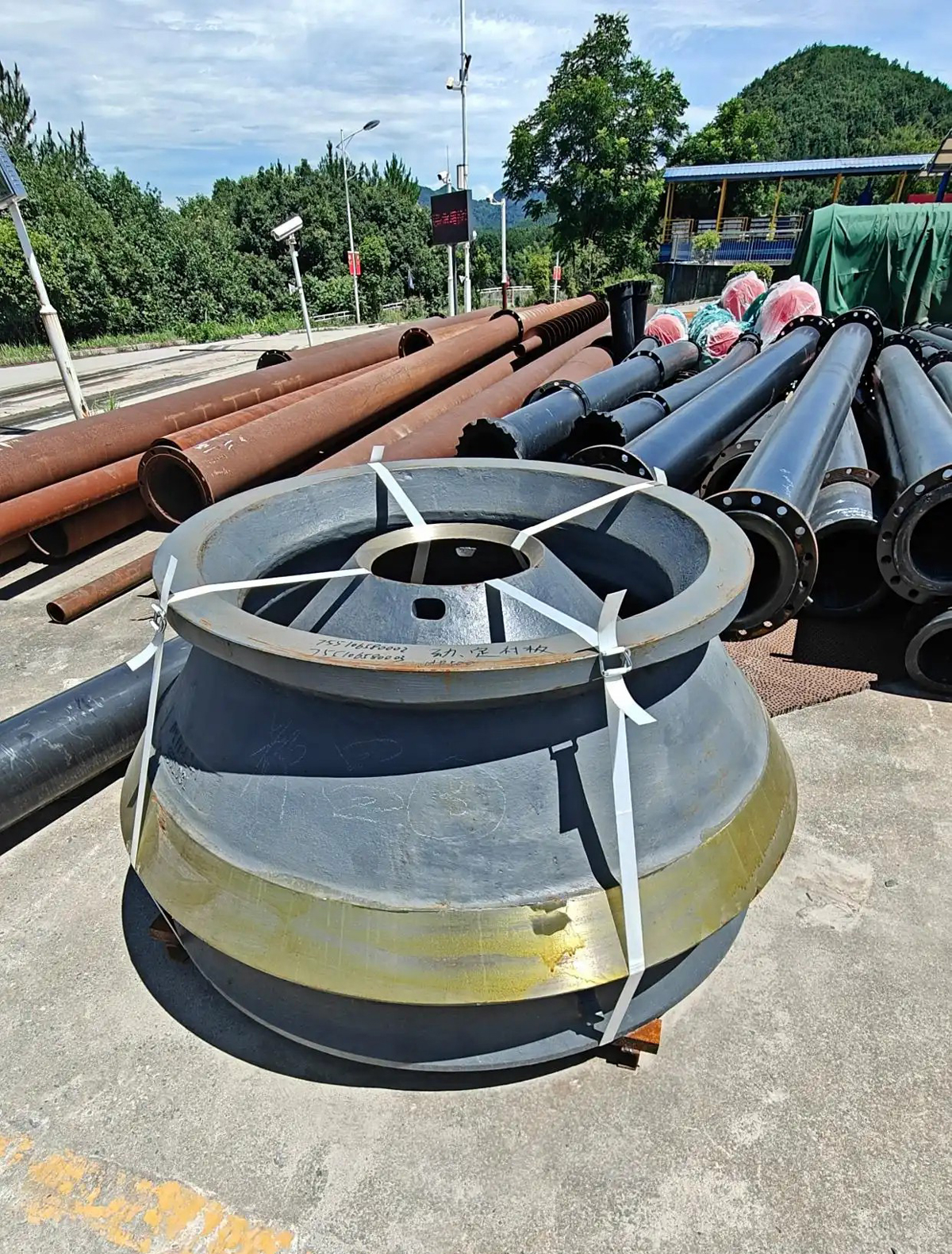
For the Maintenance Supervisor receiving this shipment, follow this protocol to ensure warranty compliance and operational safety:
1. Dimensional Verification
Before installation, measure the bottom diameter of the mantle. It must match the OEM drawing within a tolerance of +0/-3mm. An oversized liner will not seat correctly, causing loose fitment.
2. Sound Test
Suspend the mantle and strike it with a hammer. A clear, bell-like ring indicates a solid casting. A dull thud suggests internal porosity or cracking. Do not install components that fail this acoustic test.
3. Backing Material
Ensure the ambient temperature is considered. If installing in the Andes winter below 5 Celsius, pre-heat the bowl or head to 25 Celsius to prevent the epoxy backing from curing too brittle or failing to bond.
Pro-Tip from the Field: I have seen perfectly good Mn18 liners fail because the crew did not clean the grey paint off the seating surfaces before applying the backing compound. While the paint protects against rust during shipping, it acts as a bond breaker for the epoxy. Always grind the seating surface down to bare metal just before the pour to ensure maximum adhesion.