The Hidden Cost of Generic Bowl Liners: A $47,000 Lesson
Last quarter, a copper mine in Arizona replaced their cone crusher bowl liner with a low-cost aftermarket option. Within 180 operating hours, catastrophic spalling occurred across 60 percent of the crushing surface. The premature failure forced an unscheduled shutdown during peak production, costing the operation $47,000 in lost throughput and emergency replacement labor. This scenario repeats across mining operations globally because many buyers focus solely on initial purchase price rather than the metallurgical integrity and geometric precision that determine actual service life.
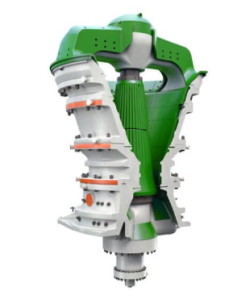
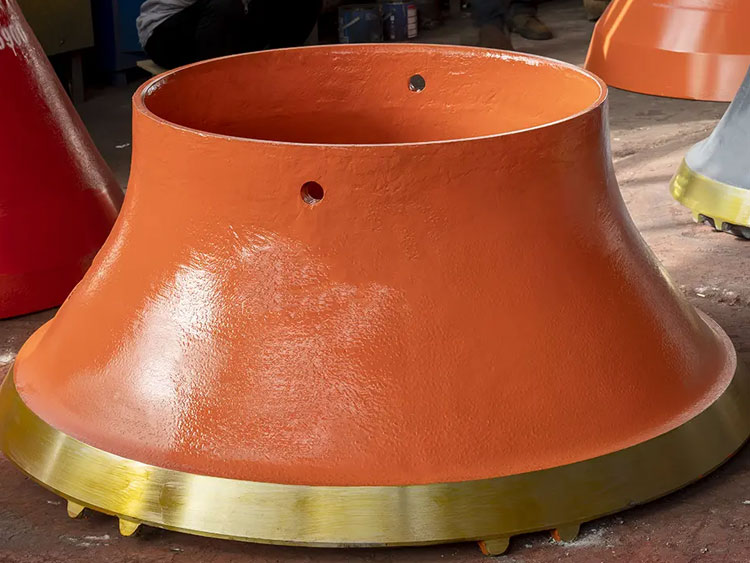
The bowl liner, also known as the concave, serves as the stationary crushing surface in a cone crusher. Unlike the rotating mantle, it must endure continuous high-impact abrasion while maintaining precise cavity geometry. When this component fails prematurely, the consequences extend beyond replacement costs. Material blockages, frame damage from loose segments, and compromised product gradation create cascading operational inefficiencies. For operations processing 800 tons per hour, even a 12-hour delay translates to massive revenue loss.
Material Science: Why Manganese Chemistry Defines Wear Performance
The performance gap between premium and inferior bowl liners originates in their metallurgical DNA. High-quality concaves utilize austenitic manganese steel conforming to ASTM A128 Grade C or equivalent standards. The critical alloying elements include 11 to 14 percent manganese, 1.7 to 2.3 percent chromium, and controlled carbon content between 1.0 and 1.4 percent. This specific chemistry enables work-hardening behavior where the surface layer reaches 450 to 550 HBW hardness under impact while the core maintains ductility at approximately 220 HBW.
Substandard castings often contain insufficient chromium, leading to premature matrix breakdown. During my field assessments, I have observed bowl liners with chromium levels below 1.2 percent exhibiting severe gouging after just 400 hours in basalt crushing applications. The chromium carbides formed during solidification act as micro-anchors that prevent abrasive particles from plowing through the surface. Without adequate chromium, the manganese matrix cannot develop the necessary strain-hardening response.
Common Failure Modes and Root Causes
Bowl liner failures manifest in three primary modes. Spalling occurs when subsurface cracks propagate parallel to the crushing face, causing large chunks of material to detach. This typically results from thermal shock during water quenching or inadequate heat treatment cycles. Mushrooming describes the plastic deformation of the liner’s upper edge, caused by impact forces exceeding the material’s yield strength. This failure mode indicates either incorrect alloy selection or operation beyond the crusher’s design capacity.
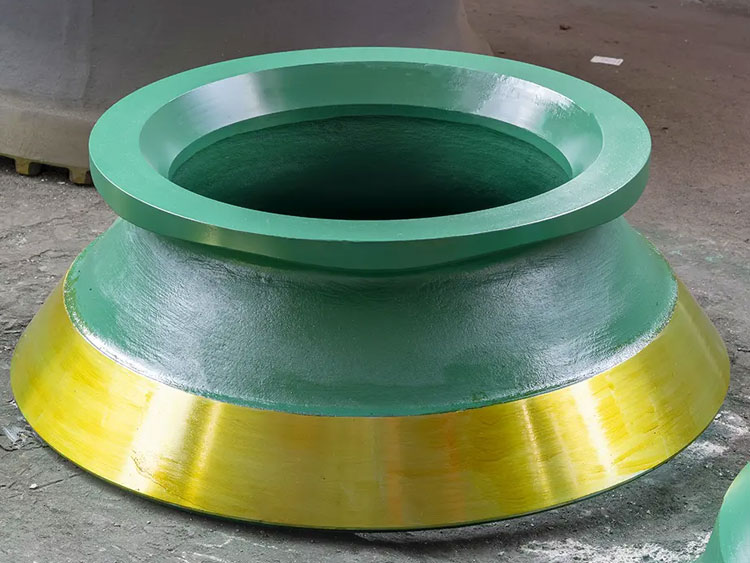
The third failure mechanism, galling, involves adhesive wear where metal transfers between the bowl liner and mantle under high pressure and temperature. Galling accelerates when the oil film in the crushing chamber breaks down, allowing direct metal-to-metal contact. Prevention requires maintaining proper lubrication and ensuring the mantle and concave materials have compatible hardness ratios.
Critical Supplier Selection Criteria Beyond Price
Selecting a bowl liner supplier demands evaluation across multiple technical dimensions. The first criterion involves casting methodology. Centrifugal or static sand casting processes produce vastly different material densities. Centrifugal casting eliminates porosity more effectively, resulting in bowl liners with tensile strength exceeding 620 MPa compared to 480 MPa for poorly controlled sand castings.
Second, examine the supplier’s heat treatment protocols. Proper water quenching from 1050 degrees Celsius followed by controlled cooling prevents carbide precipitation at grain boundaries. Request documentation of time-temperature profiles for the quenching process. Suppliers who cannot provide this data likely lack quality control over their metallurgical processes.
Third, verify dimensional accuracy through inspection reports. The seating surface that contacts the adjustment ring must maintain flatness within 0.5 millimeters across its diameter. Any deviation creates gaps that allow the liner to shift during operation, leading to catastrophic failure. The bolt hole patterns require positional tolerance of plus or minus 0.8 millimeters to ensure proper load distribution.
| Technical Parameter | Specification Requirement |
| Manganese Content | 11.5 – 14.0% |
| Chromium Content | 1.7 – 2.3% |
| Carbon Content | 1.0 – 1.4% |
| Surface Hardness (Work-hardened) | 450 – 550 HBW |
| Core Hardness | 200 – 240 HBW |
| Tensile Strength | ≥ 620 MPa |
| Seating Surface Flatness | ≤ 0.5 mm deviation |
| Bolt Hole Positional Tolerance | ± 0.8 mm |
The Customization Advantage: Matching Liner Geometry to Feed Characteristics
Generic bowl liners assume standardized feed gradation and rock properties. However, actual operating conditions vary dramatically between a limestone quarry and a porphyry copper mine. Customized concaves from suppliers like Yonsmen address this reality by adapting the crushing chamber profile to specific applications.
For operations processing high-silica granite, a fine chamber configuration with steeper cavity angles prevents premature liner wear on the upper sections. Conversely, plants crushing softer sedimentary rock benefit from coarse chamber profiles that maximize throughput while minimizing particle oversize. The ability to specify custom profiles eliminates the compromise inherent in off-the-shelf designs.
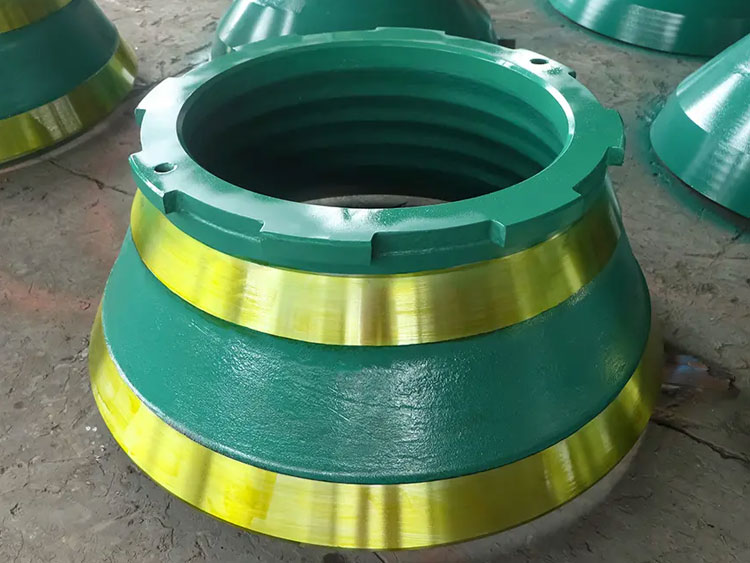
Beyond profile geometry, custom manufacturing enables material grade selection tailored to ore characteristics. Highly abrasive taconite requires Mn18Cr2 alloy with elevated chromium, while impact-dominant applications perform better with Mn14Cr2 compositions that prioritize toughness over hardness. Working with a supplier who maintains flexibility across alloy grades and chamber designs transforms bowl liner replacement from a commodity purchase into a strategic performance optimization.
Installation Best Practices to Maximize Liner Life
Proper installation directly influences service life. Before positioning the new bowl liner, inspect the adjustment ring seating surface for damage or debris accumulation. Remove all scale and residue using a wire brush, then verify the surface is flat within tolerance using a precision straight edge. Any raised areas must be ground smooth to ensure uniform contact.
When lowering the bowl liner into position, align the bolt holes carefully to avoid cross-threading. Apply anti-seize compound to all fastener threads to facilitate future removal. Torque the mounting bolts in a star pattern to the manufacturer’s specified value, typically between 950 and 1,200 Newton-meters depending on crusher size. After initial tightening, allow the machine to run empty for 15 minutes, then re-torque all fasteners to account for initial settling.
Measure the crushing chamber clearance at multiple points around the circumference using feeler gauges. Variation exceeding 2 millimeters indicates improper seating or a warped liner that must be replaced before production resumes. This verification step prevents the metal-on-metal contact that destroys both bowl liner and mantle.
Predictive Maintenance Through Oil Analysis
Implementing oil sampling protocols extends bowl liner life by detecting problems before catastrophic failure. Analyze lubrication samples every 250 operating hours for metallic content using spectrometric analysis. Elevated iron levels above 150 parts per million indicate abnormal wear between bronze components, while manganese concentrations exceeding 80 ppm signal bowl liner or mantle degradation.
Particle counting provides early that admit contaminants into the crushing chamber. When particles larger than 21 microns exceed the baseline count by 300 percent, inspect the dust seals immediately. Contaminated oil accelerates liner wear through three-body abrasion where hard particles embed in the softer bronze bushings and score the hardened steel surfaces.
Total Cost of Ownership Analysis: Premium Versus Economy Liners
A comprehensive TCO calculation reveals why premium bowl liners deliver superior value despite higher acquisition costs. Consider a typical scenario: an economy liner costs $8,500 and lasts 1,200 hours, while a custom-engineered premium liner costs $14,000 but operates for 2,400 hours. The economy option appears attractive until you factor in installation labor at $3,200 per change and lost production valued at $12,000 per shutdown.
Over a 12-month operating period of 7,200 hours, the economy liner requires six replacements totaling $51,000 in parts, $19,200 in labor, and $72,000 in production losses, for a total of $142,200. The premium liner needs only three replacements, costing $42,000 in parts, $9,600 in labor, and $36,000 in downtime, totaling $87,600. The premium option saves $54,600 annually while reducing maintenance disruptions by 50 percent.
Field Experience: Customization Resolving Chronic Liner Cracking
During a consultation at a Nevada gold operation, I investigated recurring bowl liner cracking in their secondary cone crusher processing highly fractured quartz monzonite. Standard Mn13Cr2 liners developed radial cracks originating from bolt holes after 600 hours, well below the expected 1,800-hour service life.
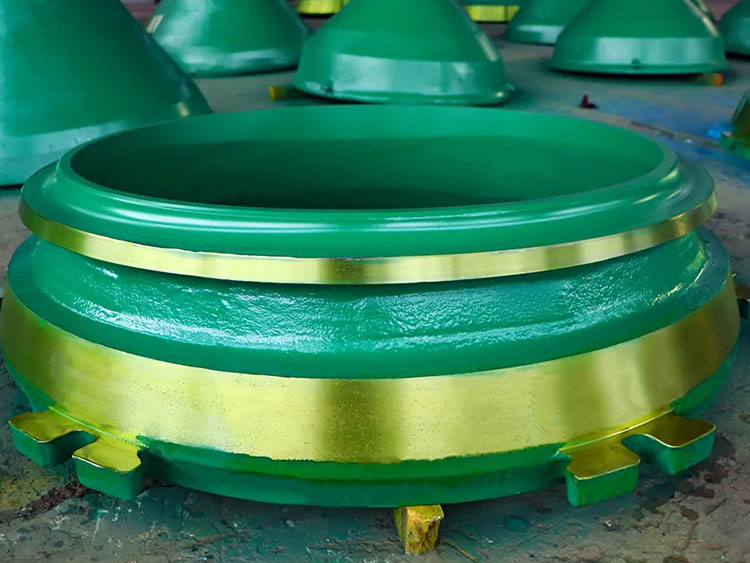
Metallurgical analysis revealed the standard alloy lacked sufficient impact toughness for this application’s extreme shock loading. Working with Yonsmen, we specified a custom Mn14Cr2 composition with controlled titanium additions to refine the grain structure. Additionally, the bowl liner profile was modified to increase the wall thickness in high-stress zones by 8 millimeters. The redesigned liner exceeded 2,100 hours before requiring replacement, validating the value of application-specific engineering.
Frequently Asked Questions
What is the correct procedure for measuring bowl liner wear during operation?
Shut down the crusher and lock out the motor completely. Remove the inspection door and use a depth micrometer to measure from a fixed reference point on the bowl liner rim to the crushing surface at eight equally spaced locations around the circumference. Record these measurements and compare them to the original specifications. When the thinnest point reaches 70 percent of the original thickness, schedule replacement. Operating beyond this threshold risks sudden through-wall failure that can damage the mainframe casting.
How do I prevent the bowl liner from spinning inside the crusher frame?
Liner rotation typically results from insufficient clamping force or contamination on the seating surfaces. First, verify all mounting bolts maintain proper torque by re-checking with a calibrated torque wrench every 500 operating hours. Second, inspect the bowl liner backing for any grinding dust or scale accumulation. Even a 0.3-millimeter contamination layer reduces friction enough to allow movement. Third, examine the condition of the locking pins or keys if your crusher model uses them. Worn or broken locking hardware must be replaced immediately as it serves as the mechanical backup to friction clamping.
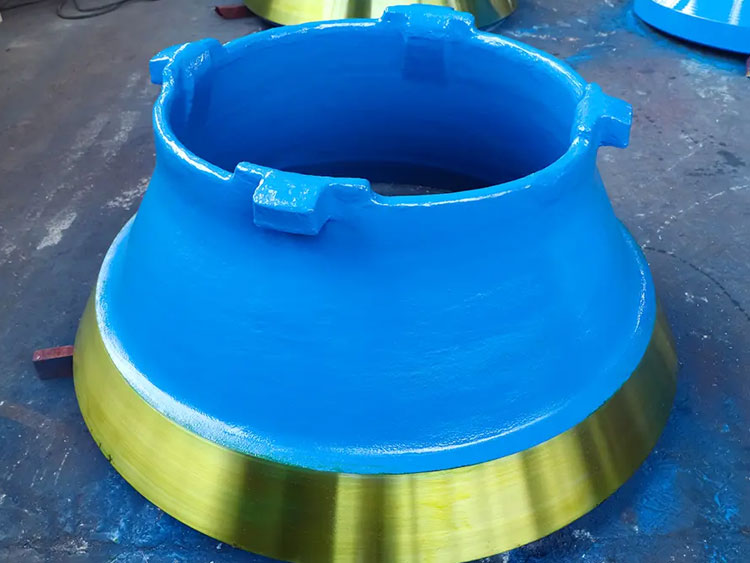
Should I replace the bowl liner and mantle simultaneously or can I replace them independently?
While independent replacement is mechanically possible, simultaneous replacement optimizes crushing performance and extends component life. A new mantle operating against a worn bowl liner creates an improper crushing chamber geometry, reducing efficiency by up to 15 percent and accelerating wear on the new component. The same issue occurs in reverse. When one component reaches 75 percent of its service life while the other has 40 percent remaining, consider replacing both during the next scheduled shutdown. This approach minimizes the number of separate maintenance interventions and ensures matched wear patterns that maintain consistent product gradation throughout the wear cycle.
Conclusion: Strategic Supplier Partnerships Deliver Operational Excellence
Optimizing cone crusher bowl liner performance requires moving beyond transactional purchasing to strategic supplier relationships. Partners who offer custom engineering, rigorous quality control, and application-specific metallurgy transform wear parts from a commodity expense into a competitive advantage. The initial investment in premium, customized bowl liners returns multiples through extended service life, reduced downtime, and improved crushing efficiency. For operations serious about maximizing asset utilization, supplier selection deserves the same analytical rigor applied to capital equipment decisions.