Low Price Cone Crusher Parts Do Not Have To Mean Low Quality
A cone crusher can lose production from a part that looks correct on the pallet but fails under load after installation. One poorly machined seating face can push the mantle off center. One concave made from the wrong manganese grade can polish instead of work harden. One bronze bushing with poor oil groove geometry can raise shaft temperature before the operator sees a clear alarm. For a U.S. aggregate plant or mining contractor, the cheapest invoice is not always the lowest cost, but a lower price can still be safe when the supplier controls metallurgy, machining, inspection, and fit.
The practical buying question is simple. Can an aftermarket cone crusher parts supplier deliver parts that match the crusher, match the rock, and match the shutdown plan without forcing the buyer to accept unknown alloy quality. In many cases, the answer is yes. Price and quality are not natural enemies. Bad purchasing makes them enemies. A well audited supplier can reduce cost by better foundry scheduling, broader pattern coverage, lower overhead, and consolidated export logistics while still meeting the technical requirements of a hard rock crushing circuit.
Where Low Price Becomes Dangerous
The dangerous part of low price appears when the quote hides technical gaps. A mantle quoted only by crusher model may ignore chamber type, liner profile, feed opening, closed side setting, feed gradation, and tonnage target. A bronze eccentric bushing quoted only by outside diameter may ignore lead clearance, lubrication groove depth, bearing alloy, surface finish, and crush tolerance. A main shaft or countershaft quoted without heat treatment condition may fit the drawing but lack the fatigue strength needed for repeated shock load.
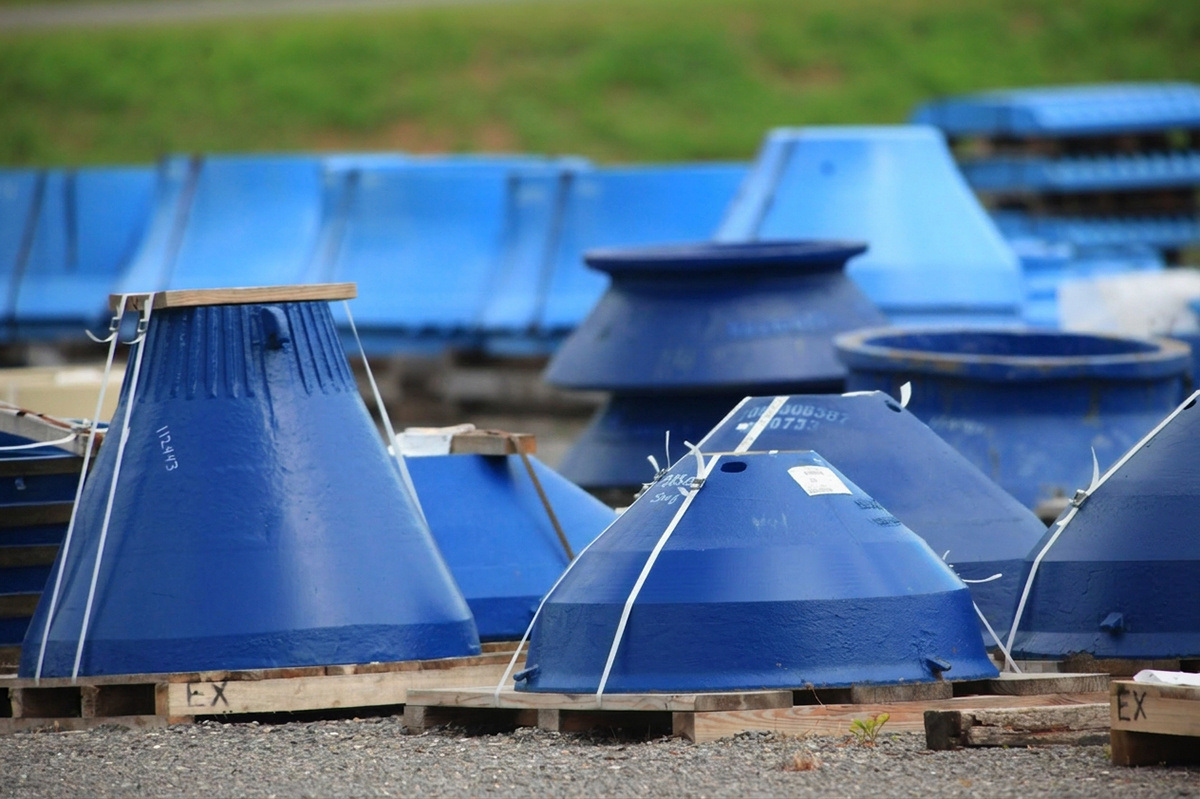
Good purchasing starts by separating commodity weight from engineered function. Cone liners are sacrificial wear parts, but they are still pressure vessels inside the crushing chamber. Bushings are replaceable, but they decide oil film stability. Torch rings are inexpensive, but they protect expensive head and locking components during liner removal. A buyer looking for a cone crusher parts supplier should judge price against these mechanical duties, not against casting weight alone.
Metallurgy That Supports Real Value
Most cone mantles and concaves are made from austenitic manganese steel because it work hardens during crushing. A typical Hadfield type manganese steel range uses about 1.0 to 1.4 percent carbon and about 11 to 14 percent manganese. ASTM A128 Grade C is commonly specified with carbon around 1.05 to 1.35 percent, manganese around 11.5 to 14.0 percent, chromium around 1.5 to 2.5 percent, silicon below 1.0 percent, and phosphorus below 0.070 percent. The key is not only chemistry. The casting must be solution treated above about 1000 degrees Celsius and quenched rapidly, usually in water, to preserve toughness and reduce harmful carbide networks.
In service, manganese liner hardness may begin around 190 to 250 HB and rise at the working surface under repeated compression and impact. Many field references place work hardened surface levels around 450 to 550 HB, and severe impact areas can be higher. This is why a liner that feels soft during incoming inspection may still perform correctly if the chemistry, heat treatment, and chamber pressure are right. It is also why a very high initial hardness claim for manganese steel should be questioned unless the supplier explains the alloy family and test method.
For extremely abrasive feed such as granite, quartz rich river stone, trap rock, or basalt, Mn18Cr2 and Mn22Cr2 are often selected over lower manganese grades. For softer limestone or less severe secondary duty, Mn13Cr2 may be adequate and sometimes more economical. For bronze components, C93200 bearing bronze is a common reference material with ultimate tensile strength around 240 MPa and Brinell hardness around 65 HB. For shafts and high load steel components, 42CrMo4 or AISI 4140 type quenched and tempered alloy steel may be purchased in tensile strength classes around 900 to 1100 MPa depending on section size and heat treatment condition.
Dimensional Accuracy Is A Hidden Quality Marker
Low quality parts often fail at the interfaces, not in the thickest casting section. The seating face between mantle and head must carry load evenly. The bowl liner contact surface must avoid rocking. The bore of a bushing must keep oil film clearance within the crusher manual range. The thread, taper, counterbore, and locating shoulder must be inspected before packing, not corrected with a grinder during a shutdown.
For sand cast steel parts, ISO 8062 gives a common framework for casting dimensional tolerance grades. Rough cast surfaces normally need wider tolerance than machined interfaces. A serious supplier should therefore define which dimensions are as cast and which are machined. For contact surfaces, roughness around Ra 3.2 to 6.3 micrometres is a practical machining target in many heavy equipment applications when stable seating and clean contact are required. For non contact rough cast areas, appearance matters less than wall thickness, soundness, and absence of crack like defects.
Incoming inspection should include part weight comparison, heat number traceability, hardness readings, critical dimension reports, visual crack checks, and photos of seating faces. For high risk castings, magnetic particle testing or ultrasonic testing may be justified. For bushings, buyers should request bore size, outside diameter, oil groove width, groove depth, surface finish, and alloy certificate. A low price supported by these documents is very different from a low price supported only by a sales promise.
Supplier Options For U.S. Buyers Comparing Value
The following supplier shortlist is presented as a procurement comparison, not as a substitute for direct factory verification. Locations, stock availability, and service coverage should be checked before placing orders. The order has been changed to support a practical buyer journey from global OEM options to aftermarket and custom alternatives, with Yonsmen placed last for comparison.
- Metso Australia Ekurhuleni, Gauteng, South Africa. Product focus includes O Series wear parts, primary gyratory segments, heavy duty cone liners, and OEM crusher castings. This type of supplier is often chosen when fit assurance and documented chamber design support are more important than the lowest piece price.
- Sandvik Australia Jet Park, Gauteng, South Africa. Product focus includes austenitic manganese jaw plates, comminution spares, heavy impact wear liners, and cone crusher concaves. Buyers often compare this type of OEM related option when they need original chamber logic and established liner selection guidance.
- H E Parts International Johannesburg, Gauteng, South Africa. Product focus includes VSI rotor shoes, bronze eccentric bushings, aggregate plant spares, and tracked crusher components. The company is relevant when buyers want aftermarket engineering, site specific liner review, and spare parts support beyond a single machine model.
- Weir Minerals Isando, Gauteng, South Africa. Product focus includes carbide inserted blow bars, eccentric shafts, apron feeder pans, and secondary crusher parts. This type of supplier can suit plants that want wear materials, process equipment knowledge, and support for severe abrasion applications.
- Bradken Johannesburg, Gauteng, South Africa. Product focus includes high chrome blow bars, mill liners, impact crusher spares, and specialized grinding liners. Bradken is often viewed as a heavy wear solutions name where liners, grinding parts, and impact protection are evaluated together.
- FLSmidth Australia Stormill, Gauteng, South Africa. Product focus includes impact wear plates, portable crusher parts, mining spares, and aggregate screening parts. This option can fit buyers who need crushing and process plant support in the same supply conversation.
- ME Elecmetal Australia Johannesburg, Gauteng, South Africa. Product focus includes crushing chamber liners, custom wear liners, heavy impact backing plates, and vibratory sizing spares. This supplier profile can be useful where liner design and wear mapping matter more than a standard catalogue replacement.
- Minprovise Middelburg, Mpumalanga, South Africa. Product focus includes thick ribbed jaw dies, high manganese cone mantles, mobile crusher spares, and toggle plates. This type of supplier can suit operators who need practical replacement support for mixed mobile and fixed plant fleets.
- CME Johannesburg, Gauteng, South Africa. Product focus includes massive primary jaw plates, custom roll crusher shells, high strength toggles, and large scale castings. It belongs in the comparison when the requirement is heavy casting capability and robust replacement geometry.
- Keech Australia Ekurhuleni, Gauteng, South Africa. Product focus includes impact crusher components, reversible hammer mill parts, abrasion resistant alloy sleeves, and fine grinding liners. This type of supplier can be considered when the wear environment includes impact, sliding abrasion, and smaller rotating equipment.
- Yonsmen China. Product focus can include cone mantles, bowl liners, concaves, bronze bushings, eccentric components, torch rings, feed plates, and other engineered replacement parts. Yonsmen should be evaluated as an aftermarket cone crusher parts supplier when the buyer wants lower landed cost, controlled manganese grades, machined fit surfaces, inspection reports, and custom packaging for export shipments.
Why Affordable Parts Can Still Be High Quality
A lower price can come from efficient casting capacity, shared patterns, local alloy sourcing, batch machining, and export consolidation. These cost advantages do not automatically reduce mechanical quality. Quality drops only when the supplier removes controls such as chemistry testing, heat treatment records, dimensional inspection, machining allowance, and traceability. A well run foundry can pour Mn18Cr2 liners at scale, machine seating faces accurately, and document the part before shipment. A poor foundry can make the same alloy name meaningless.
For U.S. buyers, the best procurement method is to trial one chamber set or one critical spare group under controlled conditions. Record installed dimensions, running amps, lube oil temperature, closed side setting stability, product shape, wear profile, and tonnes processed. When the part is removed, measure the wear zones and compare them with the supplier drawing. If the liner wears evenly and protects the crusher, the supplier becomes a cost per ton improvement rather than a price gamble.
Procurement Checklist Before Approving A Lower Price
- Material certificate should show carbon, manganese, chromium, silicon, phosphorus, and heat number for manganese castings.
- Heat treatment record should confirm solution treatment and rapid quench for austenitic manganese steel.
- Hardness report should use the correct scale such as HB for manganese liners and HRC where hardened alloy steel is specified.
- Machining report should show bore size, seating face condition, bolt hole location, and critical profile dimensions.
- Surface finish control should distinguish functional machined faces from non critical cast surfaces.
- Packing control should protect machined surfaces, threads, bronze parts, and thin edges during ocean or truck transport.
- Application review should include feed size, rock abrasiveness, crushing stage, closed side setting, and target service life.
The Better Definition Of Cheap
Cheap does not mean the lowest line item on a quote. Cheap means lower cost per finished ton after freight, liner backing, labor, crane time, downtime, rework risk, and secondary machine damage are counted. A part that costs less but needs grinding during installation is expensive. A part that costs less but keeps the crusher stable through the planned campaign is real value.
The strongest suppliers understand this distinction. They do not sell only by alloy name. They discuss the chamber, the feed, the wear map, the operating pressure, and the maintenance window. Whether the buyer chooses an OEM source, a regional specialist, or Yonsmen as an aftermarket alternative, the decision should be based on measurable fit and documented material quality. That is how low price cone crusher parts can still deliver high quality in the United States market.