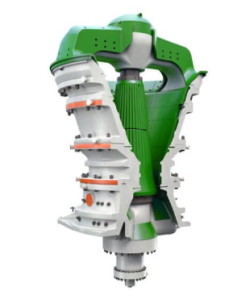
In the production of cone crusher bronze components, few manufacturing steps are as important as centrifugal casting. A cone crusher works under heavy load, repeated impact, high temperature, dust, vibration, and continuous friction. Inside this harsh operating environment, the bushing must support rotating parts, reduce metal-to-metal contact, maintain proper clearance, and protect more expensive crusher components from premature wear.
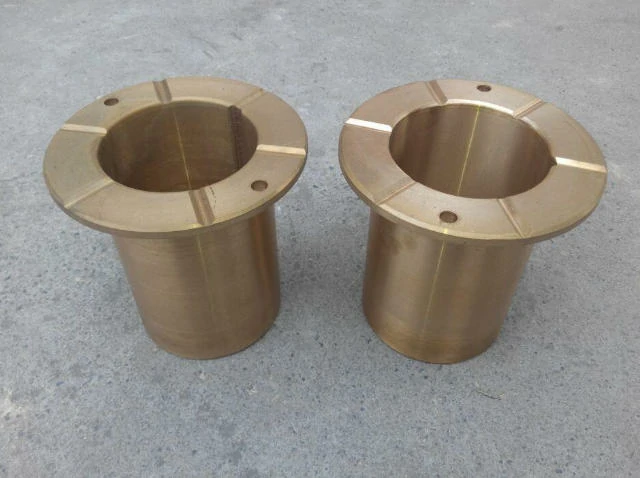
For this reason, a high-quality crusher bushing is not simply a bronze sleeve with the correct dimensions. It is a precision-engineered wear part that depends on proper material selection, controlled casting, heat treatment, machining accuracy, and strict inspection. Among these steps, centrifugal casting has a direct influence on the density, internal structure, wear resistance, and service life of the final bronze crusher part.

Why Bronze Bushings Are Critical for Cone Crushers
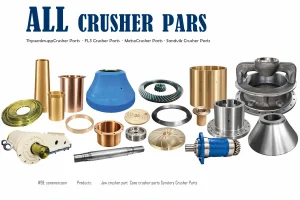
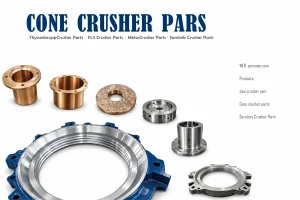
Cone crushers rely on several bronze components to maintain stable crushing performance. These parts may include eccentric bushings, main shaft bushings, socket liners, head bushings, countershaft bushings, thrust bearings, and other bronze wear parts. Each component plays a specific role in supporting movement and reducing friction between major mechanical assemblies.
When a crusher bushing is manufactured with poor density or inconsistent material structure, it can wear unevenly, overheat, crack, or lose clearance control. This may lead to higher maintenance costs, lower production efficiency, unplanned shutdowns, and damage to the main shaft, eccentric assembly, or crusher frame. In mining, quarrying, cement, and aggregate production, downtime is expensive. That is why reliable bronze parts are essential for long-term crusher operation.
A professional cone crusher parts supplier understands that bronze bushing quality starts before machining. The foundation is built during casting. If the casting process produces pores, shrinkage, inclusions, or weak internal structure, even the most accurate CNC machining cannot fully correct the problem. This is why centrifugal casting is widely used for premium bronze crusher components.
What Is Centrifugal Casting?
Centrifugal casting is a manufacturing process in which molten bronze alloy is poured into a rotating mold. As the mold spins at high speed, centrifugal force pushes the liquid metal outward against the mold wall. This force helps form a dense, uniform cylindrical casting with fewer internal defects compared with many traditional casting methods.
For cone crusher bushings, this process is especially suitable because many bronze parts are sleeve-shaped or ring-shaped. The natural geometry of a bushing matches the advantages of centrifugal casting. Instead of relying only on gravity to fill a mold, centrifugal casting uses rotational force to compact the molten metal and improve the internal quality of the casting.
Main Steps of Centrifugal Casting for Crusher Bushings
- Material preparation: The correct bronze alloy is selected according to the working conditions of the crusher. Chemical composition must be controlled to achieve strength, wear resistance, and anti-friction performance.
- Melting and refining: Bronze material is melted at a controlled temperature. Impurities, gas, and slag must be minimized to improve casting quality.
- Mold preheating: The mold is prepared and preheated to ensure smooth metal flow and reduce thermal shock during pouring.
- Centrifugal pouring: Molten bronze is poured into the rotating mold. Centrifugal force distributes the metal evenly and pushes denser material toward the outer wall.
- Controlled solidification: The casting cools under controlled conditions to form a stable structure and reduce internal stress.
- Rough machining: The casting is turned, bored, and prepared for further processing.
- Final machining and inspection: The bushing is machined to precise dimensions and inspected for tolerance, hardness, surface finish, and material quality.
Centrifugal Casting vs. Traditional Sand Casting
Sand casting is one of the oldest and most common casting methods. It uses a sand mold to shape molten metal. This process is flexible and cost-effective for many types of parts, especially complex shapes and low-volume production. However, when manufacturing high-performance bronze bushings for cone crushers, sand casting has several limitations compared with centrifugal casting.
1. Difference in Metal Density
The biggest advantage of centrifugal casting is improved metal density. During rotation, centrifugal force pushes molten bronze outward, helping reduce gas porosity and shrinkage defects. This creates a tighter and more uniform structure, which is important for parts that must handle heavy pressure and continuous sliding friction.
In sand casting, molten metal flows into the mold mainly by gravity. Because the process does not apply the same compacting force, the final casting may be more likely to contain small pores, loose structure, or internal defects. These defects may not be visible on the surface, but they can reduce the working life of the bushing.
2. Difference in Wear Resistance
A dense bronze structure usually provides better wear resistance. For a crusher bushing, this means the part can maintain its shape and clearance for a longer time under high load. Better wear resistance helps the crusher run smoothly and reduces the frequency of part replacement.
Sand-cast bushings may perform acceptably in some applications, but they are often less stable in severe crushing environments. If the internal material is not compact enough, wear can accelerate. This increases the risk of overheating, vibration, and abnormal movement inside the crusher.
3. Difference in Internal Defects
Centrifugal casting can help separate impurities during rotation. Heavier and cleaner metal tends to move outward, while lighter impurities may remain closer to the inner surface, where they can be removed during machining. This makes the final working surface more reliable after proper processing.
With sand casting, defects such as sand inclusion, gas holes, and shrinkage cavities are more difficult to control. The quality depends heavily on mold preparation, pouring temperature, gating design, and operator experience. For critical cone crusher bronze parts, this higher variability can create performance risks.
4. Difference in Machining Stability
A centrifugally cast bronze tube often provides better machining stability because the material distribution is more uniform. During turning, boring, grooving, and finishing, the tool can cut more consistently. This helps maintain dimensional accuracy and surface quality.
Sand-cast parts may require more machining allowance because of surface roughness, mold movement, and dimensional variation. More machining can increase production time and material waste. For precision crusher parts, this can also make it harder to achieve consistent quality batch after batch.

Why Centrifugal Casting Is Better for Premium Crusher Bushings
For cone crusher applications, centrifugal casting is not only a production method. It is a quality strategy. It helps create bronze bushings with stronger structure, better wear behavior, and more reliable performance under pressure. This is especially important for customers who operate crushers in demanding industries such as mining, aggregates, quarrying, construction materials, and metal recycling.
A premium bronze crusher part should offer stable hardness, accurate dimensions, proper oil groove design, smooth surface finish, and long wear life. Centrifugal casting supports these goals by improving the quality of the raw casting before final machining begins. When combined with experienced engineering and strict inspection, it can significantly improve the reliability of the finished bushing.
Quality Control After Casting
Even with centrifugal casting, quality control remains essential. A responsible cone crusher parts manufacturer should inspect both material and dimensions carefully. Chemical composition testing confirms that the bronze alloy meets the required standard. Hardness testing helps verify mechanical performance. Dimensional inspection ensures the bushing fits the crusher correctly. Surface inspection checks for cracks, defects, or machining problems.
For crusher users, these inspection steps are not optional. A bushing with incorrect clearance can cause lubrication failure, overheating, uneven wear, or poor crusher performance. Good casting must be matched with accurate machining and careful final inspection.
Choosing the Right Cone Crusher Parts Supplier
When choosing a supplier for bronze bushings, customers should look beyond price. A low-cost part may become expensive if it fails early, causes downtime, or damages other crusher components. The better choice is a supplier with strong casting capability, machining experience, crusher model knowledge, and reliable quality control.
A qualified supplier should understand the working conditions of different cone crusher brands and models. They should be able to supply bushings that match original dimensions, material requirements, lubrication design, and operating expectations. They should also provide consistent production quality for repeat orders.
Yonsmen Crusher Parts Supplier Advantages
Yonsmen is a professional cone crusher parts supplier focused on reliable wear parts and replacement components for demanding crushing applications. For customers looking for high-quality bronze crusher part solutions, Yonsmen provides strong manufacturing support, strict quality control, and practical industry experience.
As an experienced crusher parts supplier, Yonsmen supports customers with cone crusher bushings, bronze wear parts, liners, and other critical crusher components. The company understands that every crusher bushing must perform under pressure, not just look correct on a drawing.
- Advanced casting capability: Yonsmen uses suitable casting processes, including centrifugal casting for bronze bushing production, to improve density and durability.
- Precision machining: Bushings are processed to accurate dimensions, helping ensure proper installation and stable crusher performance.
- Strict inspection process: Material, hardness, surface quality, and dimensional accuracy are checked to reduce quality risks.
- Wide product coverage: Yonsmen supplies different types of bronze crusher parts for cone crushers, including main shaft bushings, eccentric bushings, and other wear components.
- Reliable supply support: With production and warehouse capability, Yonsmen helps customers reduce downtime and maintain continuous equipment operation.
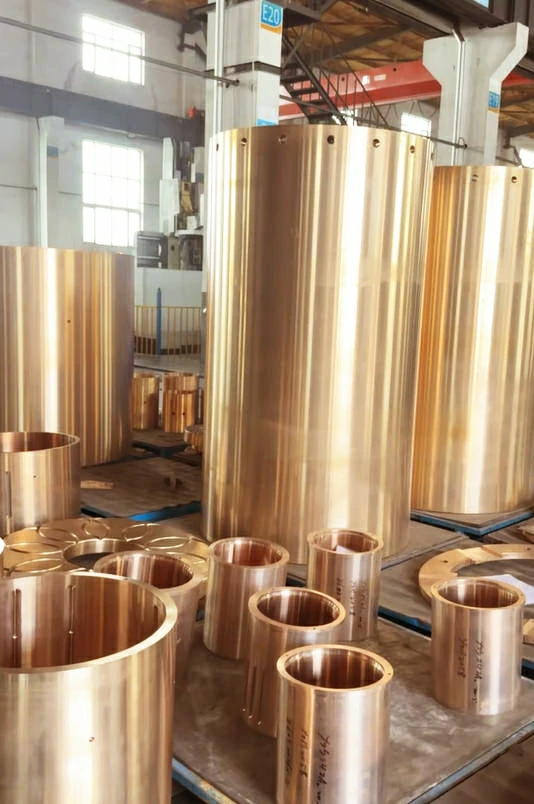
Centrifugal casting is one of the most important manufacturing steps in the production of cone crusher bronze bushings. Compared with ordinary sand casting, it offers better density, fewer internal defects, stronger wear resistance, and more stable machining performance. For parts that must operate under heavy load and continuous friction, these advantages directly affect crusher reliability and maintenance cost.
A high-quality crusher bushing begins with the right casting process and ends with accurate machining and strict inspection. For mining, quarrying, and aggregate producers, choosing a reliable supplier is essential. Yonsmen provides durable bronze crusher part solutions and professional crusher parts support for customers who need stable performance, long service life, and dependable supply.