The Real Cost of an Underspecified Wear Part
A jaw plate that cracks two weeks into a granite quarry contract rarely fails because of bad luck. In most field cases the plate specification simply did not match the feed material. Granite with a silica content above 70 percent behaves very differently against a wear surface than recycled concrete debris does, and a crushing chamber rebuilt with the wrong grade of manganese steel, or the wrong casting tolerance, will show the mismatch within days rather than months.
This is the part of the mobile crushing story that sales brochures tend to skip. Mobility, modular crushing chambers, and a compact footprint only pay off if the wear components behind them are matched to the rock type, the moisture content, and the duty cycle of the site. This article looks at both sides of that equation, the operational traits that make a mobile crusher fit a given job, and the mobile crusher parts that keep it running once it gets there.
What Actually Sets a Mobile Crusher Apart
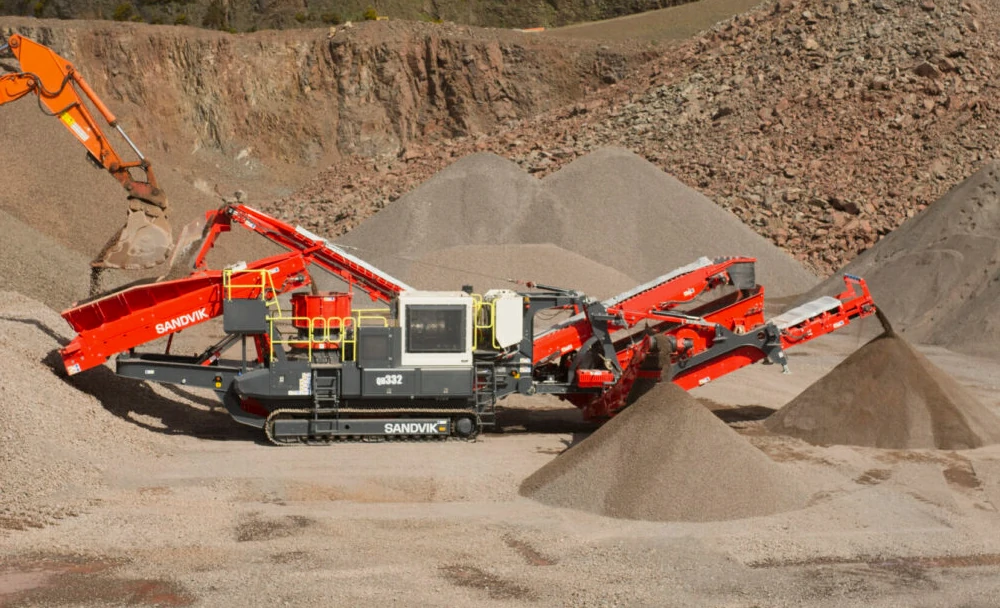
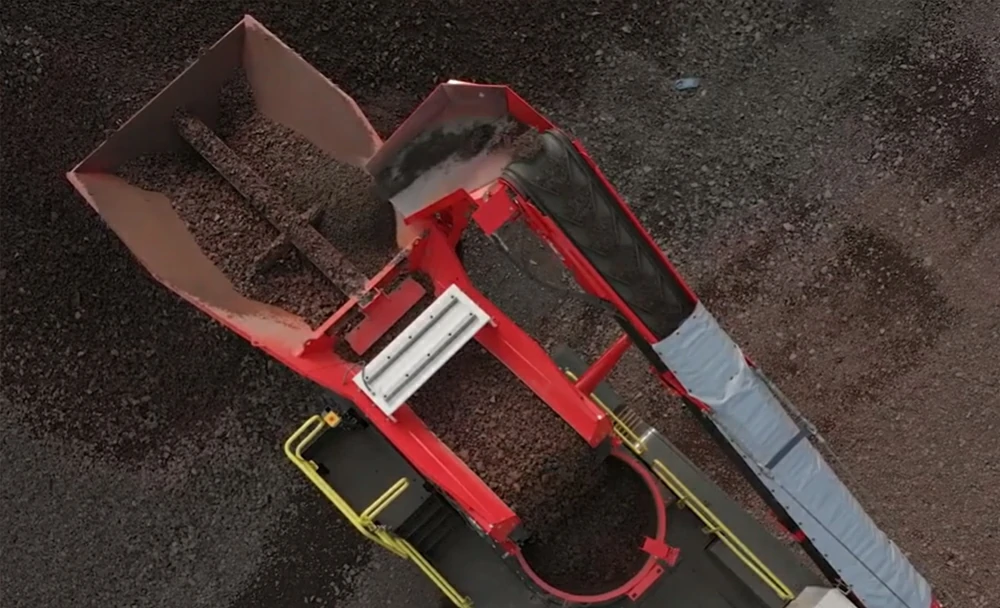
Track mounted and wheel mounted crushing plants share one defining trait, they bring the crushing process to the material instead of hauling the material to a stationary plant. Beyond that basic principle, several engineering choices shape how well a unit performs on a given site.
- Track undercarriages built for slopes up to roughly 30 percent grade and soft or uneven ground, versus wheel mounted chassis suited to fast road transport between sites.
- Modular crushing chambers that allow jaw, cone, or impact modules to be swapped or paired with screening decks depending on the feed gradation required.
- Diesel direct or diesel electric drive trains, with the electric option reducing fuel burn on sites with grid access.
- Integrated dust suppression, typically water misting rated for particulate matter below 10 microns, plus noise enclosures that bring operating levels closer to 85 decibels at the operator station.
- Fast mobilization, with most units capable of moving from transport mode to production mode in under two hours once positioned.
None of these features function well without wear parts sized and hardened correctly for the rock being processed, which is where the metallurgy comes in.
The Metallurgy Behind Wear Part Life
Jaw Plates and Cheek Plates
Jaw and cheek plates are almost always cast from Hadfield manganese steel to ASTM A128, containing 11 to 14 percent manganese and 1.0 to 1.4 percent carbon. As delivered, the casting sits at roughly 200 to 250 HB. Under repeated impact loading in the crushing chamber, the surface work hardens rapidly, climbing to 500 HB or higher while the core stays tough and austenitic. Minimum strength for A128 grade material runs around 620 megapascals yield and 900 megapascals ultimate, which is why the plates absorb heavy impact without cracking even as the surface hardens against abrasion.
Cone Liners and Mantles
Cone mantles and concaves see more sliding abrasion than raw impact, so foundries typically specify high chromium white iron to ASTM A532 Class III Type A, with 23 to 28 percent chromium content. Heat treated hardness in this class sits between 58 and 64 HRC, delivered through chromium rich M7C3 carbides embedded in the iron matrix. That hardness window resists gouging wear from silica bearing rock but leaves enough matrix toughness to survive the impact loading a cone chamber applies during choke feeding.
Blow Bars and Impact Plates
Impact chambers ask more of a wear part than either jaw or cone chambers, since blow bars take direct high velocity impact rather than compressive crushing. Depending on feed abrasiveness, foundries specify either the same manganese steel used in jaw plates for high impact low silica material, or chromium molybdenum alloy steel hardened to 45 to 55 HRC where wear resistance matters more than raw toughness.
Casting Tolerance and Surface Finish
Dimensional control matters as much as chemistry. Sand cast wear parts are typically produced to ISO 8062-3 grade CT8 to CT10, giving a linear tolerance in the range of plus or minus 0.4 to 0.8 percent of the nominal dimension. As cast surfaces from green sand molding generally finish at Ra 6.3 to 12.5 micrometers, while mating and seating faces are machined down to Ra 3.2 micrometers or finer per ISO 1302 so the part seats correctly against the frame and does not rock loose under load.
The table below summarizes typical specifications across the three most common wear part families.
| Wear Part | Typical Material | Hardness | Primary Wear Mode |
|---|---|---|---|
| Jaw plate / cheek plate | Hadfield manganese steel, ASTM A128 | 200-250 HB as cast, 500+ HB work hardened | Impact and compression |
| Cone mantle / concave | High chromium white iron, ASTM A532 Class III A | 58-64 HRC | Sliding abrasion |
| Blow bar | Manganese steel or Cr-Mo alloy steel | 200-250 HB or 45-55 HRC | High velocity impact |
Where These Machines Earn Their Keep
Given the traits above, mobile crushing plants tend to outperform stationary setups in a specific set of scenarios rather than across the board.
- Construction and demolition waste recycling, crushing concrete and asphalt on site for direct reuse as base material.
- Quarrying and mining at remote or short term sites, where building a stationary plant is not cost effective.
- Road and highway projects, processing aggregate progressively along the route as work advances.
- Urban redevelopment work, where footprint limits and noise ordinances rule out a fixed plant.
- Emergency debris clearing after storms or disasters, where equipment must be deployed and running within days.
Matching Wear Parts to the Job
Feed material dictates the correct crusher parts spec before anything else. High silica granite calls for the harder end of the chromium white iron range for cone liners, while softer limestone can run on lower chromium grades without losing service life. Wet, sticky feed changes how quickly a work hardened manganese jaw plate builds surface hardness, so plate thickness allowances often need adjusting upward on wet sites. Getting this wrong does not just shorten service life, it changes crushing efficiency as clearances open up faster than expected.
Yonsmen Wear Parts Engineered Around the Numbers Above
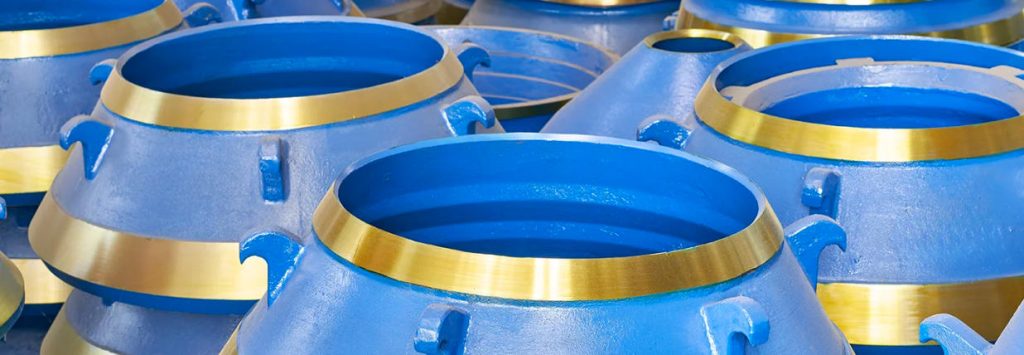
Every material and tolerance referenced above is the baseline Yonsmen works from when producing replacement crusher parts for mobile crushing plants. Rather than supplying generic castings, our engineering team matches jaw plates, cone liners, and blow bars to the feed material, moisture level, and duty cycle of each site, drawing on the same ASTM A128 and A532 specifications covered here.
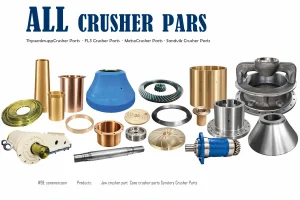
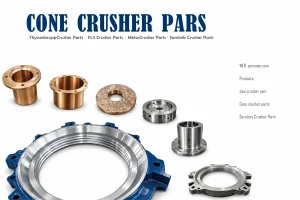
Our current range for mobile crusher parts includes jaw plates and cheek plates, cone mantles and concaves, impact blow bars and side liners, screen mesh and screen panels, plus conveyor belting, rollers, bearings, and seals. Every casting ships with documented chemistry, hardness test results, and dimensional inspection against the tolerance grade specified for the part.
If your current wear parts are underperforming against the feed material on site, Yonsmen can review the specification of your crusher parts and recommend a grade change before the next rebuild.