A Liner That Barely Needed Adjustment for Weeks, Then Needed It Every Shift
Track the bowl rotation log on almost any cone crusher and the same pattern shows up. In the first few hundred hours after a new mantle and concave go in, the crew barely touches the closed side setting. By the final quarter of the liner’s service life, the same crusher needs the bowl rotated down almost every shift just to hold the same product gradation. The wear rate did not stay flat, it climbed, and the reason has more to do with mechanics than with the metal itself.
Why Mantle and Concave Wear Accelerates Instead of Staying Linear
The Closed Side Setting Feedback Loop
As the mantle and concave lose thickness, the closed side setting opens even if nobody touches the adjustment ring. A wider gap lets oversized material pass through with less compression per pass, so the crusher compensates by relying more on rock to rock attrition inside a looser chamber. That attrition mode is sliding and rubbing rather than clean compressive crushing, and sliding contact removes far more metal per ton processed than compression does. Once the gap opens past the liner’s designed profile, every additional millimeter of wear opens the gap faster than the millimeter before it.
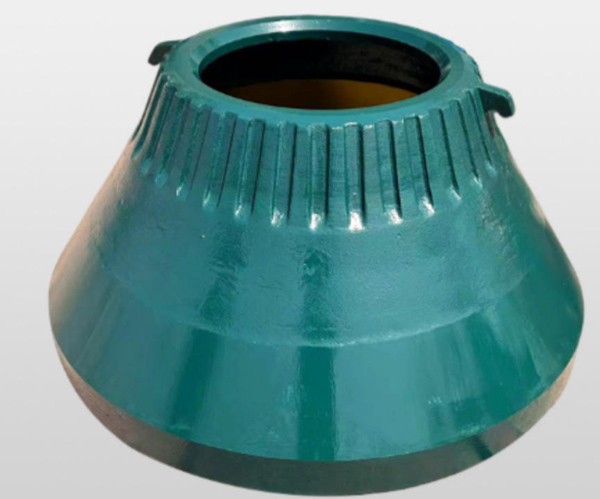
Cupping and the Shrinking Contact Band
Operators who inspect down into the chamber often describe a groove or cupping pattern forming lower in the crushing zone rather than even wear across the whole profile. This happens when the crusher is not fed on a full, choke fed basis, so the majority of the crushing load concentrates into one narrow band instead of spreading across the liner surface. Once that groove starts, it funnels more material into the same worn path, which increases contact pressure on a shrinking area and wears that band faster than the surrounding liner, a self reinforcing pattern rather than a one time event.
Loss of Choke Feed as the Chamber Opens
A choke fed chamber needs the crusher head covered with a consistent, homogeneous column of feed, typically at least 150 millimeters deep, to keep material distributed evenly and to promote rock on rock crushing that spreads load across the full liner surface. As the chamber volume grows with wear, the same feed rate that once kept the head fully covered starts leaving pockets of open space, which lets material free fall and impact the liner directly rather than being cushioned by surrounding rock. Direct impact on a chamber that was designed for cushioned compression accelerates surface damage on both the mantle and the concave.
Work Hardening Depth and the Point of No Return
Manganese liners rely on a work hardened case that forms under repeated impact, with surface hardness climbing from roughly 200 to 250 HB as cast up to 500 HB or higher once hardened. That case has a finite depth. As wear removes the hardened skin faster than fresh impact can rebuild it, softer manganese underneath is exposed, and softer material always abrades faster than hardened material under the same load. A thinning liner also flexes more under crushing force, and that added deflection promotes micro cracking and localized spalling that a rigid, full thickness liner would not experience, which is why the final portion of a liner’s service life typically wears away far faster than the first portion did.
Material and Feed Factors That Set the Baseline Wear Rate
Feed characteristics decide how steep that curve becomes before the mechanical feedback effects above even come into play. Ore abrasiveness is commonly quantified with the Bond Abrasion Index, where values above roughly 0.6 mark a rock as abrasive enough that operations often shift to single stage circuits purely to limit liner replacement cost. Quartz itself measures around 800 on the Vickers hardness scale, harder than most as cast liner surfaces, which is why feed with quartz content above roughly 20 percent measurably accelerates wear regardless of how well the crusher is operated.
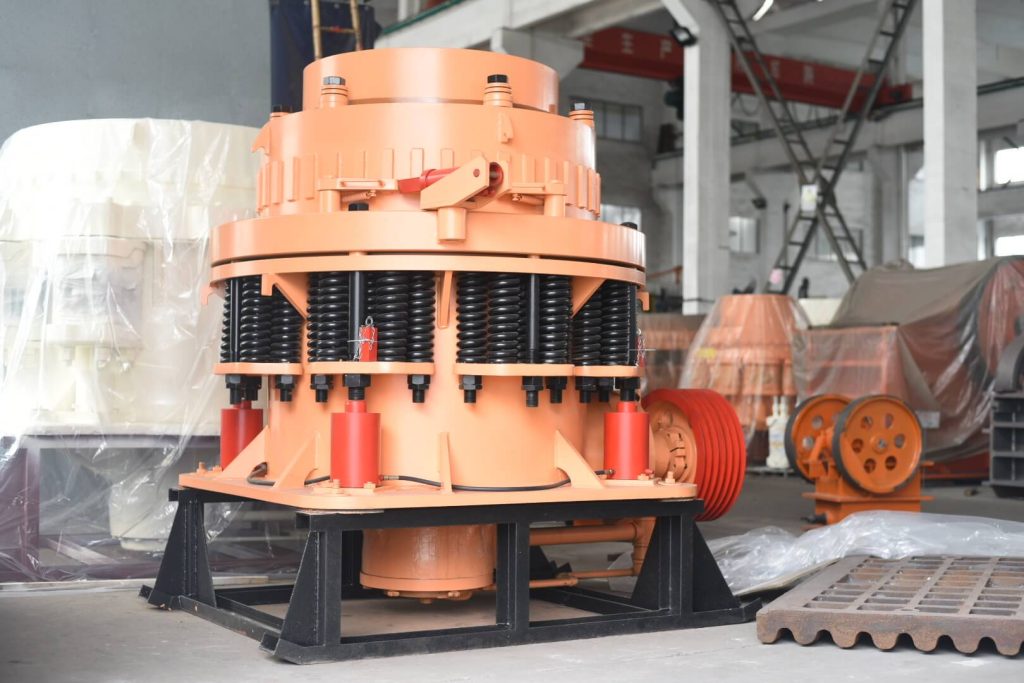
Most concaves and mantles are still cast from Hadfield manganese steel to ASTM A128, containing 11 to 14 percent manganese and delivering roughly 200 to 250 HB as cast, climbing past 500 HB once the surface work hardens under impact. In highly abrasive, lower impact duty, some operations switch to high chromium white iron to ASTM A532 Class III Type A, with chromium content in the 23 to 28 percent range and heat treated hardness between 58 and 64 HRC, trading some impact toughness for a harder surface against pure sliding abrasion. Dimensional accuracy matters too, sand cast liners are typically produced to ISO 8062-3 grade CT8 to CT10, and a casting outside that tolerance band can seat unevenly in the bowl or head, creating the same kind of localized stress concentration that drives cupping. Choosing the correct crusher wear part before installation is far cheaper than adjusting operating practice around a mismatched one for months.
| Factor | Effect on Wear Rate | Typical Reference Value |
|---|---|---|
| Quartz content in feed | Significantly accelerates abrasive wear | Above roughly 20 percent |
| Bond Abrasion Index | Signals when liner cost drives circuit design | Above roughly 0.6 |
| Choke feed depth | Maintains cushioned rock on rock crushing | At least 150 mm of coverage |
| Liner material hardness | Higher hardness resists sliding abrasion | 200-250 HB as cast, 500+ HB hardened, or 58-64 HRC for Cr white iron |
Field Practices That Flatten the Wear Curve
None of the mechanisms above are fixed once a liner is installed, they respond to how the crusher is run day to day.
- Monitor the closed side setting on a fixed schedule rather than waiting for gradation complaints, since correcting drift early prevents the attrition feedback loop from taking hold.
- Keep the feed centered across the full chamber rather than favoring one side, since an off center feed is a common cause of the cupping pattern described above.
- Maintain a steady, homogeneous choke feed rather than cycling the crusher on and off, since starving the head and then surging it back to full load both concentrate wear rather than spreading it evenly.
- Avoid running the crusher empty or with erratic surges, since an unloaded head can spin at 200 to 300 rpm and the resulting inertia damages liners and internal components well before normal wear would occur.
- Rotate liners on a scheduled basis where the design allows it, a practice that field data credits with extending usable wear life by 15 to 30 percent by keeping wear distributed rather than concentrated.

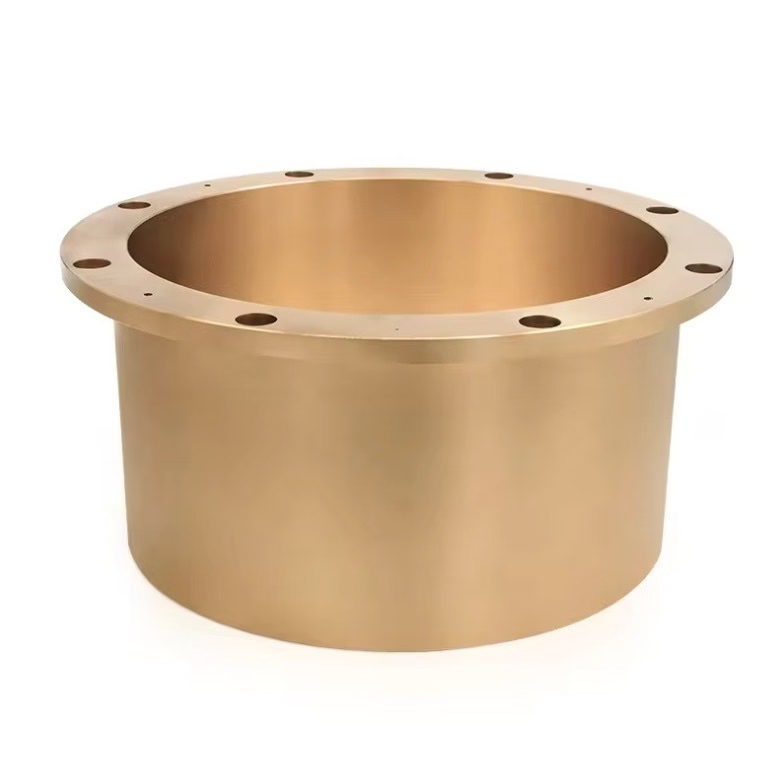
Sourcing Crusher Wear Parts Built for the Whole Curve, Not Just Day One
Understanding why wear accelerates matters because it changes what to look for the next time a liner needs replacing. A crusher wear part cast to the wrong chromium or manganese grade for your quartz content will start the feedback loop above earlier than it should, no matter how well the crew manages closed side setting. As a crusher wear parts manufacturer, Yonsmen produces mantles, concaves, and full crusher parts sets to the material and tolerance specifications covered here, with chemistry and hardness test reports supplied against every casting batch.
Yonsmen also profiles chamber geometry against your feed gradation and Bond Abrasion Index before recommending a liner grade, rather than supplying a generic profile and leaving choke feed and closed side setting adjustments to trial and error. That is the standard we hold ourselves to as a crusher wear parts manufacturer serving abrasive duty applications. If your current liners are showing early cupping or a wear curve that is getting steeper sooner than expected, send us your feed analysis and current wear pattern and we can recommend a grade or profile change before the next changeout.