What Makes the Metso 60X110 Gyratory Crusher the Highest Capacity Primary in Its Class
Most primary crushing failures do not start at the mantle. They start at the shell junction, the spider casting, or a bearing seat that was never designed to absorb the load pattern a specific ore body actually produces. The Superior MKIII 60-110 was engineered around that reality rather than around a generic throughput spec sheet.
Shell and Spider Redesign Backed by Finite Element Analysis
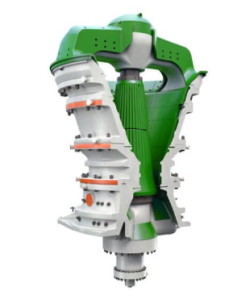
The 60-110E generation, an evolution of the earlier MK-II platform, replaced its spider casting, bottom shell, and rim liner retention system after strain gauge testing on operating units in the field. Engineers used that field data to build finite element models that identified stress concentration points which conventional design methods had missed.
The spider casting removed geometry that previously acted as a stress riser, producing a structure with a longer fatigue life under the same cyclic load. The bottom shell moved from a multi-piece bolted assembly to a single casting, which cut installation time and eliminated the joints where cracking most often initiated. The top shell kept horizontal reinforcement bands but removed vertical ribs, since those ribs were the primary source of localized stress buildup under repeated impact.
Combined, these changes let the redesigned components bolt directly onto existing MK-II frames, so an operator running an older unit does not need a full frame replacement to gain the reliability improvement.
Weight Reduction Without a Capacity Trade Off
Engineering teams cut approximately ten percent from the total structural weight of the machine while holding throughput constant, and raised operating speed from roughly 514 rpm to 600 rpm. A faster eccentric cycle at the same feed opening moves more material per hour without requiring a larger crushing chamber, which keeps the civil foundation and site footprint unchanged for plants upgrading from an older frame.
Lower shipping weight also reduces transport cost for remote mine sites, where crane capacity and road weight limits often dictate what equipment can physically reach the plant.
Drive Train Precision and Wear Component Metallurgy
Power reaches the eccentric assembly through a precision machined gear and pinion set, heat treated and ground to hold dimensional accuracy under sustained torque. That accuracy directly affects gear mesh quality, and a poorly toleranced gear set is one of the more common sources of premature vibration and bearing wear in large gyratory drives.
The mantle and concave, the two primary wear surfaces, are cast from high manganese steel or high chrome alloy depending on the ore abrasiveness at a given site. Foundries supplying this class of casting typically control non-metallic inclusion levels and refine grain boundary structure through controlled alloying, since inclusion content has a measurable effect on how quickly a casting develops surface cracking under repeated impact. Single castings for the 60X110 frame size can reach sixteen tons, with mantle assemblies commonly specified near 2750 mm outer diameter, which places significant demand on furnace capacity and heat treatment uniformity across the full casting cross section.
Main Shaft, Bushings, and the Arm Shield System
The main shaft on this frame size is produced as a single forged piece rather than a welded assembly, removing the weld interface that would otherwise become a fatigue initiation point under the shaft’s combined bending and torsional load. Spider bushings are cast from manganese bronze, chosen for its low friction coefficient against the shaft journal and its tolerance for boundary lubrication conditions during startup.
The spider arm shield, narrow arm liner, and pinion arm liner protect the structural arms themselves from the abrasive fines that pass through the crushing chamber. These liners are treated as sacrificial wear items by design, replaced on a set interval so the underlying structural casting never sees direct abrasive contact.
Comparable Specifications Across the Superior Frame Range
| Parameter | 60-110 MK-II | 60-110E / MKIII |
|---|---|---|
| Operating Speed | Approx 514 rpm | Up to 600 rpm |
| Structural Weight | Baseline | Approx 10 percent lower |
| Bottom Shell Design | Multi piece bolted | Single piece casting |
| Wear Part Materials | High manganese steel | High manganese steel or high chrome alloy |
| Retrofit Compatibility | Not applicable | Bolt on to existing MK-II frames |
Capacity Figures Depend on Feed Conditions, Not Just Frame Size
Published throughput numbers for this frame size assume a feed bulk density near 1.6 metric tons per cubic meter, with a feed gradation where the majority of material passes well below the maximum feed opening. Capacities are calculated at maximum eccentric throw, meaning a site running a coarser or wetter feed than the reference gradation should expect lower actual throughput than the rated figure. This is a common source of disagreement between mine planning teams and plant operators, and one of the more overlooked variables when comparing tonnage claims across different crusher brands.
Digital Monitoring as Part of the Reliability Package
The Superior MKIII platform pairs with monitoring systems that track crushing chamber conditions and feed truck data in near real time. Trend data on vibration, chamber fill level, and cycle load lets a maintenance team catch a developing wear pattern before it reaches the point of unplanned downtime, shifting the maintenance model from reactive repair toward scheduled component replacement based on actual condition data rather than a fixed calendar interval.
Why Upgrade Compatibility Matters for Existing Plants
A mine site running an older MK-I or MK-II frame does not need to replace the entire crusher to gain most of these reliability improvements. Because the redesigned spider, shell, and liner retention components share mounting geometry with earlier frames, a plant can phase in the upgraded castings during scheduled liner change intervals, spreading the capital cost across multiple maintenance cycles instead of one large shutdown.
- Reduced structural weight lowers transport and crane cost for remote site installation
- Single piece bottom shell removes a historical source of joint fatigue cracking
- Forged single piece main shaft eliminates a weld seam under combined torsional load
- Retrofit compatible castings let existing frames gain reliability upgrades without full replacement
- Manganese bronze spider bushings tolerate boundary lubrication conditions during startup cycles