
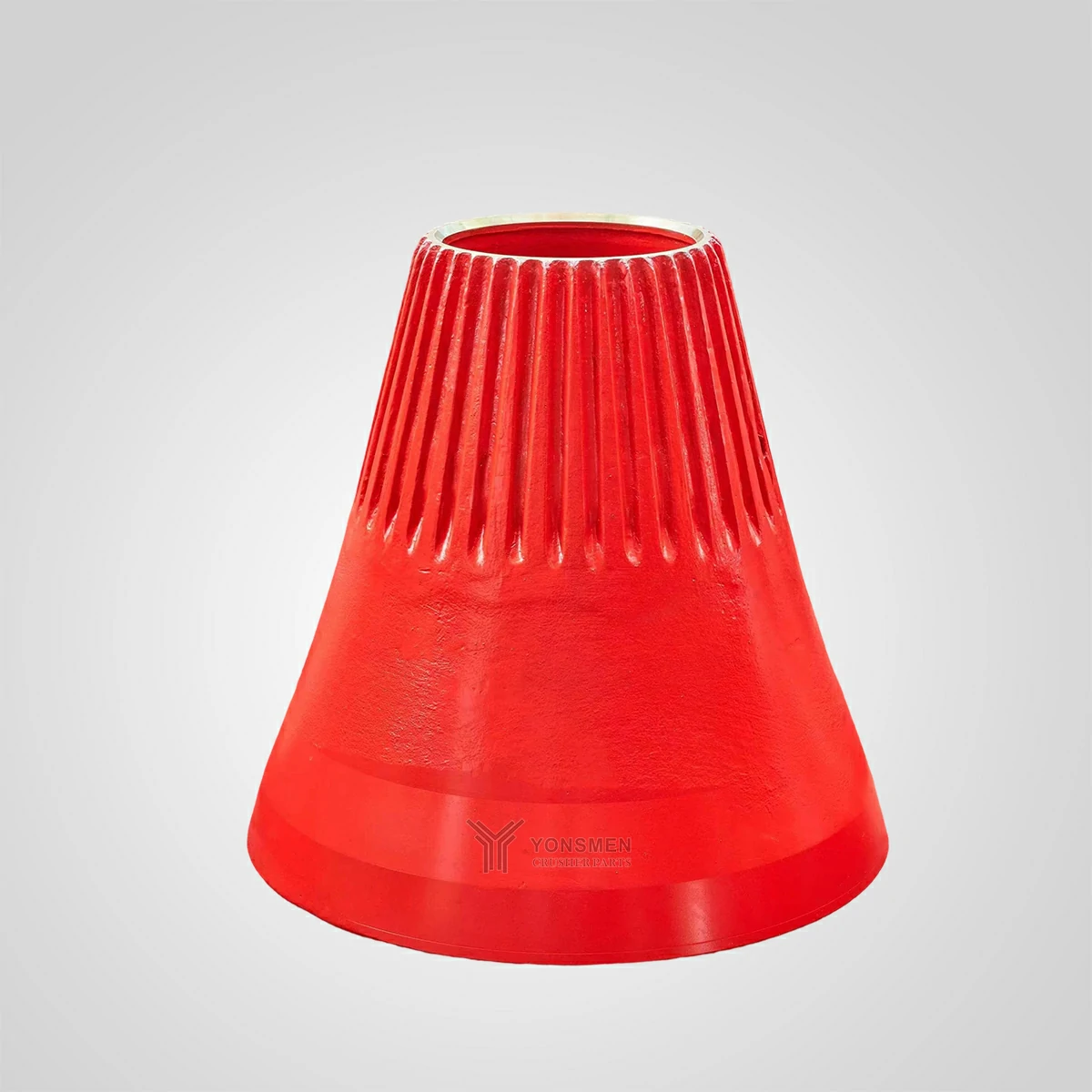
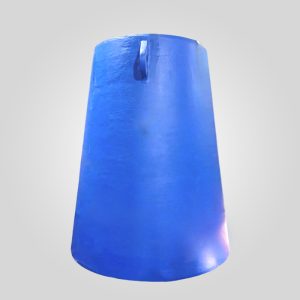
FLSmidth Jaw Gyratory Crusher BK 54-67 mantle
Component : Mantle (crushing head liner)
Crusher Model :Jaw Gyratory Crusher BK 54-67 Pro (ThyssenKrupp / FLSmidth)
Mantle Reference Diameter :1,700 mm / 67 inch (base mantle diameter confirmed for 54-67 class)
Standard Material Grade: Mn18Cr2 — austenitic manganese steel (standard grade for primary gyratory mantles)
The Mantle Failure That Starts Before the First Tonne of Ore Is Crushed
A mantle cast from under-alloyed manganese steel that has not been correctly solution-annealed and water-quenched will not work-harden as designed. The austenitic structure required for surface hardening under compressive impact load depends entirely on complete carbide dissolution during heat treatment. A casting that looks identical on the surface — correct profile, correct weight, correct fit — can begin failing within the first 200 operating hours if the microstructure contains residual carbides at grain boundaries. Those carbides become fracture initiation sites. The first sign is a network of fine surface cracks across the impact zone; the second sign is spalling; the third sign is accelerated wear that forces an unplanned liner changeout on a schedule no one planned for.
For the BK 54-67 Pro jaw gyratory crusher specifically, this failure mode is more damaging than in a standard circular-feed gyratory because the jaw opening creates asymmetric impact loading on the upper mantle. The jaw side of the mantle receives concentrated impact from oversized feed slabs — the very material the BK design is intended to handle. A mantle with incorrect microstructure in the upper section fails preferentially on the jaw side, and the resulting asymmetric wear accelerates the rate at which the opposing concave segments also wear unevenly, driving a full liner changeout for what should have been a single mantle issue.
Confirmed Parameter Data — BK 54-67 Pro Mantle
The table below lists only parameters that are verifiable from FLSmidth’s official documentation and from multiple confirmed industry material standards. Specific mantle segment part numbers, individual segment weights, and OEM drawing dimensions for the BK 54-67 Pro are not publicly released. The generic figures sometimes circulated online — “high-strength steel,” “60-65 HRC,” and “+/- 0.5mm” as a blanket tolerance — are not sourced from FLSmidth documentation and do not correspond to verified mantle specifications. They are not included in this table. The 60-65 HRC hardness range corresponds to ceramic metal-matrix composites, not to the austenitic manganese steel used for crusher mantles, where as-cast hardness is in the range of 200–250 HB and in-service surface hardness reaches 450–550 HBW through work-hardening.
| Parameter | Confirmed Value / Status |
| Component | Mantle (crushing head liner) |
| Crusher Model | Jaw Gyratory Crusher BK 54-67 Pro (ThyssenKrupp / FLSmidth) |
| Mantle Reference Diameter | 1,700 mm / 67 inch (base mantle diameter confirmed for 54-67 class) |
| Standard Material Grade | Mn18Cr2 — austenitic manganese steel (standard grade for primary gyratory mantles) |
| High-Abrasivity Alternative Grade | Mn22Cr2 or Mn22Cr3 — for feed with Bond Work Index above 16 kWh/t and SiO2 content above 25% |
| Minimum Grade (moderate duty) | Mn13Cr2 — for lower crushing zone where impact energy is reduced relative to upper jaw zone |
| Chemical Composition — Mn18Cr2 | C: 1.10–1.40%, Mn: 17–20%, Cr: 1.70–2.40%, Si: 0.30–0.60%, S: max 0.05%, P: max 0.03% |
| As-Cast Initial Hardness | 200–250 HB (Mn13Cr2: 210–230 HB; Mn18Cr2: 220–240 HB; Mn22Cr2: 230–250 HB) |
| In-Service Surface Hardness (work-hardened) | 450–550 HBW (approximately 47–53 HRC equivalent); hardened layer depth up to 18 mm |
| Heat Treatment Requirement | Solution annealing at 1,000–1,100°C followed by water quenching; carbides at grain boundaries not permitted |
| Profile Tolerance (industry standard) | ±2 mm on profile geometry; bore dimensions ±0.5 mm; weight tolerance ±2% |
| Impact Toughness (Mn18Cr2) | Above 100 J/cm² at ambient temperature (austenitic structure requirement) |
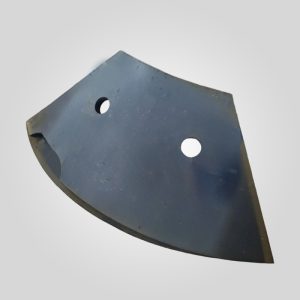
| Mantle Configuration | Segmented (multiple segments); individual segment weight to be confirmed by OEM drawing or measured sample |
| Maintenance Assembly Weight (mainshaft + oversized mantle) | Approx. 32,500 kg (confirmed for 54-67 class; mantle liner set is a fraction of this figure) |
| Available Surface Profile Options | Smooth (high-abrasivity hard rock); corrugated (improved bite on coarse, irregular feed); application-specific |
| OEM Drawing Dimensions | Not publicly available — confirm by OEM drawing, worn sample measurement, or original part comparison |
| Application | Primary jaw gyratory crushing — underground block cave, hard rock copper/gold/iron ore duty |
Why the BK 54-67 Pro Mantle Is Not the Same as a Standard Gyratory Mantle of the Same Diameter
A standard KB-series gyratory mantle for a 67-inch diameter crusher receives feed distributed evenly around its full circumference. The wear pattern develops concentrically. A replacement mantle from any supplier who has measured the wear on a circular-feed gyratory and replicated that profile will produce acceptable results, provided the material grade and heat treatment are correct.
The BK 54-67 Pro mantle operates differently. Feed enters from one side only — through the asymmetric jaw opening. The upper mantle on the jaw side contacts oversized slabs under direct impact loading that does not occur on the opposing side. This creates a predictable asymmetric wear pattern where the jaw-side upper segments lose thickness faster than the back-side segments at the same axial height. A supplier who has only measured a standard KB-series mantle and offers it as a BK 54-67 Pro replacement is supplying a component with the wrong upper geometry for the jaw-side contact zone. The incorrect profile changes the nip angle at the jaw entry, reduces the efficiency of the first crushing stage, and accelerates the load on the lower crushing chamber.
For procurement of this gyratory crusher part specifically, the supplier must confirm that their pattern or drawing source is derived from a BK jaw gyratory mantle — not from a KB standard gyratory mantle of the same nominal diameter. The distinction is not visible in a photograph of the finished casting and cannot be identified by visual inspection alone. It requires profile measurement against the OEM drawing or a confirmed worn BK sample.
Industry Pain Point: The Grade Substitution That Costs Four Times the Liner Price
A copper mine operating a BK 54-67 Pro underground had sourced mantles from three successive suppliers over a two-year period. The first supplier delivered Mn18Cr2 liners that achieved a 5,200-hour service life before reaching the rejection wear limit. The second supplier, selected on price, delivered liners described as “equivalent Mn18Cr2” that reached rejection at 3,100 hours. The third supplier, also selected on price, delivered liners that spalled in the upper jaw zone at 1,400 hours, requiring an emergency changeout that cost more in underground crane time and production loss than three full planned changeout cycles.
Post-failure metallurgical analysis on the third supplier’s liner segments found residual carbide networks at austenite grain boundaries — the signature of incomplete solution annealing. The as-cast hardness reported on the material certificate was 218 HB, which appeared correct. The certificate did not include a microstructure report confirming carbide dissolution. The absence of a microstructure acceptance criterion in the purchase order allowed a non-conforming casting to be certified and shipped. The cost of adding a microstructure acceptance check to the procurement specification — requiring a photomicrograph at 100x magnification confirming no carbides at grain boundaries — is zero. The cost of not having it, in that operation, was equivalent to seven standard planned changeout events compressed into one unplanned emergency.
Pro-Tip: When evaluating a new mantle supplier for the BK 54-67 Pro, request a Brinell hardness test on the actual delivered casting — not on a separately cast test bar. A test bar poured alongside a large casting does not experience the same solidification rate as the casting itself and will typically show 10–20 HB higher than the actual part. The mantle segment should be hardness-tested directly on a machined flat spot in the non-functional area of the bore or back surface. If the supplier cannot provide direct casting hardness and can only reference a test bar result, that is a quality control gap that should be resolved before the liner is installed in the crusher.
Wear Measurement and Replacement Timing for the BK 54-67 Pro Mantle
Measuring mantle wear in a jaw gyratory crusher requires a different approach from a standard gyratory. In a circular-feed gyratory, three or four radial measurements at equal angular spacing gives a representative wear profile because wear is approximately concentric. In the BK 54-67 Pro, the jaw-side and back-side of the mantle wear at different rates. A single-point or two-point measurement protocol that does not include the jaw-side 90-degree arc will systematically underestimate the actual wear rate on the thinnest section of the liner.
The measurement protocol for the BK 54-67 Pro mantle should include a minimum of six angular positions — at 0, 60, 120, 180, 240, and 300 degrees relative to the jaw opening centerline — measured at three axial heights: upper jaw zone, mid-chamber, and lower parallel zone. This 18-point grid reveals the asymmetric wear map that drives replacement timing. The replacement decision should be based on the minimum remaining thickness at any point in the grid, not on the average thickness, because spalling typically initiates at the thinnest point regardless of the condition of the adjacent material.
Hydraulic main shaft adjustment on the BK 54-67 Pro compensates for cumulative mantle wear by raising the shaft to restore the OSS. The rate at which shaft height adjustment is consumed per 1,000 operating hours is a direct measure of the mantle wear rate. Tracking the shaft height log against the crusher feed rate, feed size distribution, and ore hardness index creates a predictive wear model that allows the maintenance team to schedule the next mantle changeout to within a two-week window — rather than responding to a wear limit alarm during a shift.
Procurement Requirements from a Qualified Gyratory Crusher Part Supplier
The minimum technical documentation package for a BK 54-67 Pro mantle from any supplier who positions themselves as a serious gyratory crusher part supplier should include the following items without exception:
- Chemical composition certificate with heat number, listing C, Mn, Cr, Si, S, and P against declared min/max limits for the specified grade
- Hardness test result measured directly on the casting, not on a separately cast test bar, reported in Brinell units with the test load and ball diameter stated
- Microstructure acceptance report confirming no carbides at grain boundaries, with a photomicrograph at 100x magnification from the heat treatment batch
- Dimensional inspection sheet covering profile geometry, bore dimensions, and weight, compared against the drawing or confirmed sample reference
- Profile source declaration — confirmation that the pattern was derived from a BK jaw gyratory mantle, not from a standard KB circular-feed gyratory mantle of the same diameter
- Weight confirmation for each delivered segment, within ±2% of the drawing reference
A supplier who provides a single-line “material certificate” stating “Mn18Cr2 — conforms to specification” without the above supporting data is providing assurance language. That language cannot be inspected, measured, or verified after a failure. Measurable data can be audited, trended, and used as the basis for a warranty claim if the liner fails to deliver its expected service life.
Frequently Asked Questions
Should the upper mantle and lower mantle of the BK 54-67 Pro use the same manganese grade, or should different grades be specified by zone?
Specifying different grades by zone is technically correct and economically justified for the BK 54-67 Pro. The upper mantle on the jaw side receives the hi
All manufacturer names, part numbers, model numbers, and descriptions are used for reference and identification purposes only, they are owned by the respective machine manufacturer, including but not limited to FLSmidth®, Metso®, thyssenkrupp®, and Sandvik®. All parts supplied are manufactured and warranted by yonsmen and are not manufactured by or purchased from the Original Equipment Manufacturer. yonsmen has no association with the OEM and does not intend to give this impression.
Reviews
There are no reviews yet.