
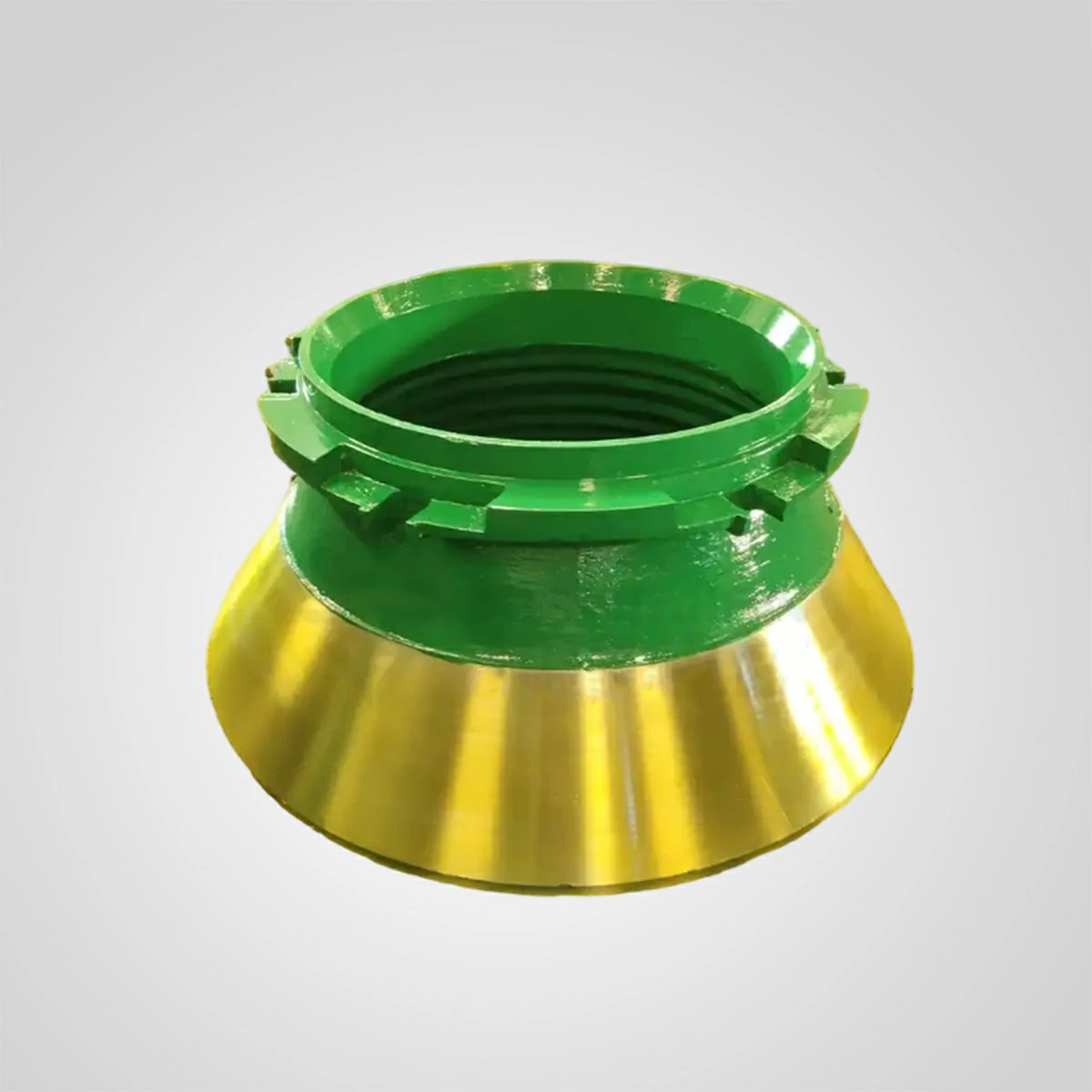
Bowl Liner Specifications
| Parameter | Available Information |
| Part Name | Bowl Liner |
| Crusher Type | Cone crusher |
| Function | Stationary crushing liner working with the mantle to compress rock inside the chamber |
| Common Materials | Mn13Cr2, Mn18Cr2, Mn22Cr2 or customer-specified manganese steel |
| Typical Application | Secondary, tertiary, and quaternary crushing in mining, quarrying, and aggregate plants |
| Hardness Information | Exact hardness depends on alloy and heat treatment; generic values should be confirmed by material certificate |
Material grade and liner profile should be selected according to the actual operating conditions of the crusher. Mechanical properties may vary with chemical composition, casting process and heat treatment.
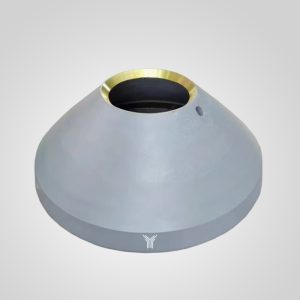
A cone crusher bowl liner, also known as a cone crusher concave, is the stationary wear part installed inside the crushing chamber. Together with the mantle, it forms the crushing cavity where rock is compressed and reduced to the required product size.
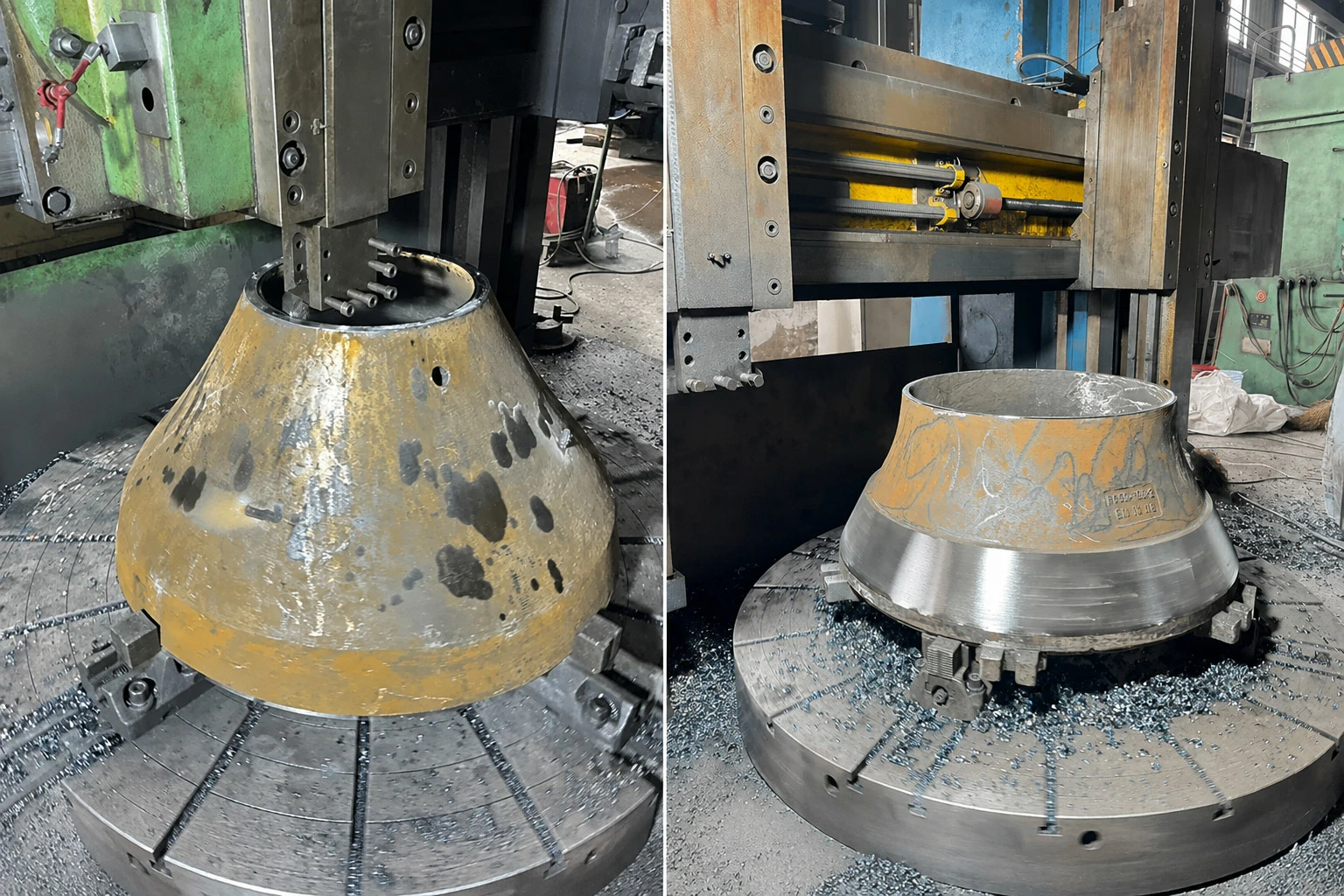
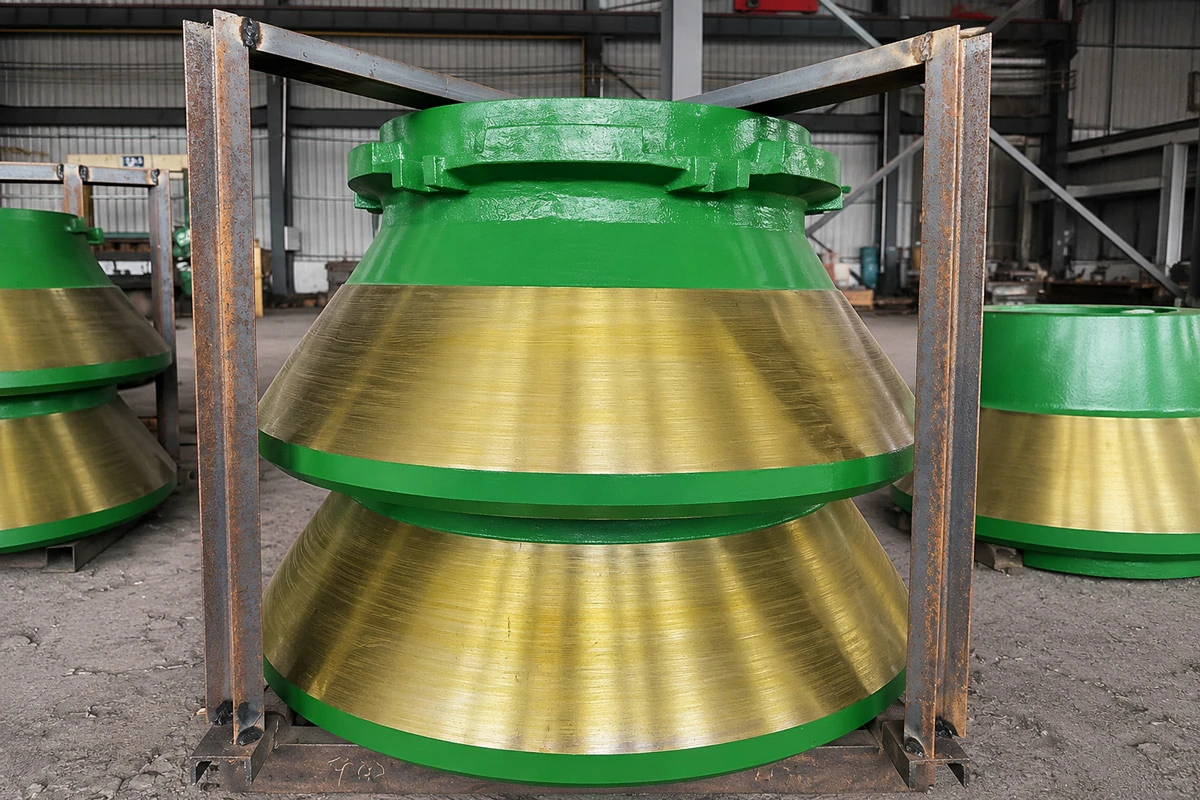
We manufacture replacement bowl liners for a wide range of cone crusher models and crushing applications. Liners can be supplied in different manganese steel grades and chamber profiles according to crusher model, feed conditions, target product size, and wear requirements.
What Does a Bowl Liner Do?
During operation, the mantle moves eccentrically toward and away from the bowl liner. Material entering the chamber is repeatedly compressed between these two wear surfaces until it becomes small enough to pass through the crusher discharge opening.
Because the bowl liner directly defines part of the crushing chamber geometry, its profile affects:
- feed opening;
- crushing ratio;
- crusher capacity;
- product gradation;
- circulating load;
- power consumption;
- liner utilization.
For this reason, replacing a bowl liner should involve more than matching its overall diameter. The crusher model, cavity configuration and operating conditions should also be checked before production.
Available Manganese Steel Grades
Mn13Cr2 Bowl Liner
Mn13Cr2 can be considered for applications with moderate impact and relatively lower abrasive wear.
It may be suitable where the feed material provides sufficient impact to work-harden the liner but does not require a higher-manganese alloy.
Mn18Cr2 Bowl Liner
Mn18Cr2 is widely used for general quarrying, aggregate production and hard-rock crushing applications.
It provides a practical balance between impact resistance and wear performance under many normal cone crusher operating conditions.
Mn22Cr2 Bowl Liner
Mn22Cr2 is generally considered for demanding applications involving hard or abrasive feed, larger crushing loads or conditions where longer wear life is a priority.
Higher manganese content does not automatically mean better service life. The correct grade depends on the feed material, crusher load and whether the liner receives enough impact to develop effective work hardening.
How to Select the Correct Bowl Liner
For an accurate replacement, we recommend confirming the following information before ordering:
- Crusher manufacturer and model
Provide the complete crusher model whenever possible. - OEM or existing part number
A known part number is one of the quickest ways to identify the required liner. - Current chamber profile
Confirm whether the crusher is using a coarse, medium, fine or other specific cavity. - Feed size
Maximum and typical feed size influence both chamber selection and liner performance. - Closed Side Setting (CSS)
The operating CSS helps determine whether the selected profile is suitable for the required discharge size. - Feed material
Tell us the rock or ore type and, when available, its hardness and abrasiveness. - Current liner performance
Information about liner life, uneven wear or premature replacement can help identify whether another material or profile should be considered.
If the part number is unknown, drawings, dimensions or photographs of the existing liner can also help with identification.
Coarse vs. Fine Bowl Liner
A coarse bowl liner normally provides a larger feed opening and is used where larger feed material enters the chamber.
A fine bowl liner is intended for smaller feed and a smaller final product.
The correct cavity should always be matched with the corresponding mantle and the operating requirements of the crusher. Installing a liner only because its dimensions appear similar can change the chamber geometry and affect crusher performance.
Why Does a Bowl Liner Wear Unevenly?
Uneven wear is often a sign that the crushing chamber is not receiving material uniformly.
Typical causes include:
- off-center feeding;
- segregated feed;
- insufficient choke feeding;
- excessive fines in the feed;
- unsuitable liner profile;
- incorrect operating setting;
- worn or damaged feeding components.
For example, when most material consistently enters one side of the crusher, that section of the bowl liner receives more crushing work. The liner can then develop an uneven wear profile even though other sections still have usable thickness.
Before replacing an unevenly worn liner, checking the feeding system can help prevent the same wear pattern from developing on the new part.
Bowl Liner Wear Inspection
Routine liner inspection helps operators identify abnormal wear before it affects crusher operation.
During inspection, check:
- wear distribution around the full circumference;
- remaining liner thickness;
- cracks or damaged areas;
- loose liner conditions;
- abnormal changes in crusher power;
- changes in product gradation;
- changes in CSS;
- feed distribution inside the chamber.
Maintenance intervals should follow the crusher manufacturer’s instructions and the site’s actual operating conditions rather than relying on one fixed inspection interval for every application.
Bowl Liner Applications
Our cone crusher bowl liners are used in crushing equipment processing materials such as:
- granite;
- basalt;
- iron ore;
- copper ore;
- limestone;
- quartzite;
- hard rock;
- quarry stone;
- construction aggregate.
Typical installations include mining operations, quarries, aggregate plants and mineral processing facilities.
Compatible Cone Crusher Models
Replacement bowl liners can be manufactured for many commonly used cone crusher families, including models corresponding to:
Metso-type cone crushers
GP series, HP series, MP series, MX series, Omnicone series and selected G-series applications.
Sandvik-type cone crushers
CH series, CS series, Hydrocone series, Superior series and selected Svedala-type cone crusher applications.
Telsmith-type cone crushers
Selected Gyrasphere cone crusher models.
Availability depends on the exact model and liner configuration. Please provide the crusher model and part number when requesting a quotation.
All manufacturer names, model names and part numbers are used for identification and reference purposes only where applicable. Replacement parts are supplied according to the requested technical specifications.
Information Required for a Bowl Liner Quotation
To receive an accurate quotation, send as much of the following information as possible:
- crusher brand;
- crusher model;
- bowl liner part number;
- mantle part number, if available;
- required material grade;
- chamber type;
- required quantity;
- working material;
- maximum feed size;
- CSS;
- drawing or liner dimensions if the part number is unavailable.
Providing operating information is especially useful when you want to improve liner life instead of simply replacing the existing part with the same specification.
Frequently Asked Questions
Is a bowl liner the same as a cone crusher concave?
In cone crusher terminology, the stationary wear liner surrounding the mantle is commonly referred to as the bowl liner or concave. Terminology can vary between crusher manufacturers and models.
How do I identify the correct bowl liner?
The preferred method is to provide the crusher model and existing part number. If these are unavailable, liner drawings, dimensions and photographs can be used to help identify the required part.
Which manganese steel grade should I choose?
Mn13Cr2, Mn18Cr2 and Mn22Cr2 are used for different operating conditions. Selection should consider feed hardness, abrasiveness, impact level, feed size and existing wear performance rather than choosing solely by manganese content.
Can the bowl liner profile be customized?
Yes. Where manufacturing and crusher design requirements allow, the liner material or chamber profile can be produced according to drawings, samples or specified operating requirements.
When should a bowl liner be replaced?
Replacement should be based on the crusher manufacturer’s wear limits, remaining liner thickness and operating condition. Abnormal product size, changing crusher settings or severely uneven wear should also be investigated rather than waiting for the liner to fail.
What information should I provide if I do not know the part number?
Send the crusher model, photographs of the existing bowl liner, key dimensions and any markings visible on the casting. Information about the feed material and crushing application is also helpful.
Reviews
There are no reviews yet.