A recent failure analysis of a 7-foot heavy-duty cone crusher revealed that a catastrophic main shaft seizure was caused by a sub-surface thermal fatigue crack in the eccentric bronze bushing. This defect passed visual inspection during a routine rebuild, highlighting a critical gap in quality control. As a field engineer with over two decades of experience, I have observed that micro-fissures smaller than 0.05 mm can compromise an entire crushing circuit, resulting in downtime costs exceeding forty thousand dollars per hour.
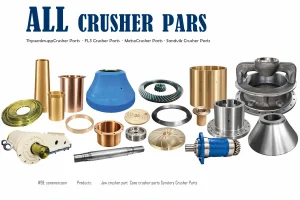
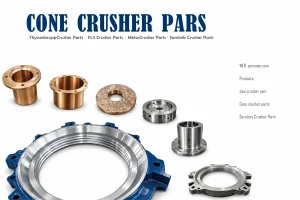
Bronze crusher parts serve as the sacrificial heart of high-stress comminution equipment. They operate under extreme cyclic loading, where peak compressive stresses routinely exceed 300 MPa. Components such as eccentric bushings, socket liners, and countershaft bushings are engineered to bear the brunt of kinetic energy. If the copper alloy matrix contains microscopic inclusions, shrinkage cavities, or cooling cracks, the high-vibration environment of a quarry will rapidly propagate these defects into structural fractures.
Material Specifications and Performance Standards
Premium eccentric bushings are typically cast from high-lead bronze alloys, specifically ASTM B505 C93200 (SAE 660) or ASTM B22 C93800. These alloys are selected for their low coefficient of friction, high thermal conductivity, and embedded anti-galling properties provided by suspended lead micro-globules.
Maintaining strict mechanical parameters is non-negotiable. The following table outlines the standard engineering boundaries for reliable field deployment:
| Mechanical & Physical Property | ASTM B505 C93200 Standard Value | ASTM B22 C93800 High-Load Value |
|---|---|---|
| Tensile Strength (Minimum) | 241 MPa (35,000 psi) | 172 MPa (25,000 psi) |
| Yield Strength (0.5% Extension) | 138 MPa (20,000 psi) | 110 MPa (16,000 psi) |
| Brinell Hardness (HB, 500kg load) | 65 – 75 | 60 – 70 |
| Elongation in 2 inches (Minimum) | 10% | 6% |
| Machined Surface Finish Tolerance | Ra 0.8 to Ra 1.6 microns | Ra 0.4 to Ra 0.8 microns |
An optimal surface finish between Ra 0.8 and Ra 1.6 microns is crucial for establishing a stable hydrodynamic oil film. However, if a casting defect disrupts this surface, it leads to boundary lubrication conditions. This causes direct metal-to-metal contact, elevating local temperatures beyond the 327°C melting point of lead, resulting in rapid galling and component seizure.
Step-by-Step Dye Penetrant Inspection Protocol
Liquid Penetrant Testing (PT) is a highly sensitive non-destructive testing method capable of detecting surface-open discontinuities. For reliable crusher parts, this test must be executed in accordance with ASTM E165 standards.
1. Surface Preparation and Pre-Cleaning
The accuracy of the test depends entirely on surface cleanliness.
- Solvent Degreasing: Thoroughly spray with an approved volatile organic solvent to dissolve hydrocarbon chains within defects.
- Mechanical Caution: Strictly avoid sandblasting or grinding prior to testing, as this can smear the ductile copper-matrix across fine cracks, sealing them from detection.
- Drying: Allow a minimum of 5 minutes for solvent evaporation. The ambient temperature should ideally be between 10°C and 52°C.
2. Penetrant Application and Dwell Time
Apply a bright red, visible penetrant via spraying, brushing, or immersion. For dense bronze castings, a standard 5-minute dwell time is insufficient. Based on shop-floor data, the penetrant must remain active for a minimum of 20 to 30 minutes to capture deep foundry cooling fractures.
3. Excess Penetrant Removal
After dwell time, remove excess dye without washing out the penetrant from defects.
- Wipe Technique: Wipe the bulk penetrant away using a clean, dry, lint-free microfiber cloth.
- Controlled Solvent Action: Slightly moisten a fresh cloth with solvent cleaner. Never spray solvent directly onto the surface, as this dilutes trapped penetrant and yields false-negative results.
4. Developer Application
Spray a white, non-aqueous wet developer in a thin, uniform layer. The developer draws trapped penetrant back out via reverse capillary action. Allow development to mature for 10 to 15 minutes, but no longer than 30 minutes to avoid excessive bleed-out.
5. Indication Interpretation
Perform inspection under a minimum light intensity of 1000 lux.
- Continuous Linear Indications: Signify sharp, deep structural cracks (immediate rejection).
- Intermittent Linear Indications: Point to surface micro-fissures caused by localized stress.
- Rounded or Porous Indications: Represent casting blowholes or shrinkage cavities.
Professional Engineer’s Note
Environmental and Material Sensitivity: Based on field experience, particularly in variable climates, two critical factors often lead to false negatives if overlooked:
- Temperature Sensitivity: If the ambient temperature falls below 10°C, the surface tension of the penetrant changes, drastically reducing capillary action. Do not perform the test in cold conditions without pre-warming the component, or hidden flaws will be missed.
- Lead Micro-Globule Interference: High-lead bronzes often have lead segregated on the surface. If not removed by a proper acid-etch “activation” step (followed by thorough rinsing), this lead acts like a “non-stick” coating, repelling the penetrant and causing catastrophic inspection failure.
Case Study: The Cost of Overlooking Quality
A failure analysis on a secondary gyratory crusher at a Nevada gold mine traced a sudden drop in countershaft speed to aftermarket bronze bushings. The bushing fractured along a pre-existing foundry shrinkage crack. Because the manufacturer skipped the $50 dye penetrant test, the mining company suffered a total economic loss of nearly eighty-five thousand dollars in replacement parts and lost production.
In the mining industry, bronze bushings must not be treated as basic commodities. True reliability is built through rigorous metallurgy, precise machining tolerances, and strict NDT protocols like dye penetrant testing. By guaranteeing zero hidden micro-fractures before shipping, operations can maximize return on investment and avoid catastrophic downtime.