
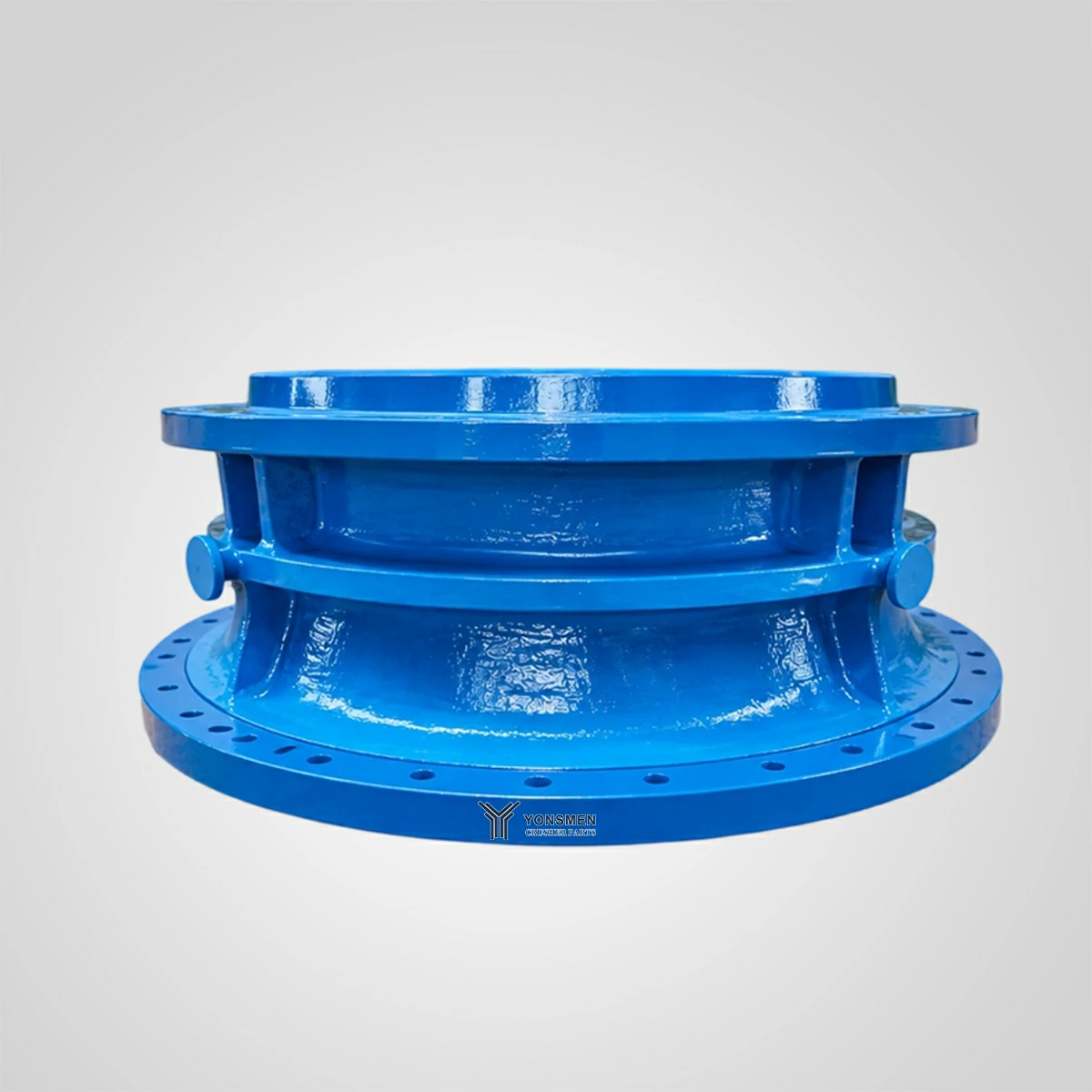

ThyssenKrupp KB 63-89 Gyratory Crusher Top Shell: Engineering Data and Field Performance
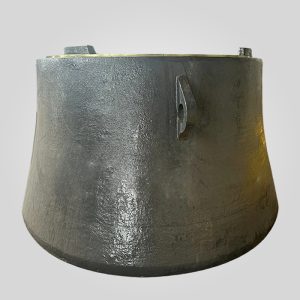
A hairline crack running through the spider arm boss of a KB 63-89 top shell rarely announces itself with noise. It shows up first as a faint reddish stain of oxidized dust seeping through a stress line after roughly 35,000 to 42,000 operating hours under cyclical eccentric thrust loads. By the time an operator notices it during a shift walk-down, the casting has already lost a meaningful percentage of its fatigue life, and the mine is looking at an unplanned shutdown that can run into six figures per day in lost throughput. This is the exact failure mode that makes gyratory crusher parts, and top shell castings in particular, one of the highest-consequence procurement decisions in a comminution circuit. The following technical breakdown covers a precision-cast, OEM-compatible top shell for the ThyssenKrupp KB 63-89 primary gyratory crusher, including full dimensional and metallurgical specifications for engineers evaluating a replacement or a spare-stock purchase.
Product Parameters
| Parameter | Specification |
|---|---|
| Applicable Model | ThyssenKrupp KB 63-89 Primary Gyratory Crusher |
| Part Designation | Top Shell / Upper Main Frame Casing |
| Feed Opening (Gape) | 1,600 mm (63 in) |
| Mantle Diameter Reference | 2,250 mm (89 in) |
| Casting Process | Sand casting, gravity pour, stress-relief annealed |
| Base Material | Cast steel, ASTM A148 Grade 90-60 equivalent |
| Nominal Wall Thickness | 180 mm – 220 mm |
| Minimum Wear Limit (Wall) | 120 mm before mandatory retirement |
| Base Casting Hardness | 200 HB – 230 HB |
| Wear Liner Surface Hardness | 450 HB – 500 HB (work-hardened Mn steel) |
| Overall Assembly Weight | 42,000 kg – 48,000 kg (configuration dependent) |
| Machined Seating Face Tolerance | ±0.5 mm |
| Flatness Tolerance | 0.3 mm per meter |
| Surface Roughness (Ra) | 12.5 μm on all mating faces |
| Spider Cap Bolt Size | M64 x 4, Grade 10.9 |
| Spider Cap Bolt Torque | 3,200 N·m ± 5% |
| Mantle-to-Concave Setting | 25 mm – 45 mm, adjustable |
| Top Shell to Main Frame Shim Gap | 2 mm – 3 mm |
| Non-Destructive Testing | Ultrasonic testing (UT) + magnetic particle inspection (MPI) on critical fillet radii |
| Quality System | ISO 9001 certified foundry, ASTM A148/A148M compliant |
Why Top Shell Failures Drive Procurement Decisions
Gyratory crusher parts sit at the intersection of metallurgy and structural fatigue engineering, and nowhere is that more evident than in the top shell of a KB 63-89 unit. The top shell carries the spider assembly, absorbs the reactive gyration forces transmitted from the mantle and concave liners, and forms the structural boundary between the crushing chamber and the main frame. Because the casting experiences cyclical loading at every gyration cycle, typically 100 to 175 rpm depending on eccentric throw, fatigue crack initiation at fillet radii and boss transitions is the dominant failure mechanism, not simple abrasive wear. A properly specified replacement top shell must therefore match not only the outer dimensions but also the section thickness distribution and fillet geometry of the original ThyssenKrupp casting, because undersized fillet radii concentrate stress and shorten fatigue life dramatically, sometimes by more than 40%.
Material Composition Analysis
Two material families dominate top shell production for gyratory crusher parts of this size class, and the choice materially affects both fatigue life and cost of ownership.
| Element | Cast Steel A148 90-60 (%) | High-Manganese Steel Mn13 (%) |
|---|---|---|
| Carbon (C) | 0.25 – 0.35 | 1.05 – 1.35 |
| Manganese (Mn) | 0.60 – 1.00 | 11.0 – 14.0 |
| Chromium (Cr) | 0.50 – 1.00 | 1.50 – 2.50 |
| Silicon (Si) | 0.30 – 0.60 | 0.30 – 0.80 |
| Molybdenum (Mo) | 0.20 – 0.40 | 0 – 0.30 |
| Yield Strength | 485 MPa min | 350 MPa (as-cast) |
| Tensile Strength | 620 MPa min | 750 – 900 MPa |
| Impact Toughness | Moderate, good at low temp | High, improves under work hardening |
For the structural top shell body, low-alloy cast steel is the correct specification because the part must resist fatigue cracking rather than abrasive wear, and its ductility tolerates minor casting imperfections without brittle fracture. High-manganese Mn13 steel is reserved for the wear-facing liner segments bolted or welded onto the shell interior, since its surface work-hardens under impact to 450-500 HB while retaining a tough, crack-resistant core. Substituting Mn13 for the full structural casting, a shortcut some non-OEM suppliers take to cut foundry costs, produces a shell that is harder but significantly more fatigue-prone at the fillet transitions, which is a common root cause of premature spider boss cracking reported across several operations I have serviced.
Field Installation Guidance
- Verify the main frame seating diameter with a laser tracker before rigging; the KB 63-89 tolerance stack allows no more than 1.0 mm total mismatch across the bolt circle.
- Pre-heat the mating bolt bores to 15°C above ambient in cold climates to avoid galling during M64 bolt insertion.
- Apply anti-seize compound rated for high-temperature, high-load bolted joints on all spider cap bolts prior to torqueing to 3,200 N·m.
- Use a cross-pattern torque sequence in three passes (40%, 70%, 100% of final torque) to distribute clamping load evenly across the flange.
- Confirm the 2-3 mm shim gap between top shell and main frame using feeler gauges at eight points around the circumference before final bolt-up.
- Re-check mantle-to-concave setting after 8 hours of running-in, since initial bedding-in of the casting can shift the setting by 2-4 mm.
Preventive Maintenance Recommendations
Preventive maintenance on gyratory crusher parts of this scale is less about scheduled replacement and more about early detection of fatigue indicators before they propagate into structural failure.

- Conduct magnetic particle inspection on spider boss fillets every 8,000 operating hours, focusing on the highest-stress radius transitions identified during OEM design review.
- Monitor wall thickness ultrasonically at quarterly intervals once the shell has exceeded 60% of its rated wear allowance, since the retirement threshold of 120 mm leaves limited margin for delayed action.
- Track bolt elongation on spider cap bolts annually; any bolt showing more than 0.15 mm permanent stretch should be replaced regardless of visual condition.
- Log vibration signatures at the top shell flange monthly, since a rising vibration trend often precedes visible cracking by several hundred operating hours.
- Keep a documented shim history for every reassembly, because cumulative shim adjustments beyond 5 mm typically indicate underlying wear that warrants a full dimensional survey.
Field Notes From Twenty Years on the Crusher Deck
I have pulled more than a dozen top shells off KB-series gyratory crushers across three continents, and the pattern repeats itself with almost boring consistency. The shells that fail early are almost never the ones that were run too hard; they are the ones where the replacement casting deviated from OEM fillet geometry by what looked like an insignificant few millimeters on paper. On one iron ore operation, a non-OEM top shell installed to save roughly 12% on procurement cost developed a through-wall crack at 22,000 hours, less than half the expected fatigue life, and the resulting eleven-day outage cost the site more than four times what the “savings” had been. Since then, my standard practice on any gyratory crusher parts specification sheet is to demand the original fillet radius drawings and NDT reports before signing off on a casting, no matter how reputable the foundry claims to be. That single verification step has prevented at least two repeat failures on sites I have advised since.
Frequently Asked Questions
How is the casting quality of a KB 63-89 top shell verified before shipment?
Every casting undergoes ultrasonic testing across the full wall section and magnetic particle inspection at documented high-stress fillet zones, with results compared against the original ThyssenKrupp acceptance criteria before the part is cleared for machining and shipment.
What lead time should a mine plan for when procuring gyratory crusher parts of this size?
Foundry casting, stress-relief heat treatment, and precision machining for a top shell of this mass typically require 14 to 18 weeks, so operations should initiate procurement as soon as wall thickness measurements approach the 150 mm advisory threshold, well before the 120 mm retirement limit.
Does transport of a 45-ton top shell casting require special handling, and does it affect warranty coverage?
Yes, the casting must be transported with certified lifting lugs rated to at least 1.5 times the assembly weight and shipped with shock and tilt indicators, since warranty coverage on machined faces and fillet zones is contingent on documented evidence that no impact damage occurred in transit.
Reviews
There are no reviews yet.