

Performance Metrics and Installation Standards for Heavy-Duty metso Jaw Crusher Parts
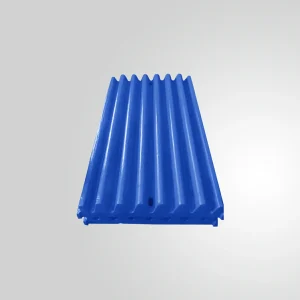
Component Description MOVABLE JAW PLATE
Compatible Equipment FLSmidth Series Jaw Crushers
Net Weight 1164.45 kg
Standard Material Mn18Cr2 (ASTM A128 Grade E-1)
Machining Precision ±0.05 mm on critical mounting centers
Technical Mechanics and Impact Dynamics of High-Manganese Jaw Crusher Parts
The failure of a movable jaw in a high-capacity FLSmidth crusher typically originates from an overlooked mechanical resonance or a metallurgical deficiency during the work-hardening phase. In the demanding environment of primary crushing, Jaw Crusher Parts are subjected to extreme compressive loads that can exceed the plastic deformation threshold of the supporting pitman if the fitment is not exact. For a heavy-duty component like the N11928919 movable jaw, which carries a net weight of 1164.45kg, any structural instability leads to rapid energy dissipation. This energy is transferred directly into the eccentric shaft and the C93800 bronze bushings, causing localized overheating and unplanned downtime. Engineering excellence requires a fundamental shift from viewing these as simple castings to recognizing them as precision-machined kinetic interfaces.
A common pain point in the field is the premature “peening” or mushrooming of the teeth, which alters the nip angle and forces the crusher to work harder for the same throughput. When Jaw Crusher Parts fail to maintain their profile, the power consumption per ton of material processed increases exponentially. To mitigate this, the metallurgical composition must be strictly aligned with the compressive strength of the feed material. By utilizing Mn18Cr2 alloys compliant with ASTM A128 standards, operators can ensure that the initial surface hardness of 220 HBW rapidly transforms into a wear-resistant martensitic layer, effectively shielding the core from fracture.
Metallurgical Evolution: The Science of Mn18Cr2 and ASTM A128 Standards
The performance of premium Jaw Crusher Parts depends on the precise balance of the Manganese-to-Carbon ratio. While many generic suppliers offer standard Mn13Cr2, the heavy-duty metso series demands the superior yield strength of Mn18Cr2. This alloy is categorized under ASTM A128 Grade E-1 and is specifically designed to handle the high-impact energy of basalt and granite processing. The addition of 1.5% to 2.5% Chromium is critical, as it refines the grain structure and prevents the precipitation of brittle carbides at the grain boundaries during the cooling process.
During the manufacturing of these Jaw Crusher Parts, solution annealing is performed at temperatures between 1050°C and 1100°C. This is followed by a high-velocity water quench to ensure the austenite remains fully retained at room temperature. If the quenching medium temperature exceeds 30°C, the resulting microstructure will be compromised, leading to a part that is either too brittle or too soft. A high-quality N11928919 movable jaw will demonstrate an elongation rate of at least 20%, providing the necessary “give” to survive uncrushable tramp metal while maintaining a surface that can harden to over 500 HBW during operation.
| Element / Property | Standard Mn13Cr2 Specification | Premium Mn18Cr2 (N11928919) | ASTM A128 Grade E-1 Requirement |
|---|---|---|---|
| Manganese (Mn) | 12.0% – 14.0% | 17.5% – 19.5% | 17.0% – 20.0% |
| Carbon (C) | 1.10% – 1.35% | 1.15% – 1.40% | 1.05% – 1.45% |
| Chromium (Cr) | 1.5% – 2.5% | 1.8% – 2.5% | 1.5% – 2.5% |
| Initial Hardness | 180 – 210 HBW | 210 – 240 HBW | Min 180 HBW |
| Yield Strength | ≥ 350 MPa | ≥ 390 MPa | Specified per project |
Engineering Precision and Machining Tolerances for N11928919
Beyond the chemical composition, the dimensional integrity of Jaw Crusher Parts defines their service life. For the N11928919 movable jaw, the mounting face must be machined to a surface roughness of Ra ≤ 1.6 μm. This level of precision is not for aesthetics; it is essential to ensure a 100% contact area with the pitman’s front face. If the surface is left in an as-cast state (typically Ra 12.5 μm or higher), the crushing force will be concentrated on microscopic “peaks,” which eventually collapse, creating an installation gap. Once a gap of even 0.5 mm exists, the plate begins to flex, leading to fatigue cracks in the main casting.
The machining of the wedge grooves and bolt holes must adhere to a strict tolerance of ±0.05 mm. In high-vibration environments, any deviation from these centers results in the mounting bolts being subjected to shear forces they were never designed to handle. Proper Jaw Crusher Parts should fit into the pitman seat with zero lateral movement. This precision fitment ensures that the torque value applied to the wedge bolts is converted entirely into clamping force, preventing the “liner dancing” that destroys the C93800 bronze bushings in the eccentric assembly due to erratic pitman motion.
Field Insight: A Lesson in Pitman Protection
I recall a site visit to a large iron ore operation in Western Australia where the maintenance team was replacing their movable Jaw Crusher Parts every 400 hours—nearly half the expected life. Upon inspecting the pitman, I noticed deep scoring and evidence of “fretting” on the mounting surface. The liners they were using were out of tolerance by nearly 2.0 mm on the back flatness, and the installers were not using a backing compound. Every time a large rock entered the chamber, the movable jaw would slam against the pitman, creating a high-frequency shockwave. We measured the installation clearance and found it was completely uneven. By switching to Mn18Cr2 plates with a precision-machined Ra ≤ 1.6 μm finish and implementing a strict torque management protocol for the wedge bolts, we eliminated the movement. The wear life immediately jumped to 850 hours, and more importantly, the temperature of the eccentric bearings stabilized. It proves that the quality of your Jaw Crusher Parts is the best insurance policy for your crusher’s frame and bearings.
Step-by-Step Field Installation Suggestions
To ensure the N11928919 movable jaw operates at peak efficiency, the installation process must be executed with metallurgical and mechanical precision. Follow these engineering steps for a successful change-out:
- Surface Preparation: Thoroughly clean the pitman face using a pneumatic grinder to remove all old epoxy and rust. Any protrusion on the seat will lead to a localized stress riser on the new Jaw Crusher Parts.
- Dimensional Check: Before hoisting the 1164.45kg plate, verify the mounting bolt hole centers against the pitman using a template. Ensure the tolerance is within ±0.05 mm to avoid bolt binding.
- Backing Material Application: Apply a high-compressive-strength epoxy backing compound. This material acts as a vital buffer, filling any microscopic voids and ensuring that 100% of the crushing force is distributed evenly across the pitman face.
- Initial Tensioning: Use a hydraulic torque wrench to tighten the wedge bolts to 50% of the target torque value. Verify that the plate is seated squarely against the bottom support.
- Final Torque Management: Complete the tensioning to the full torque value specified in the manual. For these heavy-duty Jaw Crusher Parts, it is mandatory to re-tighten the bolts after the first 8 hours of feed, and again after 24 hours, as Manganese steel tends to “seat” or flow slightly during its initial work-hardening.
Engineering Tips for Preventive Maintenance
The most effective way to lower the cost-per-ton is through proactive monitoring of the wear profile. Maintenance managers should never wait for the teeth to disappear before planning a replacement. Once the tooth height has reached the wear limit—typically when 70% of the original profile is gone—the crushing geometry is compromised. This results in the “nip angle” becoming too obtuse, causing material to bounce and slip, which generates excessive heat and accelerates the wear of the surrounding Jaw Crusher Parts.
Always maintain a spare set of C93800 bronze bushings and monitor the lubrication oil for copper flakes. If the movable jaw is loose, the eccentric shaft will experience unbalanced loading, which manifests first as wear in the bushings. Additionally, consider rotating the fixed jaw plate to match the wear pattern of the N11928919 movable jaw. Balancing the wear across the chamber ensures that the crusher maintains its designed “gape” and “set,” providing consistent product size and protecting the motor from power spikes caused by inefficient crushing.
Technical Specifications for N11928919 Movable Jaw
| Part Number | N11928919 |
| Component Description | MOVABLE JAW PLATE |
| Compatible Equipment | metso Series Jaw Crushers |
| Net Weight | 1164.45 kg |
| Standard Material | Mn18Cr2 (ASTM A128 Grade E-1) |
| Machining Precision | ±0.05 mm on critical mounting centers |
| Rear Surface Finish | Ra ≤ 1.6 μm (Precision Machined) |
| Heat Treatment Process | Solution Annealing + Water Quench (1050°C-1100°C) |
| Work-Hardened Hardness | 480 – 540 HBW |
Conclusion: The ROI of Engineering Quality
In the high-stakes world of mineral processing, Jaw Crusher Parts are the primary defense against equipment degradation. Choosing a high-manganese N11928919 movable jaw that adheres to strict metallurgical and machining standards is not just a procurement decision; it is a commitment to operational stability. By ensuring a precision fit with a Ra ≤ 1.6 μm finish and utilizing the superior work-hardening properties of Mn18Cr2, mines can significantly extend the life of their pitman assemblies and C93800 bushings. The goal of any senior engineer is to minimize variables, and by standardizing on high-quality wear parts, you eliminate the most common cause of crushing circuit inefficiency. Investing in precision today prevents the catastrophic costs of unplanned downtime tomorrow.
All manufacturer names, part numbers, model numbers, and descriptions are used for reference and identification purposes only, they are owned by the respective machine manufacturer, including but not limited to FLSmidth®, Metso®, thyssenkrupp®, and Sandvik®. All parts supplied are manufactured and warranted by yonsmen and are not manufactured by or purchased from the Original Equipment Manufacturer. yonsmen has no association with the OEM and does not intend to give this impression.

Reviews
There are no reviews yet.