The Mechanics of Spider Cap Failure and Bearing Contamination
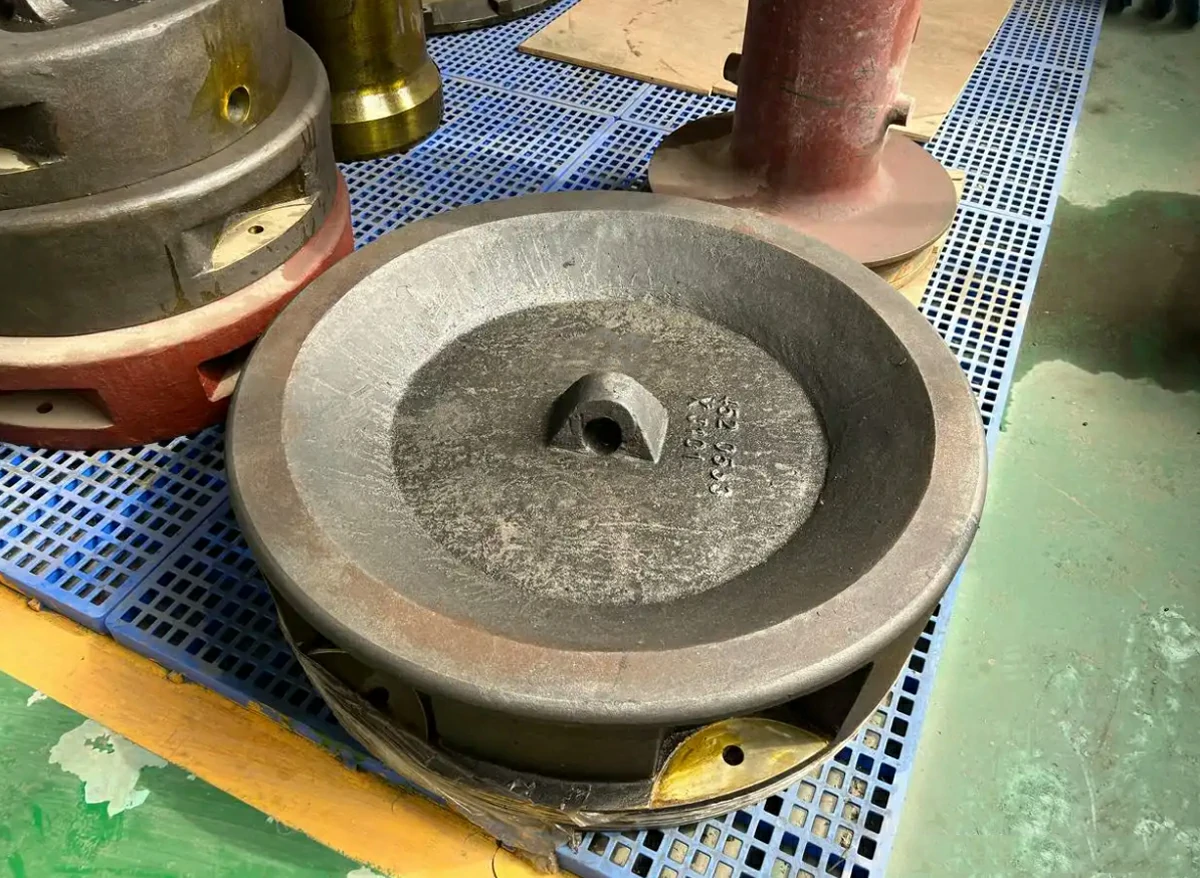
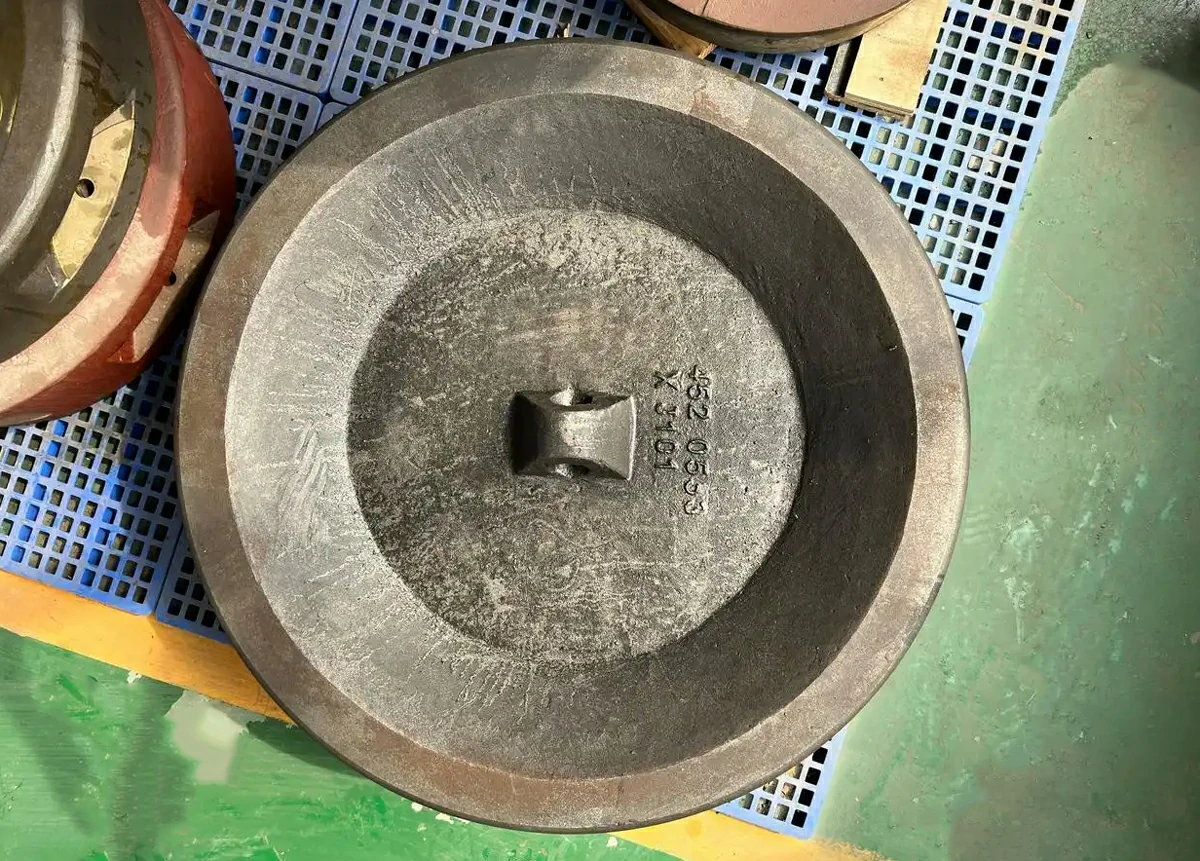
A breached spider cap on a primary or secondary crusher is not a superficial wear issue; it is a direct conduit for abrasive silica dust to infiltrate the spider bearing assembly. When the structural integrity of the spider cap for Sandvik CH660 is compromised by continuous rock impact, the physical barrier protecting the internal lubrication envelope fails. Once abrasive particulate matter bypasses the OEM Part 452.0533 precision casting, the resulting abrasive slurry accelerates the degradation of the bronze spider bushing exponentially. The clearance between the main shaft and the bushing increases beyond the allowable 0.60mm to 0.80mm threshold, altering the eccentric throw and directly reducing the crushing force applied to the mantle and bowl liner.
Procuring a compliant cone crusher part requires engineers to look beyond initial procurement costs and focus on geometric tolerances and material yield strength. The cap does not merely sit on top of the spider; it experiences severe, continuous kinetic energy transfer from the feed material. If the casting lacks the necessary impact toughness, micro-fractures develop around the mounting holes, eventually leading to a complete separation of the cap from the spider hub. This exposes the high-tolerance machined surfaces to raw ore, turning a routine wear part replacement into a massive overhaul involving main shaft extraction and spider hub re-machining.
Material Specifications and Metallurgical Failure Modes
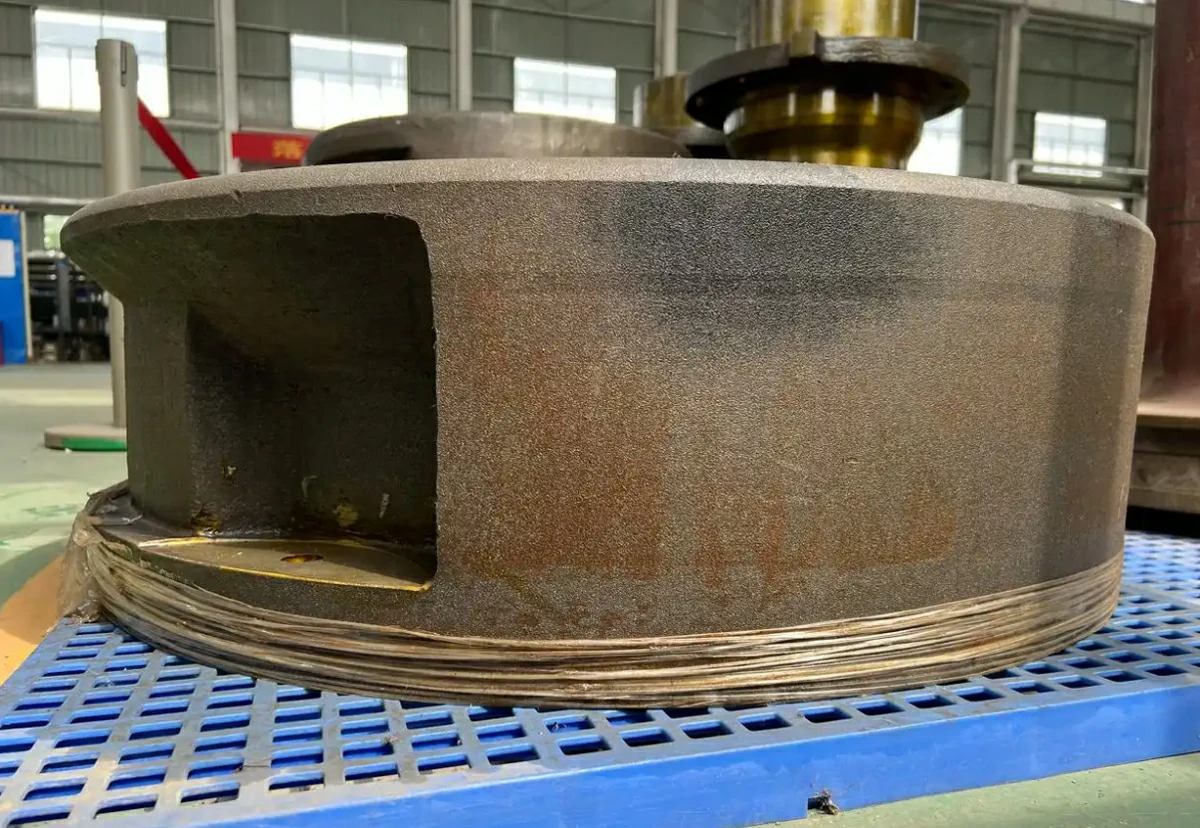
The manufacturing protocol for the OEM Part 452.0533 component strictly dictates a precision casting process, utilizing high-grade cast steel, typically mirroring the mechanical properties of ASTM A148 Grade 90-60. This specific metallurgical composition ensures a minimum tensile strength of 620 MPa and a yield strength exceeding 415 MPa, with a target surface hardness of 250 HBW to 280 HBW. The precision casting method guarantees a surface finish of Ra \≤ 3.2 \μm on the critical mating surfaces, preventing microscopic gaps where dust could bypass the sealing compound.
When substandard metallurgical practices are applied to this specific cone crusher part, three distinct failure modes plague site operations:
Impact-Induced Mushrooming
Mushrooming occurs when the compressive yield strength of the cap material is lower than the localized kinetic energy of oversized feed rocks striking the apex. The metal plastically deforms, spreading outward like a mushroom head. This deformation alters the trajectory of incoming feed, causes uneven wear on the mantle nut, and makes the eventual removal of the cap physically impossible without the use of thermal lancing, significantly increasing maintenance labor hours.
Subsurface Fatigue and Spalling
Low-grade sand castings often contain subsurface porosity or non-metallic inclusions. Under the cyclic impact loading characteristic of the Sandvik CH660 operation, these microscopic voids act as stress concentrators. Fatigue cracks initiate below the surface and propagate outward, resulting in spalling\—where large chunks of the cap physically break off. This exposes the unprotected spider arm and bearing directly to the crushing chamber environment.
Thread Galling and Loosening
Galling is a severe form of adhesive wear. When inferior mounting bolts or misaligned cap threads are subjected to extreme vibration without proper torque and anti-seize compounds, the metal surfaces cold-weld together and immediately tear apart. Thread galling compromises the clamping force. Once the cap becomes loose, the cyclic shear forces will quickly snap the remaining bolts, turning the heavy metal cap into a dangerous projectile within the crushing chamber.
Field Case Snippet: The $65,000 Dust Intrusion
I once witnessed a catastrophic main shaft failure at a high-altitude copper operation simply because the site manager ignored a visibly cracked spider cap to delay a 3-hour maintenance shutdown. The compromised casting allowed highly abrasive chalcopyrite dust to bypass the primary seal. Within 72 hours, the silica and copper particulate transformed the EP2 lithium grease into a grinding paste. The friction generated temperatures exceeding 140\°C, melting the bronze spider bushing and welding it to the main shaft journal. What should have been a standard replacement of the OEM Part 452.0533 turned into a $65,000 repair bill, including a custom extraction jig, liquid nitrogen shrinking for shaft removal, and four days of lost production at 350 tons per hour.
Strict Installation Protocols for Precision Castings
The operational lifespan of a spider cap for Sandvik CH660 is heavily dependent on the exactness of its installation. Mechanics must execute the following procedures to ensure absolute sealing and structural rigidity:
- Surface Preparation: Mechanically clean the mating surface on the spider hub using a wire wheel and an industrial degreaser (such as acetone). The surface must be entirely free of old sealant, grease, and rock dust. Any particulate remaining will create a standoff, invalidating the Ra \≤ 3.2 \μm machined finish.
- Clearance Verification: Before applying sealant, dry-fit the precision casting. Use a 0.05mm feeler gauge around the entire circumference of the mating flange. If the gauge passes between the cap and the hub, the hub surface requires localized lapping to ensure 100% contact area.
- Sealant Application: Apply a continuous 6mm bead of high-temperature, oil-resistant silicone sealant (e.g., Loctite SI 5920) exactly inboard of the bolt hole circle to prevent dust tracking through the thread cavities.
- Torque Sequence: Insert the mounting bolts coated with a high-performance copper anti-seize compound. Tighten the bolts in a strict cross-pattern (star sequence) in three stages: first to 50 Nm, then to 120 Nm, and finally to the specified operational torque of 190 Nm. This prevents flange distortion and ensures uniform compression of the sealant.
Preventive Maintenance via Tribology and Oil Analysis
While the cap itself is an external barrier, its integrity is continuously monitored through the fluid dynamics of the crusher’s lubrication system. Implementing a rigorous oil analysis program is the only definitive method to detect a micro-breach in the cap sealing before catastrophic mechanical damage occurs.
Maintenance planners must extract oil samples from the active return line (not the bottom of the reservoir) every 250 operating hours. When reviewing the spectrochemical analysis for the Sandvik CH660 lubrication system (typically running ISO VG 150 or 220 gear oil), technicians must look for specific elemental spikes. An increase in Silicon (Si) levels exceeding 25 ppm indicates that dirt and rock dust are bypassing the spider cap and seals. If this Silicon spike is accompanied by an increase in Copper (Cu) exceeding 40 ppm and Lead (Pb) exceeding 15 ppm, it is an absolute confirmation that the abrasive intrusion has reached the bronze spider bushing and active wear is occurring. Immediate machine shutdown and visual inspection of the cap are mandatory under these tribological conditions.
Total Cost of Ownership (TCO): Precision Casting vs. Sand-Cast Alternatives
Procurement departments frequently attempt to reduce OPEX by sourcing non-OEM standard aftermarket caps manufactured via basic sand casting rather than the specified precision casting methods. A Total Cost of Ownership analysis reveals the severe financial flaw in this strategy over a standard 12-month operational cycle.
| Cost Metric | Low-Cost Sand-Cast Alternative | OEM Standard Precision Casting |
| Initial Procurement Cost | $850</td> <td>$1,600 | |
| Expected Lifespan (Hard Rock) | 3 to 4 Months | 10 to 12 Months |
| Annual Replacement Frequency | 3.5 times | 1 time |
| Annual Labor Hours (Crane + Mech) | 14 Hours | 4 Hours |
| Lost Production (Calculated at 350 TPH) | 4,900 Tons | 1,400 Tons |
| Risk of Secondary Bushing Damage | High (Due to poor mating surface tolerances) | Negligible (Guaranteed fitment) |
The raw data demonstrates that while the initial capital output for the OEM standard cone crusher part is nearly double, the annualized expenditure is significantly lower. The true cost of an inferior cap is measured in crane rental hours, mechanical labor, and the thousands of tons of uncrushed rock resulting from repetitive maintenance shutdowns caused by premature component failure.
Technical FAQ
Question: During a liner change, we noticed heavy wear on the apex of the OEM Part 452.0533, but no cracks. Can we build up the worn area with hard-facing welding instead of replacing the entire cap?
Answer: Hard-facing a worn spider cap is an extremely high-risk operation and is generally rejected by senior reliability engineers. The localized heat input from arc welding alters the metallurgical grain structure of the cast steel, creating a Heat Affected Zone (HAZ) that becomes highly brittle. Given the severe impact loads this component absorbs, the brittle HAZ will rapidly develop fatigue cracks, leading to sudden, catastrophic spalling during operation. Furthermore, the welding process often causes the flange of the cap to warp, permanently destroying the critical mating clearance required to seal out rock dust. Unless performed in a controlled facility with strict pre-heating and post-weld stress-relieving annealing ovens, replacing the component is the only technically sound decision to protect the main shaft assembly.