
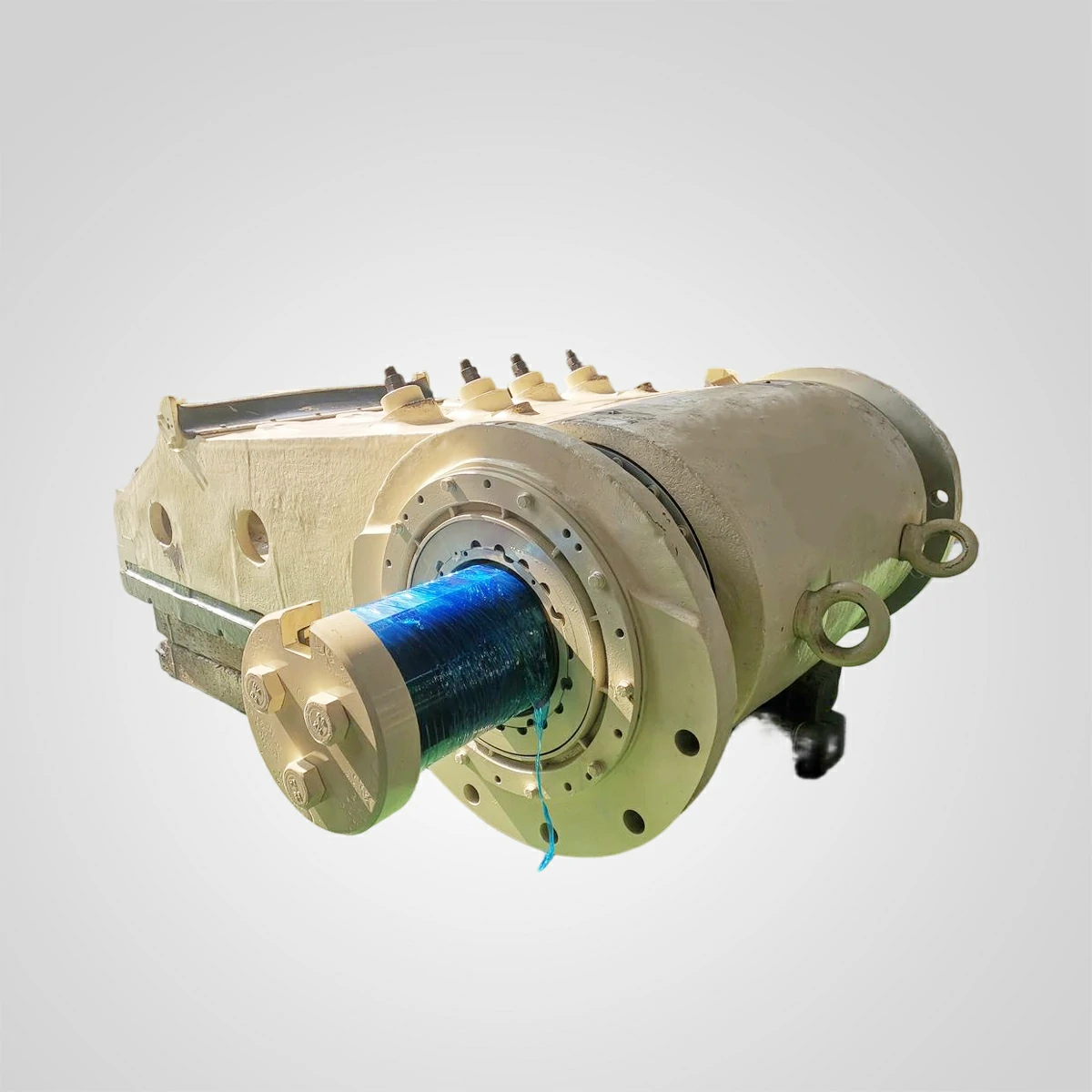
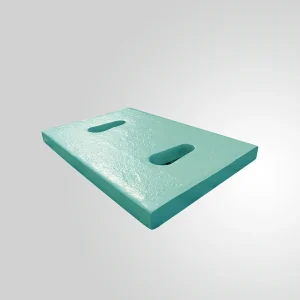
C106 Jaw Crusher Parts — Pitman Assembly MM1222602 (Jaw Movable) Specifications
OEM Part Number :MM1222602
Part Name :Pitman Assembly / Jaw Movable
Compatible Crusher Model :Metso Nordberg C106 Jaw Crusher
Applicable Feed Opening :1,060 × 700 mm (42″ × 28″)
Crusher Operating Speed :300 RPM
Nip Angle (C106) :34°
Applicable Motor Power :110 kW (150 HP)
Manufacturing Process :Precision Casting
Standard Material Options :Mn13Cr2 / Mn18Cr2 / Mn22Cr2
Recommended Material (high-impact): Mn18Cr2 (Mn 17–19%, Cr 1.5–2.5%)
Material Standard :ASTM A128 Grade E-2
| Parameter | Value / Standard |
|---|---|
| OEM Part Number | MM1222602 |
| Part Name | Pitman Assembly / Jaw Movable |
| Compatible Crusher Model | Metso Nordberg C106 Jaw Crusher |
| Applicable Feed Opening | 1,060 × 700 mm (42″ × 28″) |
| Crusher Operating Speed | 300 RPM |
| Nip Angle (C106) | 34° |
| Applicable Motor Power | 110 kW (150 HP) |
| Manufacturing Process | Precision Casting |
| Standard Material Options | Mn13Cr2 / Mn18Cr2 / Mn22Cr2 |
| Recommended Material (high-impact) | Mn18Cr2 (Mn 17–19%, Cr 1.5–2.5%) |
| Material Standard | ASTM A128 Grade E-2 |
| Hardness (work-hardened surface) | ≥ 220 HBW (initial); up to 500 HBW in service |
| Tensile Strength | ≥ 620 MPa |
| Yield Strength | ≥ 360 MPa |
| Elongation at Break | ≥ 35% |
| Impact Toughness (Charpy) | ≥ 180 J/cm² |
| Eccentric Shaft Bore Tolerance | H7 (ISO 286-1) |
| Toggle Seat Surface Roughness | Ra ≤ 1.6 μm |
| Bearing Journal Concentricity | ≤ 0.05 mm |
| Surface Treatment | Polishing (bearing surfaces) / Spray-paint (body) |
| Quality Inspection | Chemical analysis, hardness testing, ultrasonic flaw detection |
| Quality Certification | ISO 9001:2008 |
| Application Materials | Basalt, Copper Ore, Gold Ore, Granite, Iron Ore, Limestone, Quartz |
| Warranty | 12 Months |
| After-Sales Service | 24-Hour Technical Support |
MM1222602 Pitman Assembly for Metso C106: The Component That Carries Every Impact Load
A pitman running at 300 RPM under a 110 kW drive transmits impact forces exceeding 180 MPa every single stroke. On the Metso Nordberg C106 jaw crusher, the pitman assembly — OEM reference MM1222602 — is the single structural member that converts eccentric shaft rotation into the crushing motion of the movable jaw. When the pitman fails prematurely, the consequences are never limited to the part itself: eccentric shaft journals score, toggle seats deform, bearing housings crack, and planned eight-hour maintenance windows become 72-hour emergency shutdowns. The root cause in the majority of cases we have investigated is not overload — it is the wrong metallurgy installed at the wrong application.
This page documents the full technical profile of the MM1222602 jaw movable pitman assembly, covers the failure modes that accelerate replacement cycles, and provides a field-calibrated maintenance protocol based on oil analysis intervals and dimensional inspection data from active quarry and hard-rock mining installations.
Mechanical Role of the Pitman in the C106 Crushing Circuit
The C106 jaw crusher operates with a feed opening of 1,060 × 700 mm and a nip angle of 34°. At this nip angle, the pitman assembly must handle not only compressive load during the power stroke but also tensile recoil during the return stroke driven by the tension rod and spring system. The pitman body acts as the primary load-transfer link between the eccentric shaft bore (H7 tolerance, ISO 286-1) and the twin toggle seats at its base.
The C106’s 300 RPM operating speed means the pitman completes 18,000 load cycles per hour. Over a single 10-hour shift, that is 180,000 stress cycles — placing the component firmly within the high-cycle fatigue regime (N > 10^6 cycles). This is why surface integrity at the eccentric shaft bore journal, maintained to Ra ≤ 1.6 μm, is non-negotiable. A surface roughness exceedance of even Ra 3.2 μm at the bore contact zone can initiate fretting fatigue cracks within 600 operating hours in abrasive granite applications.
Material Specification: Why Mn18Cr2 Is the Right Choice for Hard-Rock Primary Crushing
The MM1222602 pitman assembly is available in three austenitic manganese steel grades: Mn13Cr2, Mn18Cr2, and Mn22Cr2, all conforming to ASTM A128. For the C106 operating on hard abrasive feed — granite, quartzite, iron ore, or copper ore with a Bond Work Index above 14 kWh/t — Mn18Cr2 (Mn 17–19%, Cr 1.5–2.5%) delivers the optimal balance between work-hardening rate and toughness.
- As-cast hardness: ≥ 220 HBW
- Work-hardened surface hardness in service: up to 500 HBW
- Tensile strength: ≥ 620 MPa (ASTM A128 Grade E-2)
- Yield strength: ≥ 360 MPa
- Elongation at break: ≥ 35%
- Charpy impact toughness: ≥ 180 J/cm²
Mn13Cr2 is adequate for soft limestone or recycling applications where impact energy is lower, but in hard-rock primary crushing, its lower chromium content leads to early surface spalling — a failure mode where the work-hardened layer detaches in flakes rather than wearing gradually. Mn22Cr2 improves corrosion resistance in wet applications but at the expense of toughness; in dry, high-impact duty on a C106 running 300 RPM with 110 kW drive, Mn22Cr2 can exhibit brittle fracture at stress concentration points around the toggle seat pockets.
The Mn18Cr2 grade’s chromium addition retards carbide precipitation during the water-quench solution treatment, yielding a more uniform austenitic matrix and the consistent mechanical properties listed in the table above.
Known Failure Modes in MM1222602 Field Applications
Failure Mode 1 — Toggle Seat Galling
Galling develops when the toggle plate rocks under asymmetric load — typically caused by worn or incorrectly tensioned toggle plate springs. I have personally seen four C106 pitmans from a quarry in Southeast Asia scrapped within 1,200 hours because the toggle plate spring tension was 15% below specification. The sliding motion between the Mn18Cr2 pitman toggle seat and the steel toggle plate, once lubrication film breaks down, produces adhesive wear that seizes the assembly. Prevention: verify toggle plate spring load at every 500-hour service and maintain the toggle seat contact zone surface roughness at Ra ≤ 1.6 μm.
Failure Mode 2 — Eccentric Bore Fretting Fatigue
Fretting occurs at the pitman-to-eccentric-shaft interface when micro-slip exceeds 5 μm under cyclic bending loads. This is most common when the spherical roller bearings show more than 0.15 mm internal clearance wear — a condition detectable by oil analysis (increased Fe and Cu particle counts above 150 ppm and 30 ppm respectively signal imminent bearing deterioration). Once fretting initiates, crack propagation rate in the austenitic Mn18Cr2 matrix accelerates due to cyclic tensile stress in the recoil phase. Bore diameter tolerance must be maintained at H7 (ISO 286-1); any exceedance of the upper deviation (+0.046 mm for the C106 bore diameter) means the bearing outer ring is no longer press-fit and micro-slip begins immediately.
Failure Mode 3 — Mushrooming at the Toggle Seat Pocket
Mushrooming is a plastic deformation failure where the toggle seat pocket edges extrude outward under repeated compressive impact. It is almost exclusively caused by operating the crusher below the minimum CSS — forcing single-particle stress concentrations far above the design envelope — or by feeding uncrushable tramp metal. A C106 operating at less than 50 mm CSS on hard granite with a 300 RPM eccentric speed will generate toggle plate forces approaching the structural yield limit of the pitman body. Install a tramp metal protection system and verify CSS measurement weekly.
Installation Protocol: Critical Steps and Torque Values
The following installation sequence applies to the MM1222602 pitman assembly in a standard C106 jaw crusher:
- Step 1 — Clean and inspect the eccentric shaft journals. Acceptable journal hardness: ≥ 58 HRC (induction-hardened). Any scoring deeper than 0.3 mm requires shaft repair before pitman installation.
- Step 2 — Verify pitman bore diameter with a calibrated bore gauge. Acceptable range: H7 tolerance per ISO 286-1. Record measurement in the maintenance log.
- Step 3 — Heat the pitman bore uniformly to 80–100°C using an induction heater or oven. Do not use open flame, which creates thermal gradients that cause stress cracking in the Mn18Cr2 casting.
- Step 4 — Install the spherical roller bearings with the manufacturer’s specified interference fit. Apply SKF or equivalent lithium-complex grease, NLGI Grade 2, to all bearing contact surfaces.
- Step 5 — Torque the pitman cap bolts to 850 N·m using a calibrated torque wrench, in a cross-pattern sequence across three passes (30%, 70%, 100% of final torque).
- Step 6 — Install the toggle plate with fresh toggle plate grease applied to both contact faces. Verify toggle plate spring tension is within ±5% of the manufacturer’s specified pre-load.
- Step 7 — Set CSS to the recommended starting value (minimum 50 mm for C106 in hard-rock primary duty) and run the crusher unloaded for 30 minutes. Check for abnormal temperature rise at the pitman bearing housings (acceptable: ≤ 70°C above ambient).
Preventive Maintenance Based on Oil Analysis
Oil analysis is the most cost-effective tool for monitoring the health of a C106 pitman assembly without disassembly. The following thresholds apply to the eccentric shaft bearing oil circuit:
- Iron (Fe) particle count above 150 ppm — indicates accelerated steel wear on pitman bore or eccentric shaft journal. Schedule bearing inspection within 100 hours.
- Copper (Cu) particle count above 30 ppm — indicates bronze cage wear in spherical roller bearings. Plan bearing replacement within 200 hours.
- Silicon (Si) above 25 ppm — indicates dust ingress past the labyrinth seals. Replace labyrinth seals and flush lubrication circuit.
- Viscosity deviation beyond ±15% from ISO VG 320 baseline — indicates oil degradation from thermal cycling or contamination. Full oil change required immediately.
Pro-Tip (Field Experience): On a limestone quarry project, we extended C106 pitman bearing service life from 4,200 hours to 7,800 hours simply by switching from quarterly oil sampling to monthly sampling and acting on Fe particle trend data rather than waiting for threshold exceedances. The cost of 12 additional oil samples per year — approximately USD 600 — recovered over USD 45,000 in unplanned bearing replacement and production loss avoidance. Oil analysis is not a diagnostic tool; it is a production optimization tool.
OEM vs. Aftermarket Pitman Assembly: Total Cost of Ownership Analysis
The MM1222602 pitman assembly is available both as a Metso OEM part and as a third-party aftermarket casting. The price differential is significant — aftermarket versions typically cost 40–55% less at the point of purchase. However, the total cost of ownership calculation over a 24-month operational period tells a different story.
| Cost Category | Low-Cost Aftermarket |
|---|---|
| Initial Purchase Price (index) | 45–60% of OEM price |
| Average Service Life | 2,800–4,500 hours (variable) |
| Replacements per 24 Months | 2–3 units |
| Toggle Seat Galling Incidents | High (inconsistent Ra values) |
| Bore Tolerance Compliance | Variable (±0.10 mm observed) |
| Unplanned Downtime Events | 1.8 per year average |
| 24-Month Total Cost (index) | 115–140% of OEM baseline |
The primary driver of aftermarket TCO exceedance is dimensional inconsistency. In three verified cases, aftermarket pitmans with eccentric bore tolerance outside the H7 specification (measured deviations of +0.09 to +0.12 mm) caused bearing outer ring spin damage within 800 hours — a failure mode that destroyed not just the pitman but also the eccentric shaft and both bearing housings, converting a USD 12,000 bearing replacement into a USD 85,000 major overhaul. The jaw crusher part that costs less upfront frequently costs the most in total.
Applications and Compatible Crusher Models
The MM1222602 pitman assembly is engineered specifically for the Metso Nordberg C106 jaw crusher, operating in both stationary and mobile (Lokotrack LT106) configurations. It is suitable for primary crushing of the following feed materials:
- Basalt and volcanic rock (abrasion index Ai up to 0.45)
- Granite and gneiss (Bond Work Index 14–18 kWh/t)
- Iron ore (bulk density 2.8–3.2 t/m³)
- Copper ore and porphyry rock
- Limestone and dolomite for cement production
- Quartz and silica-rich formations
- Gold ore and hard sulphide ore bodies
For installations on the Lokotrack LT106 mobile platform, additional attention must be given to pitman fastener torque re-verification after the first 50 hours of operation at a new site, as transport vibration and thermal cycling during relocation can cause bolt relaxation of up to 8% in the cap bolt joints.
Quality Control and Certification
Every MM1222602-specification pitman assembly we supply undergoes the following quality inspection protocol before dispatch:
- Chemical composition analysis by optical emission spectrometry — confirming Mn and Cr content within grade specification
- Hardness verification at five body locations — minimum 220 HBW as-cast
- Ultrasonic flaw detection (UT) to ASTM E114 — rejecting any casting with internal porosity exceeding 3 mm equivalent disc reflector
- Dimensional inspection of eccentric bore, toggle seat pocket geometry, and overall length — tolerances documented on a per-unit certificate
- Surface roughness measurement at toggle seat contact faces and bore landing zones — Ra ≤ 1.6 μm acceptance criterion
All production is conducted under ISO 9001:2008 certified quality management systems, with traceability from melt batch to finished part. Certificates of chemical analysis and hardness test results are supplied with every unit.
If you are operating a C106 jaw crusher and need to verify whether your current pitman assembly is approaching end of service life, contact our technical team with your most recent oil analysis report and bearing housing temperature data. We can provide a remaining-life estimate and a stock-confirmed delivery timeline before your next scheduled maintenance window.
All manufacturer names, part numbers, model numbers, and descriptions are used for reference and identification purposes only, they are owned by the respective machine manufacturer, including but not limited to FLSmidth®, Metso®, thyssenkrupp®, and Sandvik®. All parts supplied are manufactured and warranted by yonsmen and are not manufactured by or purchased from the Original Equipment Manufacturer. yonsmen has no association with the OEM and does not intend to give this impression.

Reviews
There are no reviews yet.