When the Amps Won’t Drop: Root Causes and Proven Fixes for Cone Crusher Motor Overload
A cone crusher running at 115% of its rated current for more than eight minutes is not just an electrical inconvenience — it is a countdown to a burned winding, a seized main shaft, or a production shutdown that can cost a quarry operation tens of thousands of dollars per day. Over two decades of fieldwork have shown that motor overload events almost never arrive without warning; they follow a predictable chain of mechanical, electrical, and maintenance failures that a trained eye can catch before the thermal relay trips.This guide breaks down every link in that chain: what the instruments read, what the machine sounds like, what causes each fault mode, and exactly how to restore normal operation without guessing. Whether the culprit is a worn cone crusher part deep inside the crushing chamber, an unbalanced power supply at the switchgear, or a deteriorating motor winding that has been quietly failing for months, the corrective path is systematic and repeatable.
Recognizing the Overload Condition Before It Becomes a Crisis
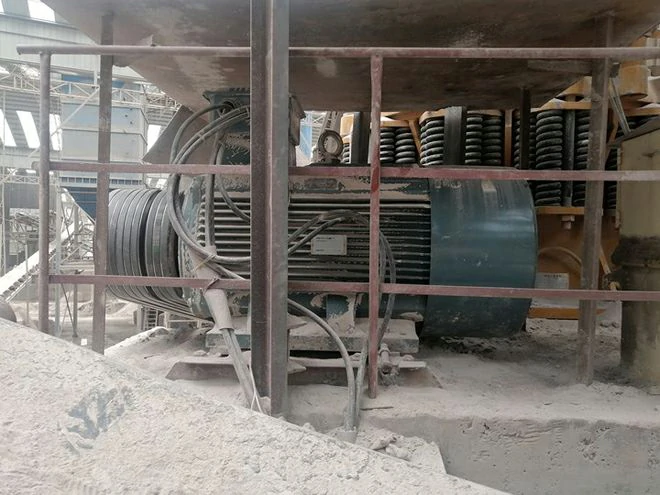
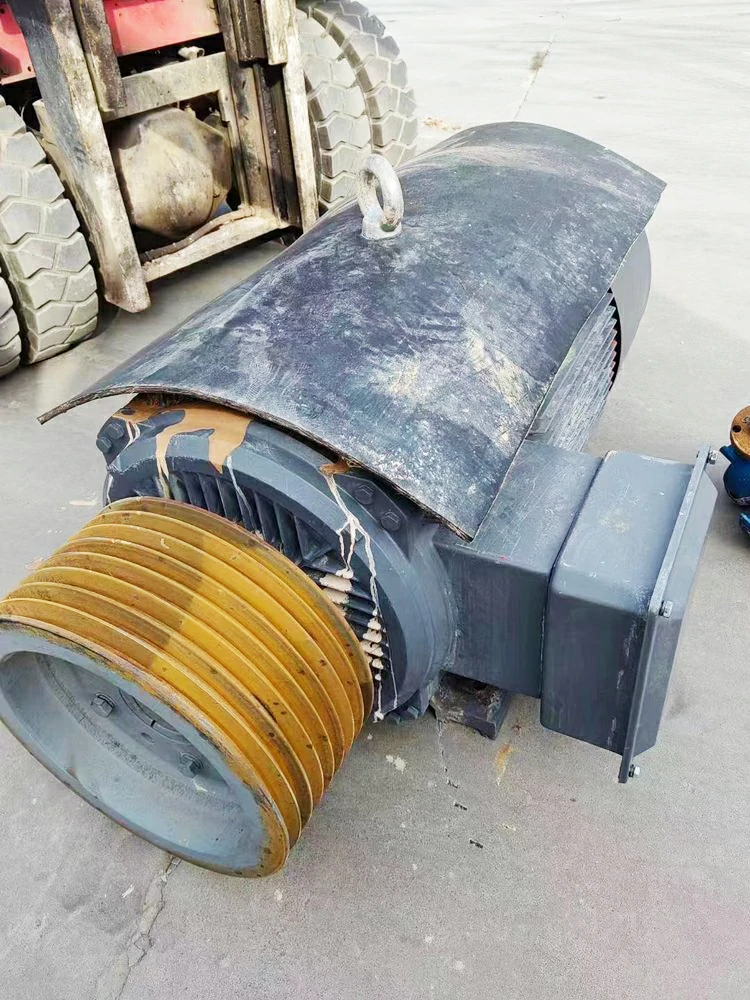
The symptom profile of a motor overload is consistent enough to serve as a reliable checklist. Running current climbs above the nameplate rating — on a typical 160 kW drive motor with a rated current of roughly 300 A at 380 V, sustained readings above 330 A should trigger an immediate investigation. Shell surface temperature on the motor housing rises above 70 °C, detectable by infrared thermometer within seconds. A low, resonant humming replaces the normal mechanical tone of the crusher; experienced operators describe it as the motor “straining.” In severe cases the thermal overload relay or the electronic motor protection relay trips, and the unit refuses to restart until the cause is resolved and the protection device is manually reset.Ignoring any one of these signals and forcing a restart is the single most expensive mistake made on crushing circuits. A second overload event on a already hot winding can push insulation resistance from a marginal 50 MΩ to below 1 MΩ in minutes, making a full rewind unavoidable.
The Four Root Causes of Motor Overload
1. Feed Rate Exceeding Design Capacity
Every cone crusher carries a design throughput envelope — a maximum tonnes-per-hour figure that accounts for feed gradation, material hardness on the Bond Work Index scale, and the geometry of the crushing chamber. When feed rate climbs beyond that envelope, the crushing chamber fills faster than the product can discharge through the closed-side setting. The mantle and concave, which are the primary cone crusher wear parts that absorb compressive forces, cannot clear the material volume efficiently. The main shaft eccentric mechanism works against an ever-increasing bed of rock, mechanical resistance rises, and the motor draws proportionally more current to maintain rotational speed. A practical rule: if the liner profile of your cone crusher wear parts has worn down by more than 20% from new dimensions, the effective chamber geometry changes, throughput capacity decreases, and the feed rate that was safe six months ago may now be excessive. Tracking wear progression with a depth gauge every 250 operating hours prevents this from becoming a surprise.
2. Mechanical Seizure Inside the Crushing Circuit
Mechanical seizure is the overload cause that escalates fastest. It can originate from three distinct locations:
- Chamber blockage: Tramp iron, oversized feed, or a sudden surge of clay-bound material can wedge between the mantle and the concave. Because the mantle is the most directly loaded cone crusher part in the entire machine, any obstruction that prevents its gyrating motion transmits immediately to the main shaft and then to the motor.
- Locked mantle-concave contact: When a piece of material harder than the liner design specification — granite above 300 MPa compressive strength entering a circuit rated for 250 MPa, for example — jams between the bowl liner and mantle liner, the eccentric motion stalls. Both the mantle liner and bowl liner are load-bearing cone crusher spare parts; when they lock together the drive train experiences a near-instantaneous step change in torque demand that can spike motor current to 200% or more of rated value.
- Bearing failure or main shaft seizure: A thrust bearing that has lost its oil film, or a main shaft running without adequate lubrication due to a blocked oil gallery, generates frictional resistance that the motor must overcome on every revolution. Oil temperature above 60 °C at the lube system outlet, or metal particles on the magnetic drain plug, are the leading indicators of this failure mode.
3. Power Supply Deficiencies
Motor overload is not always a mechanical problem. A supply voltage 10% below nominal — 342 V on a 380 V system — reduces available motor torque by approximately 19%, because torque scales with the square of terminal voltage. To deliver the same shaft power against the same mechanical load, the motor compensates by drawing higher current. A phase voltage imbalance of just 3.5% between phases can cause current imbalance of 25% or more in the highest-loaded winding, concentrating heat in a localized section and accelerating insulation degradation.
These conditions are invisible to operators watching the crusher feed belt but are immediately apparent with a true-RMS clamp meter measuring all three phases simultaneously at the motor terminal box.
4. Motor Winding and Rotor Faults
An aging motor with compromised turn-to-turn insulation draws excess magnetizing current even at light load. Rotor bar cracking in squirrel-cage induction motors — often caused by repeated thermal cycling from overload events that were inadequately addressed — produces a characteristic twice-slip-frequency current pulsation, visible on a power analyzer as a low-frequency ripple on the current waveform. Neither fault is detectable by feel or sound until it is well advanced; periodic insulation resistance testing (megger test at 1000 V DC, pass threshold above 100 MΩ for a motor below two years old) and motor current signature analysis catch them at a repairable stage.
Step-by-Step Corrective Procedure
Step 1 — Immediate Shutdown and Safe Isolation
Trip the motor at the local isolator, not just at the control panel. Wait for all rotating components to reach a full stop — on a large cone crusher with a heavy flywheel, this can take 90 seconds or more. Only after confirmed standstill should any personnel approach the crushing chamber or the motor terminal box. Lock and tag the isolation point before any inspection.
Step 2 — Clear the Crushing Chamber and Inspect Critical Wear Parts
Remove bridged material manually using a pry bar inserted through the feed opening, never by restarting the motor against a loaded chamber. Once clear, rotate the main shaft by hand using the provided wrench flat on the eccentric assembly. Free rotation — typically 360° with moderate hand effort — confirms no mechanical seizure remains. This is also the correct moment to measure mantle and concave liner thickness. If the cone crusher wear parts have reached their minimum serviceable dimension (usually 50% of new liner thickness as specified by the OEM), schedule liner replacement before the next shift rather than resuming operation.
Step 3 — Electrical Verification
With the motor isolated, measure phase-to-phase and phase-to-neutral voltage at the motor terminal box under load conditions on adjacent equipment. Record all three line currents and calculate the voltage unbalance percentage using the NEMA definition: maximum deviation from average voltage divided by average voltage, multiplied by 100. A result above 1% warrants investigation of the supply circuit; above 2% requires correction before restart.
Check motor winding insulation resistance with a 1000 V DC megger, measuring each phase to ground and phase to phase. Document results and compare against baseline readings taken at commissioning. A steady downward trend across successive readings — even if each individual value still passes — indicates progressive insulation degradation that will eventually cause an in-service failure.
Step 4 — Motor Internal Inspection
If insulation resistance falls below 50 MΩ, remove the end bells and inspect the end windings visually for discoloration, carbonization, or mechanical abrasion. Discoloration concentrated in one phase points to phase imbalance as the primary stressor. Uniform brown discoloration across all phases suggests repeated thermal overload. Either condition justifies a full rewind by a qualified motor repair shop with a rewinding test bench capable of surge comparison testing. Rotor bars should be inspected for axial cracking at the end-ring junctions; cracked bars require rotor replacement rather than repair.
Step 5 — Load Calibration at Restart
After all mechanical and electrical issues are resolved, restart the crusher unloaded and allow the lube oil system to reach operating temperature (typically 40–50 °C oil outlet temperature) before introducing feed. Introduce feed gradually over five to ten minutes, monitoring motor current continuously. Target steady-state operation between 80% and 90% of rated current — in the example of a 300 A rated motor, that means 240 A to 270 A. Operating consistently above 90% of rated current reduces motor and drive component service life substantially and provides no margin for transient load spikes from hard or oversized material.

Preventive Maintenance Intervals for Key Components
| Component | Inspection Interval | Replacement Trigger | Classification |
|---|---|---|---|
| Mantle liner | Every 250 operating hours | 50% thickness loss from new | Cone crusher wear parts |
| Bowl liner (concave) | Every 250 operating hours | 50% thickness loss from new | Cone crusher wear parts |
| Thrust bearing assembly | Every 2,000 operating hours | Metal particles in lube oil | Cone crusher spare parts |
| Main shaft bushing | Every 2,000 operating hours | Clearance exceeds OEM spec by 20% | Cone crusher spare parts |
| Eccentric bushing | Every 3,000 operating hours | Visible scoring or oval wear | Cone crusher part |
| Motor winding insulation | Every 6 months (megger test) | Below 50 MΩ phase-to-ground | Electrical |
| Lube oil and filter | Every 1,000 operating hours | Viscosity change or contamination | Consumable |
The Connection Between Worn Parts and Motor Health
Field data gathered across multiple quarry sites consistently points to one underappreciated relationship: the condition of every cone crusher part in the drive train directly influences motor current draw. A set of cone crusher spare parts — specifically the thrust bearing, eccentric bushing, and main shaft sleeve — that is maintained within OEM clearance tolerances allows the eccentric mechanism to convert motor torque into productive crushing force with minimal frictional loss. As clearances open up through normal wear, the kinematic efficiency of the mechanism drops, the effective compressive force on the rock decreases, and the motor must spin faster or pull more current to compensate.
The same logic applies to cone crusher wear parts. A mantle liner worn to a profile that no longer matches the bowl liner geometry creates uneven load distribution across the crushing surface. Instead of a uniform, progressive compression stroke, the mechanism generates point loads and impact events that spike current unpredictably and contribute to fatigue cracking in the liner backing material. Replacing cone crusher wear parts on schedule is therefore not just a throughput decision — it is a direct investment in motor longevity and power efficiency.
Final Observation from the Field
Twenty years of troubleshooting overload trips on crushing circuits has produced one consistent finding: the sites that treat every cone crusher part as a precision component rather than a commodity consumable, that track motor current trends on a shift-by-shift basis, and that never defer a scheduled lube oil analysis are the sites that almost never experience unplanned motor failures. The thermal relay trip is not the problem — it is the machine’s way of reporting a problem that began days or weeks earlier. Finding and fixing that earlier problem is the only sustainable way to keep a cone crusher running at nameplate capacity without burning out the drive motor that makes the whole circuit possible.