

HP200 Cone Crusher Socket Liner 1048721001 for Stable Head Support and Controlled Bearing Contact
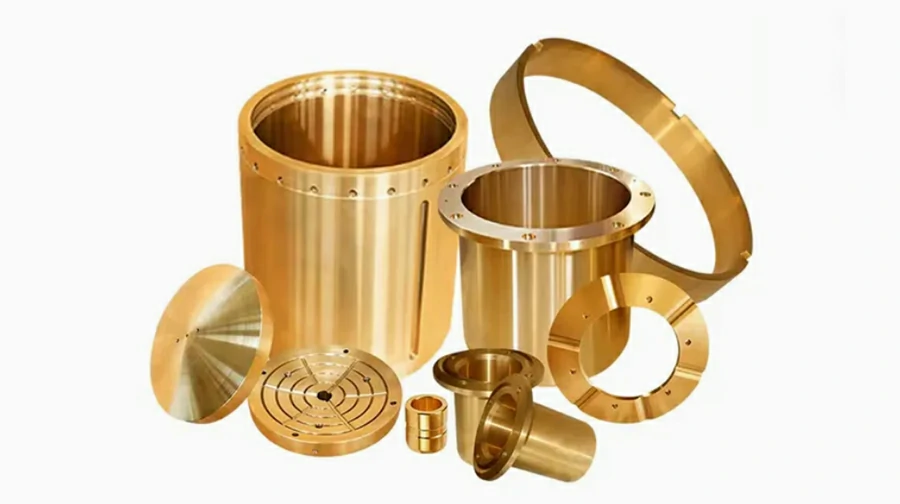
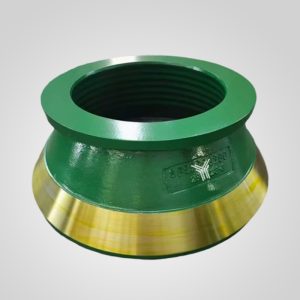
The HP200 Cone Crusher Socket Liner 1048721001 is a 31.5 kg bronze bearing component designed to support the lower spherical movement of the crushing head. Although it is smaller than the mantle, concave, adjustment ring, or main frame, its working condition is severe. Every hour the crusher runs, the socket liner carries repeated compressive load, sliding friction, oil-film pressure, vibration, and heat generated by the gyrating head assembly. When this component is accurate, clean, and properly lubricated, the HP200 cone crusher can maintain stable head movement and more predictable crushing performance. When it is worn, poorly machined, or contaminated by dirty oil, the machine may quickly develop high oil temperature, abnormal vibration, bronze powder in the filter, and uneven product size.
This socket liner is used in HP200 cone crusher service where compact size, high reduction ratio, and continuous production duty are required. In many quarry and mining circuits, the HP200 class crusher is used for secondary, tertiary, or fine crushing of granite, basalt, river stone, limestone, copper ore, iron ore, and other hard materials. The crusher may operate with a motor power around 132 kW, a closed side setting commonly controlled in the 6 mm to 32 mm range depending on chamber type, and feed conditions that change throughout the shift. Under this operating environment, the socket liner is not just a replaceable casting. It is a precision cone crusher part that helps control the relationship between the head ball, socket area, lubrication film, and crushing force path.
Product Identification and Technical Parameters
| Product name | HP200 Cone Crusher Socket Liner |
| Part number | 1048721001 |
| Net weight | 31.5 kg |
| Compatible crusher | HP200 cone crusher or equivalent model verified by drawing and dimensions |
| Main function | Spherical head support, sliding bearing contact, and oil-film distribution |
| Typical material reference | High-lead tin bronze or equivalent bearing bronze, commonly controlled around HB 80-120 according to specification |
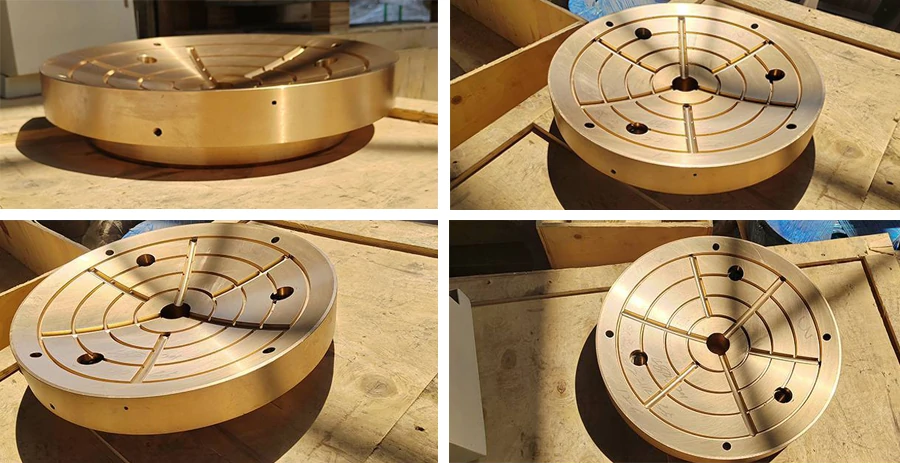
| Machining focus | Seating face, spherical bearing surface, oil grooves, outer diameter, height, and contact geometry |
| Inspection requirement | Dimensional check, hardness test, surface finish review, visual inspection, and contact-pattern verification before shipment |
Why the Socket Liner Matters in an HP200 Cone Crusher
The socket liner works at the bearing interface where the crushing head needs support but also needs freedom to move. During operation, the head does not rotate in a simple straight-axis motion. It performs a controlled gyrating movement while rock is compressed between the mantle and concave. The socket liner must support this movement with a stable contact surface and enough lubrication distribution to prevent direct metal-to-metal friction. If the oil film becomes weak, the bronze surface can begin to score. Once scoring starts, bronze particles may enter the oil system and accelerate secondary damage to other bearing areas.
In a fine crushing application, the problem becomes even more sensitive. A small change in bearing support can influence chamber movement, liner contact, power draw, and discharge consistency. Operators may first notice that the crusher current becomes unstable or that return oil temperature climbs faster than normal after feeding starts. In some cases, the discharge product becomes coarser on one side of the circuit, even though the CSS setting has not changed. These symptoms often look unrelated, but I have traced many of them back to poor bearing contact, old bronze wear, or a socket liner installed without proper cleaning and inspection.
Material Quality and Bearing Performance
A quality socket liner must balance strength and anti-friction behavior. Bearing bronze is commonly selected because it can carry heavy load, resist seizure, and embed very small contaminants better than harder steel-to-steel contact surfaces. However, bronze quality is not determined by color or weight alone. The casting must be dense, free from serious shrinkage defects, and controlled for chemical composition. The hardness should be suitable for the crusher’s working load. If the bronze is too soft, it may deform under pressure. If it is too hard or poorly matched to the mating surface, it may increase scoring risk and reduce conformability.
For the HP200 Cone Crusher Socket Liner 1048721001, the 31.5 kg weight gives buyers a useful identification reference, but final acceptance should still depend on dimensions, material certificate, machining accuracy, and inspection records. A professional cone crusher parts supplier should be able to confirm the drawing, provide production inspection, and protect the machined surfaces during packing. A dent on the bearing surface, a burr in the oil groove, or a raised edge on the seating face can become a high-pressure point after installation.

Oil Groove Accuracy and Lubrication Control
The oil groove design is one of the most important details in this cone crusher part. Its job is to help distribute lubricant across the bearing surface and remove heat from the contact area. The groove must be clean, smooth, and machined according to the correct profile. If the oil groove is too shallow, the contact surface may run short of lubrication under load. If it is too wide or wrongly positioned, the effective bearing area becomes smaller, which increases local contact pressure. A good socket liner keeps the balance between oil supply and bearing support.
Before installation, the maintenance team should check the lubrication system instead of only replacing the old part. The oil tank, filter housing, cooler, pump line, return line, and sealing condition should be inspected. In many HP200 service cases, the new socket liner fails early not because the bronze part is bad, but because old abrasive particles remain inside the lubrication circuit. Fresh oil alone cannot solve the problem if the old pipes and cooler still contain bronze powder, dust, or sludge.
Field Experience: A Failure Review from Site Maintenance
I once inspected a cone crusher that had received a new bronze liner during a short shutdown. The plant was crushing hard basalt, and the maintenance crew was under pressure to restart production quickly. They changed the worn part, filled new oil, and put the machine back into service. For the first several hours, the crusher sounded acceptable. By the second day, the return oil temperature began to rise under load. On the fourth day, fine bronze particles appeared in the filter screen, and the operator reported a dull knocking sound during feed surges.
After disassembly, the root cause was clear. The old failure had left abrasive bronze and stone dust inside the oil return path. The new socket liner was installed into a system that had not been fully flushed. The bearing surface showed scoring lines, and the oil groove contained fine contamination. We cleaned the oil tank, cooler, lines, and filter housing, checked the mating spherical surface, and used blue marking compound to confirm the contact pattern before reassembly. After that correction, the crusher returned to stable operation. That case is why I always tell customers that a socket liner must be replaced together with a lubrication inspection procedure, not treated as a simple warehouse item.
Installation Recommendations for HP200 Socket Liner 1048721001
- Clean the seating area: Remove old oil sludge, bronze powder, dust, burrs, and raised metal before placing the new socket liner.
- Inspect the mating surface: Check the head ball or spherical contact area for scoring, heat marks, uneven wear, and deformation.
- Confirm oil flow: Verify oil pump condition, filter cleanliness, cooler performance, oil grade, and return oil path before full-load operation.
- Check contact pattern: Use blue marking compound where possible to confirm even bearing contact and avoid edge loading.
- Run in carefully: Start the crusher without load first, then feed gradually while monitoring oil temperature, vibration, sound, and amperage.
How a Cone Crusher Parts Supplier Adds Real Value
A capable cone crusher parts supplier should do more than provide a part number and shipping price. For HP200 Socket Liner 1048721001, the supplier should understand the working position of the part, the importance of bronze material selection, and the effect of machining tolerance on crusher performance. The supplier should confirm the crusher model, part number, old part photos, working material, operating hours, lubrication history, and any previous failure symptoms. These details help prevent wrong selection and improve service life after installation.
For international buyers, supply consistency is especially important. A socket liner should be packed with protection for the machined bearing surface, moisture control for storage, and clear labeling for warehouse identification. Inspection reports, material certificates, hardness results, and dimensional records can help maintenance teams prepare for shutdown work with more confidence. When a plant has only one planned shutdown window, receiving a poorly protected or dimensionally incorrect component can cost more than the purchase price of the part itself.
Product Value for Quarry and Mining Operations
The HP200 Cone Crusher Socket Liner 1048721001 helps protect the crushing head support system by maintaining proper bearing contact and lubrication distribution. Its 31.5 kg bronze structure is designed for a demanding position where friction, pressure, heat, and movement are continuous. When this cone crusher part is manufactured correctly and installed with disciplined maintenance practice, it can reduce the risk of emergency downtime, protect expensive mating components, and support stable crusher output.
For plants processing abrasive stone or ore, the best result comes from treating the socket liner as part of a complete reliability system. Correct bronze alloy, accurate machining, clean oil, proper contact pattern, careful start-up, and regular oil inspection all work together. A trusted cone crusher parts supplier can support that system by providing a replacement socket liner with verified dimensions, controlled material quality, protected packaging, and practical field guidance. In my experience, that combination is what keeps an HP200 cone crusher running steadily after the maintenance team closes the inspection cover and the feed belt starts again.
Reviews
There are no reviews yet.