
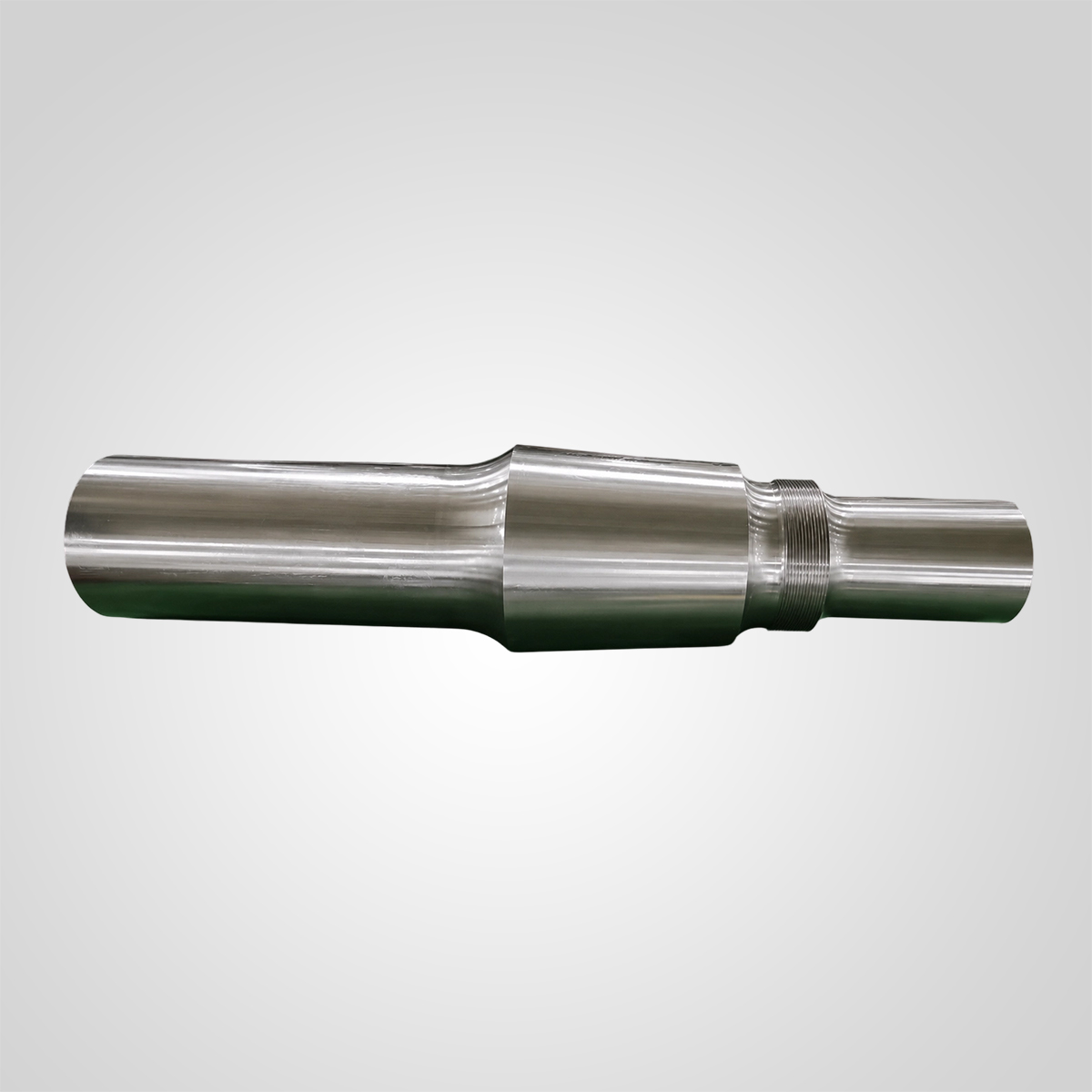
Sandvik CH430 442.8313-902 Cone Crusher shaft 784.35 kg Replacement
Crusher manufacturer :yonsmen
Crusher model :Sandvik CH430
Product group :Cone Crusher shaft and main shaft assembly components
Reference number :442.8313-902
Published parts database weight reference: 784.35 kg
Published description in replacement databases: Main Shaft Assembly Excluding Mantle
Sandvik CH430 442.8313-902 Cone Crusher shaft
Abnormal clearance between the main shaft, sleeve, head center and eccentric related components can turn a planned CH430 maintenance job into damage involving several major assemblies. The 442.8313-902 reference is listed in CH430 replacement parts databases within the main shaft assembly group, while published parts information also associates a 784.35 kg weight reference with this item. Other aftermarket documentation describes 442.8313-902 as a main shaft assembly excluding mantle and publishes a substantially different assembly weight, so procurement teams should confirm the exact supply scope before using any catalogue weight for crane selection, freight calculation or component identification. The separate shaft commonly appears under reference 442.7902-01, while related components include the 442.7913-01 main shaft sleeve, 442.7895-01 main shaft step and 442.7910-01 head center. A replacement main shaft must therefore be ordered from confirmed drawings, machine serial information and mating component measurements rather than from crusher model and approximate weight alone. This is particularly important on CH430 crushers that have undergone previous rebuilding, sleeve modification or component upgrades during their service history.
CH430 442.8313-902 Main Shaft Parameters
| Parameter | Specification |
|---|---|
| Crusher manufacturer | Sandvik |
| Crusher model | CH430 |
| Product group | Cone Crusher shaft and main shaft assembly components |
| Reference number | 442.8313-902 |
| Published parts database weight reference | 784.35 kg |
| Published description in replacement databases | Main Shaft Assembly Excluding Mantle |
| Other published aftermarket assembly weight | Approximately 2140 kg depending on supply scope |
| Independent main shaft reference | 442.7902-01 |
| Main shaft sleeve reference | 442.7913-01 |
| Main shaft step reference | 442.7895-01 |
| Head center reference | 442.7910-01 |
| Official CH430 complete mainshaft assembly weight | Approximately 1840 kg |
| CH430 maximum motor power | 132 kW |
| CH430 eccentric throw range | 16 to 36 mm |
| CH430 CSS range | 4 to 41 mm depending on chamber configuration |
| CH430 maximum published feed size | 214 mm |
| Main shaft material | Confirm from approved engineering drawing and material certificate |
| Dimensional acceptance | Verify shaft geometry, mating diameters, straightness and surface condition against the approved drawing |
Main Shaft Function and Mechanical Inspection
The Cone Crusher shaft works at the center of the CH430 crushing movement and must retain controlled geometry while the head is subjected to continuously changing crushing forces. The CH430 operates with up to 132 kW motor power and an eccentric throw range from 16 to 36 mm, which means the shaft and its related support surfaces experience repeated load cycles throughout every production shift. Shaft acceptance should therefore concentrate on measurable geometry rather than visual appearance. Critical inspection points normally include principal diameters, shaft straightness, roundness, concentricity, shoulder position, sleeve contact surfaces, fillet areas and machined surface finish. Measurements should be taken at several positions around each functional diameter because one measurement cannot reveal localized wear, taper or ovality. The condition of the head center and sleeve is equally important. Installing a correctly machined shaft into a worn mating component may produce acceptable movement during an unloaded workshop check but excessive clearance when the crushing chamber is filled. Material specification and heat treatment should be confirmed from the approved production drawing because public CH430 spare parts databases do not provide sufficient evidence to assign one universal steel grade to every revision. A competent crusher spare supplier should be able to provide drawing based dimensional inspection and material traceability when these documents are included in the purchasing specification.
High Risk Problem Caused by Sleeve Wear and Incorrect Clearance
One of the more expensive CH430 failure patterns starts with wear around the main shaft sleeve or associated support surfaces. The crusher may continue running while clearance increases gradually, so the first signs can be higher vibration, rising lubrication temperature, unusual movement or metallic contamination rather than an immediate shutdown. If production continues, the damaged mating component can score the shaft and convert a sleeve replacement into a main shaft and head repair. Another risk appears during dismantling. Mechanics sometimes use uncontrolled grinding or heating when a worn sleeve cannot be removed easily. A grinder entering the shaft surface can create a local reduction in diameter or a stress concentration, while excessive heating can affect the condition of nearby surfaces. Replacing the sleeve without measuring the shaft may appear to reduce maintenance cost, but the saving disappears if the new sleeve operates against a damaged or tapered surface. During every major overhaul, technicians should measure the shaft at several axial and circumferential positions, inspect the contact pattern and record visible scoring, polishing or discoloration. If abnormal wear is concentrated on one side, the cause should be found before the replacement assembly is installed.
Installation Control and Commissioning
Installation should start with verification while the replacement component is still accessible on the workshop floor. Confirm the 442.8313-902 reference, the actual supply scope and all drawing controlled dimensions before dismantling the crusher. The published 784.35 kg figure should be treated as a database weight reference rather than the only acceptance criterion because other sources use different descriptions and weights for the same reference. Inspect all machined surfaces for corrosion, lifting damage and impact marks. During handling, use protected lifting equipment and prevent steel chains or hooks from contacting functional shaft surfaces. After dismantling the existing CH430 assembly, inspect the main shaft sleeve 442.7913-01, main shaft step 442.7895-01, head center 442.7910-01 and the relevant eccentric and lubrication interfaces. Oil passages must be clean before assembly. If the removed shaft shows uneven wear, measure the mating parts rather than assuming that the old shaft alone caused the problem. After installation, confirm lubrication flow, hydraulic operation and free mechanical movement according to the crusher service procedure before feeding material. Commissioning readings should include oil temperature, pressure, vibration and abnormal sound. Record these values under stable operating load so future maintenance teams have a baseline for comparison.
Engineer Installation Advice
Engineer recommendation I would not install a CH430 replacement main shaft until the workshop has measured both the new component and the mating components removed from the crusher. Put the new shaft diameters, old shaft wear measurements, sleeve dimensions and head center condition on the same inspection record. This quickly shows whether the original failure was normal wear or a system problem. Protect the shaft during every crane movement because a small impact mark on a precision contact surface can create a local load point after assembly. I also recommend checking the complete lubrication circuit before the crusher receives feed. After startup, increase load progressively and compare temperature and vibration with the recorded baseline. Do not describe rapid heating or new vibration after overhaul as normal running in. Stop the crusher and find the mechanical or lubrication cause before the new shaft and mating components suffer permanent surface damage.
Maintenance Strategy and Cost Control
Main shaft service life depends heavily on the condition of components around it. Lubricant cleanliness, correct oil flow, controlled operating clearance and functioning crusher protection systems are all part of shaft maintenance. Trend oil temperature instead of recording only whether the value remains below an alarm level. A gradual increase can indicate developing friction or clearance problems before visible damage occurs. Lubricant inspection can also provide early evidence of bronze or steel wear. After overload events, tramp metal incidents or lubrication interruptions, inspect the main shaft system during the next safe opportunity even if the crusher continues to operate. For purchasing, clarify whether 442.8313-902 is being quoted as an assembly excluding mantle or whether the supplier is referring to an individual shaft component. Request a component list, drawing reference, finished weight and packing weight separately. The CH430 official specification lists a complete mainshaft assembly weight of approximately 1840 kg, while commercial replacement sources publish different figures for specific assembly references. These differences make drawing verification more useful than comparing quotations by weight alone. The lowest purchase price becomes irrelevant if incorrect interfaces require the crusher to be dismantled a second time.
CH430 Main Shaft FAQ
Is 442.8313-902 the individual CH430 main shaft
Several replacement parts databases describe 442.8313-902 as a main shaft assembly excluding mantle. The individual main shaft is commonly listed as 442.7902-01. Because catalogue descriptions vary between suppliers, confirm the assembly drawing and included components before placing an order. Do not rely only on the wording used in an online parts database.
What should be measured before installing a CH430 main shaft
Measure the functional shaft diameters, straightness, roundness, sleeve interface and mating component clearances. Inspect the main shaft sleeve, head center, main shaft step and eccentric related surfaces for wear or scoring. Measurements should be compared with the approved drawing and recorded before assembly so any abnormal clearance can be corrected before commissioning.
How can premature Cone Crusher shaft wear be reduced
Maintain clean lubricant at the specified flow condition, investigate increasing oil temperature and vibration early, keep overload protection systems operational and avoid uncontrolled grinding or heating during sleeve removal. During major shutdowns, measure the shaft and mating components instead of relying only on visual inspection. Correcting a worn sleeve or abnormal clearance before it damages the shaft is usually far less expensive than replacing several major CH430 components during an emergency shutdown.
| Weight | 784.35 kg |
|---|
All manufacturer names, part numbers, model numbers, and descriptions are used for reference and identification purposes only, they are owned by the respective machine manufacturer, including but not limited to FLSmidth®, Metso®, thyssenkrupp®, and Sandvik®. All parts supplied are manufactured and warranted by yonsmen and are not manufactured by or purchased from the Original Equipment Manufacturer. yonsmen has no association with the OEM and does not intend to give this impression.
Reviews
There are no reviews yet.