
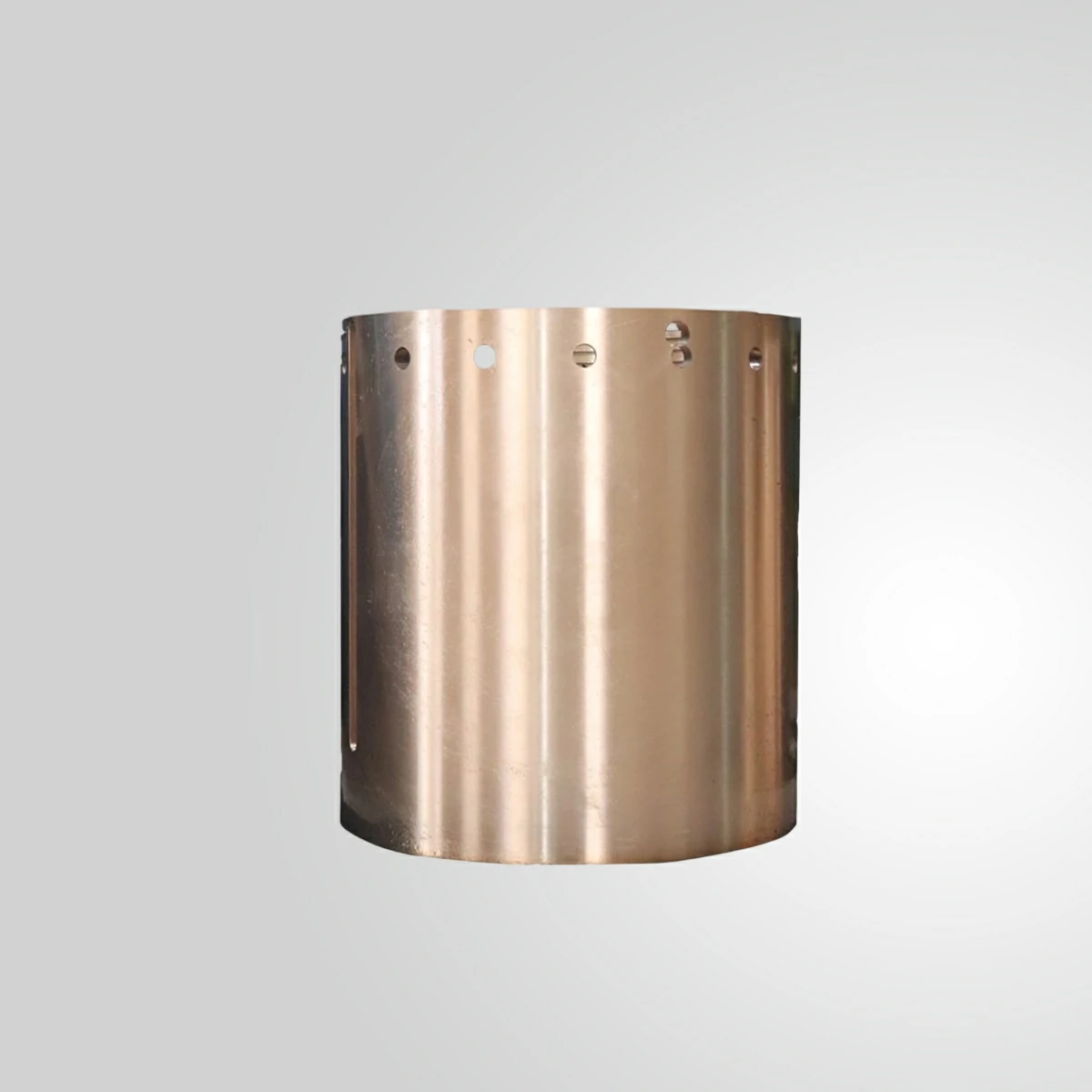
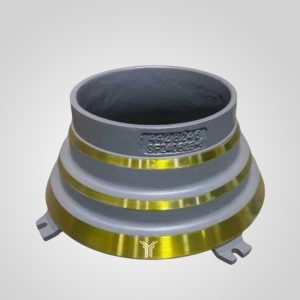
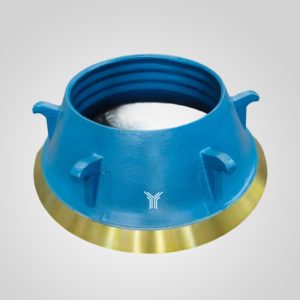
FLSmidth RXL302-0005 Cone Crusher Eccentric Bushing: Centrifugally Cast ASTM B505 C93700 Bronze
Product Name Cone Crusher Eccentric Bushing
Compatible Model FLSmidth RXL302-0005
Material Standards ASTM B505 C93700 / DIN 1716 G-CuPb20Sn
Alloy Composition High Leaded Tin Bronze (Pb: 18-23%, Sn: 5-7%, Cu: Balance)
Manufacturing Process Horizontal Centrifugal Casting (High G-Force Densification)
Hardness Profile 65 \– 85 HBW (Optimized for particulate embeddability)
Surface Finish (Inner Bore) Ra \≤ 0.8\μm (Critical for rapid hydrodynamic oil film generation)
Engineered to mitigate catastrophic main shaft scoring under extreme cyclical radial impact loads, the FLSmidth RXL302-0005 Cone Crusher Eccentric Bushing is manufactured via high G-force centrifugal casting using ASTM B505 C93700 high-leaded tin bronze. Featuring a rigorously controlled 65-85 HBW hardness for optimal particulate embeddability and an ultra-tight concentricity tolerance of 0.02mm, this critical drivetrain component guarantees rapid hydrodynamic oil film establishment. The Ra \≤ 0.8\μm surface finish drastically reduces break-in friction, preventing metal-to-metal transfer during boundary lubrication phases in high-tonnage hard rock crushing circuits.
Detailed Introduction
Overcoming Tribological Failures in the Eccentric Assembly
Main shaft galling and eccentric bushing seizure represent the most costly modes of unscheduled downtime in heavy-duty cone crushing operations. During the crushing stroke, immense radial forces are transferred directly through the eccentric assembly, constantly threatening to break through the hydrodynamic oil wedge. The FLSmidth RXL302-0005 Cone Crusher Eccentric Bushing is engineered to serve as the ultimate fail-safe wear interface within this brutal environment. By strictly controlling the metallurgical grain structure and adhering to exceptionally tight machining tolerances, this component effectively prevents catastrophic metal-to-metal transfer during the highest-risk operational phases: low-speed cold startups, momentary losses of lubrication pressure, and shock-loading events caused by tramp iron.
Metallurgical Matrix: ASTM B505 C93700 / DIN 1716 G-CuPb20Sn
The operational resilience of an eccentric bushing is fundamentally dictated by its exact alloy composition. The FLSmidth RXL302-0005 utilizes a highly specialized High Leaded Tin Bronze, strictly conforming to the metallurgical limits of ASTM B505 C93700 and the European equivalent DIN 1716 G-CuPb20Sn. The precise alloying ratio of 18-23% Lead (Pb) and 5-7% Tin (Sn) creates a necessary dual-phase microstructure.
In this matrix, the tin content fully alloys with the copper, creating a robust, high-yield-strength crystalline framework capable of absorbing the severe, repetitive compressive forces inherent to the gyratory crushing stroke. Conversely, the high lead content remains insoluble in the solid state. Instead, it disperses uniformly throughout the copper-tin matrix as microscopic pools. Under conditions of boundary lubrication, this dispersed lead acts as an internal solid lubricant. When frictional heat spikes, the lead smears across the Ra &≤ 0.8\μm running surface, creating an emergency sacrificial boundary film that drastically lowers the coefficient of friction and prevents the bronze from micro-welding to the forged steel main shaft.
Centrifugal Casting and High G-Force Densification
Standard static sand casting methods frequently introduce microscopic porosity, gas inclusions, and uneven grain boundaries into bronze components. Under cyclical compressive loading, these structural anomalies act as stress concentrators, leading to rapid fatigue spalling. To eliminate these failure modes, the FLSmidth RXL302-0005 is exclusively manufactured utilizing a horizontal centrifugal casting process.
By rotating the permanent mold at critical velocities during the pouring phase, the molten C93700 bronze is subjected to intense high G-force densification. The denser elemental copper, tin, and lead are forced radially outward to form a highly compacted, uniform outer wall. Simultaneously, lighter impurities, slag, and dissolved gases are driven to the inner bore of the casting. This sacrificial inner layer is completely machined away during the preliminary roughing phase. The resulting metallurgical structure exhibits exceptionally high tensile strength, zero micro-porosity, and a strictly uniform lead distribution, ensuring completely predictable wear rates across the entire vertical operating length of the bushing.
Hardness Control (65 \– 85 HBW) and Particulate Embeddability
A persistent misconception in mechanical maintenance is that harder wear components inherently yield longer service lives. In the harsh, highly contaminated environment of a hard rock crushing plant, an eccentric bushing that is too hard becomes a liability. The FLSmidth RXL302-0005 Cone Crusher Eccentric Bushing is carefully heat-treated and normalized to maintain a strict, relatively soft hardness window of 65 \– 85 HBW.
This specific hardness parameter is mathematically optimized to maximize embeddability. Despite the presence of primary dust seals and overpressure blowers, microscopic airborne silica dust and metallic wear debris inevitably contaminate the circulating lubricating oil. If the bushing were harder, these abrasive contaminants would become trapped between the bushing and the shaft, acting like a cutting tool and deeply scoring the costly main shaft. At 65-85 HBW, the bronze surface allows these abrasive silica particles to embed safely and deeply into the bushing wall. This isolates the sharp, cutting edges of the contaminants, protecting the highly polished journal surface of the main shaft from abrasive grooving.
Machining Precision and Hydrodynamic Lift Optimization
The transition from boundary lubrication (metal-to-metal contact) to full hydrodynamic lubrication (fluid film separation) is the most critical phase of crusher operation. To facilitate the immediate generation of a stable, load-bearing oil wedge, the FLSmidth RXL302-0005 Cone Crusher Eccentric Bushing is CNC machined to exacting ISO 2768-mK tolerances, featuring a maximum concentricity deviation of just 0.02mm.
This ultra-tight concentricity ensures an even, predictable distribution of the oil film thickness across the entire bearing geometry, preventing localized pressure spikes that can fracture the fluid film. Furthermore, the critical running surface is finished to an Ra \≤ 0.8\μm. By minimizing microscopic asperities (surface peaks), the fluid film thickness generated by the ISO VG 150 or 220 gear oil easily exceeds the combined composite surface roughness of the bushing and the shaft. This precise finish entirely eliminates metal-to-metal contact during steady-state operation, exponentially increasing the component’s operational lifespan.
Thermal Dynamics and Installation Protocol
The successful installation of the FLSmidth RXL302-0005 requires strict adherence to the principles of thermal expansion. Because the coefficient of thermal expansion for C93700 bronze is significantly higher than that of the cast steel eccentric housing, an exact interference fit must be executed. The bushing must be supercooled using liquid nitrogen or a dry ice/alcohol bath, shrinking its outer diameter sufficiently to allow it to drop freely into the eccentric bore.
Forcing the bushing into the housing via hydraulic pressing at ambient temperatures will inevitably shear the outer bronze wall and distort the inner bore, permanently compromising the interference fit and leading to a spun bushing under load. Once properly seated and normalized to ambient temperature, the bronze expands outward, creating a permanently locked, stress-free fit.
Technical Specifications
| Parameter | Specification / Standard |
| Product Name | Cone Crusher Eccentric Bushing |
| Compatible Model | FLSmidth RXL302-0005 |
| Material Standards | ASTM B505 C93700 / DIN 1716 G-CuPb20Sn |
| Alloy Composition | High Leaded Tin Bronze (Pb: 18-23%, Sn: 5-7%, Cu: Balance) |
| Manufacturing Process | Horizontal Centrifugal Casting (High G-Force Densification) |
| Hardness Profile | 65 \– 85 HBW (Optimized for particulate embeddability) |
| Surface Finish (Inner Bore) | Ra \≤ 0.8\μm (Critical for rapid hydrodynamic oil film generation) |
| Machining Precision Standard | ISO 2768-mK |
| Concentricity Tolerance | Max Deviation 0.02mm |
| Minimum Tensile Strength | 200 MPa (Industry baseline for C93700 continuous casting) |
| Minimum Yield Strength | 100 MPa (Industry baseline for C93700 continuous casting) |
| Lubricant Compatibility | ISO VG 150 / ISO VG 220 EP Gear Oils |
| Maximum Continuous Operating Temp | 85\°C (185\°F) – Bearing oil return temperature limit |
All manufacturer names, part numbers, model numbers, and descriptions are used for reference and identification purposes only, they are owned by the respective machine manufacturer, including but not limited to FLSmidth®, Metso®, thyssenkrupp®, and Sandvik®. All parts supplied are manufactured and warranted by yonsmen and are not manufactured by or purchased from the Original Equipment Manufacturer. yonsmen has no association with the OEM and does not intend to give this impression.
Reviews
There are no reviews yet.