How Cone Crusher Bowl Liners and Mantles Are Made for Real Crushing Conditions
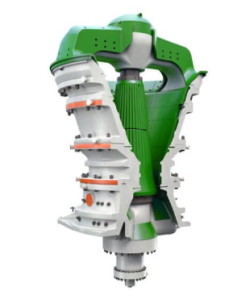
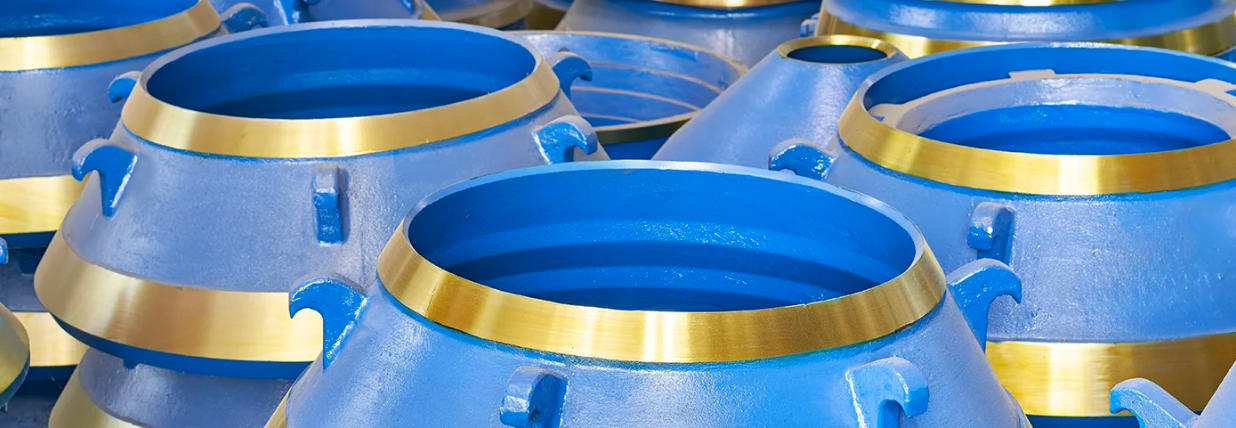
A cone crusher usually loses money before it fully breaks down. The warning is often a rising motor current, a drifting closed side setting, an uneven product curve, or a liner that wears thin on one side while the opposite side still has usable metal. In secondary and tertiary crushing, the two parts that decide this result are the bowl liner, also called the concave, and the mantle. The bowl liner is fixed in the upper frame or adjustment ring, while the mantle is mounted on the moving cone. Rock is compressed between them until it fractures, drops, and is crushed again through the chamber.
As a field engineer, I have seen a brand-new liner set fail in less than half of its expected life because the material was selected by price rather than feed condition. The quarry was crushing hard granite with high quartz content, yet the liner supplied was a low-manganese grade better suited to softer limestone. The wear face polished, the profile flattened, and the crusher started producing flaky aggregate. After changing to a higher manganese grade with controlled chromium and a corrected chamber profile, the same machine ran with steadier amperage and a more predictable liner life. This is why a crusher parts manufacturer must understand metallurgy, casting control, machining accuracy, and the actual rock entering the chamber.
What a Bowl Liner and Mantle Actually Do
A Cone crusher part should never be treated as a simple casting. The bowl liner and mantle form a constantly changing crushing chamber. Feed size, moisture, clay content, compressive strength, abrasiveness, and crusher speed all affect the contact pattern. When the feed is well graded and the chamber is choke fed, the load is distributed across the manganese surface. When the feed is segregated or too fine, crushing happens in a narrow zone, causing localized gouging, heat, and premature profile loss.
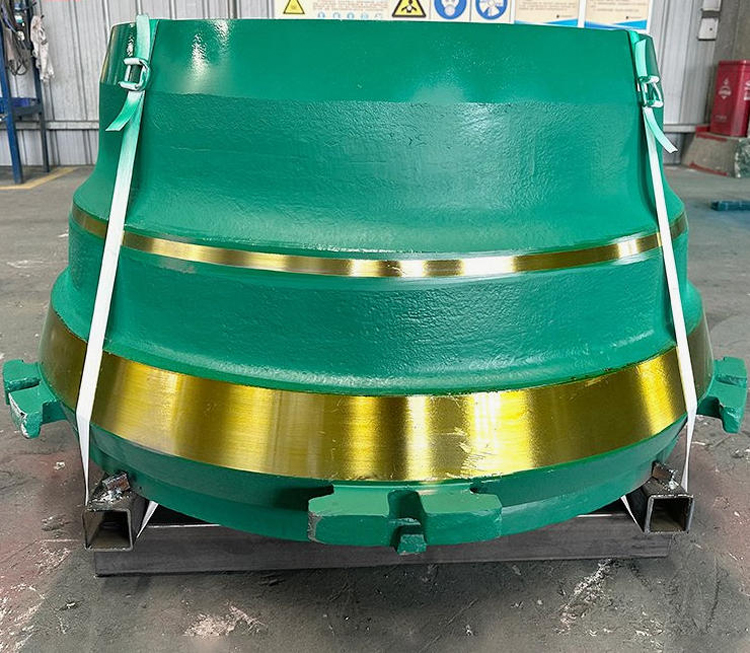
The mantle carries the moving crushing surface. Its geometry controls nip angle, reduction ratio, and how the material descends through the chamber. The bowl liner provides the fixed reaction surface. A mismatch between mantle profile and bowl liner profile can create poor feed intake, high recirculating load, and abnormal stress on the main frame. For this reason, production drawings should define not only weight and model number, but also chamber type, critical diameters, seating surfaces, key fitting dimensions, and the required wear material.
Material Choices for Cone Crusher Wear Parts
High manganese steel remains the standard material for most cone crusher bowl liners and mantles because it combines impact toughness with work-hardening behavior. In service, austenitic manganese steel starts relatively soft, often around 180 to 220 HB depending on grade and heat treatment, and can harden significantly under repeated impact and compression. Typical Hadfield-type manganese steel is based on about 1.0 percent to 1.4 percent carbon and more than 10 percent manganese. Common crusher liner grades include Mn13, Mn18, and Mn22, often with chromium additions such as Mn13Cr2, Mn18Cr2, and Mn22Cr2.
Pure titanium is not normally used as a bulk cone crusher liner material. It has good corrosion resistance and a high strength-to-weight ratio, but it does not provide the same crushing-chamber wear economy as manganese steel or ceramic-reinforced manganese. In modern wear parts, the practical “titanium material” is usually titanium carbide, known as TiC. TiC is a very hard ceramic phase inserted into high-wear zones of the mantle or bowl liner. These inserts are cast into a manganese steel matrix, so the part keeps a tough backing while the high-wear zone gains extra abrasion resistance.
| Material Grade | Typical Use | Common Parameters | Best-Fit Crushing Material |
|---|---|---|---|
| Mn13Cr2 | General impact crushing where work hardening must start quickly | About 11.5 percent to 14 percent Mn, Cr often around 1.5 percent to 2.5 percent in ASTM A128 Grade C-type chemistry | Limestone, medium-hard river stone, recycled concrete with moderate abrasion |
| Mn18Cr2 | Balanced toughness and wear life for many quarry and mining cones | Common commercial liner grade; initial hardness often around 180 to 220 HB after proper heat treatment | Granite, basalt, copper ore, mixed hard rock with moderate to high impact |
| Mn22Cr2 | High-abrasion applications requiring deeper work-hardening potential | Higher manganese content, good toughness when solution treated and water quenched correctly | Quartzite, iron ore, abrasive basalt, hard gold ore, high-silica aggregates |
| Mn18Cr2 with TiC inserts | Localized severe abrasion at feed opening, crushing zone, or discharge zone | TiC inserts may use depths such as 20 mm, 40 mm, 60 mm, or 80 mm depending on design and casting capability | Very abrasive granite, iron ore, copper ore, and hard quarry rock where shutdown cost is high |
Production Flow of a Cone Crusher Bowl Liner
1. Drawing Review and Chamber Confirmation
The production process starts before metal is melted. A responsible crusher parts manufacturer checks the crusher model, chamber type, closed side setting range, feed opening, liner weight, and previous wear photos. In many replacement projects, the customer only provides an OEM part number. That is not enough. A bowl liner for fine crushing and a bowl liner for coarse crushing may look similar to a buyer, but the contact zone and usable wear volume are different.
For critical liners, I prefer to review the old worn part before approving the new drawing. A liner with heavy wear only at the upper entry may indicate oversized feed or poor distribution. A liner with a smooth lower band and unused upper section may indicate poor choke feeding. These observations help decide whether to keep the original profile or adjust the chamber curve.
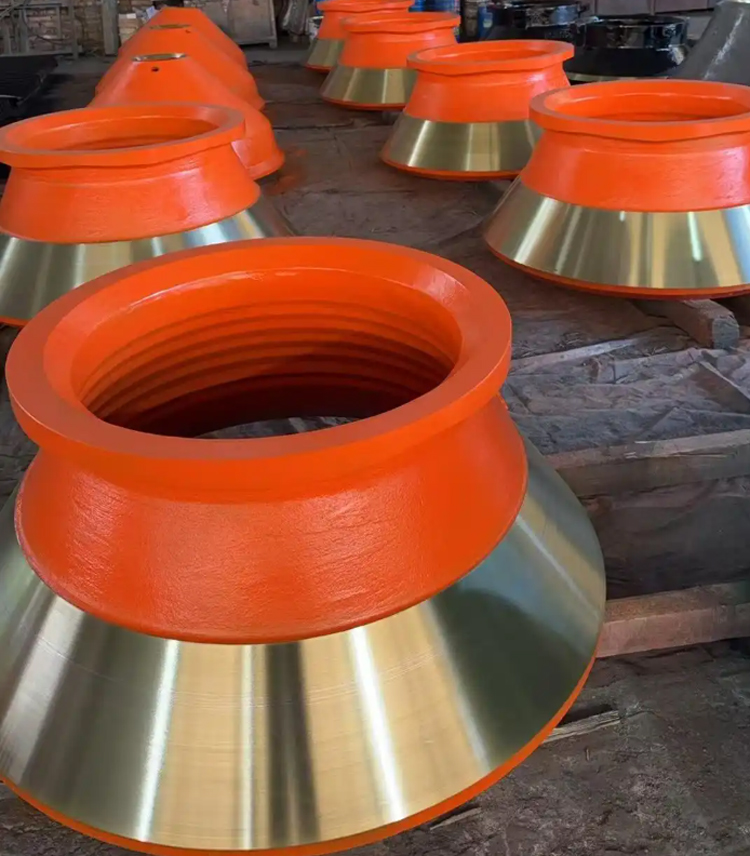
2. Pattern Making and Casting Simulation
The bowl liner pattern must allow for solidification shrinkage, machining allowance, and riser placement. Steel castings usually require a controlled feeding system because thick and thin sections cool at different rates. For large cone liners, foundries often use resin sand molding because it provides better dimensional stability than simple green sand molding. Typical sand casting tolerance depends on the molding method and casting size. For heavy wear castings, practical dimensional control is often managed through casting tolerance grades and final machining of seating areas rather than trying to machine the full wear face.
Simulation software is used to predict hot spots, shrinkage porosity, and metal flow. A bowl liner with hidden shrinkage near a seating area may pass visual inspection but crack under crushing load. Good riser design, proper chills, stable pouring temperature, and clean steel practice reduce this risk.
3. Melting, Chemistry Control, and Pouring
High manganese steel is usually melted in an electric arc furnace or induction furnace, then adjusted by spectrometer analysis. The target chemistry depends on the selected grade. For ASTM A128-style manganese steel, carbon and manganese must be controlled tightly because low carbon can reduce wear resistance, while excessive carbides from poor heat treatment can reduce toughness.
Before pouring, the melt must be deoxidized and checked for temperature. Too low a pouring temperature can cause cold shuts and poor filling. Too high a pouring temperature can increase grain coarsening, gas pickup, and shrinkage risk. For cone crusher liners, consistent melting practice matters more than a single impressive certificate. A clean heat with controlled phosphorus and sulfur gives better crack resistance during service.
4. Shakeout, Cleaning, and Heat Treatment
After solidification, the casting is removed from the mold, and gates, risers, and fins are cut away. For manganese steel, heat treatment is the step that separates a durable liner from a brittle casting. The common process is solution annealing at high temperature, often near 1,050°C to 1,100°C depending on chemistry and section thickness, followed by rapid water quenching. The goal is to dissolve carbides and retain a tough austenitic structure.
If the quench is delayed or insufficient, carbides can precipitate along grain boundaries. In the field, this often appears as cracking, spalling, or chunks breaking out under impact. I once inspected a mantle that failed after only six days in a copper mine. The fracture surface was bright and granular near a thick section. The chemical report looked acceptable, but the microstructure showed carbide networks caused by poor quenching. The lesson was simple: chemistry alone does not make a good liner; heat treatment must match the casting mass.
5. Machining and Fitting Accuracy
After heat treatment and shot blasting, the liner is machined where it contacts the crusher body, locking system, or backing compound. Wear faces are usually left as-cast unless the design requires special finishing. Seating surfaces, however, require controlled flatness, roundness, and surface roughness. In many heavy cast parts, a machined surface roughness of Ra 3.2 to 6.3 micrometers is common for functional fit surfaces, while tighter surfaces may be specified for special assemblies.
Dimensional tolerance should be agreed on the drawing. For a large bowl liner, the most important dimensions are not always the overall height or outside diameter. The key dimensions are the seating taper, locking groove, contact band, and any reference diameter that controls assembly. Poor seating creates uneven load transfer, which can damage the adjustment ring or main frame long before the wear part is consumed.
Production Flow of a Cone Crusher Mantle
The mantle production route is similar to the bowl liner process, but the risk points are different. The mantle is mounted on the moving head and sees cyclic compressive force. Its inner seating surface must match the head correctly. If the mantle does not sit evenly, it can loosen, spin, crack, or damage the head seat.
During pattern design, the mantle requires careful allowance for wall thickness and internal geometry. During pouring, the foundry must avoid shrinkage near the inner cone and upper locking area. During machining, the bore, taper, and top seating location must be checked with gauges or coordinate measuring equipment when required. After machining, many manufacturers perform dye penetrant testing on critical areas and magnetic particle inspection where suitable. Ultrasonic testing may be used on heavy sections if the specification requires internal soundness.
| Inspection Item | Why It Matters | Typical Control Method |
|---|---|---|
| Chemical composition | Controls toughness, work hardening, and wear resistance | Spectrometer analysis for C, Mn, Cr, Si, P, S, and alloy additions |
| Hardness | Confirms heat treatment consistency before shipment | Brinell hardness testing, commonly around 180 to 220 HB for many manganese liners before service |
| Microstructure | Detects carbide networks and heat-treatment defects | Metallographic sample checking when required by customer specification |
| Dimensional accuracy | Ensures correct fit and load transfer inside the crusher | Template checking, calipers, gauges, CMM, or 3D scanning for critical profiles |
| Surface quality | Reduces crack initiation and assembly problems | Visual inspection, grinding of fins, NDT on critical seating or locking zones |
How to Select Wear Material by Crushed Material
Material selection should begin with the rock, not the catalog. Limestone has lower abrasiveness than granite, but it can still cause packing when wet and clay-rich. Basalt has high compressive strength and can generate sharp wear. Quartzite and high-silica granite can cut manganese quickly if the liner does not work harden. Iron ore may combine high abrasion with high compressive loading. Recycled concrete can contain steel, tramp metal, and variable feed shape, making toughness more important than maximum hardness.
- For limestone and medium-hard aggregate: Mn13Cr2 or Mn18Cr2 is often enough, especially when impact is moderate and fast work hardening is useful.
- For granite and basalt: Mn18Cr2 is a common starting point because it balances toughness, wear resistance, and cost.
- For quartz-rich or highly abrasive ore: Mn22Cr2 or TiC-reinforced manganese may be considered after reviewing feed size, CSS, and actual wear pattern.
- For copper, gold, and iron ore: higher manganese grades or TiC insert designs can reduce shutdown frequency when the chamber receives enough impact to activate work hardening.
- For recycled concrete and mixed demolition feed: toughness and tramp resistance are critical, so overly brittle materials should be avoided.
Why TiC Insert Liners Are Not a Universal Upgrade
TiC insert cone crusher wear parts can be valuable in severe abrasion zones, but they must be designed correctly. The insert location should match the real wear map. If TiC is placed outside the active crushing band, the customer pays for material that does not work. If the insert depth is too aggressive or bonding is poor, the insert area can become a stress concentrator. The best designs combine a ductile manganese body with localized ceramic reinforcement where abrasion is concentrated.
In my experience, TiC liners perform best when three conditions are met. First, the feed is stable enough to keep the chamber loaded. Second, the rock is abrasive enough to justify the higher part cost. Third, the crusher is expensive to stop, so fewer liner changes create real economic value. For a small limestone plant with easy access and low abrasion, standard manganese may still be the better choice. For a hard-rock mine where one shutdown affects the entire production chain, TiC inserts can be worth testing.
Failure Review from the Field
A failure review should be systematic. When a bowl liner or mantle fails early, do not blame the foundry immediately and do not blame the operator immediately. Check the worn profile, feed grading, CSS history, motor load trend, tramp events, backing condition, and installation record. Then check the part: chemistry, hardness, heat number, NDT report, seating marks, crack origin, and microstructure if necessary.
One tertiary cone I inspected had a mantle crack from the top seat downward. The customer suspected poor manganese. The hardness was normal, and the chemistry was within specification. The real cause was uneven seating caused by old backing residue left on the head. The new mantle was installed over a high spot, and the cyclic load concentrated near the top. After the head was cleaned, checked, and the mantle was installed with proper backing, the next set completed its planned wear life. This is why installation discipline is part of wear-part performance.
What a Reliable Crusher Parts Manufacturer Should Provide
A reliable crusher parts manufacturer should provide more than weight and price. The supplier should confirm material grade, heat treatment route, hardness range, dimensional inspection, chamber profile, compatible crusher model, and recommended application. For high-value liners, the supplier should also be able to discuss wear photos and suggest whether the customer needs Mn13Cr2, Mn18Cr2, Mn22Cr2, or a TiC insert design.
Traceability matters. Each liner should carry a heat number or batch record. The manufacturer should keep spectrometer results, heat-treatment charts, hardness reports, and dimensional records. For export or critical mine supply, packing should protect machined surfaces and prevent impact damage during transport. A polished brochure does not keep a crusher running; controlled production records do.
Final Engineering Advice
The best cone crusher bowl liner or mantle is not always the hardest one, the heaviest one, or the most expensive one. It is the part whose metallurgy, profile, fit, and work-hardening behavior match the crushing duty. High manganese steel remains the foundation because it can develop a hard wear surface while keeping a tough core. Mn18Cr2 and Mn22Cr2 cover many hard-rock applications. TiC insert liners are a modern option for localized severe abrasion, but they should be selected based on wear mapping and total cost per ton.
Before ordering the next liner set, collect three pieces of evidence: the worn liner photos, the feed and product data, and the operating history of CSS and power draw. With those records, a crusher parts manufacturer can recommend a material and chamber design that solves the actual problem instead of simply replacing metal with more metal. In crushing, longer wear life starts with better diagnosis.