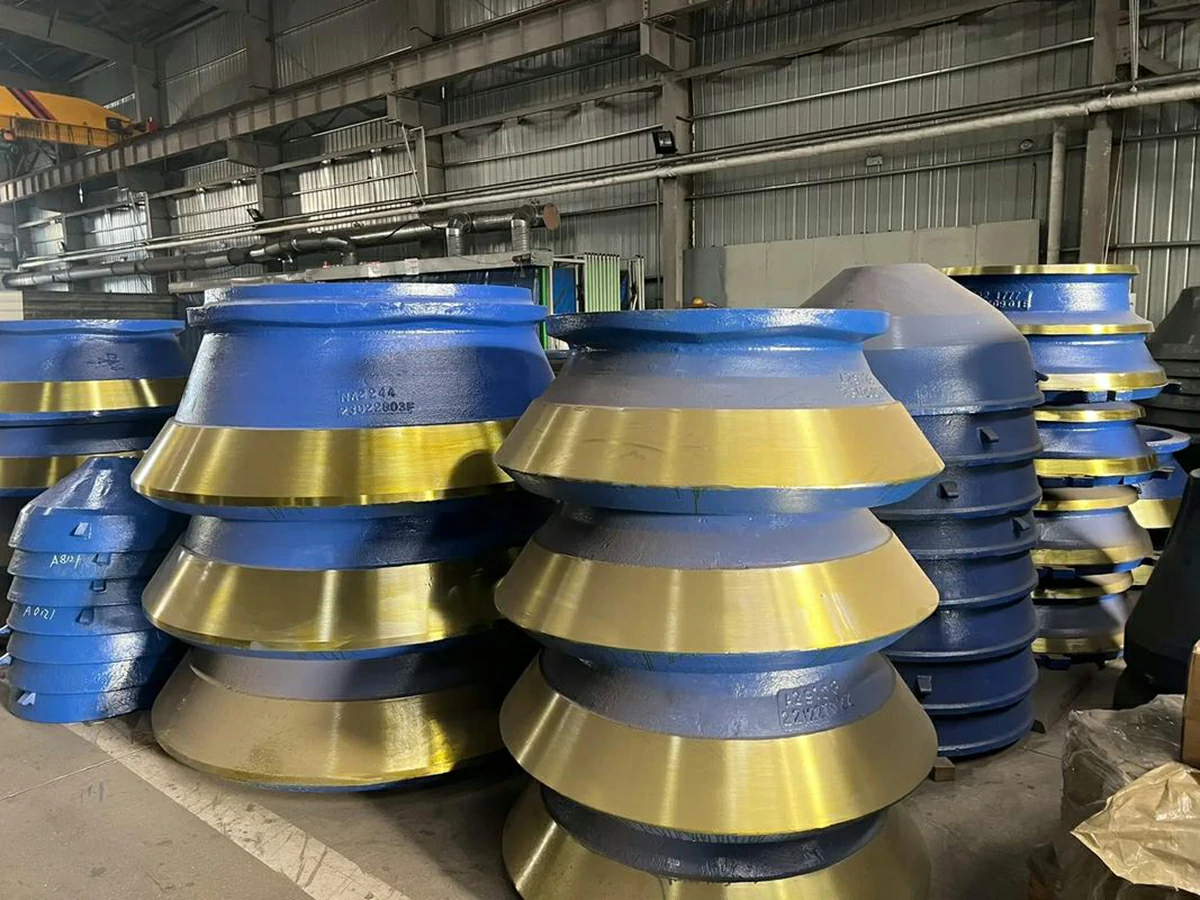
OEM Crusher Parts
| Comparison Item | Aftermarket Crusher Parts | OEM Crusher Parts |
|---|---|---|
| Purchase Cost | Usually lower in unit price, often helping reduce maintenance budget pressure for high consumption wear parts. | Usually higher because of brand premium, factory channel cost, and original manufacturer pricing structure. |
| Lead Time | Can be shorter when common jaw plates, mantles, concaves, blow bars, and liners are stocked locally or regionally. | Can be longer, especially for imported parts, older crusher models, or special chamber configurations. |
| Fit and Installation | Reliable when supplied by a qualified manufacturer with accurate drawings, 3D scanning, machining control, and fitment records. | Generally offers predictable fit because the parts are designed or approved by the original equipment manufacturer. |
| Material Options | Can offer flexible metallurgy such as Mn13Cr2, Mn18Cr2, Mn22Cr2, high chrome iron, martensitic steel, or ceramic insert designs. | Usually follows standard factory material specifications, which may be stable but not always optimized for local rock conditions. |
| Wear Life | Can match or exceed OEM performance when the liner profile, hardness, heat treatment, and application data are properly controlled. | Usually provides stable wear life in standard applications, especially when the crusher operates under factory recommended conditions. |
| Customization | Often stronger in customization, including tooth profile adjustment, liner thickness change, chamber profile optimization, and special alloy selection. | Usually limited to factory approved options, which may be less flexible for unusual feed size, abrasive rock, or special product requirements. |
| Warranty Impact | May affect warranty claims if used on crushers still covered by strict OEM warranty terms. | Usually safer for warranty sensitive equipment, especially during the early service period of a new crusher. |
| Technical Support | Depends heavily on the supplier. Strong suppliers provide material reports, hardness testing, drawings, and field application advice. | Usually supported by factory documentation, original service manuals, and official dealer networks. |
| Best Use Cases | Suitable for mature crushers, regular wear parts, older machines, high consumption applications, and plants seeking lower cost per operating hour. | Suitable for new machines, safety critical systems, warranty sensitive components, electronic controls, and highly specialized assemblies. |
| Main Risk | Low quality suppliers may provide poor casting, inaccurate dimensions, weak heat treatment, or short service life. | Higher cost and longer delivery time may increase downtime risk if spare parts planning is weak. |
| Buying Recommendation | Choose premium Aftermarket Crusher Parts when supplier capability, material traceability, fit accuracy, and field performance are verified. | Choose OEM parts when warranty protection, factory approval, and original specification control are more important than purchase cost. |
A crusher does not fail politely. A jaw plate cracks during a night shift, a cone mantle loses its profile before the monthly target is reached, or an impact bar wears unevenly and starts shaking the rotor. At that moment, the purchasing decision is no longer theoretical. The choice between OEM parts and Aftermarket Crusher Parts affects tonnes per hour, liner change intervals, stockpile quality, maintenance labour, and the cash flow of the whole crushing plant.
For many quarry managers, cement plants, mining contractors, and aggregate producers, OEM parts feel like the default option because they come from the original equipment brand. That can be the right decision in some cases, especially when the machine is still under warranty or when a critical casting has a highly controlled geometry. Yet after twenty years around jaw crushers, cone crushers, impact crushers, screens, feeders, and mobile crushing plants, I have seen many sites run safely and profitably with well engineered Aftermarket Crusher Parts. The real question is not whether aftermarket is cheaper. The better question is whether the part matches the machine, the rock, the feed size, the closed side setting, and the production target.
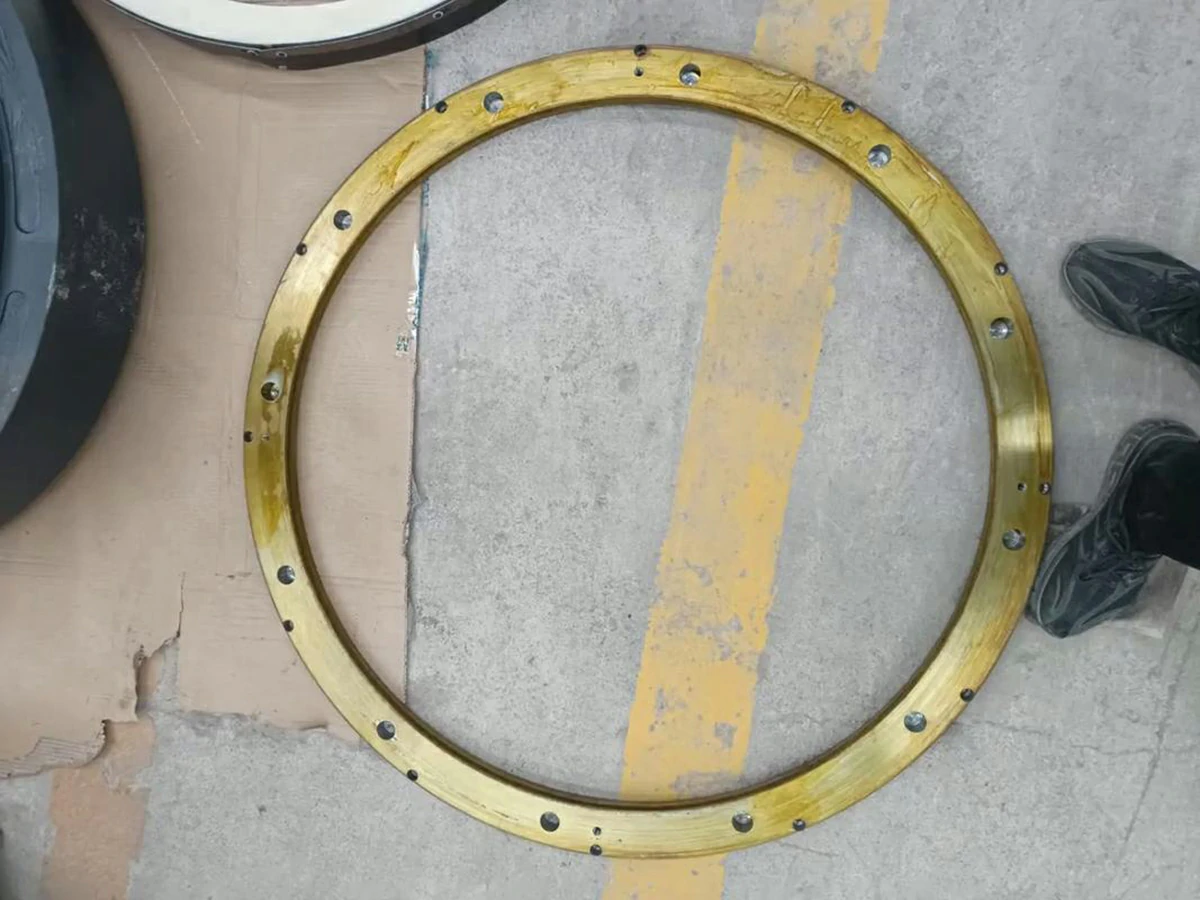
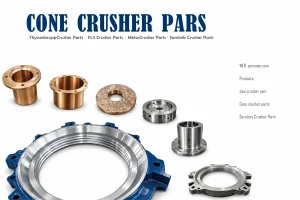
cone Aftermarket Crusher Parts
What OEM Parts Usually Offer
OEM parts are made or approved by the original equipment manufacturer. Their main advantage is controlled fit. A genuine jaw die for a specific crusher model should match the bolt pattern, seating surface, tooth profile, lifting point, and nominal thickness designed for that machine. For a cone crusher, an OEM mantle and concave should match the chamber profile that protects the head, main shaft, eccentric assembly, and countershaft from abnormal loading.
OEM parts are often the safer first choice when the crusher is new, when the warranty conditions are strict, or when the site has limited mechanical experience. If a 300 kW cone crusher is operating with a closed side setting between 16 mm and 22 mm, and the liner profile has been validated by the factory for that exact application, staying with OEM may reduce engineering uncertainty. OEM documentation can also help maintenance teams check tightening torque, backing compound volume, setting range, liner weight, and recommended inspection intervals.
The downside is usually cost and lead time. In remote mining areas, an OEM mantle or jaw plate may require several weeks of delivery. Air freight for a heavy casting can damage the maintenance budget, while sea freight may not match the shutdown plan. If a plant processes 600 tonnes per hour and loses one production day, the apparent saving from a perfect paper specification can disappear quickly. This is where qualified Aftermarket Crusher Parts become attractive.
What High Quality Aftermarket Crusher Parts Can Offer
Aftermarket Crusher Parts are replacement components produced by a supplier other than the original equipment manufacturer. The quality range is wide. Some are rough copies with poor casting control, weak heat treatment, and loose machining. Others are reverse engineered with 3D scanning, chemical analysis, controlled mould design, CNC machining, and field feedback from real crushing sites.
A serious aftermarket supplier should not only ask for the crusher model. They should ask about feed opening, feed gradation, rock type, abrasiveness, moisture, tramp iron risk, daily running hours, target product size, and current wear pattern. A jaw crusher running granite with 180 MPa compressive strength and 400 mm feed needs a different tooth profile than a recycling jaw crusher handling concrete with rebar. A cone crusher working in secondary duty at a 32 mm closed side setting does not need the same liner design as a tertiary cone working near 10 mm.
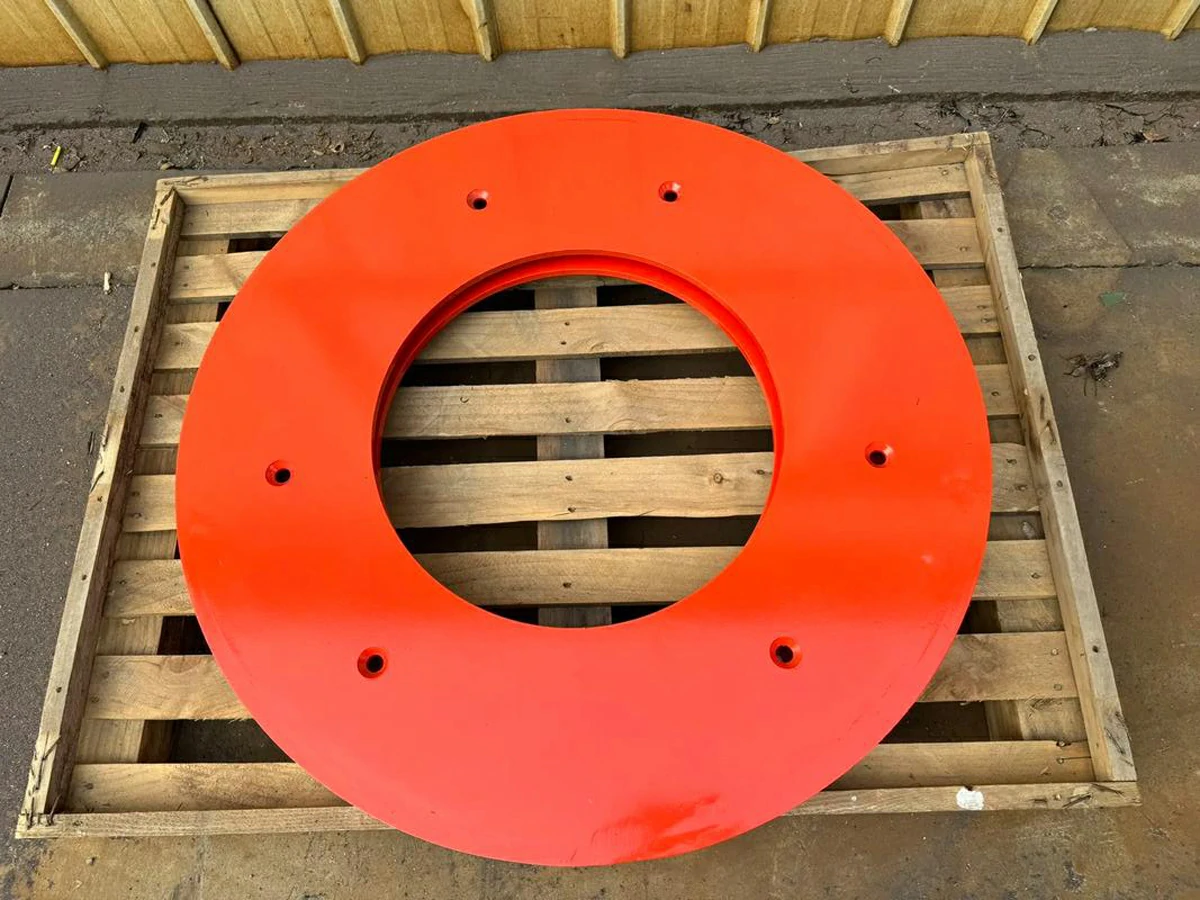
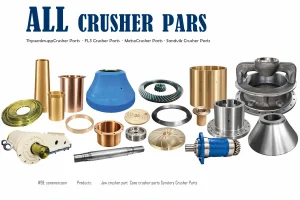
Aftermarket Crusher Parts
Good Aftermarket Crusher Parts can improve availability when the supplier holds inventory of common wear parts. For example, jaw plates for popular 900 by 600 mm and 1100 by 800 mm jaw crushers, cone mantles for common 200 hp to 500 hp machines, and impact blow bars for 1000 mm to 1400 mm rotors can often be stocked regionally. A shorter delivery window helps plants avoid emergency welding, overextended liner life, and unsafe maintenance improvisation.
Metallurgy Matters More Than the Logo
The brand name on the invoice does not crush rock. Metallurgy does. For jaw plates, cone liners, and gyratory liners, manganese steel is still the standard choice because it work hardens under impact. Common grades include Mn13Cr2, Mn18Cr2, and Mn22Cr2. A typical as cast hardness may sit around 180 HB to 220 HB, while the working surface can harden to around 450 HB to 550 HB under correct crushing pressure. If the feed is too soft or the chamber is underloaded, manganese may not work harden enough, and wear life can be disappointing even if the part is expensive.
For impact crusher blow bars, metallurgy depends heavily on feed condition. High chrome blow bars at 58 HRC to 62 HRC can perform well in clean limestone or low silica aggregate, but they are vulnerable to tramp metal. Martensitic steel blow bars around 45 HRC to 50 HRC can handle more impact and some contamination. Ceramic insert blow bars may extend wear life in abrasive applications, but the rotor speed, feed size, and impact load must be controlled. A good aftermarket engineer will explain these tradeoffs instead of simply offering the lowest price.
Heat treatment is another major factor. A manganese liner with uneven quenching can develop internal stress, cracking, or soft zones. For large cone liners above 1500 kg, temperature control and cooling rate are critical. Poor riser design in the foundry can also create shrinkage cavities near high stress sections. These defects may not be visible during a quick warehouse inspection, but they appear later as premature breakage, unstable crusher setting, or sudden liner movement.
Fit and Tolerance Are Non Negotiable
Fit is where many cheap parts fail. A jaw plate that rocks on the support surface will damage the seat and loosen wedges. A cone mantle with poor taper contact can create high point loading on the head. A bushing with the wrong bore size can overheat the shaft. In heavy crushing equipment, a small dimensional error can become a major mechanical failure.
For machined crusher components, critical tolerances may be within 0.03 mm to 0.08 mm depending on the part. Bearing housings, eccentric bushings, sleeves, pinions, and hydraulic components need more than visual similarity. Surface finish, concentricity, hardness depth, oil groove geometry, and material certificate all matter. For wear liners, the dimensional requirement is different but still important. Bolt holes must align, lifting lugs must be safe, seating surfaces must be clean, and the profile must maintain the designed nip angle and crushing zone.
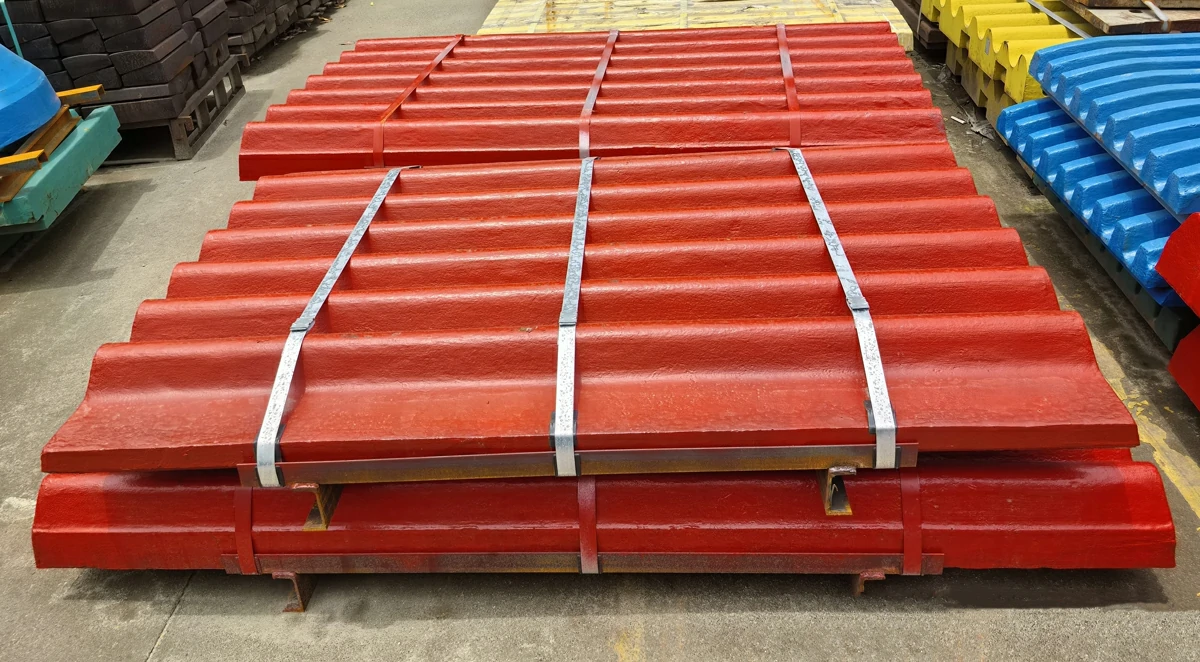
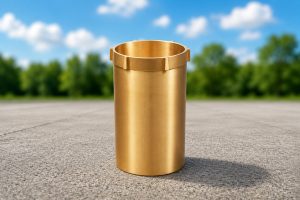
JAW Aftermarket Crusher Parts
When buying Aftermarket Crusher Parts, the buyer should request part drawings or dimensional confirmation, not only a photo. A supplier that can provide inspection reports, chemical composition, heat treatment records, hardness readings, and weight comparison is usually safer than a supplier that only quotes quickly. The cheapest liner becomes expensive if it forces a shutdown twice as often.
Cost Comparison Should Include Downtime
Many purchasing teams compare only unit price. That is incomplete. A jaw plate that costs 25 percent less but lasts 40 percent fewer hours is not cheaper. A cone concave that saves money but causes poor product shape, higher recirculating load, and more power draw may reduce total plant profit. A blow bar that cracks and damages apron liners can turn a small saving into a major repair.
A practical comparison should include purchase price, freight, customs cost, expected wear life, changeout labour, lost production, safety exposure, and spare stock value. If a plant runs 10 hours per day at 350 tonnes per hour, one lost day equals 3500 tonnes of missed production. At a larger quarry running 800 tonnes per hour, a four hour breakdown can be more costly than the price difference between OEM and high quality aftermarket parts.
This is why many experienced maintenance managers use a cost per operating hour approach. If an OEM mantle lasts 900 hours and a premium aftermarket mantle lasts 850 hours but arrives faster and costs significantly less, the aftermarket choice may be rational. If a poor quality copy lasts only 500 hours and needs extra torch work during removal, it is not a bargain. The calculation must be based on real site data, not catalogue promises.
When OEM Is Usually the Better Choice
OEM parts are often the better choice when the crusher is under factory warranty, when a failure could affect warranty claims, or when the component is deeply connected to the machine safety system. Hydraulic cylinders, electronic control modules, lubrication sensors, safety interlocks, and certain patented assemblies may not be suitable for unverified alternatives.
OEM can also be better when the crusher works in an application with very little operating history. For example, a new cone crusher installed in a manufactured sand circuit may need factory support until the chamber selection, feed grading, and closed side setting are stable. If the plant is still adjusting from 19 mm product to 12 mm product, liner performance data may not be mature enough for aggressive aftermarket changes.
Another reason to stay with OEM is documentation. Some regulated operations require traceability, conformity statements, and factory approved service procedures. If the internal maintenance team is small, the extra cost of OEM parts may be justified by easier support and clearer accountability.
When Aftermarket Crusher Parts Are Often the Better Choice
Aftermarket Crusher Parts are often the better choice when the machine is out of warranty, the part is a regular wear item, the supplier has proven fitment history, and the site has enough maintenance data to judge performance. Jaw plates, cheek plates, cone liners, mantles, concaves, blow bars, impact plates, VSI shoes, anvils, and screen side liners are common examples.
They can also be the better choice when the OEM part is not optimized for local rock. In basalt, granite, river stone, iron ore, copper ore, and highly abrasive sandstone, standard liners may wear too fast or create poor chamber packing. A skilled aftermarket supplier can adjust tooth pitch, liner thickness, profile depth, manganese grade, or ceramic insert layout to match the feed and discharge requirement.
Aftermarket supply can be especially valuable for older crushers. Many sites keep reliable machines running for 15 to 25 years. The frame, pitman, main shaft, and drive system may still be serviceable, but OEM availability becomes slow or expensive. In these cases, well measured Aftermarket Crusher Parts can extend equipment life without forcing an early capital purchase.
Field Checks Before Approving a Supplier
Before switching from OEM to aftermarket, run a controlled trial. Do not change every part at once. Install one set of jaw plates, one cone liner set, or one group of blow bars and track the results. Record operating hours, feed size, crusher setting, amperage, lubrication temperature, vibration, product gradation, and liner wear profile. For cone crushers, check the closed side setting after the first 8 hours, then again after 40 hours, because new liners can settle. For jaw crushers, inspect wedges, bolts, cheek plates, and toggle area after the first shift.
A reliable trial should include photos at fixed intervals. Take images from the same angle after 100 hours, 300 hours, and 600 hours where possible. Measure remaining liner thickness with consistent reference points. Do not judge only by calendar time, because rainy days, low feed rate, or different blasted material can distort the result.
Also check packaging and handling. Heavy castings must be supported properly during transport. A 1200 kg mantle or a 900 kg fixed jaw plate can be damaged by poor loading. Lifting eyes should be certified or clearly marked. Painted surfaces should not hide casting defects. Machined surfaces should be protected from corrosion and impact.
Warning Signs of Poor Aftermarket Parts
Several warning signs should make a buyer cautious. A supplier that refuses to provide material composition is a risk. A quote that is far below the market may indicate recycled scrap control problems, poor heat treatment, or skipped machining. Parts with rough seating faces, offset holes, visible shrinkage marks, weak packaging, or inaccurate weights should be inspected carefully before installation.
Another warning sign is a supplier that claims one material solves every application. No single manganese grade, chrome iron grade, or ceramic insert design is best for every crusher. Clean limestone, wet river gravel, hard granite, demolition concrete, and copper ore all load the machine differently. A supplier with real engineering experience will ask questions before recommending Aftermarket Crusher Parts.
Building a Balanced Spare Parts Strategy
The best maintenance strategy is not purely OEM or purely aftermarket. Most successful crushing plants use a balanced approach. They may keep OEM parts for critical safety components, control systems, and warranty sensitive assemblies. They may use premium Aftermarket Crusher Parts for high consumption wear items where performance can be tested and measured.
Stock planning is equally important. A plant should normally keep at least one set of main wear parts for the primary crusher, one set for the secondary crusher, and fast moving small parts such as wedges, bolts, backing material, torch rings, seals, filters, and scraper components. For remote mines, the buffer should be larger because freight delay can stop the entire circuit. For mobile contractors, the spare parts plan should match the travel schedule and the expected abrasiveness of each job.
Digital records improve decisions. Each liner change should record installation date, removal date, operating hours, tonnes processed, closed side setting, feed source, and reason for removal. After three or four cycles, the maintenance team can compare OEM and aftermarket performance with confidence. Without records, every purchasing meeting becomes an argument based on memory.
Final Recommendation
OEM parts are not automatically overpriced, and Aftermarket Crusher Parts are not automatically risky. The right choice depends on the crusher age, warranty status, application severity, supplier capability, and the cost of downtime. For warranty sensitive, safety critical, or highly specialized components, OEM may be the safest route. For repeat wear parts in mature applications, a qualified aftermarket supplier can reduce cost, shorten lead time, and even improve wear performance.
The strongest decision is evidence based. Check metallurgy, fit, tolerance, traceability, field history, and total operating cost. Ask for real inspection data, not only sales claims. Test one component group at a time. Track tonnes, hours, power draw, vibration, product shape, and maintenance labour. When Aftermarket Crusher Parts are selected with engineering discipline, they can become a practical tool for protecting uptime and improving the maintenance budget without compromising crusher reliability.