“I stopped arguing about the brand stamp after the third liner swap,” said Dmitri, a maintenance foreman who has spent fourteen years servicing Metso HP and Sandvik CH series cone crushers across two open-pit iron ore operations. “High-quality replacement crusher parts and OEM parts are not worlds apart in how they wear — but they are worlds apart in how fast they arrive and what they do to the maintenance budget.” That observation, delivered over a set of worn-out bowl liners in a dusty workshop, captures the central tension every crushing plant faces when a liner seat is empty and the next shift is scheduled in six hours.
The Metallurgical Starting Point
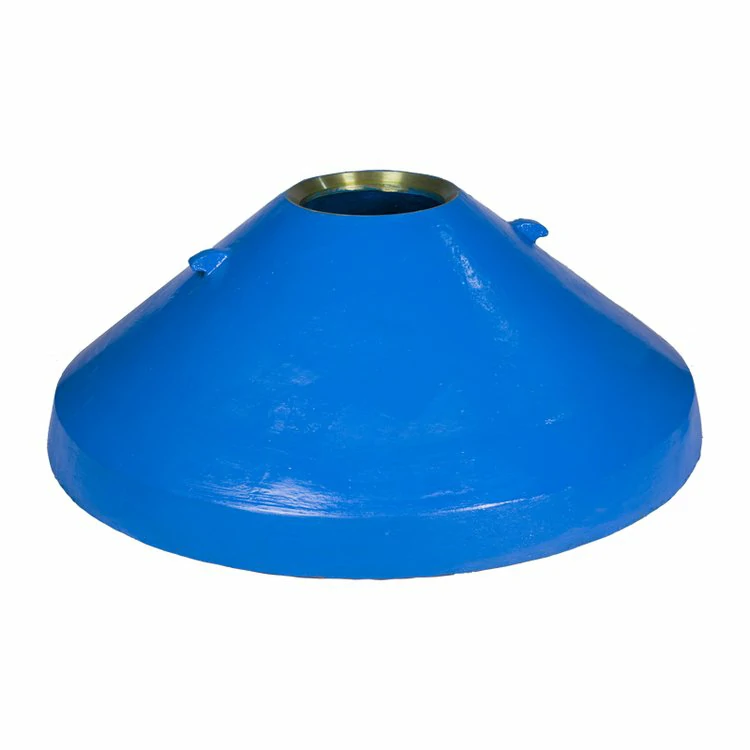
Any honest comparison between OEM crusher components and aftermarket alternatives must begin at the material level, not the marketing level. The dominant alloy for cone crusher mantles and bowl liners in hard-rock applications is austenitic manganese steel, most commonly specified as Mn13Cr2 or Mn18Cr2 under ASTM A128 and ISO 13521 standards. Mn18Cr2 — eighteen percent manganese, two percent chromium — delivers a tensile strength in the range of 850 to 950 MPa with elongation exceeding twenty-five percent and Charpy impact toughness above 180 J/cm². The initial as-cast surface hardness sits near HB 180 to 220, but under the compressive loading of a crushing chamber, the work-hardening response drives surface hardness upward toward HB 480 to 550, which is the mechanism that gives manganese steel its wear resistance in the first place.
OEM manufacturers specify these parameters in their component datasheets. What changed over the past decade is that a growing number of cone crusher parts suppliers — particularly those operating certified foundries with spectrometer-controlled melt chemistry — now publish the same specifications and can demonstrate compliance through third-party material certificates. The gap is no longer a question of whether aftermarket foundries can hit the alloy window; it is a question of whether a given supplier has the process controls to do it consistently.
Dimensional Tolerances and Fit
Wear performance is only half of the equation. A liner that meets the alloy spec but ships with loose dimensional tolerances will cause uneven load distribution in the crushing chamber, accelerate eccentric bushing wear, and in severe cases generate the kind of vibration that trips the crusher’s overload protection. Industry-standard tolerances for cone crusher mantles specify a bore-to-seat fit of no more than ±0.05 mm on critical mating diameters, with surface roughness on machined contact faces held to Ra 1.6 to 3.2 μm. Liner thickness across the casting should be consistent to within ±2 mm to ensure symmetrical force distribution.
This is where procurement managers need to ask specific questions, not general ones. Does the supplier perform dimensional inspection on a coordinate measuring machine? Are material test reports issued per heat, not per batch? Is the surface finish on seating areas confirmed with a profilometer? A cone crusher parts supplier that answers yes to all three and provides supporting documentation is operating at a level that makes the OEM-versus-aftermarket label largely irrelevant from an engineering standpoint.
A Direct Technical Comparison
| Parameter | OEM Typical Specification | Qualified Aftermarket Specification |
|---|---|---|
| Alloy Grade | Mn18Cr2 / Mn13Cr2 | Mn18Cr2 / Mn13Cr2 |
| Tensile Strength | 850 – 950 MPa | 850 – 950 MPa |
| Elongation | ≥ 25% | ≥ 25% |
| Impact Toughness (Charpy) | ≥ 180 J/cm² | ≥ 180 J/cm² |
| Work-Hardened Surface Hardness | HB 480 – 550 | HB 480 – 550 |
| Seating Diameter Tolerance | ± 0.05 mm | ± 0.05 mm (certified suppliers) |
| Surface Roughness (contact faces) | Ra 1.6 – 3.2 μm | Ra 1.6 – 3.2 μm (certified suppliers) |
| Lead Time (typical) | 8 – 20 weeks | 2 – 6 weeks |
| Unit Cost vs OEM Baseline | 100% | 55 – 75% |
Where Aftermarket Solutions Lose Ground
Transparency matters here. There are categories of crusher components where the OEM advantage is real and measurable. Complex hydraulic components — including the tramp-release cylinder assemblies and hydroset piston seals on modern cone crushers — involve tight hydraulic bore tolerances, proprietary seal compound formulations, and pressure ratings that interact with the crusher’s electronic control architecture. For these parts, using non-OEM components without verified compatibility data introduces failure modes that manganese chemistry cannot address. The same caution applies to anti-friction bearing assemblies, where fatigue-life testing under dynamic radial and axial loads requires either OEM certification or equivalent third-party testing to ISO 281.
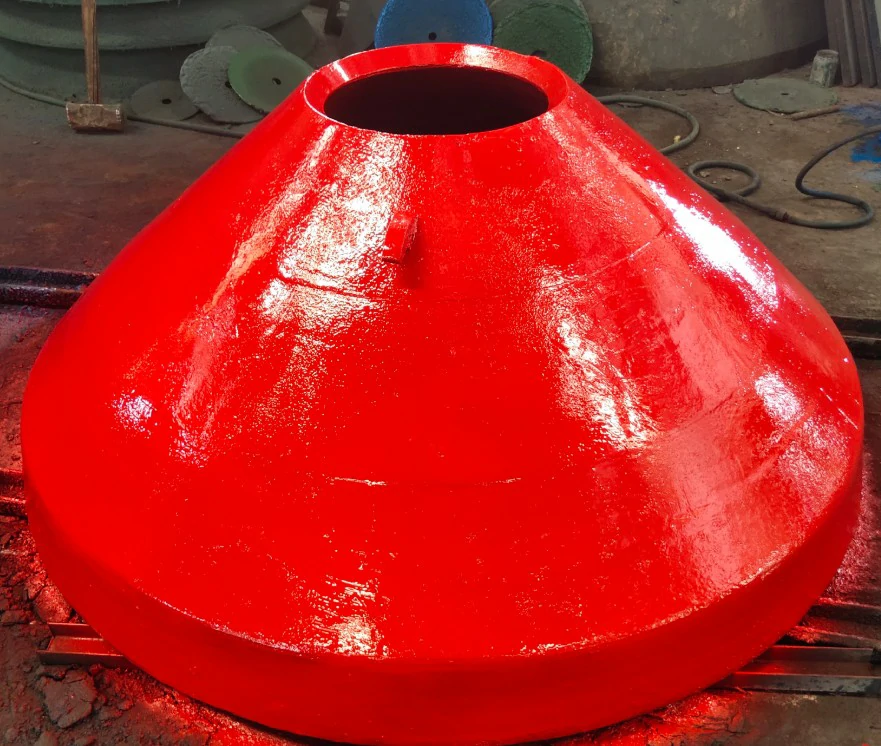
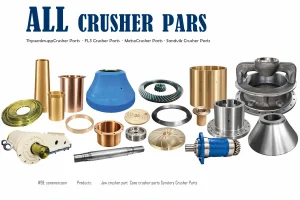
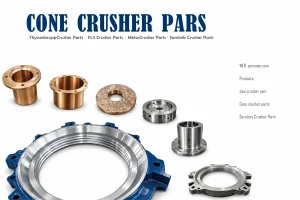
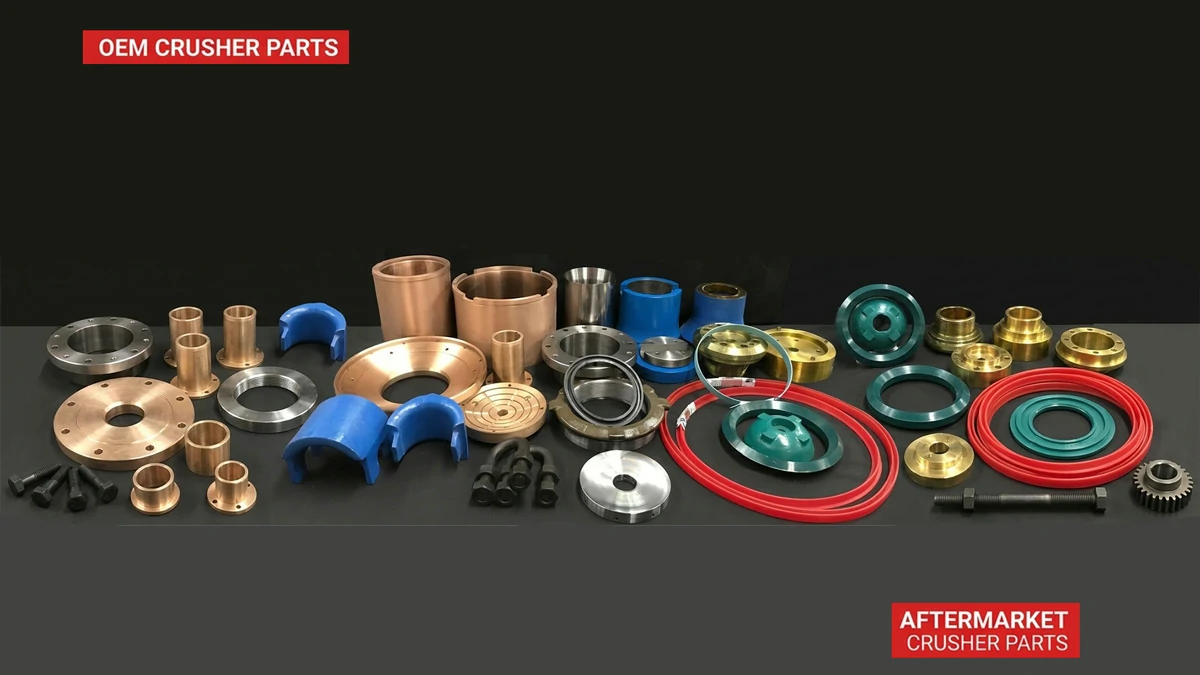
Wear liners, feed plates, spider arm shields, and dust seal rings are a different story. These components wear out by design. They are expected to be replaced on a regular cycle — sometimes every six to twelve weeks in high-tonnage granite or basalt applications. For this category, Aftermarket Crusher Parts sourced from a foundry with documented alloy control represent a logical and defensible procurement strategy.
How to Evaluate a Supplier Without a Factory Visit
Most plant engineers cannot travel to a foundry before placing an order. The following checklist provides a practical shortcut for qualifying a source of replacement crusher parts from a desk.
- Request a full material test report issued by an accredited third-party laboratory, covering chemical composition, tensile strength, elongation, and impact toughness. Accept nothing that is self-certified by the foundry alone.
- Ask for a dimensional inspection report referencing the OEM drawing number or an equivalent approved drawing. Tolerance callouts should be visible, not implied.
- Confirm the heat treatment process. Mn18Cr2 castings require solution annealing at 1050 to 1100 °C followed by water quenching to achieve the austenitic microstructure. A supplier who cannot describe their heat treatment cycle in writing is a risk.
- Check warranty terms against tonnage benchmarks, not just calendar days. A liner warranty expressed in tonnes processed is far more meaningful than one expressed in months.
- Review field references for the same crusher model and application. Wear life in granite at 300 tonnes per hour is not predictive of wear life in abrasive taconite at 500 tonnes per hour.
The Total Cost of Ownership Argument
A single OEM bowl liner for a 400-series cone crusher typically carries a list price between USD 8,000 and USD 14,000 depending on configuration. A qualified aftermarket equivalent from a reputable cone crusher parts supplier commonly prices at 55 to 70 percent of that figure. For a plant running two crushers with liner change cycles of eight weeks, the annual saving on liner spend alone can exceed USD 120,000 — without accounting for the secondary benefit of shorter lead times reducing the minimum strategic stock level required in the parts warehouse.
Unplanned downtime is the multiplier that makes this calculation urgent. Every hour a crusher sits idle in a primary or secondary circuit costs not just lost revenue but contractual throughput obligations and downstream process disruption. A supplier who can deliver from regional stock in five days versus a factory that quotes fourteen weeks changes the risk profile of the entire maintenance strategy. That, more than unit price, is the argument that has shifted a significant portion of wear-part procurement toward Aftermarket Crusher Parts over the past ten years — and the trend shows no sign of reversing.
Making the Decision on a Component-by-Component Basis
The most practical framework is not a blanket policy in either direction. Define a critical-path parts list for each crusher model — the components whose failure stops the machine and cannot be improvised around. For those, maintain OEM stock or a pre-qualified aftermarket equivalent with full documentation. For the high-consumption wear parts that cycle through the budget every few months, build a qualification process around material certification and dimensional verification, then run a controlled comparison over one or two change cycles before committing to volume.
The maintenance foreman’s instinct is correct. The gap between a well-specified aftermarket liner and its OEM counterpart, measured in tonnes of rock processed per kilogram of liner consumed, is narrow enough that it is frequently invisible in the data. What is not invisible is the difference in availability, lead time, and cost — and in a crushing circuit running against a production schedule, those variables define whether a shift runs or stands idle.