A hematite plant that runs an impact crusher in its primary stage will be ordering blow bars by the pallet within the first quarter. The same plant feeding that abrasive, high-iron rock into a compression machine instead — a jaw or a gyratory — measures liner life in months rather than weeks. Choosing the wrong crusher type for the rock and the stage is the single most expensive configuration error in mineral processing, and it cannot be corrected by buying better wear parts. It is corrected only by matching the crushing mechanism to the material at each reduction stage. This guide walks through that matching logic for the seven machine types a hematite operation actually has to choose between.
The Three Reduction Stages That Frame Every Selection Decision
Before comparing machines, the circuit has to be divided by reduction stage, because a crusher that excels at one stage is often useless at another. Crushers are classified by the feed and product size they handle across three bands, and every selection decision sits inside one of them.
| Reduction Stage | Feed Size | Product Size |
|---|---|---|
| Primary (coarse) crushing | 1500 mm to 500 mm | 350 mm to 100 mm |
| Secondary (intermediate) crushing | 350 mm to 100 mm | 100 mm to 40 mm |
| Tertiary (fine) crushing | 100 mm to 40 mm | 30 mm to 10 mm |
Compression Machines — The Backbone of Hard-Rock Hematite Crushing
Jaw crusher
The jaw crusher works intermittently, reducing rock by compressing it between a fixed jaw and an oscillating swing jaw. The older simple-pendulum design has largely disappeared from service, and the double-toggle compound-pendulum jaw now dominates new installations. It handles a wide material range from soft to hard, and it is particularly well suited to primary and secondary crushing of hard rock — which describes hematite precisely.
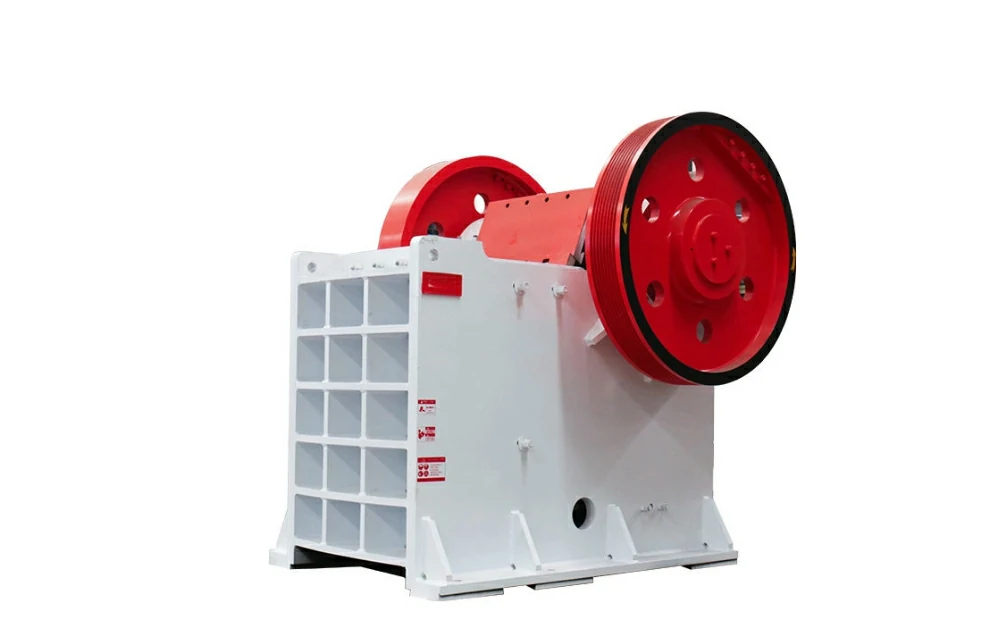
The advantages are a simple, reliable structure, low self-weight, low purchase price, compact footprint, low installed height, a large feed opening, an easily adjusted discharge setting, simple maintenance, and economical running cost. The trade-offs are rapid liner wear and a relatively high proportion of elongated and flaky particles in the product, which usually means a feeder has to be added ahead of the machine to control feed rate. For a hematite circuit, the jaw remains the default primary choice wherever overall plant capacity does not demand a gyratory.
Gyratory crusher
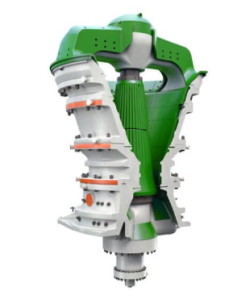
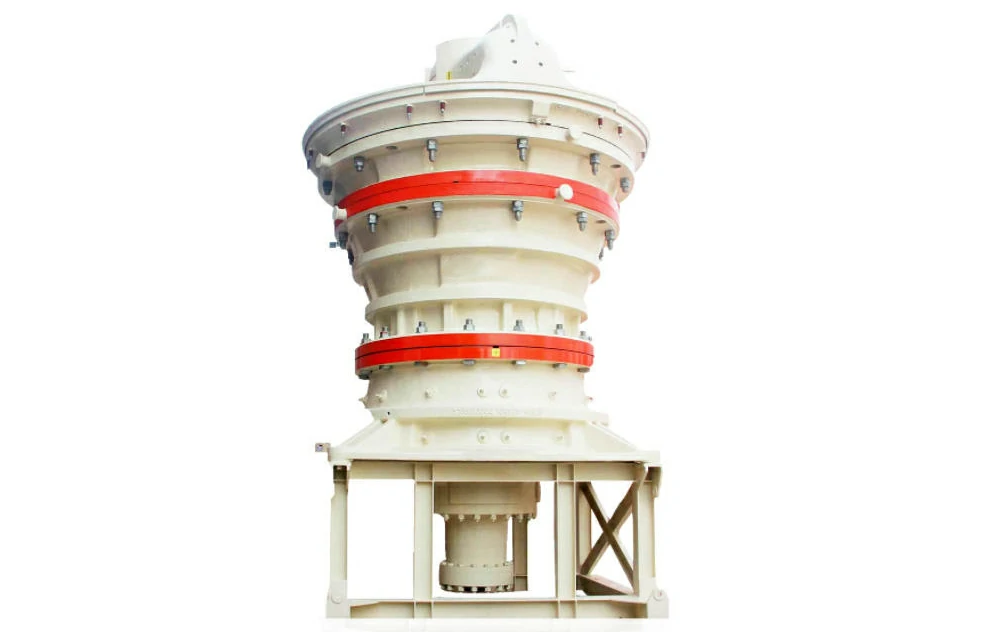
The gyratory crusher crushes continuously using interparticle layered compression, with the reduction happening progressively around an annular crushing chamber. It is built specifically for primary coarse crushing of material across all hardness grades, though it should not be used on sticky, clay-bearing ore. Its advantages are a large reduction ratio, very high throughput, the ability to run choke-fed, and direct feeding without a separate feeder. The drawbacks are a complex structure, tall machine height, large overall volume requiring a high mill building, heavy civil and foundation investment, considerable machine weight that complicates relocation, and a high price. For a large-tonnage hematite mine, the gyratory is the throughput-driven primary choice precisely where the jaw runs out of capacity.
Cone crusher
The cone crusher runs continuously, crushing rock through the eccentric motion of a moving cone while the tangential relative motion between the moving cone and the fixed cone adds a shearing and grinding action. Its working mechanism is therefore a combination of compression, shear, and abrasion. It serves mainly secondary or tertiary crushing of all rock types, and depending on whether it uses a suspended-shaft or supported-shaft configuration it can also take on primary duty, though the suspended-shaft primary application is uncommon.
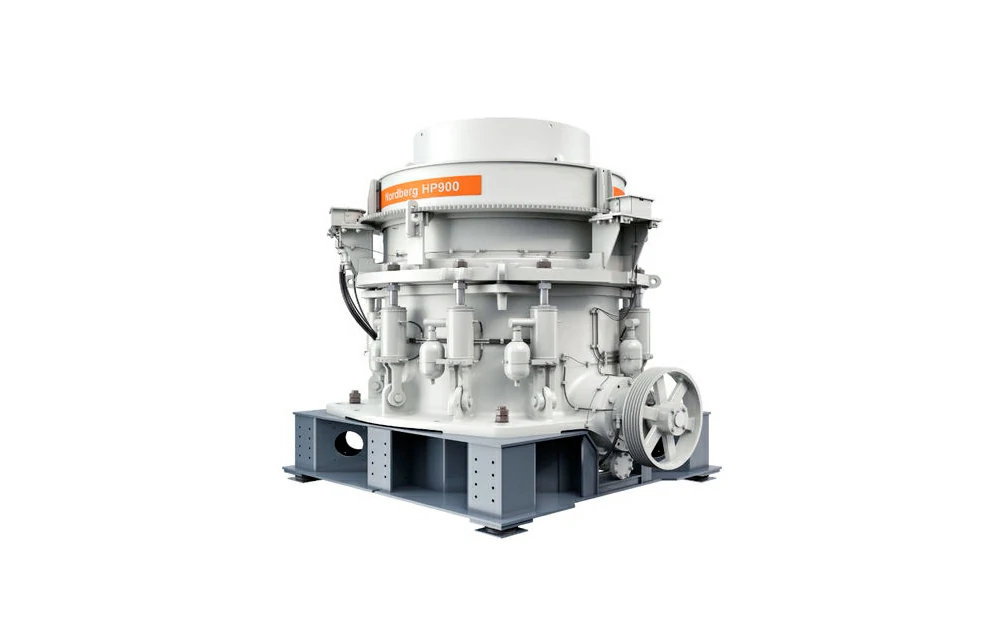
The cone offers a large reduction ratio, high efficiency, low energy consumption, minimal dust, uniform product size, stable operation, a low fault rate, and resistance to over-crushing. Against that, it carries a more complex structure and maintenance, a tall body, and a high price. In a hematite circuit the cone is the workhorse of the secondary and tertiary stages, where its uniform product and resistance to over-grinding directly protect downstream milling. Because the cone and gyratory share interchangeable wear-surface logic, sourcing mantles and concaves from a single qualified crusher part supplier simplifies inventory across both machines.
Roll, Impact, and Hammer Machines — Knowing Where They Do and Do Not Belong
Roll crusher
The roll crusher operates continuously, drawing rock between two parallel counter-rotating cylindrical rolls through friction. Smooth rolls compress the rock while toothed rolls split and compress it. It suits secondary and tertiary crushing of medium-hardness material such as coal and limestone with a compressive strength below 100 MPa, and it is not used in road-stone aggregate production. Its advantages are simplicity, a compact structure, low investment, easy adjustment, and the ability to handle sticky material. Its limitation is low production efficiency and an inability to crush hard rock — which rules it out for the hard, abrasive heart of a hematite circuit, though it can serve adjacent soft-material duties on a site.
Vertical-shaft impact sand maker
The vertical-shaft impact machine works continuously, breaking material through high-velocity impact against a steel target, particle-on-particle collision, and inter-particle friction, using either a rock-on-rock or a rock-on-steel configuration. Rock-on-rock suits abrasive material of medium hardness and above, giving good particle shape with slightly higher fines content. Rock-on-steel suits less abrasive material below medium hardness, giving higher crushing efficiency but heavier wear on the side guard plates and slightly poorer particle shape.
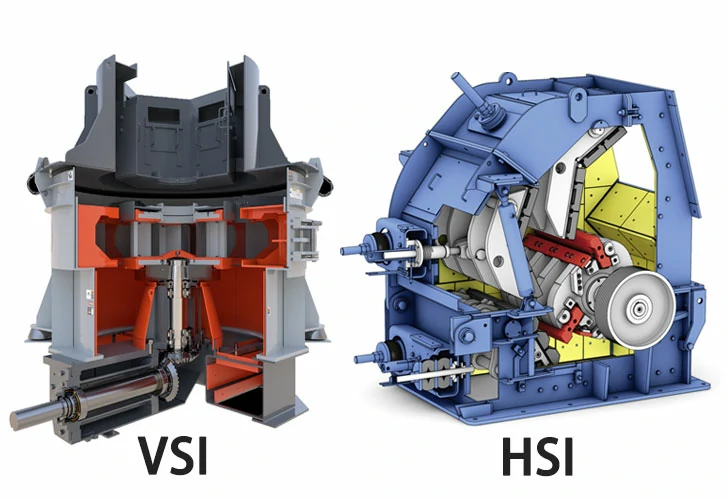
Its strengths are low energy consumption, high output, a large reduction ratio, a compact body, simple operation, easy installation and maintenance, and a particle-shaping function that produces cubical product with high bulk density and very low wear on the impact surfaces during running. The limitations are complex and costly repairs and a maximum feed size generally not exceeding 60 mm, which restricts it to fine crushing and sand making. In a hematite plant this machine earns its place only at the sand-making tail end, never in primary or secondary duty.
Hammer crusher
The hammer crusher also runs continuously, shattering rock with hammers mounted on a high-speed rotor. It suits secondary and tertiary crushing of medium-to-low hardness, non-abrasive material with compressive strength below 100 MPa, and with grate bars fitted it can make sand, though this use has become rare. It delivers a large reduction ratio, high output, and abundant fines. The drawbacks are fast hammer wear requiring frequent replacement, heavy dust generation, and an inability to process sticky material with moisture content above 12 percent. Against abrasive hematite the hammer wears far too quickly to be economical.
Impact crusher
The impact crusher uses impact energy to break material, and adjusting the gap between the impact aprons and the rotor changes both the product size and shape. It serves secondary and tertiary crushing of material below medium hardness and produces well-shaped product. Its advantages are a small size, simple construction, uniform product size, a selective crushing action, and high output. The decisive drawback for a hematite operation is that the blow bars and impact plates wear extremely fast, and that wear becomes far more severe when crushing hard rock — exactly the condition a hematite circuit imposes. It also handles plastic and sticky material poorly.
Putting the Hematite Circuit Together
Reading the seven machine profiles against the demands of hard, abrasive hematite produces a clear configuration logic. The primary stage belongs to a compression machine — a jaw crusher for moderate tonnage or a gyratory crusher where throughput is the governing constraint — because compression survives abrasion in a way that impact never will. The secondary and tertiary stages belong to the cone crusher, whose combined compression and shear action delivers uniform product while resisting over-crushing. The vertical-shaft impact machine enters only at the sand-making stage, working within its 60 mm feed limit. Hammer crushers, impact crushers, and roll crushers — all impact-dominant or low-hardness machines — stay out of the abrasive hard-rock path, where their wear economics collapse.
This is the configuration discipline that separates a plant running on schedule from one chasing replacement crusher parts every few weeks. The mechanism has to match the material, the machine has to match the stage, and the wear-part budget has to be modeled before the first machine is purchased rather than discovered after commissioning. Across every stage of a hematite circuit, standardizing on a small number of machine families keeps the crusher parts inventory lean and shortens the lead time on the wear items that ultimately govern plant availability.
The size bands, strength thresholds, and application notes in this guide reflect general field practice and serve as a selection reference rather than a substitute for a site-specific circuit study. Exact machine sizing depends on the ore’s compressive strength, abrasion index, moisture content, and the required throughput of the individual operation, and a final configuration should always be validated against the equipment manufacturer’s sizing data for the specific rock being processed.