When and How to Replace Them — A Practical Maintenance Guide
A jaw crusher running with a cracked toggle plate does not announce itself with a warning light. It announces itself with a catastrophic stop at 2:47 in the morning, three days before a contract deadline. After more than two decades of walking crusher floors — from copper porphyry operations in Chile to limestone quarries in the Midwest — the single most expensive mistake I have watched site managers repeat is treating crusher replacement parts as reactive inventory rather than scheduled engineering inputs. This guide is built on field data, not catalog copy.
Understanding the Wear Lifecycle of Core Crusher Parts
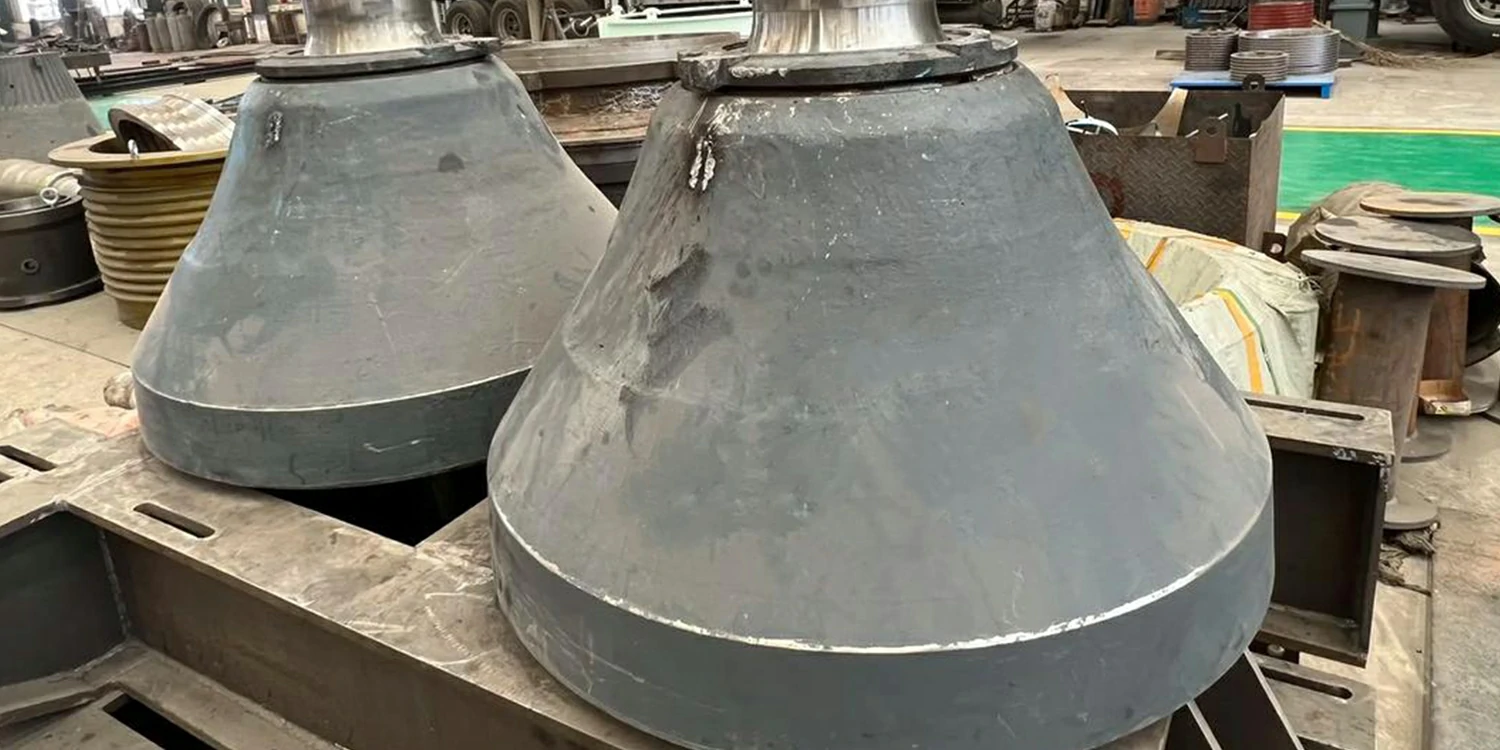
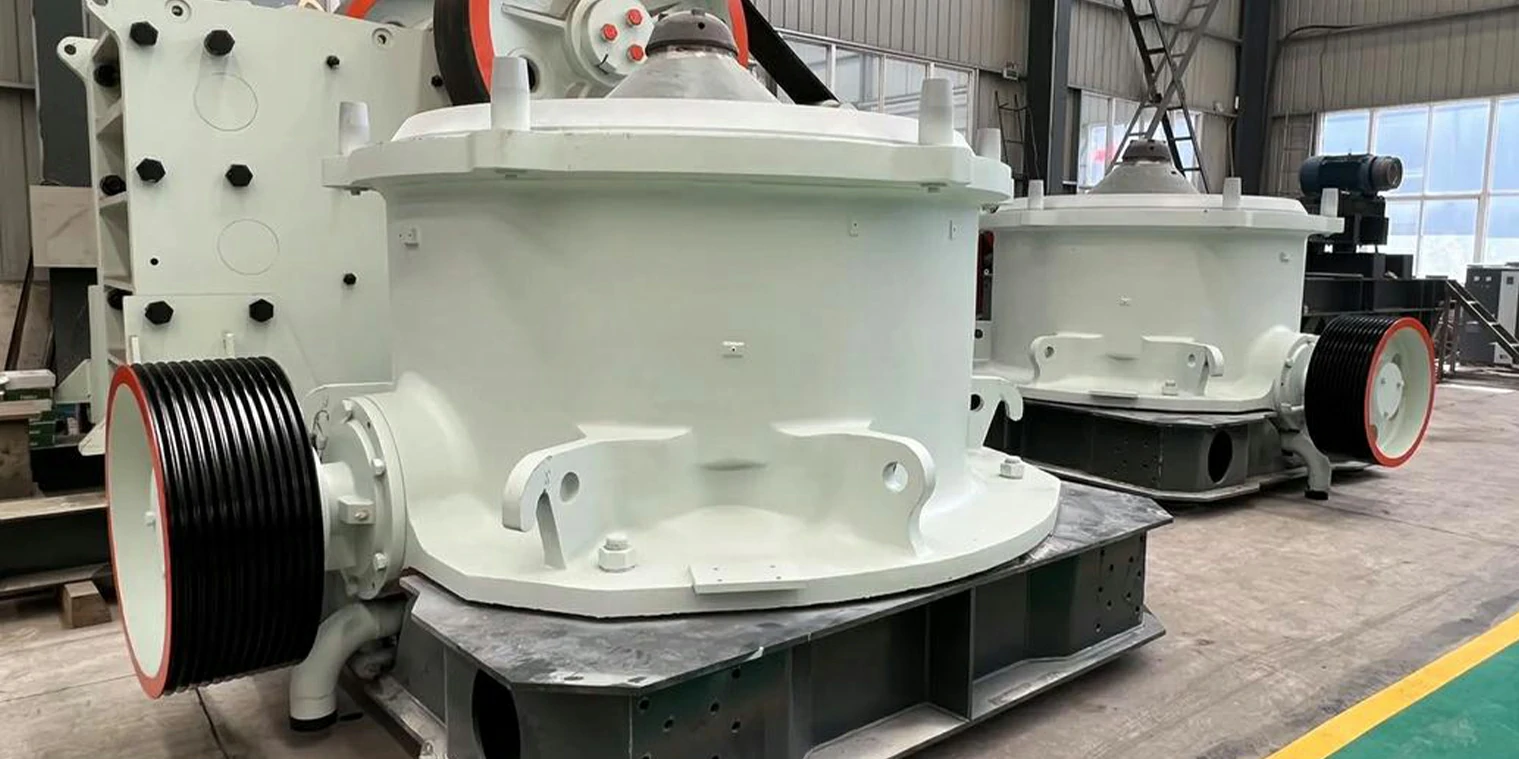
Every crushing circuit has a predictable wear hierarchy. Understanding it is what separates a maintenance program from a repair program. The components that consume themselves fastest are not random — they follow physics. In a cone crusher, the mantle and concave liners carry the highest contact stress, typically between 450 and 700 MPa in hard rock applications, and they account for more than 60% of all unscheduled maintenance events reported in operations processing granite or basalt above 250 tph.
Jaw crusher wear parts follow a different pattern. The fixed and swing jaw dies in a 42×65 primary jaw crusher processing quartzite at a closed side setting of 100 mm will typically reach the replacement threshold — usually defined as 20–25% of original weight loss — within 400 to 600 operating hours. The exact interval depends on the silica content of the feed material and the percentage of fines in the feed, both of which accelerate abrasive wear by a measurable factor.
Impact crusher replacement parts sit in a third category. Blow bars in a horizontal shaft impactor experience a combination of abrasive and impact wear. In a limestone application with a feed size under 600 mm and a rotor tip speed of 38 m/s, high-chrome blow bars rated at 20–22% Cr content will typically deliver 800 to 1,200 operating hours before the leading edge recession exceeds 35 mm, the standard field replacement trigger at most aggregate operations.
How to Read Wear Patterns Before Parts Fail
The shape of the wear tells you more than the depth. A mantle showing uniform wear from top to bottom is operating as designed. A mantle showing a pronounced step worn into the upper third indicates that oversized feed is consistently bypassing the feed cone and impacting the liner at the wrong angle. That pattern is not a parts problem — it is a feed preparation problem — and replacing the cone crusher part without correcting the root cause will produce an identical failure in 30% less time.
On jaw crushers, diagonal wear concentrated on one side of the jaw die almost always indicates a misaligned pitman or an eccentric shaft running outside of the specified 1.5 mm maximum radial runout tolerance. Replacing the jaw dies on a machine with uncorrected shaft runout will accelerate liner wear by a factor of two to three, depending on hardness of the material being processed.
For impact crushers, uneven wear across the width of a blow bar — where one end is worn significantly more than the other — points to a rotor that is not level or to feed distribution problems on the apron feeder upstream. Before any impact crusher replacement part is installed, the rotor balance and the feed curtain alignment must be verified.
Establishing a Data-Driven Replacement Schedule
The most reliable replacement schedules are built on two inputs: consumed weight and throughput tonnage. Weighing wear parts at installation and at each 250-hour inspection interval gives you a wear rate in kilograms per thousand tonnes processed. Once you have three to four data points from the same material type, you can project the remaining life of any crusher replacement part to within ±10% accuracy.
For a typical medium-duty cone crusher processing 180 tph of granite, the following replacement intervals represent conservative field-verified benchmarks:
| Component | Typical Replacement Interval | Key Trigger Condition |
|---|---|---|
| Mantle liner | 1,500 – 2,500 hours | 25% weight loss or liner float |
| Concave liner (upper) | 2,000 – 3,500 hours | Profile deviation exceeds 15 mm |
| Mainshaft sleeve | 8,000 – 12,000 hours | Clearance exceeds 0.35 mm |
| Eccentric bushing | 6,000 – 10,000 hours | Oil temperature rise above baseline by 8°C |
| Socket liner | 10,000 – 15,000 hours | Visible pitting or surface spalling |
| Head ball (spherical bearing) | 12,000 – 18,000 hours | Radial clearance exceeds OEM spec |
These intervals compress significantly in harder rock applications. Processing quartzite or taconite at the same throughput rate can reduce liner life by 40 to 60% compared to limestone, which is why material hardness data — specifically the Bond Work Index and abrasion index — must be factored into any parts procurement plan.
The Correct Procedure for Installing Crusher Replacement Parts
Installation quality determines post-replacement performance more than part quality does. A premium-grade mantle installed incorrectly will fail faster than a standard liner installed to specification. The following procedure applies to cone crusher liner replacement and represents industry-standard practice for machines in the 200–500 kW drive power range.
Step 1: Pre-Installation Inspection of the Bowl and Head
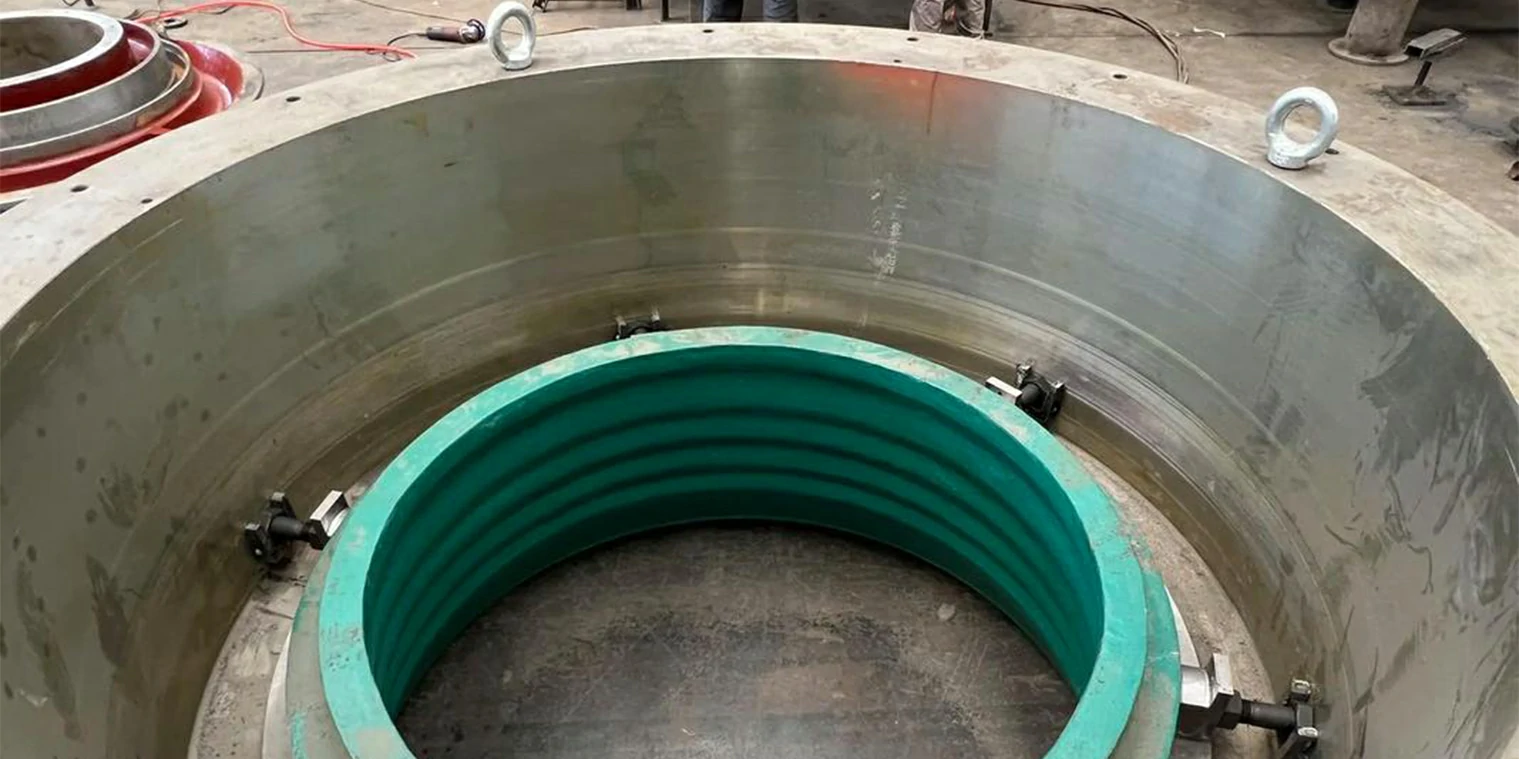
Before the new crusher part is placed, the mating surfaces must be inspected. The head and bowl surfaces that contact the liner backing material must be free of scale, old epoxy, and mechanical damage. Any surface irregularity greater than 2 mm must be corrected before backing is poured. Skipping this step is the most common cause of premature liner loosening, which generates the characteristic loud banging noise operators report within the first 200 hours of a new liner’s life.
Step 2: Backing Material Application
Epoxy backing compound — not zinc or Babbitt, which are legacy materials no longer recommended for modern high-speed cones — should be mixed at the manufacturer’s specified ratio, typically 3:1 by volume for most two-part systems. The working time at 20°C is usually 20 to 30 minutes. Pour the compound evenly to eliminate voids. A void larger than 25 mm in diameter behind the mantle creates a stress concentration that can fracture the liner within the first 500 hours of operation.
Step 3: Torque Sequence and Final Setting
The mantle nut on most cone crushers is a left-hand thread. It should be torqued to the OEM specification — commonly between 2,000 and 4,000 Nm depending on machine size — using a calibrated hydraulic torque wrench, not an impact gun. After torque is applied, run the machine unloaded for 30 minutes and re-torque. Thermal expansion of the backing compound during this initial run frequently causes a 5 to 8% torque loss, which must be recovered before the machine re-enters production.
Sourcing Crusher Parts: OEM vs. Aftermarket Considerations
The aftermarket for crusher replacement parts has matured significantly. Competent aftermarket suppliers now manufacture jaw dies, mantles, concaves, and blow bars to metallurgical specifications that match or in some cases exceed the original equipment manufacturer’s standard offerings. The critical variable is not OEM versus aftermarket — it is the alloy specification and the heat treatment verification.
For manganese steel liners, request a mill certificate confirming the Mn content (typically 12–18%), the carbon content (1.0–1.4%), and the yield strength after water quenching (minimum 345 MPa for standard, 415 MPa for high-performance grades). For chrome iron blow bars, request the as-cast hardness (typically 58–64 HRC for high-chrome grades) and the carbide volume fraction, which should be documented at 25–30% for maximum wear resistance in abrasive aggregate applications.
Price differences between OEM and quality aftermarket crusher parts range from 20 to 45% on high-volume wear items like mantles and jaw dies. On low-frequency structural components — mainshaft assemblies, eccentric housings, countershaft boxes — the engineering risk of using non-OEM parts rises substantially, and most operations correctly continue to source these components from the original manufacturer or a licensed rebuilder.
Common Mistakes That Shorten Crusher Part Life
- Running a cone crusher with a closed side setting below the manufacturer’s minimum specification to chase finer product gradations. This dramatically increases liner stress and can reduce mantle life by 30 to 50% while also overloading the mainshaft bearing.
- Allowing tramp iron to enter a jaw crusher without a reliable upstream metal detector. A single steel bar entering a 42×48 jaw crusher at full speed generates instantaneous load spikes exceeding 400% of normal operating load, sufficient to crack jaw dies, break the toggle plate, and damage the pitman bearing in a single event.
- Lubricating bronze bushings with grease instead of the specified circulating oil system pressure of 150–250 kPa. This mistake appears in poorly supervised operations and results in bronze bushing failure within 500 hours.
- Storing replacement liners outdoors without protection. Manganese steel liners stored in conditions where they experience repeated freeze-thaw cycling can develop surface micro-cracking that is not visible to the naked eye but which propagates rapidly under operating stress.
- Using worn-out feed distribution equipment — chutes, feeders, feed cones — and expecting liner life to normalize. The single biggest lever a site can pull to extend cone crusher part life is ensuring that feed is centered and evenly distributed around the full 360 degrees of the crushing chamber.
Building a Proactive Parts Inventory Strategy
A crushing plant processing 1.5 million tonnes per year should carry a minimum of one full set of primary and secondary liner replacements on-site at all times. Lead times for specialty manganese castings — particularly custom profiles for older or less common machines — can run 8 to 14 weeks from most foundries. Operations that treat crusher replacement parts as just-in-time items routinely face 3 to 6 week unplanned shutdowns waiting for parts that should have already been on the shelf.
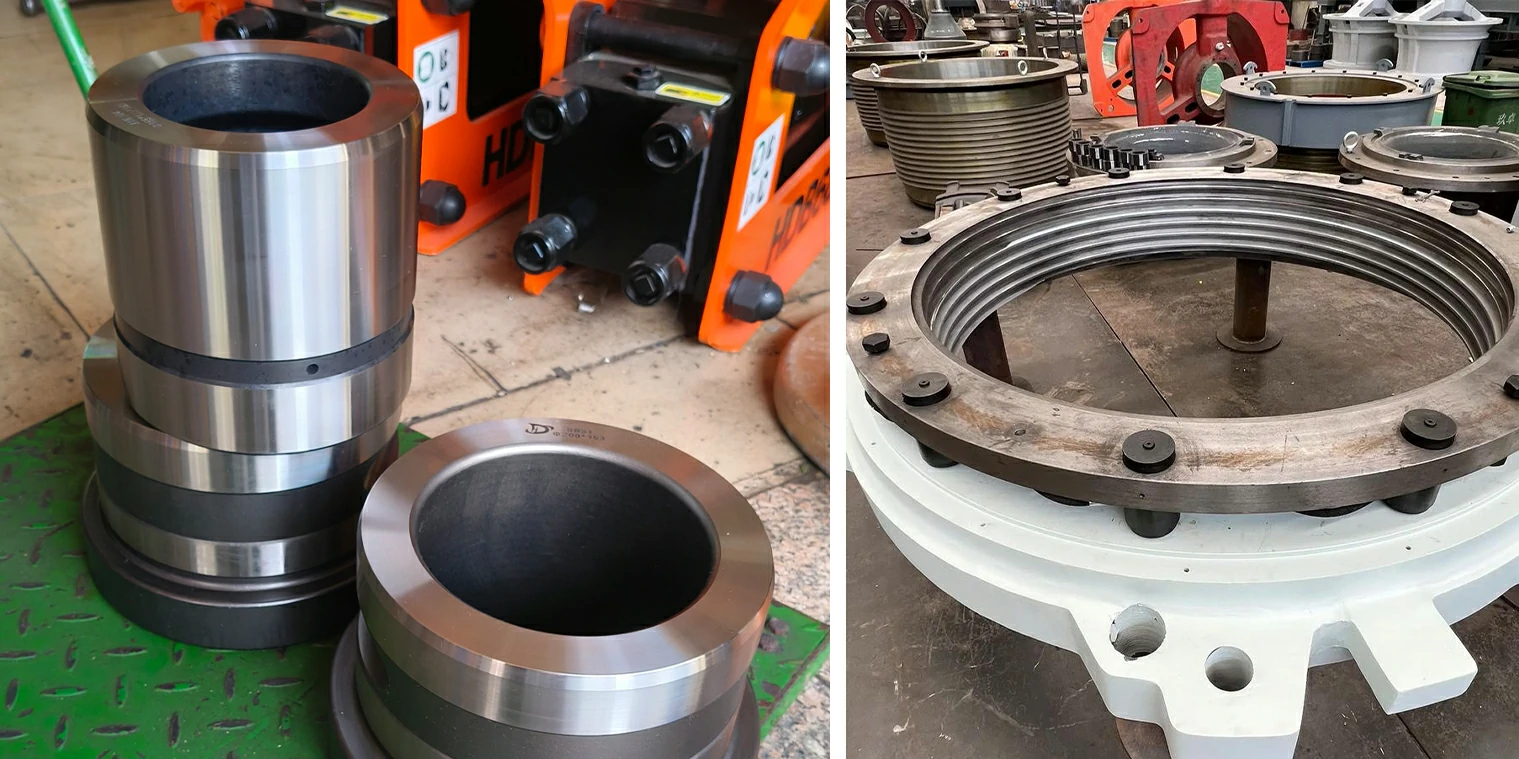
The annual parts budget for a two-stage crushing circuit processing 300 tph of hard rock should allocate 60 to 70% of total maintenance spend to consumable wear parts, 20 to 25% to mechanical components such as bearings and seals, and the remainder to structural and drive components. Any allocation that falls significantly outside these bands usually indicates either an undercount of actual wear part consumption or an aging mechanical population approaching major overhaul.
Final Assessment
A well-managed crusher replacement parts program is not expensive — unplanned downtime is expensive. The cost of a mantle replacement on a 300 kW cone crusher is typically between $4,000 and $9,000 for parts and 8 to 12 hours of labor. The cost of a sudden mainshaft failure resulting from a loose liner that was not caught at the previous inspection interval can exceed $120,000 in parts, 3 to 5 days of lost production, and the downstream contract penalties that follow. The engineering math is straightforward. The execution requires discipline, consistent inspection data, and a maintenance team that understands wear patterns rather than simply counting hours.