
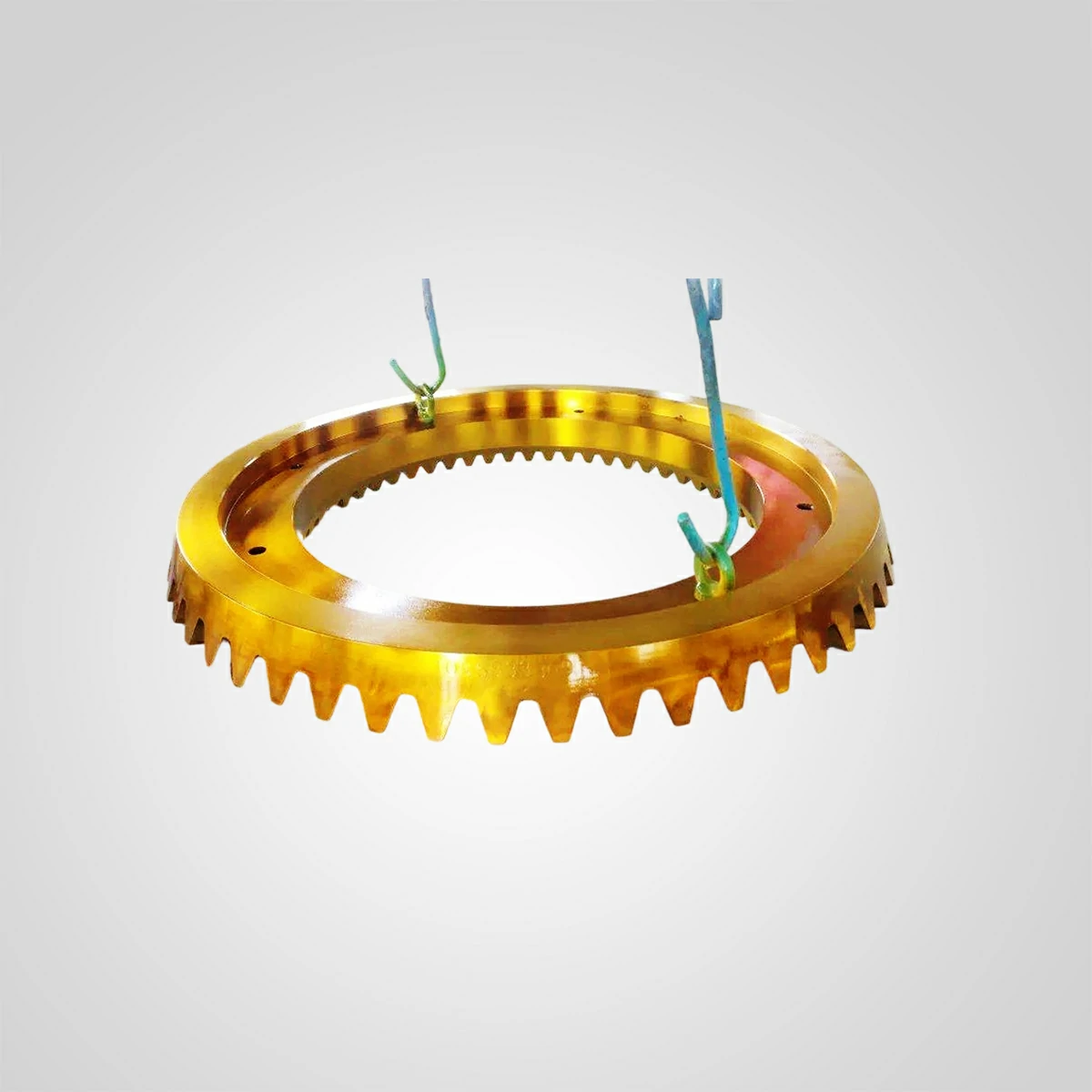
HP200 Cone Crusher Spare and Wear Parts — Drive Gear Pair Specifications
Part Name : Drive Gear Pair (Drive Gear + Pinion)
Compatible Crusher Model : Metso Nordberg HP200 Cone Crusher
OEM Part Number — Drive Gear: 1036829652 / 1062440046
OEM Part Number — Pinion : 1036829635
OEM Gear Kit Reference : 7002152731 (P60R5085C01 + P61R5085C04 + P82620)
Drive Gear Net Weight: 64 kg (standard) / 365 kg (heavy assembly variant)
Pinion Net Weight : 28 kg
Gear Type: Spiral Bevel Gear (conical, right-hand or left-hand helix)
| Parameter | Value / Standard |
|---|---|
| Part Name | Drive Gear Pair (Drive Gear + Pinion) |
| Compatible Crusher Model | Metso Nordberg HP200 Cone Crusher |
| OEM Part Number — Drive Gear | 1036829652 / 1062440046 |
| OEM Part Number — Pinion | 1036829635 |
| OEM Gear Kit Reference | 7002152731 (P60R5085C01 + P61R5085C04 + P82620) |
| Drive Gear Net Weight | 64 kg (standard) / 365 kg (heavy assembly variant) |
| Pinion Net Weight | 28 kg |
| Gear Type | Spiral Bevel Gear (conical, right-hand or left-hand helix) |
| Gear Material | Alloy Steel: 20CrMnTi / 17CrNiMo6 (carburizing grade) |
| Heat Treatment | Carburizing + Case Hardening + Tempering |
| Case Hardness (tooth surface) | 58–62 HRC |
| Core Hardness (tooth root) | 33–45 HRC |
| Case Depth (effective hardened layer) | 1.5–2.5 mm |
| Tooth Surface Roughness (Ra) | Ra ≤ 0.8 μm (ground finish) |
| Gear Accuracy Grade | ISO 1328-1, Grade 6 or better |
| Gear Ratio (Drive Gear / Pinion) | Approx. 2.3:1 (crusher eccentric speed ~580 RPM at 132 kW input) |
| Applicable Motor Power | 132 kW (HP200 standard drive) |
| Crusher Head Diameter | 940 mm |
| Tensile Strength (17CrNiMo6, Q&T) | ≥ 1,000 MPa |
| Yield Strength (17CrNiMo6, Q&T) | ≥ 800 MPa |
| Bending Fatigue Limit | ≥ 450 MPa (ISO 6336-3) |
| Lubrication Requirement | Forced-feed closed-loop system; ISO VG 320 gear oil (splash + pressure circuit) |
| Oil Operating Temperature Range | 40–60°C (normal); max 70°C alarm threshold |
| Manufacturing Process | Forging → Rough Machining → Carburizing → Quenching → Gear Grinding (ISO 1328 Grade 6) |
| NDT Inspection | Magnetic Particle Inspection (MPI) per ASTM E709; ultrasonic testing per ASTM E114 |
| Quality Certification | ISO 9001:2008; material traceability from heat batch to finished gear |
| Warranty | 12 months from installation date |
| MOQ | 1 set (gear pair) |
| Standard Lead Time | 20–35 days |
HP200 Cone Crusher Drive Gear Pair: The Component That Converts 132 kW into Crushing Force — and Why It Fails When You Are Not Watching the Oil
A spiral bevel gear pair running at 58–62 HRC case hardness under a sustained 132 kW input load is not the component most quarry managers think about during weekly maintenance rounds. That is precisely why drive gear failure in the HP200 cone crusher accounts for a disproportionate share of unplanned major overhauls. When a drive gear pair on an HP200 fails — typically through pitting fatigue on the tooth flanks or through a subsurface spalling crack propagating from the dedendum fillet — the eccentric assembly absorbs the shock load of sudden gear disengagement. The result is not just a USD 3,000–8,000 gear set replacement. In documented cases, the countershaft, countershaft bushing, and eccentric bush inner all require simultaneous replacement, pushing the total repair cost above USD 35,000 and producing 5–10 days of unplanned downtime.
The drive gear pair is the first cone crusher part in the HP200 power transmission chain. Understanding its failure mechanisms, material requirements, and maintenance schedule is the lowest-cost way to prevent the most expensive failure mode in the machine.
Power Transmission Architecture of the HP200 Drive System
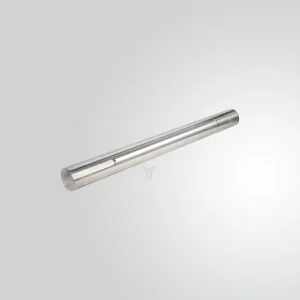
The HP200 cone crusher transmits drive power through a V-belt or direct coupling arrangement to the countershaft (OEM weight: 63 kg, Part No. 1068634853). The countershaft carries the pinion, which meshes with the drive gear mounted on the eccentric assembly. The gear ratio of approximately 2.3:1 steps down input shaft speed to the eccentric rotational speed required for crushing. At the HP200’s standard 132 kW operating power and nominal input shaft speed, the eccentric rotates at approximately 580 RPM — a speed that generates over 580,000 tooth mesh cycles per 1,000 operating hours.
At 580,000 mesh cycles per 1,000 hours, the drive gear pair is operating firmly in the high-cycle fatigue regime, where the dominant failure mechanism is no longer overload fracture but tooth flank pitting — a surface fatigue phenomenon that initiates at or just below the pitch line, where contact stress is highest. This is why ISO 6336-2 contact stress limits, not tensile strength, are the binding design criterion for cone crusher bevel gears.
Material Specification: Why 17CrNiMo6 Outperforms Standard Carbon Steel in HP200 Applications
The drive gear pair for the HP200 is manufactured from carburizing alloy steels — most commonly 20CrMnTi (a Chinese national standard grade) or the European equivalent 17CrNiMo6. Both grades are selected specifically because carburizing and case hardening deliver a tooth surface hardness of 58–62 HRC with an effective case depth of 1.5–2.5 mm, while the core hardness remains at 33–45 HRC. This combination provides the hard contact surface needed to resist pitting fatigue while maintaining a tough core that absorbs the shock loading inherent in cone crusher operation.
The mechanical properties of 17CrNiMo6 after quench-and-temper heat treatment are:
- Tensile strength: ≥ 1,000 MPa
- Yield strength: ≥ 800 MPa
- Bending fatigue limit: ≥ 450 MPa per ISO 6336-3
- Charpy impact energy at -20°C: ≥ 60 J
The nickel-molybdenum addition in 17CrNiMo6 delivers superior core toughness compared to the simpler 20CrMnTi grade, which is relevant for HP200 installations operating in cold climates or processing abrasive feed with a high Bond Work Index. Under shock-loading events — such as tramp metal passing through the crushing chamber — the tougher 17CrNiMo6 core resists root crack initiation more effectively than a comparable 20CrMnTi gear.
Both grades are unacceptable in their as-cast form for cone crusher drive gear applications. The carburizing cycle must achieve a uniform case depth verified by microhardness traverse at a minimum of three tooth positions per gear. Any case depth below 1.2 mm at the pitch line will result in early sub-surface fatigue failure, regardless of surface hardness measurement.
Failure Mode Analysis: What Actually Destroys HP200 Drive Gear Pairs
Failure Mode 1 — Pitting Fatigue (Most Common)
Pitting initiates as a surface or near-surface fatigue crack at the tooth flank contact zone, propagating under cyclic Hertzian contact stress. In the HP200 drive gear pair, pitting fatigue is accelerated by three conditions: lubricant film thickness below the lambda ratio (λ) of 2.0, which places the gears in boundary or mixed lubrication; gear backlash exceeding 0.4 mm due to tooth wear, which generates impact loading at each tooth engagement; and misalignment above 0.05 mm across the tooth face width, which concentrates contact stress at the gear tooth edge. Pitting progresses from initial micro-pitting visible as grey frosting at 4–8× magnification, to macro-pitting with 2–5 mm craters, to destructive spalling where the entire case layer detaches.
Pro-Tip (Field Experience): On an HP200 installation processing iron ore at 250 Mtph, we identified initial micro-pitting on the drive gear during a scheduled oil analysis inspection at 4,500 hours. The oil sample showed Fe particle concentration of 180 ppm — 30 ppm above the action threshold. By replacing the gear pair at 4,800 hours under planned conditions, the site avoided the collateral countershaft damage that would have occurred within the next 600 hours of continued operation. The planned replacement cost USD 6,400 in parts and 18 hours of downtime. The avoided failure would have cost USD 38,000 and 96 hours. Oil analysis is not an optional maintenance activity on an HP200 drive gear pair — it is the entire difference between a planned cost and an unplanned crisis.
Failure Mode 2 — Tooth Root Bending Fatigue
Root bending fatigue fracture occurs when the alternating bending stress at the tooth root fillet exceeds the material’s fatigue limit over sufficient cycles. On the HP200 drive gear pair, root fatigue is most commonly triggered by one of three operating faults: gear backlash below the minimum specification (causing tooth interference and elevated root stress on the approach side), countershaft misalignment exceeding ±0.05 mm (shifting the load path away from the tooth center line), or operating the crusher at CSS below the minimum recommended setting for the installed chamber profile (creating crushing force spikes that propagate backward through the eccentric to the gear mesh).
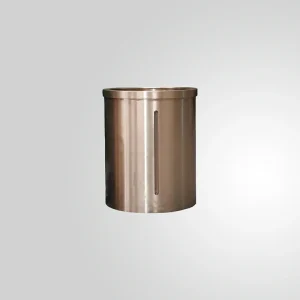
Root fatigue cracks propagate transversely across the tooth root and result in tooth breakage — a sudden failure mode that deposits hard steel fragments in the crusher oil circuit, contaminating the lubrication system and accelerating wear on all downstream bronze components including the eccentric bushing (OEM weight 38 kg) and countershaft bushing (OEM weight 7.5 kg).
Failure Mode 3 — Abrasive Wear from Contaminated Lubricant
Abrasive wear occurs when solid particles larger than the lubrication film thickness enter the gear mesh interface. On the HP200, the forced-feed closed-loop lubrication system uses a 10-micron filtration circuit. If filter cartridges are not replaced at the specified 500-hour interval, filter bypass occurs and particles in the 40–100 micron range enter the lubrication circuit. At a gear tooth surface roughness of Ra ≤ 0.8 μm, particles above 8 microns act as cutting agents against the case-hardened surface. Silicon (Si) particle concentration above 25 ppm in an HP200 oil sample confirms abrasive contamination requiring immediate filter replacement and oil flush before the next production shift.
Installation and Alignment Protocol for the HP200 Drive Gear Pair
Correct installation of the drive gear pair is as critical as the material specification. The following sequence applies to the HP200 gear pair replacement:
- Step 1 — Verify countershaft bore diameter and alignment before installing the pinion. Acceptable bore out-of-round: ≤ 0.02 mm. Misalignment above 0.05 mm across the pinion face width must be corrected before the new gear set is commissioned.
- Step 2 — Inspect the eccentric bore for drive gear seating. Any scoring on the eccentric gear seat exceeding 0.3 mm depth requires regrinding or sleeve repair before the new drive gear is installed.
- Step 3 — Apply assembly marking compound (engineers’ blue) to the gear tooth flanks before final assembly and rotate the gear pair through five full mesh cycles. The contact pattern must cover at least 70% of the tooth face width and 80% of the working depth. Any edge-contact pattern indicates misalignment and must be corrected before operation.
- Step 4 — Verify gear backlash using a dial indicator at the pitch circle. Acceptable backlash for the HP200 drive gear pair: 0.20–0.40 mm. Below 0.20 mm risks tooth interference; above 0.40 mm generates impact loading at each tooth engagement cycle.
- Step 5 — Fill the lubrication system with fresh ISO VG 320 gear oil and run the crusher unloaded for 30 minutes. Verify oil return temperature at the heat exchanger outlet: acceptable range 40–60°C. Temperature exceedance above 70°C at this stage indicates a lubrication flow restriction or bearing preload error requiring immediate investigation.
- Step 6 — Take an oil sample after the first 100 hours of production operation on the new gear pair and compare Fe particle baseline against the action threshold of 150 ppm. This establishes a site-specific baseline for trend analysis over the gear pair’s service life.
Lubrication and Oil Analysis Maintenance Schedule
The HP200 drive gear pair service life is directly proportional to the quality and consistency of the lubrication maintenance program. The following schedule reflects best-practice intervals derived from active quarry and hard-rock mining operations running HP200 cone crushers at or near rated capacity:
- Oil filter cartridge replacement: every 500 operating hours (10-micron rated; Part No. 7002445771 for HP200 MP68M90A filter cartridge or MF100-3A10HB cartridge per Part No. 7002480053)
- Full oil drain and refill: every 2,000 operating hours or annually, whichever occurs first
- Oil sample analysis: every 30 days (monthly) for continuous hard-rock primary and secondary crushing; every 60 days for intermittent or soft-rock applications
- Fe action threshold: 150 ppm — gear pair inspection required within 100 hours
- Cu action threshold: 30 ppm — bronze bushing inspection required within 200 hours
- Si action threshold: 25 ppm — filter replacement and full oil flush required before next production shift
- Viscosity deviation: if measured kinematic viscosity at 40°C deviates more than ±15% from ISO VG 320 nominal (320 cSt), the oil is degraded and must be replaced immediately regardless of hours in service
Compatible HP200 Cone Crusher Part Numbers for the Drive System
When ordering the drive gear pair for an HP200, the following associated drive system components should be inspected simultaneously and replaced if wear limits are exceeded. Replacing the gear pair alone in a worn drive system returns the new gear set to a degraded operating environment, compressing its service life significantly:
| Component | OEM Part Number / Weight |
|---|---|
| Drive Gear (standard) | 1036829652 / 64 kg |
| Drive Gear (heavy assembly variant) | 1062440046 / 365 kg |
| Pinion | 1036829635 / 28 kg |
| Countershaft | 1068634853 / 63 kg |
| Countershaft Bushing | 1022061401 / 7.5 kg |
| Eccentric Bush Inner | 1022072951 / 38 kg |
| Gear Kit (complete set) | 7002152731 |
| Lube Filter Cartridge (MP68M90A) | 7002445771 / 1.4 kg |
Total Cost of Ownership: Why Gear Pair Quality Determines 24-Month Drive System Cost
The HP200 drive gear pair is among the lower-weight components in the cone crusher part catalog — the pinion at 28 kg and drive gear at 64 kg sit far below the 334 kg adjustment cap or the 365 kg drive gear heavy assembly in terms of raw material cost. However, their position in the power transmission chain makes their failure consequence disproportionately large. Every other moving component in the HP200 drive system — countershaft, eccentric, bushings, bearings — operates downstream of the gear pair mesh.
All manufacturer names, part numbers, model numbers, and descriptions are used for reference and identification purposes only, they are owned by the respective machine manufacturer, including but not limited to FLSmidth®, Metso®, thyssenkrupp®, and Sandvik®. All parts supplied are manufactured and warranted by yonsmen and are not manufactured by or purchased from the Original Equipment Manufacturer. yonsmen has no association with the OEM and does not intend to give this impression.
Reviews
There are no reviews yet.