

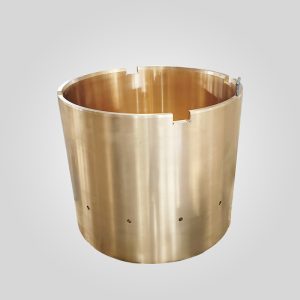
KB63-89S Inner Bushing 2080647700 Gyratory Crusher part for Primary Crusher Maintenance
Product Name: KB63-89S Inner Bushing / Inner Eccentric Bushing / Spider Bushing Reference
Part Number :2080647700
Product Type :Gyratory Crusher part, crusher bronze bushing, spider assembly wear component
Compatible Crusher Model :Thyssenkrupp KB63-89S gyratory crusher; compatibility with KB63-75 and KB54-75 must be checked by drawing
Confirmed Weight :1040 kg
Material Options: ZCuPb20Sn5, ZCuPb10Sn10, ZCuPb24Sn5 high-leaded bronze
Main shaft instability, grease contamination, abnormal vibration at the spider area, bronze debris near the upper bushing, and uneven contact marks are common warning signs before an inner bushing failure on a KB63-89S gyratory crusher. The KB63-89S Inner Bushing 2080647700 works inside the spider assembly, where it supports the upper section of the main shaft and controls sliding contact under radial and axial load. If the bushing clearance, bronze grade, grease path, or seating contact is wrong, the crusher may continue running for a short period, but the wear rate can increase quickly under full feed load.
This Gyratory Crusher part is not a general bronze sleeve. It is a 1040 kg high-leaded bronze component used in heavy primary crushing service. The working area receives shock load from ore impact, cyclic load from gyratory movement, and contamination risk from dust, degraded grease, and metallic particles. A replacement bushing must therefore match the crusher model, the mating shaft condition, the spider bore, the lubrication design, and the installation method. Yonsmen Machinery supplies the KB63-89S Inner Bushing 2080647700 for customers who need a part-number-based replacement with material checking and drawing-based machining.
Product Parameter Table
| Parameter | Specification |
| Product Name | KB63-89S Inner Bushing / Inner Eccentric Bushing / Spider Bushing Reference |
| Part Number | 2080647700 |
| Product Type | Gyratory Crusher part, crusher bronze bushing, spider assembly wear component |
| Compatible Crusher Model | Thyssenkrupp KB63-89S gyratory crusher; compatibility with KB63-75 and KB54-75 must be checked by drawing |
| Confirmed Weight | 1040 kg |
| Material Options | ZCuPb20Sn5, ZCuPb10Sn10, ZCuPb24Sn5 high-leaded bronze |
| Material Standard Reference | GB/T 1176-2013 Casting copper and copper alloys; GB 1176 older reference may be used for legacy drawings |
| ZCuPb20Sn5 Chemical Reference | Pb 18.0-23.0 percent, Sn 4.0-6.0 percent, Zn max 2.0 percent, Ni max 2.5 percent, Cu balance |
| ZCuPb20Sn5 Mechanical Reference | Sand casting tensile strength ≥150 MPa, yield strength ≥60 MPa, elongation ≥5 percent, hardness ≥45 HBW; continuous casting tensile strength ≥180 MPa, yield strength ≥80 MPa, elongation ≥7 percent, hardness ≥55 HBW |
| ZCuPb10Sn10 Chemical Reference | Pb 8.0-11.0 percent, Sn 9.0-11.0 percent, Zn max 2.0 percent, Ni max 2.0 percent, Cu balance |
| ZCuPb10Sn10 Mechanical Reference | Sand casting tensile strength ≥180 MPa, yield strength ≥80 MPa, elongation ≥7 percent, hardness ≥65 HBW; centrifugal casting tensile strength ≥220 MPa, yield strength ≥110 MPa, elongation ≥6 percent, hardness ≥70 HBW |
| Primary Function | Supports the main shaft inside the spider assembly, reduces sliding friction, maintains alignment, and protects the mating shaft surface |
| Lubrication Requirement | Grease path, grease groove, feed hole, and distribution channel must follow the original drawing or verified sample |
| Machining Method | Rough machining, stress release if required, CNC boring, turning, groove machining, chamfering, and final dimensional inspection |
| Dimensional Control | ID, OD, height, flange area, shoulder height, grease hole location, and groove geometry are drawing-based or sample-based |
| Fit Reference | Drawing-controlled fit; ISO 286 and ISO 2768 may be used only as engineering references when the mating dimensions are confirmed |
| Inspection Items | Chemical composition, hardness, bore roundness, concentricity, end-face runout, groove position, surface condition, and visual defect check |
| Surface Finish | Machined sliding surface according to drawing requirement; finish must support stable grease film and correct contact pattern |
| Application | Primary crushing in mining, quarrying, cement raw material crushing, aggregate production, and heavy-duty mineral processing plants |
| Supply Form | Finished machined bushing, semi-finished bronze bushing, or customized casting according to customer drawing or old sample |
Function in the Spider Assembly
The inner bushing is located in the upper part of the gyratory crusher, inside the spider assembly. Its task is to support the upper main shaft area and allow controlled movement without damaging the steel mating surface. During crushing, the main shaft does not operate under a simple static load. It receives repeated impact from feed material, eccentric movement from the lower assembly, and reaction force from the crushing chamber. The inner bushing must keep the shaft aligned while allowing sliding movement with a stable grease film.
When the inner bushing wears unevenly, the first cost is not always the bushing itself. The larger cost often comes from secondary damage. A worn bore may allow the main shaft to move outside the intended contact pattern. This can create local pressure on the spider area, increase vibration, change the crushing chamber geometry, and accelerate wear on nearby components. If the bushing is allowed to run after the grease film has failed, the mating shaft surface may require polishing, repair, or replacement. For a primary crusher, that repair can be more expensive than replacing the bronze bushing during a planned shutdown.
Material Selection for KB63-89S Inner Bushing
High-leaded bronze is used for this type of crusher bushing because it provides a practical balance between sliding behavior, load support, and controlled wear. In a severe crushing environment, lubrication may not remain ideal during every operating hour. Dust, heat, incorrect grease intervals, water contamination, and impact load can reduce the protection between bronze and steel. A suitable bronze grade helps the bushing wear before the shaft surface is damaged.
ZCuPb20Sn5 is often selected where sliding performance and anti-seizure behavior are important. The lead range of 18.0-23.0 percent supports low-friction performance under boundary lubrication, while tin in the 4.0-6.0 percent range contributes strength to the copper matrix. This grade is commonly referenced for bearings and crusher-related sliding components. For a KB63-89S inner bushing, it is suitable when the customer wants strong anti-seizure behavior and controlled wear under heavy load.
ZCuPb10Sn10 provides a different material balance. Its lead range is lower, while tin content is higher. This can support better strength and wear resistance in applications where the lubrication condition is more stable and the design requires a stronger bronze matrix. ZCuPb24Sn5 may be considered when a higher leaded bronze is requested for difficult lubrication conditions, but final material selection should follow the original drawing, the customer’s maintenance history, and the condition of the shaft and spider bore.
Yonsmen Machinery does not recommend selecting the bronze grade only by matching the old part visually. Two bushings may look similar after machining, but their composition and casting structure can be different. For this reason, chemical composition checking and hardness testing should be part of the supply process. If the old bushing failed through seizure, edge loading, or abnormal heat marks, the root cause should be reviewed before repeating the same material and machining plan.
Why Public Dimensions Are Not Enough
The publicly available product data confirms the part number, model, material options, and 1040 kg weight, but it does not provide complete production dimensions. For this reason, ID, OD, height, groove depth, grease hole position, chamfer size, and seating geometry should not be copied from a general online listing. A KB63-89S crusher operates with heavy components, and a small machining error can create a major installation problem.
If the inner diameter is too tight, the grease film may not form correctly and the bushing can heat up after commissioning. If the inner diameter is too loose, the shaft may lose stable guidance and generate vibration. If the groove position is wrong, grease may not reach the loaded area. If the end face is not controlled, the part may seat incorrectly in the spider assembly. These issues are difficult to correct after the crusher is fully assembled, especially during a short shutdown window.
Yonsmen Machinery can produce the KB63-89S Inner Bushing 2080647700 from an original drawing, a verified sample, or a measurement report. If the old sample is used for reverse engineering, the worn surface must be interpreted carefully. A worn bore should not be used directly as the new machining size. The new size should be corrected according to the shaft measurement, original fit requirement, lubrication clearance, and installation method.
Common Failure Patterns
Inner bushing failure usually develops through several visible patterns. Scoring lines along the sliding direction often indicate hard particles in the grease or insufficient cleaning during assembly. Local black marks or blue-brown heat discoloration may indicate grease starvation, excessive clearance, or poor contact area. Edge wear on one side can suggest misalignment, spider bore deformation, incorrect seating, or uneven loading from the main shaft. Cracks or heavy deformation may point to impact load, wrong alloy selection, or casting defects.
Maintenance teams should inspect the removed bushing before ordering a replacement. The contact pattern tells useful information about the crusher’s operating condition. A smooth and even wear band normally indicates controlled sliding. A narrow shiny band near the edge indicates localized load. Deep grooves may indicate contamination. Bronze transfer to the steel shaft may indicate high temperature or lubrication breakdown. These details help confirm whether the new Gyratory Crusher part should be produced with the same groove layout, same material grade, or additional inspection requirements.
Machining and Inspection Control
For a 1040 kg bronze bushing, casting quality and machining control must be checked together. Chemical composition testing confirms that lead, tin, copper, zinc, nickel, iron, and impurity ranges meet the selected material reference. Hardness testing helps identify whether the material condition is suitable for sliding duty. Visual inspection checks for cracks, shrinkage, porosity, and surface defects before final machining. After machining, the bore, outer diameter, groove position, end face, and chamfer transitions should be measured against the drawing.
Concentricity and roundness are important because the inner bushing guides shaft movement. If the bore is not round, the contact pressure will concentrate in a small area. If the OD and ID are not aligned, the bushing can seat correctly on the outside but run incorrectly on the inside. If the grease groove is too deep, the load-bearing area may be reduced. If it is too shallow or incorrectly placed, grease distribution may be insufficient. Every one of these conditions can shorten service life even when the bronze material itself is correct.
Yonsmen Machinery can provide material reports, hardness records, dimensional inspection results, and production photos according to order requirements. For customers operating several crushers, traceability helps manage spare parts by part number, model, production batch, and installation date. This is useful when comparing the service life of different shutdown batches or when reviewing wear performance after a maintenance interval.
Installation Notes for Site Maintenance
Before installing the KB63-89S Inner Bushing 2080647700, the spider assembly should be cleaned and inspected. Old grease, bronze powder, dust, and hardened contamination must be removed from the bore and grease channels. The mating shaft surface should be checked for scratches, heat marks, and out-of-round wear. Installing a new bushing against a damaged shaft surface can shorten the life of the replacement part.
The bushing should be lifted with suitable equipment because the confirmed weight is 1040 kg. Handling damage can occur before the part reaches the crusher if the machined sliding surface is not protected. The surface should remain covered during transport, storage, and workshop handling. The part should not be forced into place if the seating resistance is abnormal. A forced installation may damage the bronze edge, deform the contact area, or hide a fit problem until the crusher is restarted.
After installation, the grease system should be checked before full-load operation. Grease flow, feed points, line blockage, and contamination should be inspected. During commissioning, the maintenance team should monitor vibration, temperature trend, sound from the spider area, and grease condition. If bronze particles appear quickly after restart, the crusher should be stopped for inspection instead of waiting for the next scheduled maintenance shift.
Cost Logic for Planned Replacement
A planned bushing replacement is usually less expensive than an emergency spider assembly repair. The bushing is a sacrificial bronze component, but the main shaft, spider bore, and surrounding crusher structure are not intended to wear at the same rate. Running beyond the safe wear limit may save one shutdown in the short term, but it can create a longer shutdown later. The cost difference includes crane time, lost production, shaft repair, additional inspection, emergency freight, and delayed restart.
For mines and quarries with fixed production targets, spare bushing planning should be connected to oil or grease analysis, vibration reports, and shutdown schedules. If bronze wear particles increase, if the contact pattern changes, or if the crusher starts showing upper shaft movement, the inner bushing should be inspected before the failure becomes visible from the outside. A prepared replacement part allows the maintenance team to act during a planned window instead of waiting for an unplanned stop.
Why Choose Yonsmen Machinery
Customers choose Yonsmen Machinery for this Gyratory Crusher part because the supply process starts with part number verification and ends with a replacement part matched to the crusher assembly. For KB63-89S Inner Bushing 2080647700, the important details are the 1040 kg reference weight, the bronze grade, the grease path, the bore geometry, the seating surface, and the inspection process. These details decide whether the bushing can be installed smoothly and whether it can work under primary crusher load.
Yonsmen Machinery supports mining, quarrying, cement, and aggregate customers with bronze bushings, eccentric bushings, spider bushings, thrust parts, and other crusher spare parts. The team can work from part numbers, drawings, old samples, photos, and maintenance feedback. This is useful for older KB series crushers where the maintenance team may not have a complete original drawing package or where the mating dimensions have changed after previous repairs.
The KB63-89S Inner Bushing 2080647700 can be supplied as a finished machined part or as a customized bronze component according to the customer’s technical requirement. Before quotation, customers should provide the crusher model, part number, required quantity, old part photos, drawing if available, destination, and expected shutdown date. If the previous bushing failed early, provide wear photos and lubrication information. That information helps Yonsmen Machinery check whether the same material and groove design should be used or whether additional technical review is needed.
For a primary crusher, the inner bushing is a small part of the total machine cost but a large factor in shutdown risk. Correct material selection, verified dimensions, controlled grease distribution, and careful installation can reduce the chance of shaft damage and unplanned downtime. The KB63-89S Inner Bushing 2080647700 from Yonsmen Machinery is positioned for maintenance teams that need a drawing-based bronze replacement rather than a generic sleeve sold only by weight and name.
All manufacturer names, part numbers, model numbers, and descriptions are used for reference and identification purposes only, they are owned by the respective machine manufacturer, including but not limited to FLSmidth®, Metso®, thyssenkrupp®, and Sandvik®. All parts supplied are manufactured and warranted by yonsmen and are not manufactured by or purchased from the Original Equipment Manufacturer. yonsmen has no association with the OEM and does not intend to give this impression.
Reviews
There are no reviews yet.