
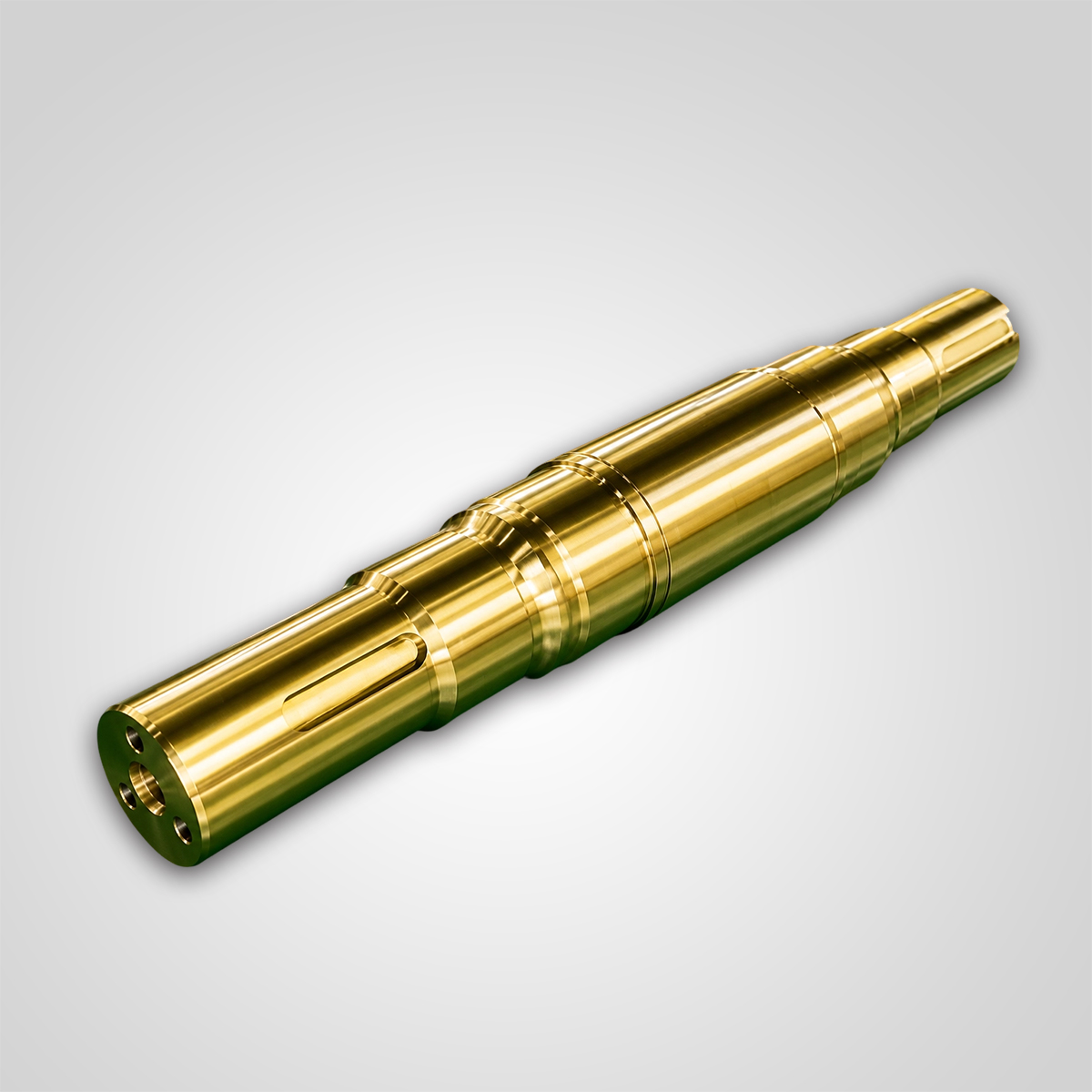
Metso C110 287909 Eccentric Shaft 1249.5 kg Crusher Part Supplier Product Guide
Product name : Eccentric Shaft
Reference part number : 287909
Compatible crusher : Metso Nordberg C110 jaw crusher
Recorded database gross weight : 1249.5 kg
Metso C110 287909 Eccentric Shaft for Jaw Crusher Drive Assembly
The Eccentric Shaft identified by reference number 287909 is used in the Metso Nordberg C110 jaw crusher drive and pitman system. Parts databases record a gross weight of 1249.5 kg for this item, which immediately places it in a category where lifting control, bearing fit, shaft alignment, dimensional inspection and installation procedure have a direct effect on crusher availability. The shaft is not simply a rotating support member. It receives rotary input from the crusher drive arrangement and creates the eccentric motion required by the pitman and movable jaw. Every revolution therefore combines bending load, cyclic bearing load, torsional input and the shock generated as rock is compressed in the crushing chamber. A dimensional error at a bearing seat, an incorrect interference condition, damaged keyway geometry or contamination introduced during assembly can turn a replacement job into repeated bearing failure. For this reason, an Eccentric Shaft should be purchased by verified part number and machine configuration rather than by crusher model alone. A responsible crusher part supplier should confirm 287909 against the C110 equipment information, dimensional drawing and relevant shaft interfaces before production or shipment. Plants sourcing a replacement jaw crusher part should also provide the crusher serial number whenever possible because machines that have been rebuilt, modified or assembled with different service components may require additional checking before the shaft is released for installation.
287909 Eccentric Shaft Technical Parameters
| Parameter | Specification |
|---|---|
| Product name | Eccentric Shaft |
| Reference part number | 287909 |
| Compatible crusher | Metso Nordberg C110 jaw crusher |
| Recorded database gross weight | 1249.5 kg |
| Other published component weight references | Approximately 1180 to 1190 kg depending on supplier data and weight basis |
| Published aftermarket height reference | 340 mm with drawing confirmation required before manufacturing |
| C110 crusher feed opening reference | 1100 × 850 mm |
| C110 crusher power reference | 160 kW |
| C110 crusher speed reference | Approximately 230 rpm |
| Related C110 bearing reference | 705302721500 spherical roller bearing with 23164 CC/C3 W3 appearing in replacement parts data |
| Main operating function | Transfers rotary drive and generates eccentric movement of the pitman and movable jaw |
| Required order verification | Part number, crusher serial information, shaft drawing, bearing seats, shoulders, keyways, threads, oil passages and mating components |
How the Eccentric Shaft Works in the C110 Jaw Crusher
The C110 uses an eccentric drive to convert continuous shaft rotation into the reciprocating motion required for crushing. As the Eccentric Shaft rotates inside the pitman bearing arrangement, its eccentric geometry changes the position of the pitman relative to the crusher frame. This movement drives the movable jaw toward and away from the fixed jaw. Rock is compressed during the closing portion of the cycle and moves downward during the opening portion. The duty is severe because the shaft does not experience a smooth laboratory load. Feed segregation, oversize rock, uneven chamber filling, changing closed side setting and tramp events can all change the load transmitted through the pitman and bearings. On a C110 with a 1100 × 850 mm feed opening and approximately 160 kW drive reference, the shaft and bearing interfaces must maintain geometry under repeated impact loading rather than merely support rotational speed. The operating speed of approximately 230 rpm means the shaft completes thousands of load cycles during a normal production shift. Small deviations in journal diameter, roundness, concentricity, shoulder location or surface condition can therefore develop into heat, vibration and accelerated bearing damage. This is why a metso crusher part intended for this position should be inspected as a precision mechanical component. The relevant question is not only whether the shaft physically enters the pitman. The more important question is whether its bearing fits, eccentric geometry, axial locations and drive interfaces reproduce the conditions required by the crusher assembly.
Critical Manufacturing and Inspection Requirements
A replacement 287909 shaft should be evaluated from the machining report rather than from external appearance. Material grade should be confirmed from the approved drawing or agreed manufacturing specification because publicly available parts lists do not provide enough evidence to assign an exact steel grade to every 287909 shaft. Inventing a material specification during procurement creates unnecessary risk. The crusher part supplier should instead provide traceable material documentation when required and should demonstrate that the shaft was produced to the confirmed drawing. Dimensional inspection should cover the bearing journals, journal roundness, cylindricity, shaft runout, eccentric relationship, shoulder dimensions, fillet regions, keyways, threaded sections and other mating surfaces shown on the production drawing. Surface finish at bearing seats is especially important because a journal can be within nominal diameter and still create poor bearing performance if grinding marks, taper or local surface damage are excessive. Transition areas between shaft sections also deserve attention because abrupt geometry and machining damage can increase local stress concentration. After machining, the shaft should be protected against corrosion and handling damage. A dent on a bearing journal caused during loading can be more expensive than the freight cost saved through inadequate packing. The 1249.5 kg database gross weight also means transport planning should account for lifting points, packing support and the possibility that published weights use different definitions. Purchase orders should therefore distinguish component weight from shipping gross weight rather than assuming every published number describes the same condition.
Operating Pain Point Bearing Failure Caused by Fit and Contamination
One of the most expensive problems associated with this type of shaft is a replacement that appears successful during startup but develops rising bearing temperature after several production shifts. Maintenance teams sometimes focus immediately on bearing quality, yet the actual cause may be the shaft installation. A bearing journal with incorrect interference, a small burr on the seating surface, contamination trapped during assembly, an incorrectly positioned bearing or a distorted locking arrangement can change internal bearing clearance. The machine may rotate normally without load and still overheat once crushing force is applied. Another common risk appears when mechanics use aggressive local heating or direct hammering to force components into position. These methods can damage bearing surfaces, seals or shaft geometry before the crusher has processed a single tonne. The lower cost approach is to measure first and assemble second. Record journal dimensions and mating dimensions before installation, compare them with the approved tolerances, inspect the bearing seats under good lighting, clean oil passages and protect every machined surface during lifting. After startup, establish an initial temperature and vibration baseline instead of waiting for an alarm. A gradual rise from the commissioning baseline can identify an installation problem before the bearing, shaft and pitman are all damaged. Saving several hours during assembly is rarely economical if the result is another shutdown involving a shaft weighing more than one tonne.
Installation Controls for the 287909 Shaft
Installation should begin with verification of the actual machine and mating parts. Confirm that the replacement carries the required 287909 reference and compare critical dimensions with the removed shaft or approved drawing before moving the component to the crusher. Inspect the pitman, bearing housings, bearing components, labyrinth areas, seals, sleeves, locking components, flywheel interfaces and other parts that may affect shaft position. A new shaft should not be used to compensate for damaged bearing housings or worn mating components. Before assembly, remove shipping protection from functional surfaces and inspect for corrosion, impact marks and burrs. Cleanliness is essential around the spherical roller bearing system because abrasive contamination introduced during maintenance will remain in a heavily loaded rotating interface. Heating and mounting procedures must follow the bearing and crusher service requirements. Open flame heating should not be treated as a substitute for controlled temperature methods. During lifting, support the shaft so that chains, slings and metal hooks cannot score machined journals. Once assembled, verify axial positioning, locking arrangements, lubrication connections and free rotation according to the machine procedure before applying crushing load. Startup checks should include abnormal sound, vibration, bearing temperature, lubrication condition and evidence of seal leakage. If any value changes rapidly, stop and investigate rather than attempting to run the condition away.
Engineer Installation Advice
Engineer recommendation Do not approve this shaft for final assembly until the mechanics have a written dimensional record for the bearing seats and the maintenance team has confirmed the condition of the mating bearings and housings. On large jaw crushers I treat shaft replacement as a system inspection rather than a single component replacement. The most important installation habit is to establish reference measurements before dismantling and compare them with measurements after assembly. Bearing position, journal fit, shaft runout and axial location should not depend on visual judgement. Mark the orientation of related components before removal, protect journals throughout lifting, use calibrated measuring instruments and document the initial unloaded and loaded operating temperatures after commissioning. If the removed Eccentric Shaft shows abnormal scoring, fretting, blue discoloration or localized damage, determine the cause before installing 287909. Otherwise the new component may inherit the same failure mechanism.
Maintenance Strategy and Cost Control
The Eccentric Shaft normally operates inside the crusher rather than as a routine wear item, so the objective of maintenance is to protect the shaft interfaces and detect abnormal load before permanent damage develops. Bearing lubrication condition, temperature trend, vibration trend, sealing condition and contamination control provide more useful information than replacing parts on an arbitrary calendar. Maintenance records should note changes following bearing replacement, pitman work, flywheel work, major chamber changes and abnormal crushing events. If bearing temperature rises after maintenance, compare it with the previous baseline and investigate lubrication quantity, bearing clearance, contamination and mounting condition. If vibration changes, determine whether the change follows shaft speed and whether it appeared immediately after mechanical work. Keep oil or grease systems clean and do not allow leaking seals to become a permanent operating condition because dust entering the bearing area can progressively damage rolling surfaces and shaft seats. During planned shutdowns, inspect accessible shaft interfaces and record evidence of fretting or movement. A crusher part supplier can reduce procurement risk by providing dimensional inspection records, drawing confirmation and packaging suitable for machined surfaces. The cheapest quoted Eccentric Shaft is not necessarily the lowest cost component if an incorrect fit causes several days of lost production. For a large primary jaw crusher, the cost of production interruption, cranes, labour, replacement bearings and repeated disassembly can exceed the purchasing difference between properly verified and poorly controlled spare parts.
Ordering the Correct C110 Replacement
For procurement, use 287909 as the primary reference but do not stop at the part number. Send the C110 model designation, equipment serial information when available, photographs of the removed component and an approved drawing or dimensional references if the crusher has a long service history. Ask the crusher part supplier to confirm the drawing revision used for production and the inspection points applied to the shaft. The 1249.5 kg figure should be treated as a recorded gross weight from C110 replacement parts databases, while other published sources show approximately 1180 kg or 1190 kg. That difference should be resolved before freight planning by confirming whether the quotation refers to net component weight, calculated weight, finished weight or packed gross weight. Do not use weight alone as proof of compatibility. Bearing journal dimensions, eccentricity, axial shoulders, drive interfaces and mating geometry determine whether the part can operate correctly. Manufacturer names and part numbers should be used for equipment identification and compatibility reference. Aftermarket replacement parts should not be represented as genuine OEM products unless they are actually supplied through the OEM channel.
FAQ About the Metso C110 287909 Eccentric Shaft
How should I confirm that 287909 fits my C110 jaw crusher
Start with the crusher model and part number, then verify the machine serial information and the dimensions shown on the approved shaft drawing. Compare bearing seats, shoulders, keyways, threads, eccentric geometry and related interfaces with the existing assembly. If the machine has undergone a previous pitman, bearing or drive modification, serial number and dimensional checking become more important. Do not approve the shaft only because the supplier lists Metso C110 compatibility.
Why do published weights for the same 287909 shaft differ
Some C110 parts databases record 1249.5 kg as gross weight, while other aftermarket references publish approximately 1180 kg or 1190 kg. The difference may result from data source, drawing revision, calculated versus finished weight, or the distinction between component and gross shipping weight. Confirm the actual finished component weight and packed shipping weight with the supplier before arranging lifting equipment or freight.
What should be checked after installing a new Eccentric Shaft
Check free rotation and the correct position of associated components before loaded operation. During commissioning, monitor bearing temperature, vibration, lubrication condition, abnormal sound and seal leakage. Record baseline readings soon after startup and again under stable production load. Rapid temperature increase, new vibration or unusual noise should be investigated immediately. The purpose of commissioning is not simply to prove that the crusher can start. It is to verify that the shaft, bearings, pitman and drive system are operating together without abnormal mechanical load.
All manufacturer names, part numbers, model numbers, and descriptions are used for reference and identification purposes only, they are owned by the respective machine manufacturer, including but not limited to FLSmidth®, Metso®, thyssenkrupp®, and Sandvik®. All parts supplied are manufactured and warranted by yonsmen and are not manufactured by or purchased from the Original Equipment Manufacturer. yonsmen has no association with the OEM and does not intend to give this impression.
Reviews
There are no reviews yet.