Market Background: Thyssenkrupp Did Not Fully Exit Crushing Technology
The search demand behind the keyword “thyssenkrupp crusher spare parts” has changed significantly in recent years. The main reason is not that the Thyssenkrupp brand disappeared from the market, but that its mining equipment business changed ownership.
In 2021, Thyssenkrupp announced the sale of its **Mining Technologies** business to the Danish company FLSmidth. The transaction was completed in 2022. This business included mining systems, material handling, mineral processing equipment, crushing solutions, and related services.
It is important to note that Thyssenkrupp did not completely leave the crushing industry. Its Polysius business still provides crushing technologies for cement, lime, and related industries. Therefore, the so-called “business contraction” mainly refers to the divestment of Thyssenkrupp’s mining-related crushing, conveying, processing, and aftermarket service business, rather than a full exit from all crusher technologies.
Reason One: Group Restructuring and Portfolio Focus
The first major reason behind the sale was Thyssenkrupp’s broader corporate restructuring strategy. As a diversified industrial group, Thyssenkrupp had been under pressure to simplify its business structure, improve efficiency, and focus on higher-priority core businesses.
Mining equipment is typically a project-based and cyclical business. Orders are often large, delivery cycles are long, and demand is closely tied to mining capital expenditure. For a group aiming to improve capital efficiency and reshape its business portfolio, mining crushers, conveyors, and mineral processing systems may no longer have been the best strategic fit.
By selling the mining business, Thyssenkrupp was able to reduce management complexity and move toward a more focused industrial portfolio.
Reason Two: Cash Flow and Balance Sheet Pressure
Cash flow was another important driver behind the divestment. Like many heavy industrial companies, Thyssenkrupp faced pressure to strengthen its financial position, improve liquidity, and restore positive cash flow.
Selling a non-core business such as Mining Technologies helped the group release capital and improve its balance sheet. From this perspective, the sale was not only a product-line adjustment, but also part of a broader financial recovery and restructuring plan.
For large industrial groups, divesting non-core assets is a common way to reduce risk, simplify operations, and concentrate resources on businesses with stronger strategic priority.
Reason Three: Profitability Pressure in the Mining Equipment Business
Another key reason was the profitability challenge within the mining equipment business. Mining equipment manufacturing requires strong engineering capability, global project execution, and a large service network. However, project-based equipment businesses can face margin pressure due to long lead times, cost overruns, competition, and cyclical demand.
The real value of mining crushers is not only in new machine sales, but also in the installed base, spare parts, maintenance, rebuilds, upgrades, and long-term service. If the aftermarket service share is not high enough, profitability can become unstable.
After acquiring Thyssenkrupp’s mining business, FLSmidth aimed to integrate the installed base into its own global service platform. This shows that the aftermarket business, including crusher spare parts, was one of the most attractive parts of the transaction.
Reason Four: FLSmidth Was a Better Strategic Owner
From FLSmidth’s point of view, the acquisition made strong strategic sense. FLSmidth already had a strong position in mining and cement equipment. By acquiring Thyssenkrupp’s mining business, it expanded its product portfolio, customer base, technology coverage, and service opportunities.
The deal helped FLSmidth build a broader pit-to-plant offering, covering crushing, conveying, processing, and aftermarket services. In other words, Thyssenkrupp’s mining business could potentially create more value under a company that was more focused on mining and mineral processing equipment.
For Thyssenkrupp, selling the business meant transferring it to a more specialized platform. For FLSmidth, the acquisition created opportunities for product integration, service expansion, and aftermarket growth.
Impact on the Thyssenkrupp Crusher Spare Parts Market
The sale of the mining business does not mean that demand for thyssenkrupp crusher spare parts*has disappeared. In fact, the spare parts market may become even more active for several reasons.
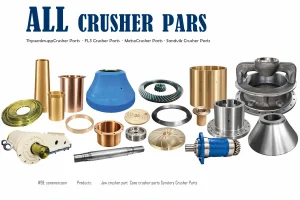
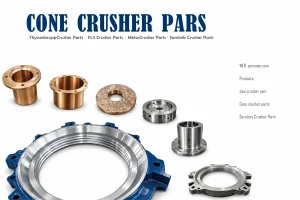
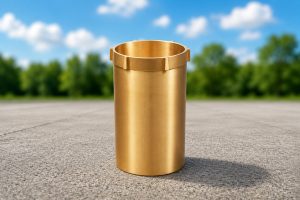
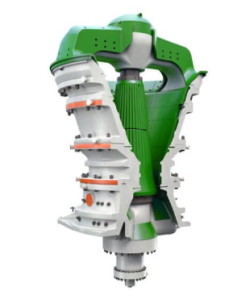
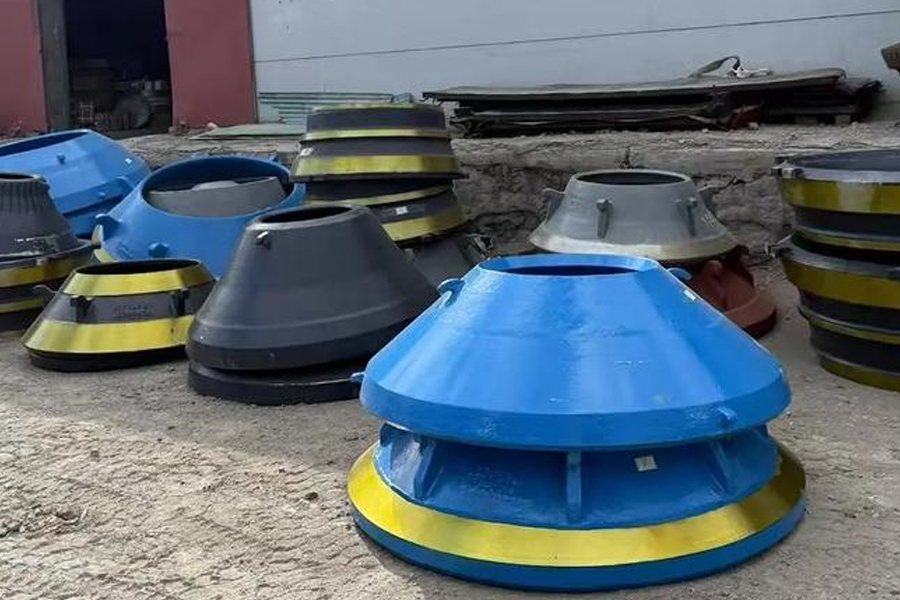
First, many Thyssenkrupp and Krupp crushers are still operating in mines, cement plants, quarries, and bulk material handling sites around the world. Crushers have long service lives, and key wear parts must be replaced regularly. These parts may include liners, jaw plates, mantles, concaves, hammers, shafts, bushings, bearing housings, and other critical components.
Second, the brand transition creates search confusion. Many buyers still search for “Thyssenkrupp crusher parts,” “Krupp crusher spare parts,” or “TK crusher parts,” even though the mining business is now part of FLSmidth. This creates a gap between old brand recognition and the current official supply structure.
Third, the aftermarket business remains highly valuable. Spare parts, maintenance, and service support usually provide more stable and recurring revenue than new equipment sales. As long as the installed machines continue operating, demand for compatible spare parts will remain.
Opportunities for Chinese Spare Parts Suppliers
For Chinese crusher spare parts manufacturers, the restructuring of Thyssenkrupp’s mining business creates several market opportunities.
1. Growing Demand for Replacement Parts for Older Equipment
Many mining and industrial customers operate crushers for decades. These customers often care more about delivery time, material quality, dimensional accuracy, and cost performance than brand identity alone. For sites where downtime is expensive, fast delivery of reliable replacement parts can be highly attractive.
2. Expansion of the Non-OEM Compatible Parts Market
During brand transitions and business integrations, some customers may look for more flexible and cost-effective alternatives to OEM parts. This creates room for third-party suppliers offering compatible replacement parts.
However, suppliers must use clear and compliant wording. They should describe products as “compatible with,” “replacement for,” or “suitable for” Thyssenkrupp/Krupp crusher models, rather than claiming to be original OEM parts.
3. Strong Repeat Demand for Wear Parts
Crusher wear parts are highly suitable for repeat orders. Products such as gyratory crusher liners, cone crusher mantles and concaves, jaw plates, hammers, impact plates, and wear-resistant liners are replaced regularly depending on working conditions.
Compared with complete crusher sales, spare parts are better suited for SEO marketing, product pages, case studies, and model-based inquiry generation.
4. Higher Keyword Value
Keywords such as “thyssenkrupp crusher spare parts,” “Krupp crusher parts,” “TK crusher parts,” “Thyssenkrupp crusher liners,”** and **“FLSmidth Thyssenkrupp crusher parts” often reflect clear purchasing intent.
Content marketing should focus on crusher models, part numbers, material grades, working conditions, drawings, customization capability, delivery time, and compatibility statements.
Conclusion: Business Divestment Creates New Aftermarket Opportunities
Thyssenkrupp’s decision to sell its mining crushing and material handling business was mainly driven by group restructuring, financial improvement, portfolio focus, and the need to place the mining business under a more specialized owner.
For FLSmidth, the acquisition strengthened its mining equipment and aftermarket service portfolio. For the spare parts market, the transaction did not reduce demand. Instead, it created a more complex and active aftermarket environment.
The keyword “thyssenkrupp crusher spare parts” remains commercially valuable because it connects old-brand equipment users, FLSmidth’s current OEM service structure, and independent compatible spare parts suppliers.
For aftermarket suppliers, future competition will not depend only on price. The real advantages will come from model identification capability, material quality, machining accuracy, stable delivery, technical support, application experience, and clear compliance in brand-related wording.