Crusher Spare Parts CNC
The cheapest crusher spare parts usually look attractive only before they enter the workshop. Once they are installed inside a jaw crusher, cone crusher, impact crusher, or gyratory crusher, the real cost starts showing through uneven wear, poor fit, abnormal vibration, fast liner loss, high amperage, oil contamination, and unplanned shutdowns. Many buyers search for crusher spare parts wholesale because they want lower prices, faster delivery, and larger stock availability. That is reasonable. The problem begins when wholesale price becomes the only standard and the buyer cannot see whether the supplier is a real Crusher Spare Parts Manufacturer or only a trading middleman moving parts from unknown foundries.
After years of field work around crushing plants, the same pattern appears again and again. A purchasing team saves 8 percent to 15 percent on the first order, then loses much more through short service life, extra maintenance hours, poor product shape, chamber instability, and emergency freight. A jaw plate that should last 28 days in abrasive granite may be worn out in 15 days. A mantle and concave set that should process 120000 tons may lose its profile before 70000 tons. A bronze bushing with poor machining can damage the eccentric assembly and turn a small saving into a major repair bill. This is the hidden side of wholesale purchasing that many price sheets never show.
Why crusher spare parts wholesale can look cheaper than it really is
Wholesale suppliers often win attention with stock photos, wide model lists, and low unit prices. Some of them are useful distributors with honest service and good inventory. Others simply collect quotations from several small foundries, choose the lowest price, and resell the parts with limited technical responsibility. The buyer receives a part number, a weight, a price, and a delivery promise, but may not receive reliable production records, heat treatment charts, chemical analysis, dimensional inspection, or field application guidance.
This matters because crusher parts are not ordinary metal products. A cone liner works under repeated compression, sliding wear, impact load, and temperature changes. A jaw plate must absorb high crushing force while maintaining tooth profile and seating stability. A blow bar may rotate at high speed and face impact from limestone, concrete, slag, or recycled asphalt. A bushing must maintain oil film clearance under heavy load. If the supplier does not control casting, machining, heat treatment, and inspection, the buyer is not really buying value. The buyer is buying uncertainty.
A genuine Crusher Spare Parts Manufacturer normally controls more of the process. It can review drawings, check material grades, select patterns, manage furnace records, supervise heat treatment, inspect key dimensions, and improve the design based on wear feedback. That production strength does not always mean the lowest price per piece, but it often means a lower cost per ton.
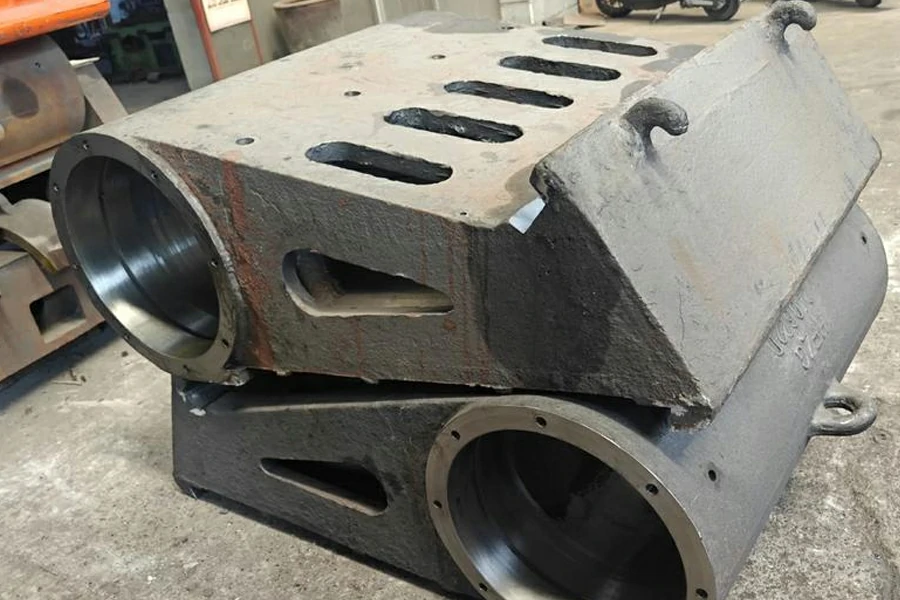
Crusher Spare Parts Manufacturer
The first trap is confusing stock availability with production capability
Many wholesale sellers advertise thousands of available crusher parts. The list may include jaw plates, cheek plates, mantles, concaves, bowl liners, torch rings, spider bushings, countershaft bushings, eccentric bushings, blow bars, aprons, impact plates, toggle plates, wedges, nuts, seals, and hydraulic parts. A large list looks impressive, but it does not prove manufacturing strength.
The real question is whether the supplier can explain the part. For cone crusher liners, can they discuss chamber type, feed opening, closed side setting, eccentric throw, feed distribution, and liner profile change through the wear cycle. For jaw plates, can they explain tooth height, tooth pitch, manganese grade, nip angle behavior, and the reason for premature lower zone wear. For bushings, can they explain inner diameter control, oil groove depth, surface finish, and clearance range. If the answer is only that the part is in stock, the buyer should be careful.
Stock solves a delivery problem, but production capability solves a performance problem. A real manufacturer should be able to supply standard parts and also support customized parts based on drawings, samples, working conditions, and wear reports. This is especially important for older machines, modified crushers, mixed brand fleets, and plants working with high silica stone.
The second trap is accepting material names without test records
Material names can be used as marketing words. Mn13Cr2, Mn18Cr2, Mn22Cr2, high chrome, martensitic steel, ceramic insert, bronze alloy, and alloy steel all sound technical, but the name alone is not enough. A reliable supplier should provide chemical analysis and batch traceability. For manganese steel wear parts, buyers should check manganese, carbon, chromium, silicon, phosphorus, and sulfur levels. For high chrome blow bars, chromium and carbon control are important, and hardness should normally be matched with the application.
In practical crushing work, manganese liners may arrive around HB 200 to HB 240 and work harden to around HB 450 to HB 550 under proper impact. If the feed is too soft or the chamber is not loaded correctly, work hardening may be poor. If heat treatment is wrong, the part may crack before it wears out. High chrome blow bars may reach HRC 58 to HRC 65, but that hardness can become a problem if the crusher receives tramp iron or oversized feed. Bronze bushings need correct alloy selection and oil film behavior, not just a yellow metal appearance.
A middleman may not know whether the casting came from a controlled furnace or a mixed scrap batch. A production focused Crusher Spare Parts Manufacturer should be able to connect the delivered part to a heat number, production batch, inspection report, and material certificate. This traceability is not paperwork for decoration. It is a way to protect the buyer when performance must be reviewed.
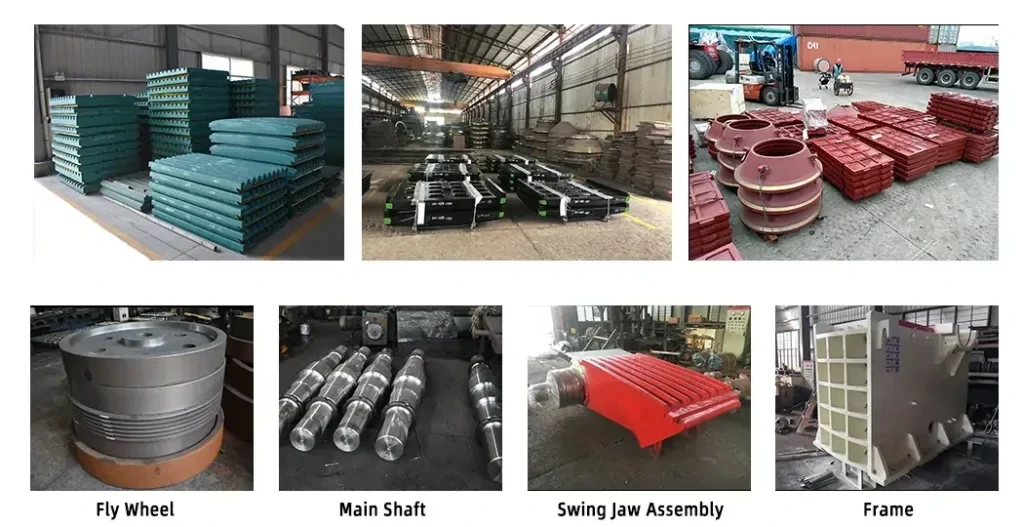
Crusher Spare Parts Wholesale
The third trap is ignoring heat treatment
Heat treatment is one of the biggest differences between a reliable crusher part and a risky low cost part. Manganese steel generally requires solution treatment around 1050 to 1100 C followed by fast quenching. If this process is poorly controlled, carbide networks may remain inside the structure and reduce toughness. The surface can look clean, but the liner may crack around bolt holes, lifting points, thick sections, or high impact zones.
For thick mantles, concaves, and jaw plates, heating time, holding time, transfer speed, and quenching capacity all affect final quality. A small foundry with limited heat treatment control may produce parts that look acceptable but perform inconsistently. One batch lasts well. The next batch fails early. This inconsistency is one of the most expensive problems in quarry maintenance because planners cannot predict shutdown windows or liner change schedules.
A serious manufacturer should be able to provide heat treatment records, hardness test results, and process control evidence. Buyers do not need to inspect every furnace operation, but they should require enough proof to know that the process is repeatable.
The fourth trap is buying shape copies instead of engineered fit
Counterfeit and low grade spare parts often copy the visible shape while ignoring hidden functional surfaces. A mantle may look close to the original but have inaccurate taper contact. A concave may have poor seating and create uneven load. A jaw plate may have bolt holes slightly out of position. A blow bar may have imperfect locking faces. A bushing may have incorrect oil grooves or rough surface finish. These problems are not always visible from a catalog photo.
Fit matters because crushing machines operate under high force. A cone crusher can experience strong cyclic loads when processing hard stone with a closed side setting between 12 mm and 38 mm depending on chamber and model. A mobile jaw crusher handling 500 mm feed may face strong impact at every stroke. If the part is not seated correctly, the load is transferred through the wrong area. That can cause loosening, fretting, cracking, and damage to expensive crusher structures.
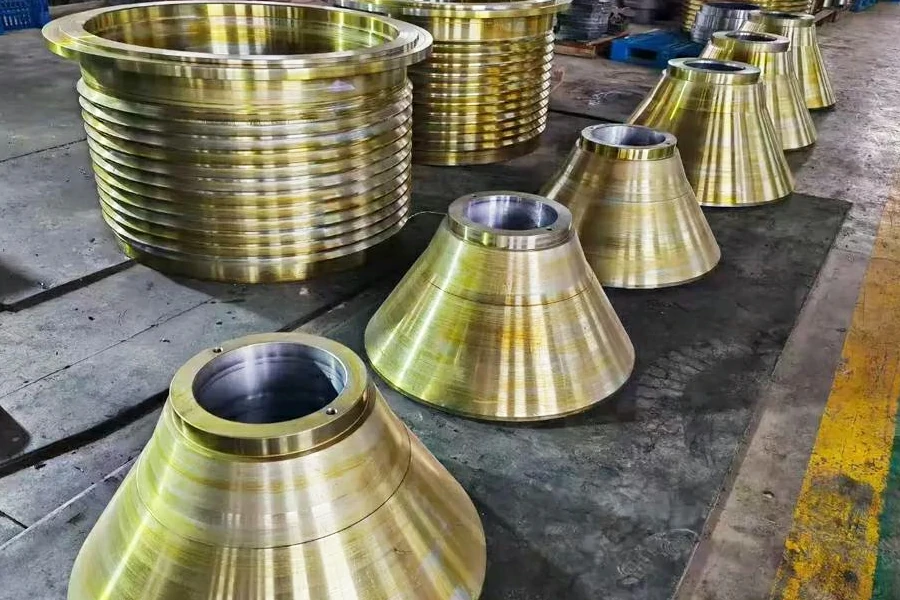
For machined spare parts, tolerances are especially important. Critical dimensions on bushings, shafts, gear parts, and bearing seats may need control within 0.02 mm to 0.10 mm depending on the design. Surface finish, roundness, concentricity, and oil groove geometry affect lubrication and temperature. A wholesale supplier with no machining control may only check the outside appearance. A manufacturer with engineering capability can inspect and correct the part before shipment.
The fifth trap is measuring price per piece instead of cost per ton
Price per piece is easy to compare. Cost per ton is harder, but it is the number that matters. A liner set that costs less but processes fewer tons is not a saving. A jaw plate that wears unevenly and forces early replacement increases labor cost and downtime. A blow bar that breaks after impact can damage the rotor and create safety risk. A bushing that fails early can contaminate the lubrication system and damage several connected components.
For a crushing plant producing 300 to 600 tons per hour, a six hour unplanned shutdown can be more expensive than the price difference between a low grade part and a high quality part. If the plant runs two shifts per day, unstable spare parts also disrupt stock planning, maintenance scheduling, and customer delivery. Buyers should record operating hours, tons processed, feed material, closed side setting, motor current, liner weight before installation, liner weight after removal, and reason for replacement. These records reveal which supplier really delivers value.
A good manufacturer welcomes this type of performance tracking because it creates useful feedback. If a liner wears too fast in the lower zone, the chamber profile may need adjustment. If a jaw plate wears mainly in the center, feed distribution may be wrong. If a blow bar loses material too quickly, the alloy may need to change. A simple trader usually cannot provide this level of improvement.
How to check whether a supplier has real manufacturing strength
- Ask for process evidence including chemical analysis, heat treatment records, hardness data, dimensional reports, and batch traceability for important wear and spare parts.
- Ask technical questions about feed size, rock hardness, silica content, closed side setting, chamber type, reduction ratio, and current wear pattern before accepting a quotation.
- Request part marking that connects the delivered part with the production batch, material grade, and inspection record.
- Compare weight and profile against approved drawings, previous samples, or original references. A major weight difference may indicate reduced thickness or incorrect geometry.
- Inspect machined surfaces on bushings, shafts, gears, and seating areas. Poor finish, burrs, incorrect grooves, and rough contact surfaces can cause serious mechanical damage.
- Review packaging quality because heavy castings and precision parts can be damaged during ocean transport if not protected correctly.
- Check complaint handling before ordering. A strong supplier can investigate wear photos, operating data, and failed parts instead of only offering a small discount on the next order.
Where wholesale buying still makes sense
Wholesale purchasing is not always wrong. It can be useful for common parts, emergency stock, mixed brand inventories, and fast moving wear items when the supplier has verified sources. The mistake is assuming that wholesale automatically means better value. Buyers should separate commercial convenience from manufacturing reliability.
A strong wholesale partner should still have technical control over its supply chain. It should know which foundry made the part, which material was used, which inspection was performed, and which working condition the part is suitable for. If the wholesaler cannot answer these questions, the buyer is exposed to hidden risk. A distributor with technical discipline can be valuable. A price only trader can become expensive very quickly.
Why a Crusher Spare Parts Manufacturer can reduce hidden cost
A capable Crusher Spare Parts Manufacturer does more than sell replacement parts. It helps buyers choose the right material, adjust chamber design, improve wear life, verify dimensions, and maintain consistent quality across repeat orders. For manganese liners, the manufacturer can recommend Mn13Cr2, Mn18Cr2, or Mn22Cr2 based on impact level and abrasiveness. For impact crusher blow bars, it can compare martensitic steel, high chrome, and ceramic options based on feed size and tramp iron risk. For bronze bushings, it can control alloy composition, machining clearance, and oil groove design.
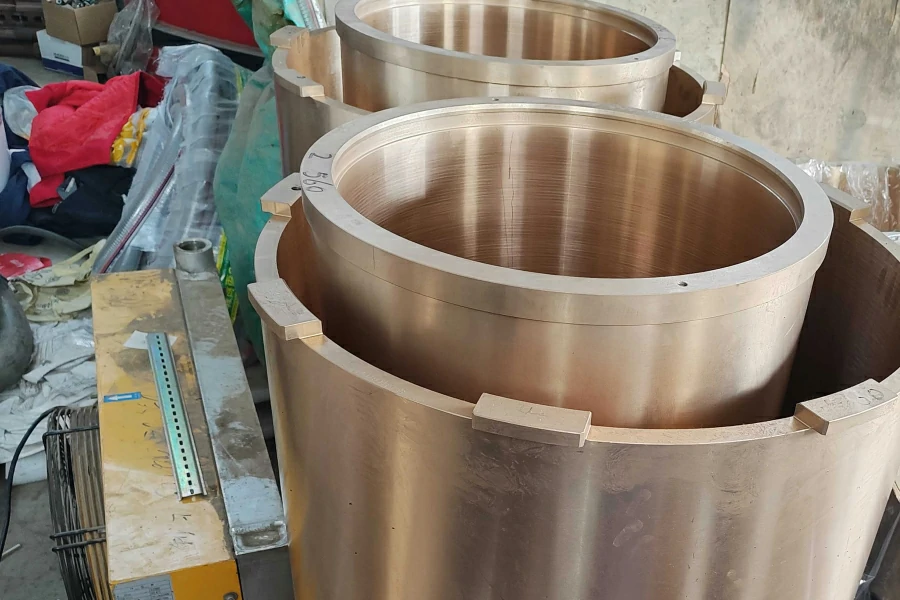
cheapest supplier
This is where production strength creates value. The manufacturer can use pattern modification, 3D scanning, machining inspection, hardness testing, and field feedback to improve the part. It can also support custom production when drawings or samples are available. For plants using older equipment, discontinued models, or machines from different brands, this flexibility can prevent long downtime and high emergency sourcing costs.
The buyer also gains accountability. When a problem occurs, a manufacturer can trace the batch, review the process, compare inspection data, and suggest a correction. With a weak wholesale chain, responsibility is often passed from seller to foundry to freight forwarder, and the buyer loses time while the crusher remains idle.
A practical purchasing method for better value
The best purchasing strategy is not simply choosing the cheapest supplier or the largest catalog. Start by classifying parts according to risk. Wear liners, jaw plates, mantles, concaves, and blow bars affect production directly. Bushings, gears, shafts, hydraulic parts, and bearing related components can cause major machine damage if they fail. These parts should require stronger documentation and stricter supplier qualification.
For the first order, avoid buying a full container of untested parts only because the price is low. Start with a controlled trial for selected parts. Record installation date, operating hours, feed type, crusher setting, motor load, vibration, final tonnage, and removal reason. Compare the result with the previous approved supplier. If the new part reduces cost per ton and performs consistently, then increase the order volume.
For repeat orders, keep an approved supplier list. Do not allow random substitution without review. The same part number from different sources can produce very different results. Ask suppliers to keep material grade, drawing revision, pattern version, and process route consistent unless a technical improvement is agreed in advance.
The real buying decision
The real choice is not wholesale versus manufacturer in a simple sense. The real choice is uncontrolled price buying versus engineered value buying. Wholesale can save money when the supplier has verified manufacturing control. A Crusher Spare Parts Manufacturer can create stronger long term value when it offers material expertise, process control, technical support, custom capability, and traceable quality.
For mines, quarries, cement plants, recycling yards, and aggregate producers, crusher parts should be judged by fit, service life, safety, output stability, and cost per ton. A low price that causes early wear is not a saving. A part that fits correctly, wears predictably, protects the machine, and keeps production stable is the real value purchase. Buyers who understand this difference avoid the common trap of cheap parts and build a stronger spare parts supply chain for long term crushing performance.