If your operators are adjusting the CSS on a cone crusher twice per shift, or if wear monitoring data shows liner consumption exceeding 1.5mm per thousand tonnes processed, the root cause isn’t operator error or equipment age. It’s a fundamental mismatch between material chemistry and crushing conditions. For operations processing high-silica granite or ultra-hard river gravel with Mohs hardness ratings above 6.5, standard ASTM A128 Grade C steel (Mn18Cr2) frequently fails before reaching its work-hardening threshold. The material simply gets abraded away like sandpaper on wood before the austenitic matrix can transform into the hardened surface layer it was designed to produce.
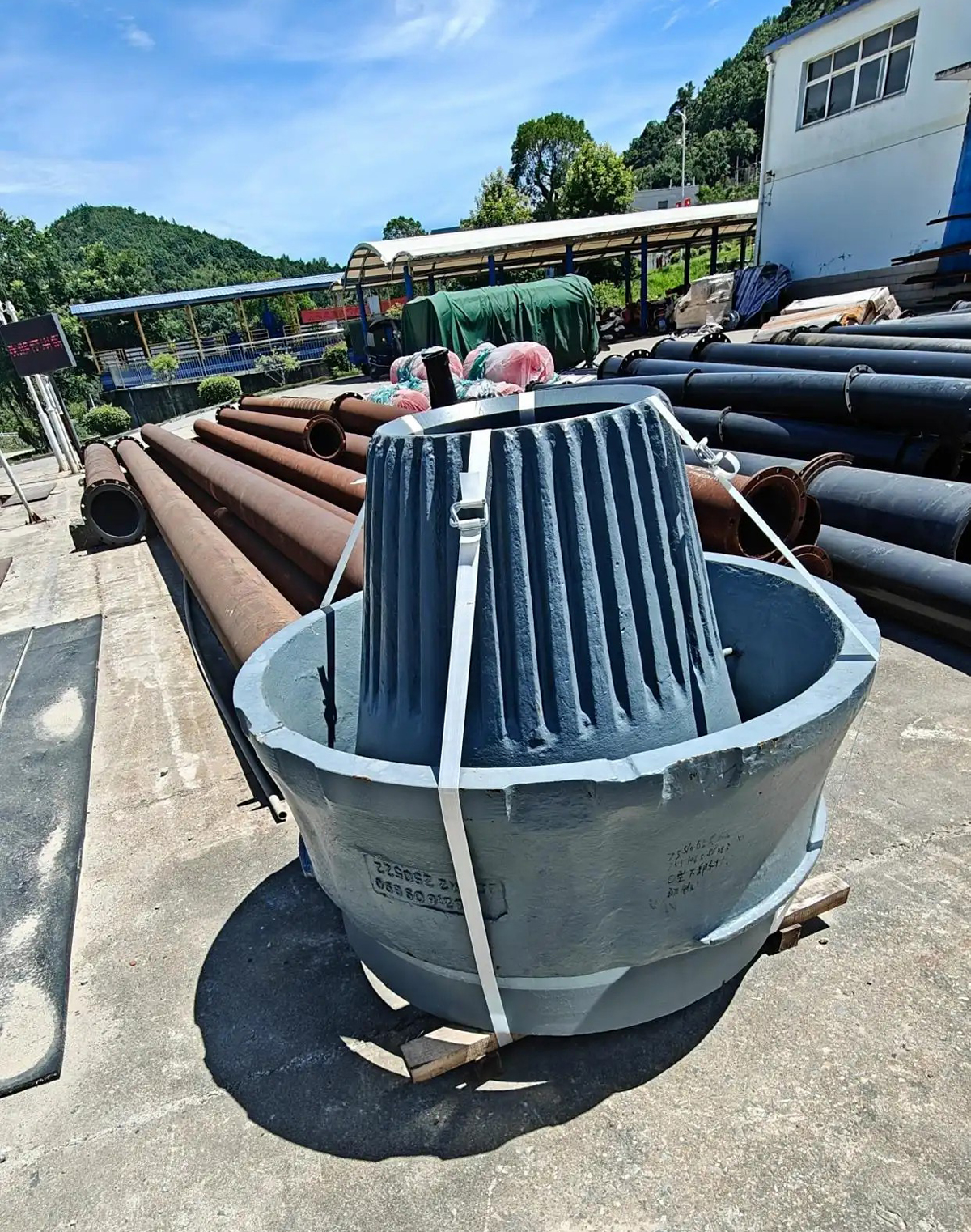
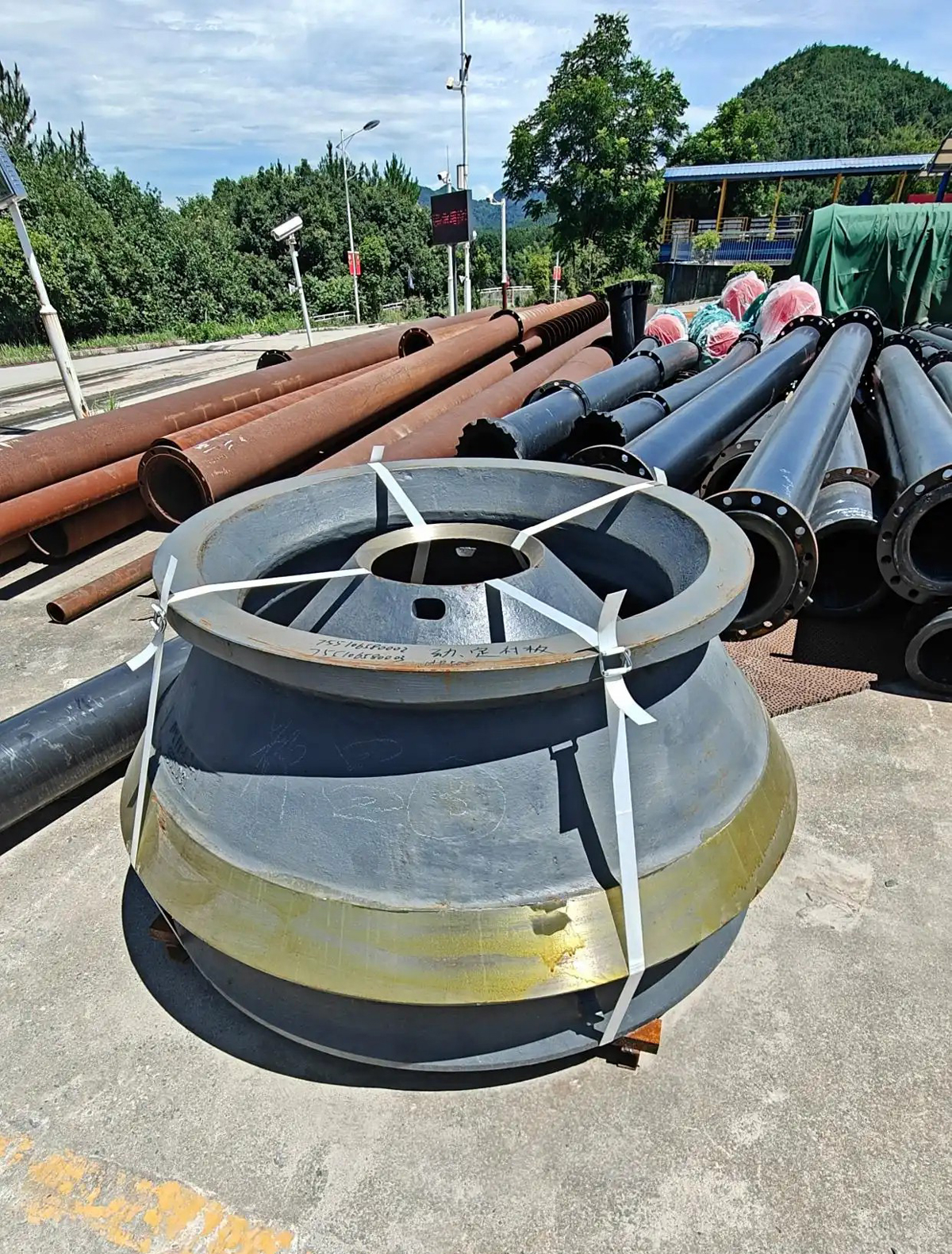
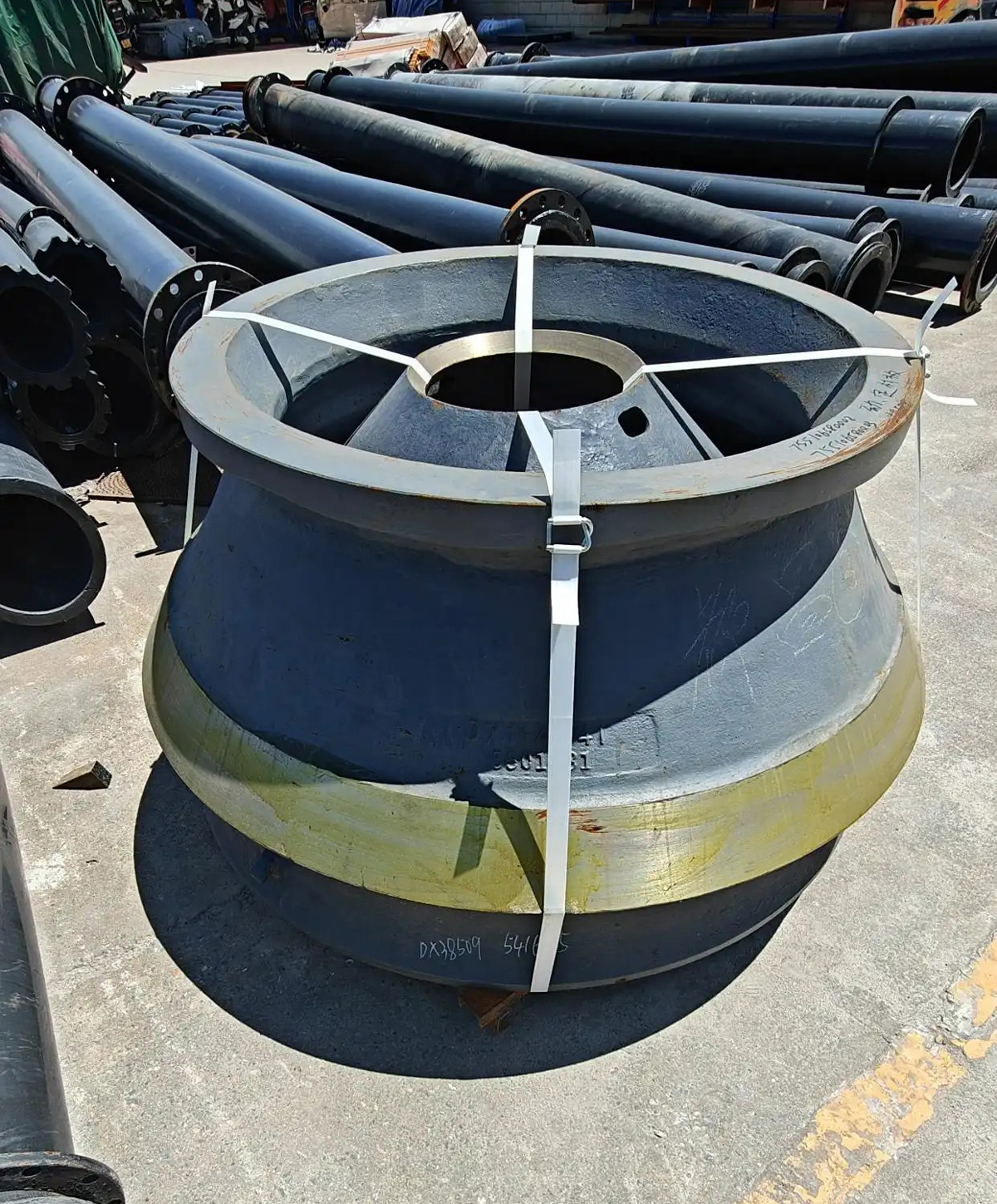
This exact scenario drove the metallurgical specification for a recent shipment of custom-manufactured cone crusher parts for FLSmidth equipment. Rather than pulling from standard inventory, these components—specifically the mantle and concave liners—were cast in Mn22% chemistry (21.0%-22.5% manganese content) after analyzing the client’s specific ore Bond Work Index and silica content. The on-time delivery allowed the customer to execute liner replacement during a planned maintenance window, preventing the catastrophic scenario where worn-through liners expose the mainframe to direct ore contact.
The Metallurgical Chess Game: Mn22% vs Mn18Cr2 at the Microstructural Level
In wear-resistant applications, the assumption that “harder is always better” creates dangerous misspecifications. Material selection is fundamentally about finding the equilibrium point between impact toughness and abrasion resistance. The decision to recommend Mn22% for this particular FLSmidth installation emerged from detailed failure mode analysis of the client’s retired liners.
How Work-Hardening Mechanisms Actually Function in Hadfield Steel
Standard high-manganese steels like Mn13 or Mn18 depend on impact loading to induce slip-plane deformation in the surface austenite structure. This plastic deformation triggers either martensitic transformation or dense dislocation tangles, driving surface hardness from an as-cast ~220 HBW to a work-hardened state exceeding 550 HBW. However, in secondary or tertiary crushing circuits where feed size is reduced and impact energy falls below 140 MPa, Mn18 chemistry often cannot generate sufficient hardening depth. The result manifests as soft-mode abrasive wear rather.
Mn22% belongs to the ultra-high manganese family. While its as-cast hardness is only marginally higher, it exhibits substantially greater initial yield strength. With carbon typically controlled between 1.1%-1.2%, the elevated manganese content stabilizes the austenitic matrix more effectively. This produces superior resistance to high-stress cutting wear (gouging abrasion) even when impact energy is insufficient for conventional work-hardening.
| Material Property | Mn18Cr2 (Standard Grade) | Mn22% (Custom Specification) |
|---|---|---|
| Typical Manganese Range | 17.0% – 19.0% | 21.0% – 22.5% |
| Optimal Application | High impact, moderate abrasion | Extreme abrasion, moderate-to-low impact |
| As-Cast Hardness (HBW) | ~210 – 230 | ~230 – 250 |
| Primary Failure Risk | Rapid wear in low-impact conditions | Brittle fracture under excessive impact |
| Microstructure | Austenite + chromium carbides (requires water quench) | Single-phase supersaturated austenite (cleaner matrix) |
Failure Mode Analysis: What the Worn Liners Actually Revealed
Before committing to Mn22% chemistry for this cone crusher part order, we conducted microscopic examination of the customer’s retired components. The physical evidence showed two critical indicators:
- Ploughing and Gouging Patterns: Deep, parallel grooves covered the working surfaces, indicating ore hardness consistently exceeded the surface hardness of the steel. The scratches measured 0.8-1.2mm in depth with aspect ratios suggesting low-angle cutting rather than perpendicular impact.
- Absence of Plastic Flow: The liner edges showed no mushrooming or rollover deformation. This absence of edge curling confirmed that impact forces within the crushing chamber were insufficient to trigger work-hardening in the Mn18 chemistry they had been using.
Field Case Snippet: I encountered an identical failure pattern at a copper operation in Chile’s Atacama region. The maintenance superintendent insisted on using Mn13Cr2 in their tertiary circuit because the upfront cost per tonne was 18% lower than Mn22 alternatives. The result was liner replacement every 250 operating hours. Beyond the obvious parts consumption, the frequent start-stop cycles caused thermal stress in the main motor windings and accelerated thread fatigue in the adjustment ring lock nuts. When we transitioned their specification to Mn22%, the single-piece purchase cost increased by 15%, but liner life extended to 480 hours. The reduction in unplanned downtime alone cut their cost-per-tonne-crushed by over 40%.
Installation Precision: Where Most Liner Life Is Actually Won or Lost
Even Mn22% components manufactured to OEM tolerances will fail prematurely if installation procedures are compromised. For FLSmidth cone crushers, installation is not simply a matter of dropping new parts into place. The technical documentation delivered with this shipment emphasized these critical steps:
1. Mating Surface Preparation and Inspection
The contact condition between the mainframe and the concave liner dictates load distribution. Every trace of previous epoxy backing compound must be removed, and the cone surface must be inspected for pitting or erosion. Ideally, metal contact surfaces should maintain a surface finish of Ra 6.3 μm or better. Any protrusion exceeding 2mm creates a stress concentration point that can initiate internal cracks propagating outward under cyclic loading.
2. Epoxy Backing Compound Application Protocol
The backing material serves as more than just void filler. It functions as the primary medium for transmitting crushing forces while damping high-frequency vibrations. Ambient temperature at the time of pour is non-negotiable. Below 10°C, the compound’s viscosity increases dramatically, preventing complete cavity filling and creating air pockets. When the crusher enters loaded operation, these unsupported areas experience local overload and catastrophic spalling.
Pro-Tip: During epoxy pour operations, many field technicians skip verification of the overflow ports. You must confirm that backing compound flows uniformly from all relief holes with no bubble discharge. I use a length of TIG welding rod to probe fill depth, ensuring no location has less than 6mm or more than 20mm of backing thickness depending on the specific model’s clearance specification. Excessive thickness generates shrinkage stress during cure that can crack the compound or debond from the metal surface.
3. Break-In Period Management
Despite its abrasion resistance, Mn22% remains sensitive to stress concentrations. During the first 8 operating hours after installation, limit crusher power to 50%-75% of rated capacity. Absolutely prohibit choke feeding until the break-in cycle completes. This gradual loading allows micro-adjustments in the liner seating position and relieves installation stresses before full production demands are imposed.
Predictive Maintenance Beyond the Wear Parts
Timely parts delivery creates the opportunity for comprehensive equipment health assessment. While replacing wear components, conduct a deep inspection of the crusher’s lubrication system—essentially the machine’s circulatory system.
Oil Analysis as an Early Warning System
For precision equipment like FLSmidth crushers, bronze bushing health directly determines mainshaft longevity. During liner change shutdowns, extract oil samples from the return line for spectrographic analysis:
- Elevated Copper (Cu) Content: If copper concentration exceeds 50 ppm accompanied by rising lead (Pb) levels, this indicates abnormal wear in the lower eccentric assembly or thrust bearing. Typical bronze bushings use C93800 alloy; wear debris in this concentration range signals imminent bearing failure.
- Silicon (Si) Contamination: Despite effective dust sealing on properly maintained machines, high silicon content in lubrication oil proves that excessive liner wear has compromised the dust seal integrity. Particulate ingress is actively contaminating the lubrication circuit. When Mn22 liners are installed, the dust seal ring must be replaced simultaneously to restore system integrity.
Total Cost of Ownership: Why Purchase Price Is a Meaningless Metric
Procurement managers evaluating cone crusher parts often focus exclusively on per-kilogram pricing. However, low-cost aftermarket components carry substantial hidden costs:
- Dimensional Tolerance Failures: Budget castings frequently lack finish machining operations, resulting in outer diameter tolerances exceeding ±1.5mm. This creates non-uniform backing layer thickness, destroying the crusher’s dynamic balance. Long-term operation under these conditions induces mainframe weld cracking and premature bearing failures.
- Heat Treatment Deficiencies: To reduce energy costs, inferior foundries abbreviate the solution annealing cycle, leaving carbide precipitates in the casting core. This material not only lacks wear resistance but becomes dangerously brittle under thermal cycling.
The Mn22% components in this delivery adhere strictly to ASTM A128 chemistry requirements and OEM-level dimensional tolerances, typically held to ±0.05mm to ±0.1mm on critical mating surfaces. While the initial acquisition cost may run 12%-18% higher than generic alternatives, consider the value equation: Mn22% chemistry extends service life by 30%-50% in high-abrasion applications. More critically, avoiding a single unplanned 12-hour shutdown saves production value frequently measured in six figures. The total cost of ownership calculation is overwhelmingly favorable.
Conclusion: Buying Time for Production
There are no miracles in crushing operations—only physics and engineering rigor. This Mn22% wear parts delivery represents the convergence of deep application understanding and supply chain execution discipline. From materials science selection through precision logistics control, every step targets a singular objective: ensuring the customer’s FLSmidth crusher operates at minimum cost-per-tonne.
In the mining machinery sector, the most expensive cone crusher part isn’t the one with the highest price tag. It’s the one that fails at 3 AM and stops production. Our commitment is to ensure that scenario never materializes.