A Single Pyrite Nodule Can Do What No Amount of Hardened Steel Can Prevent
A pyrite nodule or a piece of tramp iron passing through a coal crusher can generate enough frictional heat to spark, and coal dust suspended in air can ignite at concentrations as low as 45 grams per cubic meter, a level many crushing circuits reach and exceed during normal operation without anyone noticing. No alloy grade on the market prevents that spark from forming when hard, unexpected material meets a moving liner at speed. This is the fact that separates crusher selection and maintenance for coal from almost every other rock crushing application, the material itself is soft, but the consequences of getting the equipment and the housekeeping wrong are far more serious than a worn liner.
Why Coal Crushing Is Not a Wear Resistance Problem First
Coal is measured against the Hardgrove Grindability Index rather than the Bond Work Index used for rock and ore, with typical values running from roughly 30 for coal that resists pulverizing to 100 for coal that grinds easily, and most coals sitting well inside the soft end of any hardness scale used for ore or aggregate. That softness changes the entire equipment conversation. For high hardness feed such as granite or iron ore, a jaw crusher relying on compression and manganese steel toughness is usually the right call, while for medium to low hardness, wet, or sticky material like coal, toothed roll crushers, often called mineral sizers, tend to perform better, combining shearing and compression through paired tooth rolls rather than pure compressive force. A crusher wear part sized for granite duty is unnecessary overkill on coal, where toughness against the occasional rock parting or pyrite band matters more than raw surface hardness.
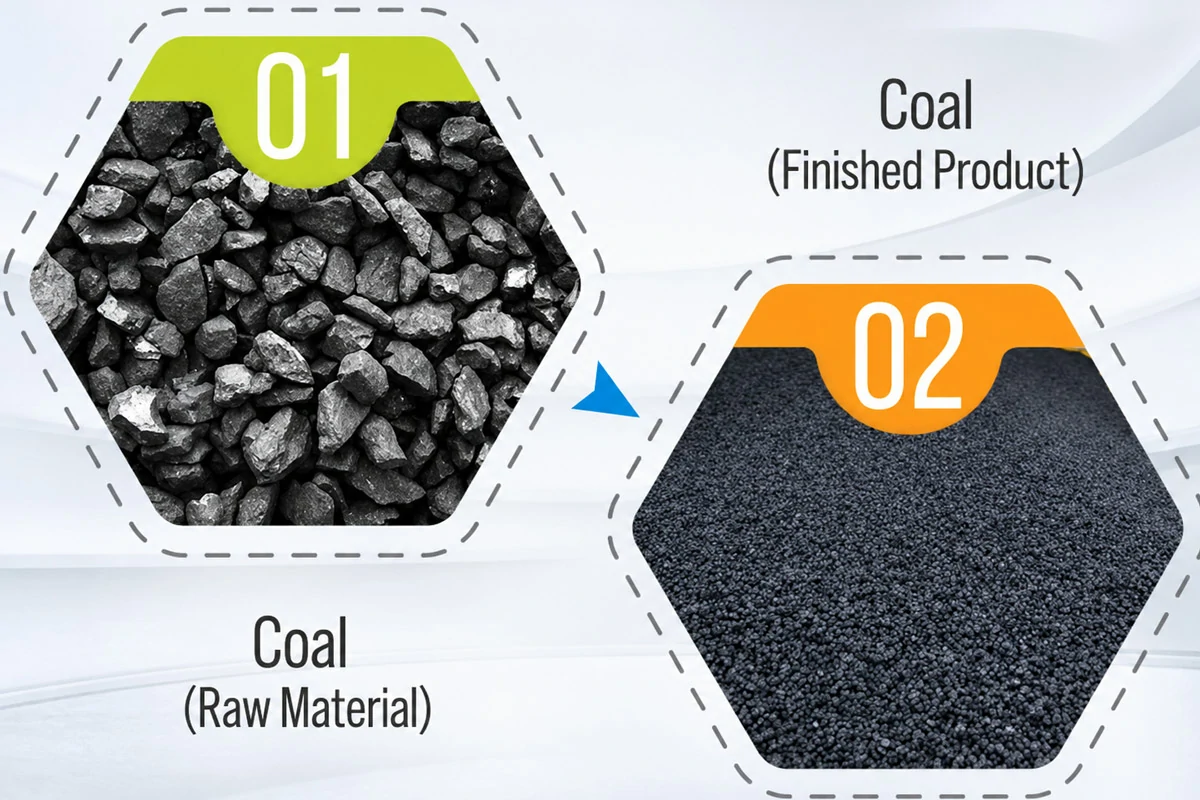
Coal before and after crushing, illustrating why fines control and moisture handling often matter more than alloy hardness
The Real Maintenance Priority Ignition Control
Tramp iron and pyrite inclusions are consistently identified as leading ignition sources in coal handling investigations, since the friction and impact from these hard fragments against crusher and mill internals can generate sparks or localized heat well above the ignition threshold for suspended coal dust. Particle size compounds the risk, dust below roughly 74 microns is dramatically more sensitive to ignition than coarser material, which is exactly the size range a crusher is producing by design. Temperature monitoring adds another layer of protection, spontaneous combustion inside stored coal piles can begin around 80 degrees Celsius, smouldering risk becomes active above roughly 90 degrees Celsius at a mill outlet, and ignition has been documented from surface temperatures near 800 degrees Celsius, tramp iron sparks, or bearing failures. Magnetic separation ahead of the crushing stage remains the standard first line of defense, removing tramp metal before it ever reaches the crushing chamber where it could contact a moving wear surface.

A coal crushing line where magnetic separation and temperature monitoring matter as much as the crusher itself
Protecting crusher parts from tramp metal damage also protects the entire circuit from a far larger risk, since the same fragment that chips a liner is often the fragment capable of sparking a dust cloud.
Selecting Crusher Parts for Coal Duty
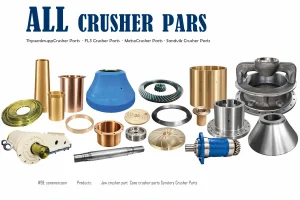
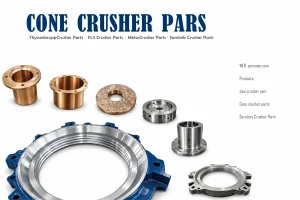
Selecting crusher parts for a coal circuit starts with recognizing that hardness is rarely the limiting factor the way it is on granite or basalt. Toothed rolls and picks on mineral sizers are commonly specified in chrome molybdenum cast steel or moderate manganese content, prioritizing toughness against occasional hard inclusions over the extreme hardness a high chromium white iron would offer, since that extra hardness would go largely unused against ordinary coal while adding unnecessary brittleness risk against a rock parting. Where a cone crusher is used ahead of the mill to size run of mine coal containing more rock content, cone crusher wear parts selected in a standard manganese grade are usually sufficient, since coal duty rarely generates the sustained compressive load that would justify a richer alloy. Dimensional accuracy still matters, sand cast components produced to ISO 8062-3 grade CT8 to CT10 seat correctly in the frame, reducing the vibration and misalignment that can itself become a frictional heat source over time.

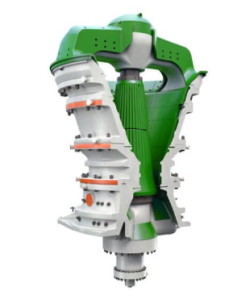
A cone crusher stage sizing run of mine coal ahead of downstream processing
| Maintenance Focus | Typical Trigger or Threshold | Action |
|---|---|---|
| Coal dust concentration | Above roughly 45 grams per cubic meter | Increase dust suppression and housekeeping frequency |
| Fine particle generation | Below roughly 74 microns | Monitor crusher setting to avoid excess fines |
| Stockpile core temperature | Around 80 degrees Celsius | Inspect for spontaneous combustion risk |
| Mill outlet temperature | Above roughly 90 degrees Celsius | Treat as active smouldering risk |
| Tramp metal detection | Any detected ferrous fragment | Remove via magnetic separator before the crusher |
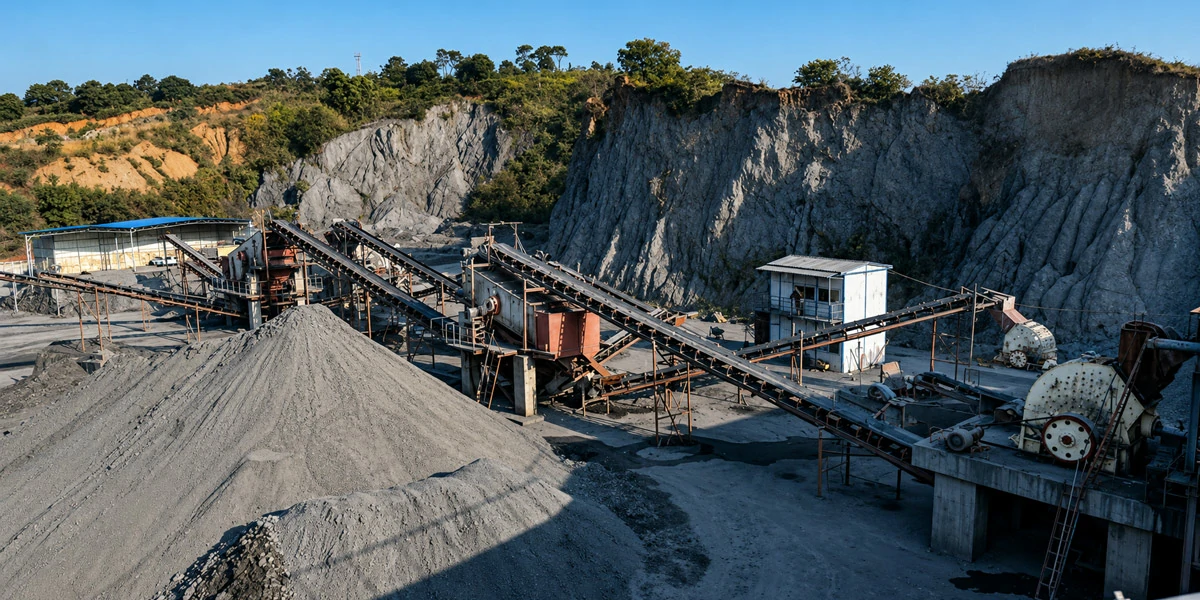
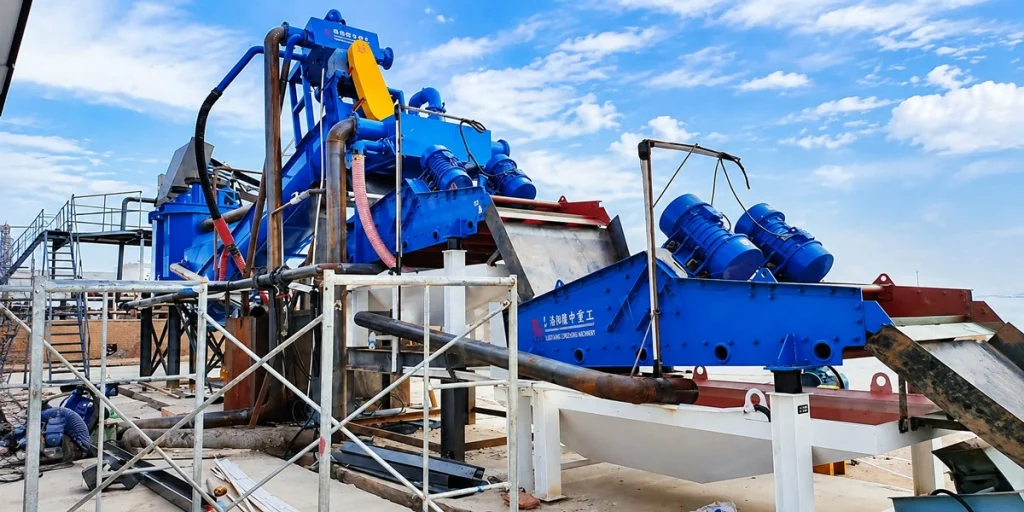
A full coal crushing line where maintenance discipline matters as much as equipment selection
A Practical Maintenance Routine for Coal Crushing
- Inspect and test magnetic separators on a fixed schedule rather than assuming they are functioning correctly, since a failed separator is one of the most direct paths to tramp metal reaching the crusher.
- Log bearing and mill outlet temperatures continuously, treating any sustained reading above roughly 90 degrees Celsius as an immediate inspection trigger rather than a background number.
- Track fines generation against crusher setting, since particle size below roughly 74 microns raises ignition sensitivity considerably.
- Maintain dust suppression and housekeeping around the crusher and conveyor transfer points, since accumulated fine dust is what turns a single spark into a propagating event.
- Choose toughness over raw hardness when specifying crusher parts for coal duty, reserving harder alloys only for zones confirmed to carry frequent rock or pyrite content.
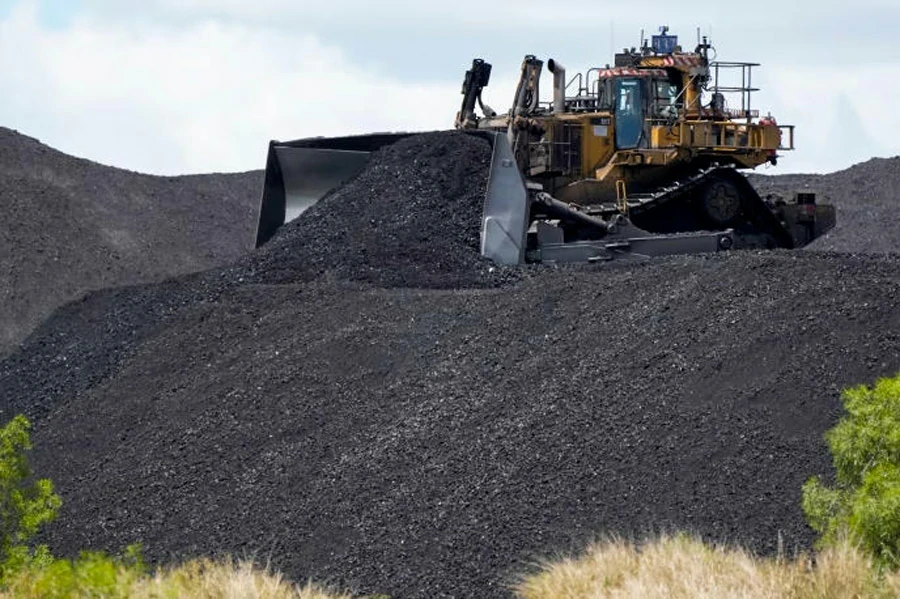
Crushed coal sized and ready for the next stage of processing
Sourcing Crusher Parts Suited to Coal Duty
Crusher selection and maintenance for coal comes down to matching equipment and alloy choice to a soft, sticky material while treating tramp metal and dust control as the real safety priority, not an afterthought to liner wear. Yonsmen supplies crusher parts across the toothed roll, jaw, and cone configurations covered here, in the chrome molybdenum and manganese grades suited to coal duty, with dimensional and hardness documentation on every batch.
Matching a crusher wear part to coal duty means prioritizing toughness and a reliable fit over alloy hardness alone, since the biggest risks on a coal line rarely come from the wear part itself. Send us your circuit layout and current maintenance data and we can recommend the configuration best suited to your coal crushing line.