
An 18 Percent Manganese Liner on a Limestone Line Is Often Money Spent on Nothing
A limestone quarry that installs a cone liner cast for granite duty is not buying extra protection, it is often buying underperformance. Eighteen percent manganese steel depends on strong impact loading to work harden from roughly 200 Brinell up toward 500 Brinell, and limestone frequently does not generate enough crushing force to build that case properly. The liner sits soft, wears faster than its alloy rating suggests, and the quarry has paid a premium for hardness it never actually gets to use. Efficiency in limestone crushing starts with matching crusher parts to what the rock actually needs, not with defaulting to the toughest grade on the price list.
Why Limestone Is Not One Material When It Comes to Crusher Parts
Limestone typically sits at Mohs 2.5 to 4, a soft sedimentary rock with uniaxial compressive strength rarely above 200 megapascals and a Bond Work Index generally in the 6 to 15 kilowatt hour per tonne range, well below granite or basalt. That average figure hides real variation, deposits carrying dolomite, chert nodules, or silica veining can behave noticeably harder in practice than the standard limestone value would suggest, and a machine or liner selected for one quarry’s material can show unexpectedly high wear when run on stone from a different bench in the same pit. Testing the specific deposit before finalizing crusher part selection is the reliable way to avoid both outcomes, wearing out an underspecified liner too fast, and paying for hardness a friable limestone will never develop.
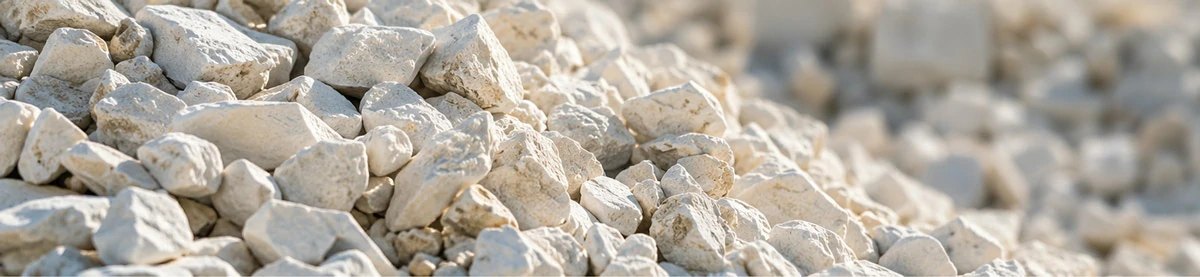
Limestone feed varies in hardness by deposit, which is why testing matters before selecting an alloy grade
Matching Crushing Method to Limestone’s Structure for Maximum Throughput
Limestone’s well developed bedding planes and natural fractures respond differently depending on how the crushing force is applied. Compression crushing through a jaw or cone chamber delivers high throughput with minimal fines and suits massive or more siliceous limestone, though the resulting particles tend to be flaky and may need further shaping. Impact crushing exploits limestone’s natural cleavage planes directly, producing a higher share of cubical particles and a stronger reduction ratio, which is why it is often the preferred method for aggregate and cement raw material from the secondary stage onward. A typical efficient layout runs a jaw or heavy duty impact crusher at the primary stage down to roughly 150 to 300 millimeters, a cone or medium impact crusher at the secondary stage down to 30 to 60 millimeters, and a VSI or high efficiency impact crusher for final shaping. On limestone under roughly 100 megapascals in compressive strength, a single impact crusher can often replace both the secondary and tertiary stages entirely, simplifying the flowsheet and cutting capital cost without sacrificing product quality.

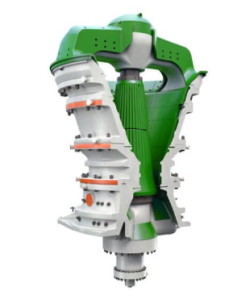
A limestone production line combining compression and impact stages to balance throughput and product shape
Alloy Grade Efficiency Not Just Wear Life
For the majority of limestone deposits, the efficient alloy choice for jaw plates and jaw crusher part sets is chrome molybdenum cast steel or a leaner fourteen percent manganese grade, both of which perform reliably without the premium cost of richer manganese alloys that limestone rarely stresses hard enough to justify. Where deposit testing confirms chert, dolomite, or silica content pushing local hardness upward, stepping up to an eighteen percent manganese crusher mantle becomes worthwhile, since that harder feed will actually generate the impact energy needed to work harden the alloy properly. Casting quality still matters regardless of alloy, sand cast liners produced to ISO 8062-3 grade CT8 to CT10 seat correctly against the head and bowl, keeping the closed side setting consistent and protecting the throughput gains that the right chamber configuration is designed to deliver.
| Crushing Stage | Preferred Method for Limestone | Typical Alloy | Efficiency Benefit |
|---|---|---|---|
| Primary | Jaw or heavy duty impact crusher | Chrome molybdenum steel or 14 percent Mn | High throughput on coarse feed |
| Secondary | Cone or medium impact crusher | 14 to 18 percent Mn depending on deposit | Balanced reduction ratio and shape |
| Tertiary shaping | VSI or high efficiency impact crusher | Manganese or martensitic alloy steel | Cubical product, fewer processing stages |
Moisture above roughly 8 to 10 percent raises the risk of bridging in jaw and cone chambers, which is why impact crushers with self cleaning designs often handle wet limestone more reliably than compression machines built for drier feed.
Practical Efficiency Levers Tied to Crusher Parts
- Test each bench or zone of the deposit separately rather than relying on a single quarry wide hardness figure, since chert and dolomite content can vary meaningfully within the same pit.
- Reserve richer manganese or chromium alloys for zones confirmed to carry higher silica or dolomite content, rather than specifying the hardest available grade across the board.
- Choose impact crushing from the secondary stage onward wherever product cubicity matters, since it can reduce the number of stages needed compared to a pure compression flowsheet.
- Check moisture and clay content before finalizing crusher type, since wet or sticky feed favors self cleaning impact designs over jaw and cone chambers prone to bridging.
- Confirm casting tolerance documentation on every liner, since a poorly seated part drifts out of setting faster and undermines the throughput gains the chamber design was meant to deliver.
Selecting Crusher Parts for a Limestone Line Built Around Efficiency
Efficiency on a limestone line comes from matching crusher parts to the deposit actually being processed rather than importing a specification built for harder rock. Yonsmen supplies jaw plates, cone mantles, concaves, and full liner sets across the chrome molybdenum, 14 percent, and 18 percent manganese grades covered here, with chemistry and hardness documentation on every batch so the alloy matches what your limestone will actually work harden against.
A crusher wear part chosen without deposit testing is a common source of wasted cost on limestone lines, either from premature wear on an underspecified liner or from paying for hardness a friable rock will never develop. Send us your deposit hardness data and current wear pattern and we can recommend the chamber configuration and alloy grade best suited to your line.