Aggregate producers and mining engineers face a critical mechanical decision when specifying medium and fine crushing equipment. The choice between spring, multi-cylinder hydraulic, and single-cylinder hydraulic cone crushers directly impacts the overall circuit efficiency and operational expenditure. Each design utilizes distinct kinematic principles and hydraulic architectures to achieve specific reduction ratios and product gradations. Evaluating these machines requires analyzing crushing force, eccentric throw, and cavity geometry rather than relying solely on initial capital costs.
Spring Cone Crusher Mechanics and Operational Limits
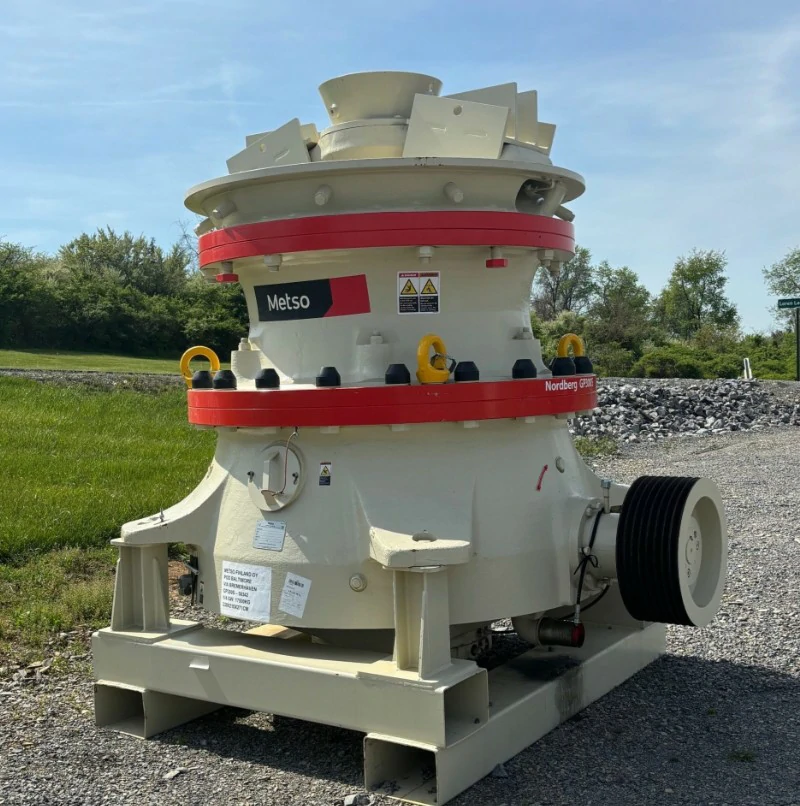
The traditional spring cone crusher utilizes a mechanical spring release system for tramp iron protection. When uncrushable material enters the crushing chamber, the spring pack compresses to increase the discharge opening, allowing the foreign object to pass before resetting. This design typically operates with an eccentric throw of 15 to 25 millimeters and a rotational speed of 250 to 300 RPM. The mechanical clearance adjustment requires manual intervention or hydraulic clearing cylinders that lack precise feedback loops.
Operators utilizing this equipment must accept lower automation thresholds and reduced interparticle breakage. The laminated crushing effect remains limited, which often results in a higher percentage of elongated particles in the final product. Maintenance intervals are frequent due to the mechanical wear on the spring assembly and the lack of automated setting compensation. This machine remains viable for secondary crushing in small-scale plants processing low-abrasion materials with moderate hardness values below 200 MPa.
Multi-Cylinder Hydraulic Cone Crusher Performance Parameters
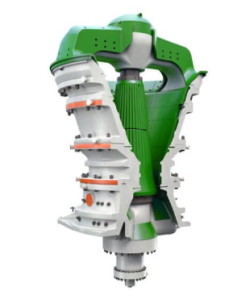
The multi-cylinder hydraulic cone crusher employs multiple hydraulic cylinders to provide a massive clamping force that prevents bowl rotation during high-energy crushing events. This structural rigidity allows the machine to sustain crushing forces exceeding 3000 kilonewtons while maintaining a fixed parallel zone. The eccentric throw typically ranges from 25 to 40 millimeters, promoting intense interparticle comminution within the crushing chamber.
Engineers specify this equipment for hard rock applications where product shape is paramount. The high rotational speed, often reaching 350 to 450 RPM, combined with the steep crushing cavity angle, maximizes the laminated crushing effect. This configuration consistently produces a high percentage of cubical fines and reduces the circulating load in closed-circuit operations. The integrated hydraulic adjustment system allows for real-time CSS modification, ensuring consistent product gradation despite liner wear. Capital expenditure is higher, but the reduction in downstream grinding costs often justifies the investment in large-scale aggregate production lines.
Single-Cylinder Hydraulic Cone Crusher Structural Advantages
The single-cylinder hydraulic cone crusher integrates the adjustment and tramp release functions into one central hydraulic cylinder located beneath the main shaft. This design eliminates the complex multi-cylinder clamping frame, resulting in a lower overall machine height and simplified maintenance access. The main shaft is supported at both the top and bottom, providing superior structural integrity to handle high crushing loads without excessive deflection.
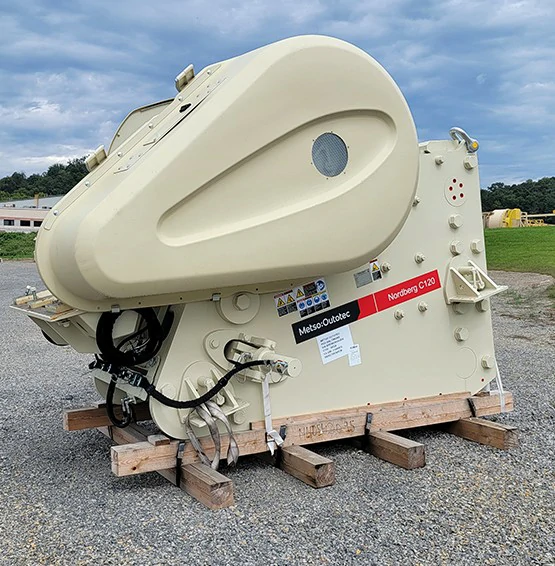
This configuration offers a versatile stroke range of 20 to 35 millimeters, allowing operators to switch between coarse and fine cavity profiles by simply changing the eccentric bushing. The hydraulic system provides continuous CSS monitoring and automatic wear compensation. While the laminated crushing effect is slightly lower than multi-cylinder designs, the single-cylinder model delivers excellent throughput and reliable performance across medium to high-hardness ores. The streamlined hydraulic circuit reduces potential leak points and lowers long-term maintenance requirements.
Comparative Technical Specifications
| Parameter | Spring Cone Crusher | Multi-Cylinder Hydraulic | Single-Cylinder Hydraulic |
|---|---|---|---|
| Overload Protection | Mechanical Spring Pack | Multi-Cylinder Clamping | Central Hydraulic Cylinder |
| Typical Eccentric Throw | 15 to 25 mm | 25 to 40 mm | 20 to 35 mm |
| Rotational Speed Range | 250 to 300 RPM | 350 to 450 RPM | 300 to 400 RPM |
| Automation Level | Low | High | Medium to High |
| Primary Application | Secondary Crushing | Tertiary Hard Rock | Secondary to Tertiary |
Circuit Integration and Material Considerations
Selecting the appropriate cone crusher requires analyzing the entire comminution circuit rather than evaluating the machine in isolation. Feed size distribution, moisture content, and clay percentage dictate the required cavity geometry and liner profile. High clay content may necessitate a larger feed opening and specialized liner designs to prevent packing and choking. The upstream jaw crusher discharge setting must align with the cone crusher feed opening to maintain optimal choke-fed conditions.

Downstream screening capacity determines the circulating load and overall circuit efficiency. A high-capacity multi-cylinder hydraulic cone crusher can generate significant fines, which may require upgrading the screening deck to prevent bottlenecking. Engineers must also evaluate the manufacturer’s technical support, liner availability, and service response times. Total cost of ownership calculations should include power consumption, liner wear rates, and scheduled maintenance downtime to accurately compare the economic viability of each cone crusher type.