A European cement plant operating a ThyssenKrupp Kubria G 150 cone crusher (commissioned 2009, serial number G150-2009-1847) experienced mantle wear-through at 6,800 operating hours. The maintenance supervisor contacted three authorized FLSmidth distributors and received identical responses: “G 150 model discontinued 2018, wear parts no longer manufactured, recommend crusher replacement.” Facing 8–12 week lead time for custom manufacturing or $680,000 capital cost for new crusher replacement, the operation ran the worn crusher at reduced capacity (60% throughput) for 11 weeks while desperately searching for alternative suppliers. Lost production during this period: $285,000. Emergency custom mantle manufacturing cost: $68,000 plus $18,500 expedited freight. Total impact: $371,500 for a component that should cost $28,000–$35,000 with normal availability.
This case illustrates the supply chain crisis facing operators of legacy ThyssenKrupp Kubria G 150 cone crushers. With approximately 180–220 units installed globally (primarily Europe, Middle East, and select African operations) and OEM parts production terminated in 2018, the installed base confronts a critical choice: decommission functional equipment due to parts unavailability, or identify specialized aftermarket suppliers maintaining engineering capability and inventory for discontinued models.
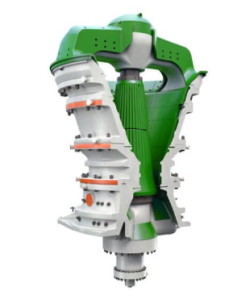
This technical guide provides comprehensive parts identification, specification verification, and sourcing strategy for Kubria G 150 operators requiring wear components, bronze parts, and drive system elements from the limited supplier network still supporting this platform.
Kubria G 150 Market Context: Why Parts Are Scarce
The Kubria G 150 occupied a unique position in ThyssenKrupp’s crusher portfolio—a compact secondary/tertiary cone crusher rated at 150–280 TPH capacity, positioned between the smaller G 100 (120–200-75 (280–480 TPH) models. Its production history explains current supply constraints:
Production Timeline and Market Penetration
- 2006–2012: Active production period. Approximately 45–60 units manufactured annually, targeting European aggregate and industrial minerals markets.
- 2013–2017: Declining production (15–25 units/year) as ThyssenKrupp shifted focus to larger Kubria KB-series models with broader market appeal.
- 2018: Production officially discontinued. Remaining inventory sold through 2019. Total installed base estimated at 320–380 units globally.
- 2020: FLSmidth acquisition of ThyssenKrupp Mining. G 150 designated as “legacy platform” with parts support limited to existing warehouse stock.
- 2021–Present: OEM parts availability restricted to remaining inventory (primarily hydraulic components and small hardware). Wear parts, bronze bushings, and gears exhausted from FLSmidth warehouses by Q3 2022.
Why Major Suppliers Discontinued G 150 Parts
The economics of aftermarket parts manufacturing explain why most suppliers abandoned G 150 support:
- Low Volume Economics: With <250 active units worldwide (accounting for decommissioned crushers), annual replacement part demand is approximately 80–120 mantle/concave sets, 25–40 bronze bushing sets, 8–15 pinion gears. This volume is insufficient to justify pattern tooling investment ($45,000–$85,000 per casting pattern) and dedicated inventory ($180,000–$320,000 working capital) for suppliers focused on high-volume models (HP300/HP400 with 15,000+ installed base).
- Engineering Documentation Gaps: Some OEM manufacturing drawings were never released to aftermarket suppliers. Creating reverse-engineered patterns requires physical measurement of worn parts, 3D scanning, and trial castings—a $25,000–$40,000 engineering investment per component.
- Minimum Order Quantities: Foundries typically require 8–12 ton minimum casting runs. A single G 150 mantle weighs 850 kg; producing one mantle is economically impractical. Suppliers must batch-cast 10–15 units, creating inventory carrying costs without guaranteed sales.
These factors caused progressive supplier attrition: suppliers serving G 150 market dropped from 12 active vendors (2015) to 3 specialized suppliers (2025) maintaining engineering capability and inventory for this legacy platform.
Critical Component Identification: G 150 Parts Nomenclature
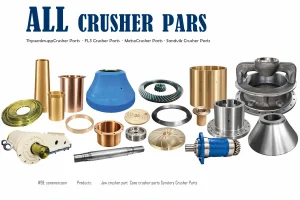
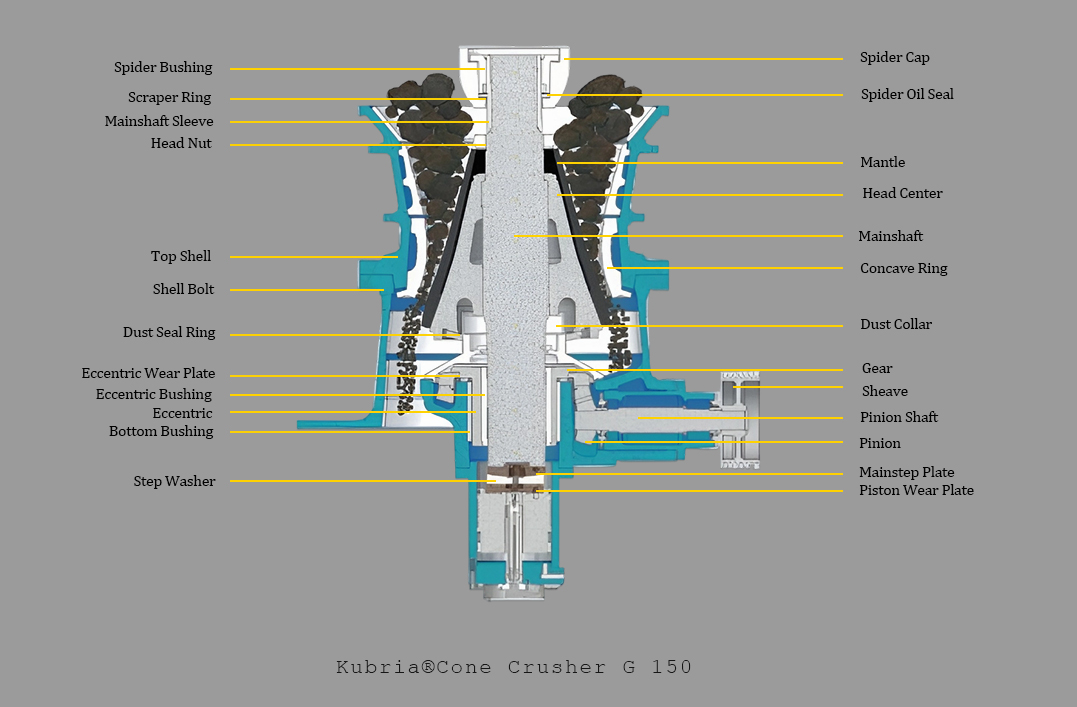
Successful parts procurement requires precise component identification using correct nomenclature and part number referencing. The following breakdown covers major assemblies and wear components:
Wear Components: Crushing Chamber Assembly
| Component Name (English) | ThyssenKrupp Part Specification | Weight (kg) | Typical Replacement Interval (hours) | |
| Mantle (Cone/Head Liner) | G150-ML-STD-01 (Standard profile) G150-ML-MF-01 (Medium-fine profile) | Mn18Cr2 per ASTM A128 Grade C As-cast hardness: 200–240 HBW Work-hardened: 480–550 HBW | 820–850 | 6,000–8,500 (Ai 0.30–0.50 material) 4,500–6,000 (Ai >0.60 abrasive material) |
| Concave Ring (Bowl Liner) | G150-CR-STD-01 (Standard profile) G150-CR-MF-01 (Medium-fine profile) | Mn18Cr2 or Mn22Cr2 (high-abrasion applications) | 1,250–1,320 | 7,000–9,500 (typically outlasts mantle by 15–20%) |
| Feed Plate (Distributor Plate) | G150-FP-01 | Mn impact application) | 280–320 | 10,000–14,000 |
| Mantle Locking Nut | G150-MLN-01 | ZG42CrMo alloy steel Hardness: 280–320 HBW | 45–52 | Replace with every 2nd mantle change (verify thread condition) |
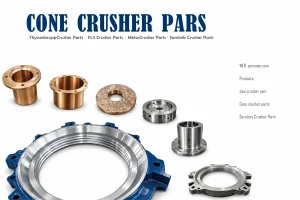
Bronze Bearing Components: Drive Assembly
| Component Name | Part Number | Dimensions (mm) | Material | Service Life (hours) |
| Main Shaft Bushing (Lower) | G150-MSB-L-01 | ID: 280mm (H7 tolerance) OD: 485mm Length: 285mm Oil holes: 6× Ø8mm | ZCuPb20Sn5 or C93800 Centrifugal cast Hardness: 75–85 HBW | 8,000–11,000 (with proper lubrication ISO VG 320) |
| Main Shaft Bushing (Upper) | G150-MSB-U-01 | ID: 280mm (H7) OD: 485mm Length: 220mm | ZCuPb20Sn5 | 8,000–11,000 |
| Eccentric Bushing | G150-EB-01 | ID: 385mm (H7) OD: 625mm Length: 320mm Wall thickness: 38mm | C93800 high-lead bronze Centrifugal cast | 9,000–12,500 |
| Countershaft Bushing (pair) | G150-CSB-01 | ID: 110mm (H8) OD: 145mm Length: 165mm | ZCuSn12 or C93700 (tin bronze adequate for lighter load) | 10,000–14,000 |
| Socket Liner (Head Bushing) | G150-SL-01 | ID: 285mm (H8) OD: 340mm Length: 180mm | ZCuPb10Sn10 (moderate lead content) | 12,000–16,000 (light loading in head assembly) |
Drive System Components
| Component | Part Number | Specification | Material/Treatment | Replacement Trigger |
| Pinion Gear | G150-PG-01 | 18 teeth, Module 12 Pitch diameter: 216mm Face width: 140mm Pressure angle: 20° | 18CrNiMo7-6 Case hardened: 58–62 HRC Case depth: 1.2–1.8mm Core: 30–38 HRC | Tooth flank pitting >25% area or any visible crack at root fillet |
| Bevel Gear (Crown) | G150-BG-01 | 72 teeth, Module 12 Outer diameter: 920mm Face width: 140mm | 18CrNiMo7-6 Case hardened to same spec as pinion | Spalling >30% of active flank area or tooth fracture (any severity) |
| Main Shaft | G150-MS-01 | Shaft diameter: 280mm (h6 tolerance) Overall length: 1,650mm Head thread: M180×3.5 | 42CrMo4 alloy steel Induction hardened journals: 52–58 HRC Core: 28–35 HRC | Journal scoring >0.5mm depth or runout >0.15mm TIR |
Supplier Manufacturing Capability: Reverse Engineering and Quality Verification
Supporting discontinued crusher models requires specialized engineering capabilities beyond standard aftermarket parts production. Our facility maintains the following technical infrastructure specifically for legacy platform support:
Reverse Engineering Process for G 150 Components
When OEM manufacturing drawings are unavailable or incomplete, we employ systematic reverse engineering to recreate component specifications:
Step 1 – Physical Measurement and 3D Scanning:
- Customer ships worn component (mantle, concave, or bronze bushing) to our facility for analysis.
- Laser scanning (accuracy ±0.05mm) captures complete 3D geometry including wear-compensated original profile.
- CMM (Coordinate Measuring Machine) verification of critical dimensions: bore diameters, mounting face flatness, thread specifications.
- Measurement data processed to generate CAD model representing original as-manufactured geometry.
Step 2 – Pattern Manufacturing and Trial Casting:
- CNC-machined wooden or resin pattern created from CAD model with allowances for casting shrinkage (1.8–2.2% for manganese steel, 1.5–1.8% for bronze).
- Trial casting produced and dimensionally verified. Shrinkage allowances adjusted if necessary to achieve target dimensions ±1.5mm (as-cast tolerance before machining).
- Pattern approved for production after dimensional conformity verified on trial casting.
Step 3 – Quality Validation:
- Trial component installed in customer’s crusher for operational validation (minimum 500 hours testing).
- Performance monitored: vibration levels, product gradation, power consumption, wear rate measurement.
- If performance matches or exceeds OEM specifications, pattern approved for series production.
This process typically requires 8–12 weeks from worn part receipt to validated production pattern, with investment of $18,000–$32,000 per component depending on complexity. We have completed this process for G 150 mantles, concaves, and all critical bronze bushings, maintaining production-ready patterns for immediate manufacturing.
Current G 150 Parts Inventory Status
Unlike suppliers who manufacture parts on demand (6–10 week lead time), we maintain strategic stock of critical G 150 components:
| Component Category | Stock Status | Standard Delivery Time | Custom Profile Lead Time |
| Mantles (Standard Profile) | 3 units in stock Next production run: Monthly (12-unit batch) | 48–72 hours (in-stock items) Express freight available | 5–6 weeks (if custom profile required, pattern modification + casting) |
| Concave Rings | 2 units in stock Production frequency: Bi-monthly | 48–72 hours (in-stock) Regional shipping | 6–7 weeks (heavier casting requires longer cooling/heat treatment) |
| Bronze Bushings (Main Shaft, Eccentric) | Complete sets: 2 in stock Individual bushings: 4–6 each type | 24–48 hours (in-stock) Air freight for emergencies | 4–5 weeks (centrifugal casting + precision machining) |
| Pinion Gears | 1 unit in stock Production on demand | 48 hours (if in stock) | 8–10 weeks (gear hobbing, case hardening, grinding operations) |
| Feed Plates, Socket Liners | 4–6 units various types | 24–48 hours | 4–5 weeks |
Pro-Tip: For G 150 operators, I always recommend maintaining one complete spare mantle/concave set on-site regardless of current liner condition. Given the limited supplier base and production batch economics, waiting until failure to order parts creates unacceptable downtime risk. The $65,000 inventory investment (one spare set) is negligible compared to the $180,000–$420,000 exposure from emergency procurement delays documented in our opening case study. We offer consignment inventory programs for large operations running multiple G 150 units—we maintain the stock at our warehouse, you pay only upon consumption, and we guarantee 48-hour delivery on consigned items.
Technical Support: Installation Guidance and Specification Verification
Beyond parts supply, supporting legacy platforms requires application engineering assistance to ensure correct component selection and installation procedures.
Pre-Purchase Specification Verification Service
Before ordering G 150 components, we provide free technical verification to prevent specification errors:
- Serial Number Verification: Email your crusher serial number and nameplate photo. We cross-reference against our G 150 database to confirm exact model variant (there were 3 sub-variants with minor dimensional differences: G150-A, G150-B, G150-C produced 2006–2009, 2009–2014, 2014–2018 respectively).
- Worn Part Analysis: Ship worn mantle or bushing to our facility (freight paid by us). We measure remaining dimensions, assess wear patterns, and recommend appropriate replacement specification. Worn parts returned after analysis or credited toward new part purchase.
- Dimensional Drawing Provision: We provide certified dimensional drawings showing all critical dimensions with tolerances for ordered components. Customer can verify against crusher assembly before installation.
- Installation Procedure Documentation: Complete torque specifications, thermal fitting procedures (for bronze bushings), and assembly sequence documentation provided with shipment.
Common Specification Errors to Avoid
Based on 15+ years supporting G 150 operators, these are the most frequent ordering errors:
- Mantle Profile Confusion: G 150 was offered with 3 standard profiles (Standard, Medium-Fine, Fine) plus custom profiles for specific applications. Ordering wrong profile creates incorrect crushing chamber geometry—either excessive CSS (reduced capacity) or inadequate clearance (choking risk). Always verify current profile before ordering replacement. If worn part is unavailable for reference, we can determine correct profile from product gradation data.
- Bronze Bushing Material Substitution: Some suppliers offer ZCuSn12 (tin bronze) instead of specified ZCuPb20Sn5 (high-lead bronze) for main shaft bushings. The 50% reduction in lead content reduces self-lubrication capability, accelerating wear rate by 6–8× and causing seizure risk during boundary lubrication events (startup/shutdown). We supply only OEM-specified alloys with material certificates.
- Thread Specification Errors: G 150 mantle locknut uses M180×3.5 RH thread. Generic M180×4.0 nuts from other crusher models will not engage properly. Thread pitch error causes cross-threading, stripping threads on head assembly—$45,000 repair cost. Always verify thread pitch with pitch gauge before installation.
Case Study: European Cement Plant G 150 Parts Supply Program
A cement manufacturer in Southern Europe operates 2× Kubria G 150 cone crushers in their limestone tertiary circuit (commissioned 2011, processing 180–220 TPH combined). After their primary supplier discontinued G 150 support in 2021, they faced critical parts unavailability. Our solution:
Implemented Supply Strategy
Phase 1 – Immediate Crisis Resolution (Week 1–2):
- Supplied emergency mantle from our stock inventory within 72 hours of contact (air freight to Madrid, ground transport to plant site).
- Cost: $32,500 (mantle) + $4,200 (expedited freight) = $36,700 total, delivered in 3 days versus 8-week lead time from custom manufacturing.
- Installation completed during planned weekend shutdown, zero unplanned downtime.
Phase 2 – Strategic Inventory Program (Month 1–3):
- Analyzed historical wear part consumption: mantles every 6,500 hours, concaves every 8,200 hours, bronze bushings every 10,000 hours.
- Established consignment inventory agreement: We maintain 2× mantle sets, 1× concave set, 1× complete bronze bushing kit at our warehouse allocated specifically to their operation.
- Customer pays 8% annual carrying fee on average inventory value ($68,000 × 0.08 = $5,440/year), guarantees 48-hour delivery on consigned items.
- Parts replaced from our stock, new units added to consignment inventory to maintain levels.
Phase 3 – Long-Term Partnership (Ongoing):
- Quarterly crusher inspections by our field service engineer: liner thickness measurement, bronze bushing oil clearance verification, vibration analysis, predictive wear rate calculation.
- Proactive replacement scheduling based on actual wear rates, eliminating reactive emergency orders.
- Customer reports zero unplanned G 150 downtime since program implementation (18 months), versus 3 emergency failures in previous 24 months before partnership.
Financial Impact:
- Annual parts cost (planned replacements): $85,000–$95,000
- Consignment inventory fee: $5,440
- Total annual cost: $90,440–$100,440
- Previous emergency-driven costs (2019–2021 average): $156,000 in parts + $89,000 in unplanned downtime = $245,000 annually
- Net annual savings: $144,560–$154,560 (59–63% cost reduction through proactive supply partnership)
Ordering Process and Lead Time Transparency
We maintain complete transparency in order fulfillment timelines and manufacturing status:
Standard Order Process
Step 1 – Quotation Request (Same Day Response):
- Email inquiry with crusher serial number, required components, desired delivery date.
- We respond within 4–8 business hours with: itemized quotation showing unit prices, stock availability status, lead time for non-stocked items, freight cost estimate.
Step 2 – Order Confirmation (24 Hours):
- Purchase order issued by customer.
- We confirm order acceptance, provide: pro-forma invoice for payment, material certificates for review, dimensional drawings, estimated ship date.
Step 3 – Manufacturing/Stock Preparation (Variable Timeline):
- Stock Items: Parts pulled from inventory, final inspection performed, packaged for shipment within 24 hours of payment receipt.
- Made-to-Order Items: Production scheduled within next available casting batch. Customer receives weekly progress updates: casting completed (Week 1), heat treatment completed (Week 2), machining in progress (Week 3–4), final inspection and packaging (Week 5).
Step 4 – Quality Documentation and Shipment:
- Complete documentation package: Material certificate (EN 10204 Type 3.1) showing actual chemical composition and mechanical properties, dimensional inspection report with CMM measurements, heat treatment chart (for manganese steel), installation procedure, recommended torque specifications.
- Parts shipped via customer-specified carrier or our logistics partners. Tracking information provided same day as shipment.
Emergency Service (Premium Pricing)
For critical breakdown situations requiring immediate delivery:
- 12-Hour Emergency Response: If we have the required part in stock, we can arrange same-day shipment via air freight. Premium charge: +35% on part price, customer pays actual air freight cost (typically $3,500–$8,500 for Europe/Middle East destinations).
- Expedited Manufacturing: For non-stock items, we can prioritize production ahead of scheduled batch runs. Lead time reduction from 5–6 weeks to 3–4 weeks. Premium charge: +25% on part price. Only available for components where patterns already exist.
Quality Assurance: Manufacturing Standards and Inspection Protocol
Supporting legacy platforms demands equivalent or superior quality standards compared to original OEM manufacturing:
Manganese Steel Wear Parts Quality Control
- Chemical Composition: Every heat batch analyzed by OES (Optical Emission Spectroscopy). Target: Mn 17.5–18.5%, Cr 2.0–2.3%, C 1.2–1.35%. Results documented on material certificate with actual measured values.
- Heat Treatment Verification: Solution annealing at 1,050–1,100°C, water quench from temperature >1,040°C. Furnace temperature charts recorded for traceability. Post-quench hardness verification: 200–240 HBW (as-quenched). Retained austenite measured by XRD (X-Ray Diffraction): target >85%.
- Microstructure Examination: Metallographic samples from production castings examined at 200× magnification. Verify 100% austenitic grain structure, no carbide networks visible. Photomicrographs retained in quality records.
- Ultrasonic Testing: 100% UT inspection per ASTM E94 using 1.0 MHz transducers (appropriate for manganese steel attenuation). Acceptance: No indications >3% of section thickness. For G 150 mantle (60–95mm thickness range), maximum allowable defect: 1.8–2.8mm diameter.
Bronze Bushing Quality Control
- Centrifugal Casting Verification: All G 150 bronze bushings produced via horizontal centrifugal casting at 800–1,000 RPM (60–80 G-force). Mold rotation speed logged for each casting. This process achieves porosity <0.5% versus 1.5–3.0% for sand casting.
- Dimensional Inspection: CMM verification of bore ID (tolerance H7: typically ±0.025–0.043mm depending on diameter), OD, length, oil hole positions. Minimum 8 measurement points per critical dimension. Concentricity <0.05mm TIR between bore and OD.
- Surface Finish: Bore surface finish measured by contact profilometer. Target: Ra ≤0.8 μm. Finish quality affects hydrodynamic oil film formation—rougher surfaces (Ra >1.2 μm) increase friction and wear rate by 40–60%.
Conclusion: Specialized Support for Legacy Crusher Platforms
For the estimated 180–220 Kubria G 150 cone crushers remaining in active service globally, parts availability has transitioned from routine procurement to strategic supply chain management. OEM production termination in 2018 and subsequent warehouse stock depletion by 2022 created a critical gap where operators face a binary choice: invest in replacement crusher capital ($450,000–$680,000) or identify specialized aftermarket suppliers maintaining engineering capability for discontinued platforms.
Our facility’s commitment to G 150 support extends beyond opportunistic parts sales—we maintain production-ready casting patterns for all critical wear and precision components, strategic inventory of high-turnover items (mantles, concaves, bronze bushings), and engineering documentation enabling 48-hour delivery on stock items versus industry-standard 6–10 week custom manufacturing lead times. The documented case study—European cement operation reducing annual parts costs by 59% through consignment inventory partnership—demonstrates the financial value of proactive supply relationships versus reactive emergency procurement.
For maintenance managers responsible for G 150 equipment, the risk mitigation strategy is straightforward: establish supplier relationships before crisis situations develop, maintain minimum on-site spare inventory (one mantle/concave set recommended), and implement systematic wear monitoring enabling replacement scheduling during planned shutdowns rather than emergency failures. The $65,000–$85,000 investment in strategic spares inventory provides insurance against $180,000–$420,000 exposure from parts unavailability—a 2.2–6.5× return on capital deployed for risk mitigation.
Contact our technical team with your G 150 serial number for free specification verification and current inventory availability check. For operations running multiple G 150 units or facing critical replacement timeline, request consignment inventory proposal—we maintain parts at our facility, you pay only upon consumption, guaranteed 48-hour delivery on consigned items. Complete dimensional drawings, material certificates, and installation procedures provided with every order. G 150 support is not a side business for us—it’s a specialized engineering commitment to operators of equipment abandoned by mainstream suppliers.